
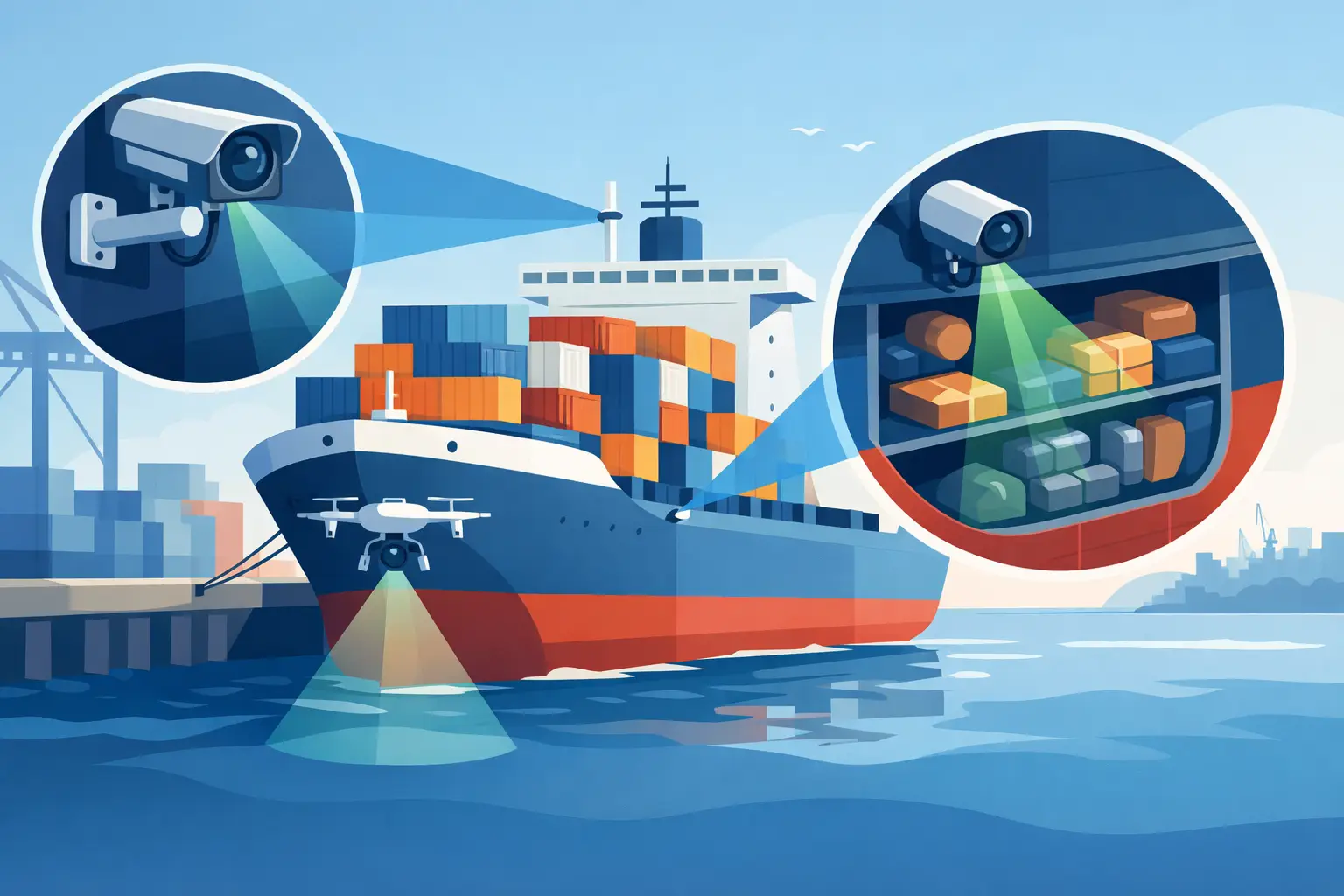
A ship hull contraband detection camera is not a general-purpose surveillance device. It is a critical inspection asset for vessels operating through high-risk ports, offshore terminals, restricted waters, and cargo routes where an unseen attachment beneath the waterline can create major security, legal, and operational exposure. Clear subsea video gives captains, port security teams, superintendents, and vessel managers evidence they can review, retain, and act on before a vessel sails.
Hull inspections have traditionally depended on diver availability, scheduling windows, visibility conditions, and manual reporting. Those resources still have a place, especially when an object must be recovered or physically examined. But an engineered underwater camera system adds speed and repeatability to the process. It helps teams identify suspicious packages, tampering, damage, obstructions, and unauthorized devices without waiting for a full dive operation to begin.
Why Hull Contraband Inspection Requires Purpose-Built Equipment
The underwater zone around a commercial vessel is an unusually demanding surveillance environment. Saltwater, low light, turbidity, marine growth, reflected harbor lighting, strong currents, and propeller wash all affect image quality. A camera that performs well in a clean test tank may deliver poor evidence when positioned beneath a working vessel in a busy berth.
A professional ship hull contraband detection camera must therefore prioritize usable video, not simply a high resolution specification. Low-light sensitivity, controlled illumination, lens selection, stable mounting, pressure-rated construction, and protected cabling all affect whether an operator can distinguish a suspicious object from a shadow, rope, fender mark, or natural growth.
The business case is equally clear. A security incident involving concealed narcotics or other prohibited materials can lead to vessel detention, cargo delays, investigations, crew scrutiny, fines, reputation damage, and disrupted charter commitments. The cost of a reliable inspection system is small compared with the financial impact of an extended port hold.
What a Ship Hull Contraband Detection Camera Must Deliver
Procurement teams should assess the complete inspection capability rather than purchasing a camera body in isolation. The strongest systems combine underwater imaging hardware with recording, display, power, connectivity, and a deployment method suited to the vessel or terminal.
Clear imaging in poor underwater visibility
Image performance begins with an appropriate sensor and continues with lighting design. In dark or murky water, integrated illumination needs to light the target area evenly without creating excessive backscatter from suspended particles. Wide-angle coverage is useful for scanning broad hull sections, while a narrower field of view can support closer examination of suspicious fixtures or packages.
More pixels are not always the answer. If the lens, lighting, and water conditions are wrong, higher resolution footage can still be difficult to interpret. Buyers should request representative footage from working marine environments and evaluate whether labels, straps, attachment points, and package outlines remain visible at realistic inspection distances.
Rugged underwater construction
Marine inspection hardware must withstand repeated exposure to saltwater and physical contact risks around the hull. The camera enclosure, connectors, cable glands, mounting points, and lighting assembly should be selected for long-term subsea operation. Corrosion resistance matters as much as impact protection.
Depth rating also needs to match the application. A berth inspection near the waterline has different requirements than a deep-draft vessel inspection, offshore structure survey, or subsea terminal operation. Specifying extra depth capacity can provide a useful safety margin, but the right choice depends on vessel class, operating location, and planned deployment method.
Reliable live viewing and recorded evidence
Live video allows the operator to change position quickly, revisit a concern, and direct a diver or security team when necessary. Recording is equally important. Time-stamped footage provides an inspection record for internal reporting, insurance discussions, port security procedures, and incident response.
A system should support straightforward playback and export without forcing crews to work through complicated software. Operators need to locate the relevant sequence, preserve the original file, and provide decision-makers with clear footage. Network-connected setups can also enable authorized shore-side personnel to review an inspection remotely, subject to the vessel’s cybersecurity policies and available bandwidth.
Deployment Method Determines Inspection Quality
The same camera can produce very different results depending on how it reaches the inspection zone. A fixed underwater installation can provide continuous observation of a defined area, such as a berth, intake zone, or offshore asset. For vessel hull screening, a managed cable deployment or inspection platform often provides more practical coverage.
The key is controlled movement. The camera must remain stable enough to inspect seams, sea chests, thruster tunnels, rudder areas, stabilizer recesses, and other locations where contraband may be attached or concealed. A poorly controlled camera can move too quickly, drift away from the hull, or create footage that is difficult to review.
Cable length, reel design, connector protection, and topside controls deserve close attention. Long cable runs support larger vessels but can add drag and handling complexity. Shorter configurations are easier to manage but may limit access. The right system reflects the vessel’s hull geometry, draft, berth arrangement, and crew procedures rather than a generic equipment checklist.
Where Camera Inspection Fits in a Security Program
A hull camera should strengthen established maritime security procedures, not replace professional judgment. Security teams can use it before departure from a higher-risk port, after an extended berth stay, following restricted-area access concerns, or when intelligence indicates an elevated threat.
It is also valuable after maintenance activity, towage work, diver activity, or unusual contact near the vessel. Not every anomaly is contraband. It may be debris, a damaged fitting, discarded line, or accumulated growth. The advantage of recorded inspection footage is that the vessel can make a measured decision rather than relying on assumptions.
For larger operators, consistency matters. A defined inspection route and documentation process helps crews compare conditions across voyages. Recording the date, berth, vessel position, visibility conditions, inspection zones, and any findings gives management a stronger audit trail. When suspicious material is identified, crews should follow their company security plan, preserve the area, notify the appropriate authorities, and avoid unnecessary contact with the object.
Buying Criteria for Marine Operators and Port Facilities
The lowest upfront price rarely represents the lowest operational cost. A low-grade system that fails in saltwater, produces unusable video, or requires difficult setup can create false confidence while consuming crew time. Commercial buyers should prioritize proven environment-specific equipment and supplier support.
When comparing systems, examine the camera’s depth rating, low-light performance, illumination range, cable length, recording format, control interface, mounting options, and serviceability. Confirm how the system is powered aboard ship or at the terminal. Ask whether replacement parts, cable assemblies, and technical assistance are available when the equipment is needed urgently.
Compatibility should also be reviewed early. Some operators require video feeds into an existing network video recorder, bridge display, security control room, or shore-side monitoring environment. Others need a self-contained inspection station to keep the process simple. Neither approach is universally better. Integrated systems provide centralized oversight, while dedicated systems can reduce network dependency and simplify deployment.
Revlight Security supplies marine surveillance solutions selected for demanding industrial conditions, with practical attention to underwater visibility, recording capability, and deployment reliability. For procurement teams, the goal is not a catalog specification. It is a dependable inspection capability that crews can operate confidently when timing and evidence matter.
Build Inspection Readiness Before the Next Port Call
A camera system only delivers value when personnel know how to use it under real operating pressure. Crews should receive practical familiarization on launch and recovery, camera positioning, lighting adjustment, recording verification, file retention, and escalation procedures. A short planned test in controlled conditions can reveal cable-handling issues or display limitations before an urgent inspection is required.
Establish a routine inspection trigger matrix based on port risk, berth duration, vessel activity, and security intelligence. This avoids both extremes: inspecting too rarely to provide assurance or conducting unfocused checks that waste time without covering high-risk areas. The strongest programs pair capable underwater imaging with disciplined procedures, clear evidence retention, and fast access to technical support.
When a vessel’s underwater security status cannot be confirmed, uncertainty becomes an operational cost. A properly specified hull inspection camera gives your team a direct view below the waterline and a practical basis for acting before that uncertainty becomes a delay, detention, or security event.
🛡️ Secure Your Home or Business Today
Protect your home, office, shop, or business with reliable CCTV security cameras. Explore our range of CCTV cameras and find the right security solution for your needs.
Explore CCTV Cameras ✉️ Email Us


 Singapore :
+65-6708-9302
Singapore :
+65-6708-9302