
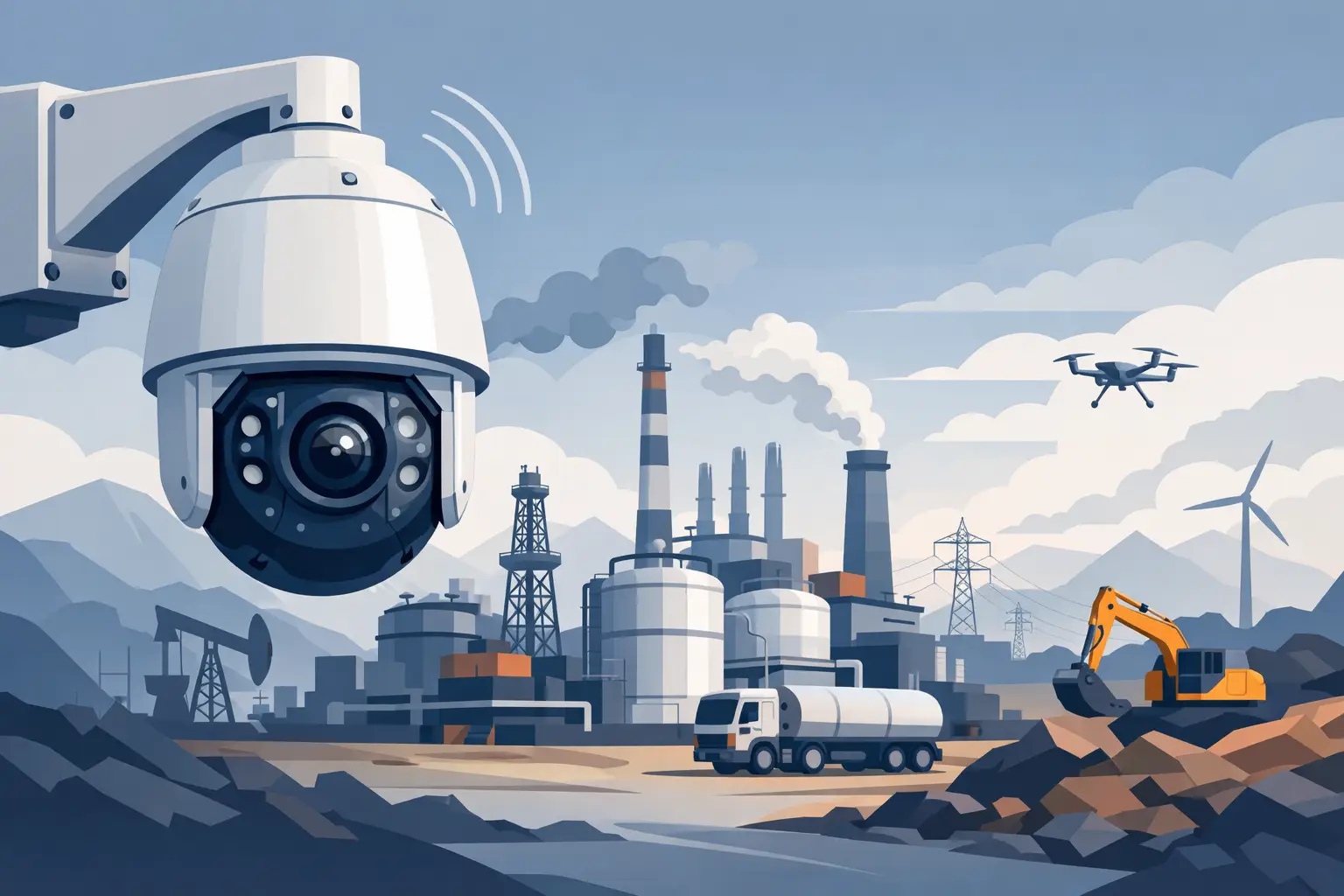
A camera that performs well in a warehouse can fail fast on a refinery rack, offshore deck, or power generation site. That is why any serious industrial PTZ camera review has to go beyond image quality and look hard at housing integrity, environmental ratings, control reliability, and long-range visibility under real operating pressure.
For procurement teams and operations managers, the wrong PTZ choice usually shows up later as maintenance cost, blind spots, network friction, or poor evidence capture when an incident occurs. The right one does more than pan and zoom. It extends site awareness, supports remote decision-making, and reduces the need to send people into exposed areas just to verify conditions.
What an industrial PTZ camera review should actually assess
A standard camera comparison often spends too much time on resolution and too little on survivability. In industrial security, that balance is backward. A 4K image means very little if the unit cannot tolerate salt spray, hydrocarbon exposure, vibration, high wind, washdowns, or thermal cycling.
A useful industrial PTZ camera review starts with the operating environment. On offshore platforms, corrosion resistance and sealed housings matter immediately. In oil and gas processing, hazardous area requirements may define the shortlist before optical performance is even discussed. In marine installations, constant movement, moisture, and horizon glare can expose weak stabilization and poor enclosure design. At power stations and chemical sites, uptime and integration with the existing network often carry more weight than headline specs.
That is why buyers should treat PTZ evaluation as a system decision, not a camera-only decision. You are not just buying motion control and zoom. You are buying coverage efficiency, operator usability, and long-term service economics.
Core performance factors in an industrial PTZ camera review
Housing and environmental durability
This is where industrial models separate themselves from commercial-grade units. Look for strong ingress protection, corrosion-resistant materials, and temperature ranges that match the site instead of marketing claims. Stainless steel housings, marine-grade finishes, pressurized enclosures in some applications, and stable seals all deserve attention.
If the site faces salt air, heavy rain, dust loading, or chemical washdown, durability is not a premium feature. It is the baseline. A lower-cost PTZ can become the expensive option if service intervals are frequent or replacement requires shutdown coordination and specialist access.
Optical range and image usefulness
Zoom numbers are easy to advertise and easy to misuse. A long optical zoom helps, but the actual question is whether operators can identify activity, inspect equipment zones, or confirm an event from the required distance. Lens quality, low-light handling, focus speed, image stabilization, and sensor performance all affect usable detail.
For perimeter monitoring, berth observation, flare stack viewing, or deck surveillance, the camera must hold a clean image while moving and when fully zoomed. If the picture softens badly at range or struggles in fog, glare, or mixed lighting, the spec sheet is doing more work than the camera.
Pan, tilt, and preset accuracy
A PTZ is only as effective as its repeatability. In industrial operations, presets are not a convenience. They are part of the response process. Operators need the camera to return to specific valves, loading points, gangways, exclusion zones, or machinery lines without drift.
Look at patrol reliability, positioning accuracy, and motor responsiveness. Fast movement is useful, but control precision matters more. A camera that overshoots, hesitates, or loses preset confidence becomes frustrating in live operations and weaker in incident review.
Low-light and night performance
Many industrial incidents do not happen in ideal daylight. Shift work, poor weather, marine darkness, and low-illumination perimeter areas are standard conditions. Good PTZ performance at night depends on more than infrared range. Sensor sensitivity, noise handling, exposure balance, and the ability to manage bright point sources all matter.
At ports, offshore assets, and large process sites, scene contrast can be harsh. Floodlights, reflections, and dark operating zones can all sit in one frame. The better camera manages that without washing out key details.
Network compatibility and remote operation
A PTZ camera has to fit the surveillance infrastructure already in place. That includes video management compatibility, ONVIF support where required, compression efficiency, latency performance, and remote control responsiveness over the available network.
For marine and remote energy installations, bandwidth is often limited or shared with other operational traffic. In those cases, efficient streaming and stable remote access are not technical nice-to-haves. They directly affect whether the camera can be used confidently from a control room, vessel bridge, or remote operations center.
Where industrial PTZ cameras earn their value
In oil and gas, PTZ cameras are often selected for wide-area oversight, tank farm monitoring, flare observation, loading areas, and perimeter security. Their advantage is coverage flexibility. One properly specified PTZ can monitor multiple zones that would otherwise need several fixed cameras, especially where access is difficult or hazardous.
In marine operations, PTZ systems support deck activity monitoring, berth awareness, vessel approach observation, and machinery-space oversight where a movable view adds clear operational value. The key here is environmental hardening and dependable remote control. Saltwater exposure quickly punishes weak construction.
At power stations and industrial plants, PTZ cameras help supervisory teams verify alarms, assess restricted zones, and follow activity across broad infrastructure. The labor-saving value is real. When operators can remotely inspect an area before dispatching personnel, decision speed improves and unnecessary exposure drops.
Common buying mistakes
The first mistake is buying by resolution alone. Higher resolution can help, but if the site needs thermal stability, corrosion resistance, or hazardous area compliance, those requirements come first.
The second is underestimating installation conditions. Mounting height, vibration, cable paths, wind load, and cleaning access all affect long-term performance. A strong PTZ camera poorly installed will still disappoint.
The third is ignoring control workflow. If the operators cannot quickly access presets, manage tours, or review footage smoothly, the camera may be technically capable but commercially inefficient. Ease of operation matters because security teams and operations staff need speed, not menu friction.
The fourth is treating all industrial sites the same. A coastal terminal, a refinery, and a power station may all need PTZ surveillance, but the right specification changes with atmosphere, risk profile, and monitoring distance.
How to compare industrial PTZ models with confidence
Start with the environment, then move to the task. Define what the camera must survive and what it must let your team see. That narrows the field faster than browsing general product catalogs.
Next, review the control and recording requirements. Ask how the camera will be used in daily operations, not just in emergencies. Will it need constant patrol tours, manual operator control, long-range inspection, alarm-linked presets, or remote access from multiple sites? The right answer shapes the right model.
Then look at service life economics. Industrial buyers know that capital price is only part of the picture. Maintenance access, replacement frequency, network fit, and downtime risk can outweigh the initial difference between mid-range and top-of-the-line offers.
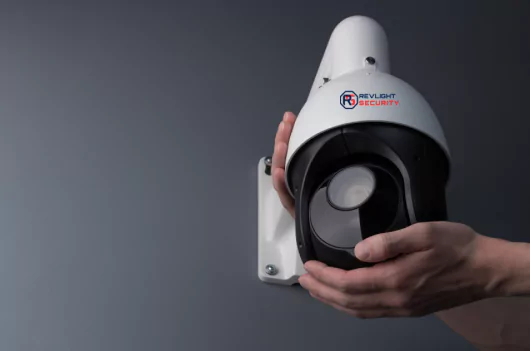
This is also where working with a specialist surveillance supplier pays off. A provider with experience in oil and gas, marine, and energy environments can identify the practical fit faster and help avoid overbuying in one area while underbuying in another. Revlight Security operates in exactly that space, where buyers need dependable surveillance infrastructure rather than generic camera stock.
The verdict from an industrial PTZ camera review
For harsh sites, the best PTZ camera is rarely the one with the flashiest brochure. It is the one that keeps performing after months of vibration, weather exposure, remote use, and demanding operator expectations. Strong optics matter. Stronger still are environmental resilience, preset accuracy, network stability, and serviceability.
If your site needs evidence-grade visibility, flexible coverage, and fewer blind spots across difficult operating zones, an industrial PTZ is often a smart investment. But the model has to match the hazard level, the viewing distance, and the network reality on site. Buy for the environment first, the application second, and the headline specs third. That is how security infrastructure stays productive long after installation day.
🛡️ Secure Your Home or Business Today
Protect your home, office, shop, or business with reliable CCTV security cameras. Explore our range of CCTV cameras and find the right security solution for your needs.
Explore CCTV Cameras ✉️ Email Us



 Singapore :
+65-6708-9302
Singapore :
+65-6708-9302