
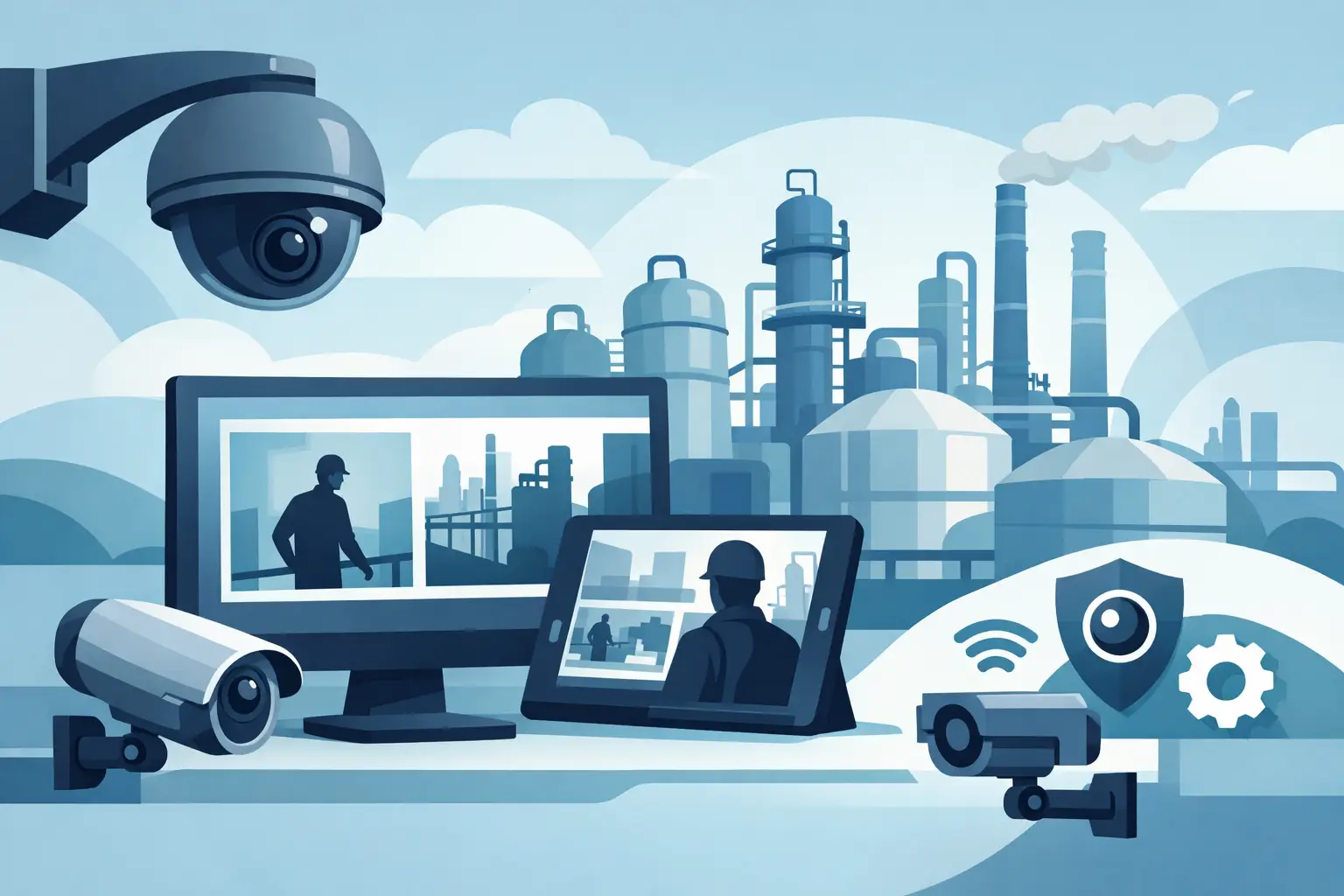
A camera that performs well in a warehouse can fail quickly in a chemical unit. Corrosive vapors, washdown routines, classified zones, temperature swings, and long operating hours change the buying criteria fast. That is why camera systems for chemical plants have to be specified as industrial assets, not treated like standard commercial surveillance.
For procurement teams and plant operators, the real question is not whether cameras are useful. It is which system will keep delivering usable images, reliable recording, and remote visibility after months of exposure to harsh conditions. A low upfront price means very little if the housings pit, the lenses fog, or the network drops when operations need footage most.
What chemical plants actually need from camera systems
In a chemical facility, surveillance is tied directly to operational control, site security, and incident response. Cameras are often expected to do more than capture perimeter activity. They support tank farm oversight, loading bay verification, flare and process area visibility, contractor monitoring, and post-event review.
That changes the specification. Image quality still matters, but survivability matters just as much. A camera that offers sharp video on paper but cannot tolerate chemical exposure, moisture ingress, or hazardous-area requirements is the wrong purchase. The best service provider in this market understands that the enclosure, mounting method, network path, and recording architecture are part of the system, not extras.
Plants also need systems that fit the way industrial sites operate. Some sites prioritize central control room viewing with 24/7 recording. Others need remote access across multiple production areas or integration with detection and alarm workflows. It depends on the process risk, site layout, and compliance expectations.
Camera systems for chemical plants by application
There is no single format that suits every plant zone. A blending area, a solvent storage yard, and a truck loading station can each demand different camera types and support equipment.
Process area monitoring
In process zones, operators usually need stable live video with enough detail to verify movement, status, and abnormal conditions. Fixed cameras are often preferred where the view needs to stay consistent for routine checks. In larger units, pan-tilt-zoom coverage may help operators inspect distant valves, structures, or access routes without sending personnel immediately.
The trade-off is straightforward. Fixed cameras are simpler and often easier to protect. PTZ models add flexibility, but they also introduce moving parts and require more careful maintenance planning in harsh environments.
Tank farms and storage zones
Tank farms need broad visibility, especially around access points, bund walls, transfer lines, and high-value storage assets. Glare, darkness, and weather can reduce image usability, so low-light performance and infrared capability often become important. In some facilities, longer viewing distances push buyers toward specialist lenses and elevated mounting positions.
This is also where corrosion resistance becomes a major buying factor. Salt, chemicals, and constant exposure can shorten the life of standard housings quickly.
Loading bays and transfer stations
These areas benefit from clear, reviewable footage. Operators may need to verify hose connections, vehicle movement, personnel presence, and timing around product transfer. Recording quality matters because incidents in these zones often require playback and investigation.
A practical system here needs dependable frame capture, solid storage retention, and network performance that does not choke during busy operating periods.
Perimeter and access control
Chemical plants still need traditional site security. Gates, fences, entry points, and parking or staging areas require detection and visual verification. This is where camera placement, analytics, and night performance have to work together.
The mistake many buyers make is treating perimeter coverage as separate from the plant network. In practice, it is better when perimeter surveillance and operational views can be reviewed within the same overall platform.
Hazardous area ratings are not optional
One of the biggest specification mistakes in this sector is underestimating hazardous area requirements. If a camera is going into a classified location, it must be suitable for that environment. That includes the camera body, enclosure, cabling approach, and associated accessories.
This is not just a technical checkbox. It affects procurement, installation cost, maintenance access, and long-term asset life. Explosion-protected and hazardous-area certified equipment usually carries a higher purchase price, but the alternative is unacceptable risk and possible noncompliance.
For buyers comparing options, the right conversation is not simply about camera count or resolution. It is about where each camera will be deployed, what substances are present, how the zone is classified, and what approvals are required. A supplier with real industrial experience will push those questions early because they directly affect system suitability.
Materials, housings, and durability matter more than brochure specs
Chemical plants are hard on equipment. Stainless steel housings, anti-corrosion finishes, sealed connectors, and environmental protection ratings are not premium extras in this market. They are part of the baseline for dependable performance.
Lens protection also deserves attention. Condensation, chemical film, dust, and repeated cleaning can all degrade image quality over time. In some installations, wipers, heaters, blowers, or pressurized enclosures make sense. In others, a simpler sealed format is more cost-effective. It depends on the site conditions and maintenance schedule.
Temperature range is another point buyers should review carefully. A system mounted near process heat or exposed to extreme outdoor weather needs thermal stability. Equipment that performs well in mild conditions may not hold up near reactors, steam lines, or open yards in peak summer and winter cycles.
Network design and recording are where many projects go wrong
A strong camera spec can still lead to poor results if the network and recording side is weak. Chemical plants often have large footprints, legacy infrastructure, and strict cybersecurity requirements. That means video transport and storage have to be planned with the same discipline as the camera hardware.
Bandwidth matters, especially when multiple high-resolution streams are running continuously. So does redundancy. If one network segment fails, what footage is lost and for how long? If remote access is required, who gets it and under what controls? These are operational questions, not just IT questions.
Recording architecture should match the value of the footage. Some sites need long retention periods for investigations or compliance review. Others can work with shorter storage windows but need faster playback and simpler export. There is no universal answer, but there is a wrong one: under-sizing storage to hit a budget target and discovering later that footage is overwritten too quickly.
What buyers should compare before approving a system
When procurement teams review camera systems for chemical plants, headline specs can be misleading. Resolution, zoom range, and price are easy to compare, but they do not tell the whole story.
A stronger comparison looks at hazardous-area suitability, housing material, ingress protection, operating temperature, cleaning demands, mounting options, recording compatibility, and support availability. It also helps to ask how easy the system will be to service during planned shutdowns. A camera that is difficult to access or expensive to re-certify can become a hidden long-term cost.
Commercially, total ownership cost is usually more important than unit price. A top-of-the-line offer earns its value when it reduces replacement cycles, avoids unplanned outages, and gives operators video they can actually use during incidents.
Integration can improve security and operations
The most effective systems do not sit in isolation. In many plants, cameras work best when paired with alarms, detection equipment, access control, and central monitoring workflows. Visual verification can speed up response times and reduce unnecessary callouts. It can also help control rooms confirm whether an alarm event is a process issue, a maintenance activity, or a genuine security concern.
For industrial buyers, that is where the return becomes clearer. Good surveillance is not only about watching. It is about making decisions faster, documenting events better, and limiting uncertainty across high-risk areas.
Revlight Security operates in exactly this part of the market, where industrial-grade surveillance must stand up to difficult environments and commercial scrutiny at the same time.
Choosing a supplier for camera systems for chemical plants
A supplier should be able to discuss certification, environmental protection, system architecture, and deployment realities with confidence. If the conversation stays too focused on generic features, that is a warning sign. Chemical sites need engineering-backed recommendations, not repackaged commercial security language.
The right partner will ask about the process environment, site drawings, hazardous zones, viewing objectives, maintenance limitations, and network constraints before recommending equipment. That approach protects the buyer from overspending in the wrong areas and under-specifying the critical ones.
A plant camera system should support uptime, safety, and asset protection for years, not just pass a purchasing review this quarter. When the environment is harsh and the operational stakes are high, dependable performance is the feature that matters most.
🛡️ Secure Your Home or Business Today
Protect your home, office, shop, or business with reliable CCTV security cameras. Explore our range of CCTV cameras and find the right security solution for your needs.
Explore CCTV Cameras ✉️ Email Us



 Singapore :
+65-6708-9302
Singapore :
+65-6708-9302