
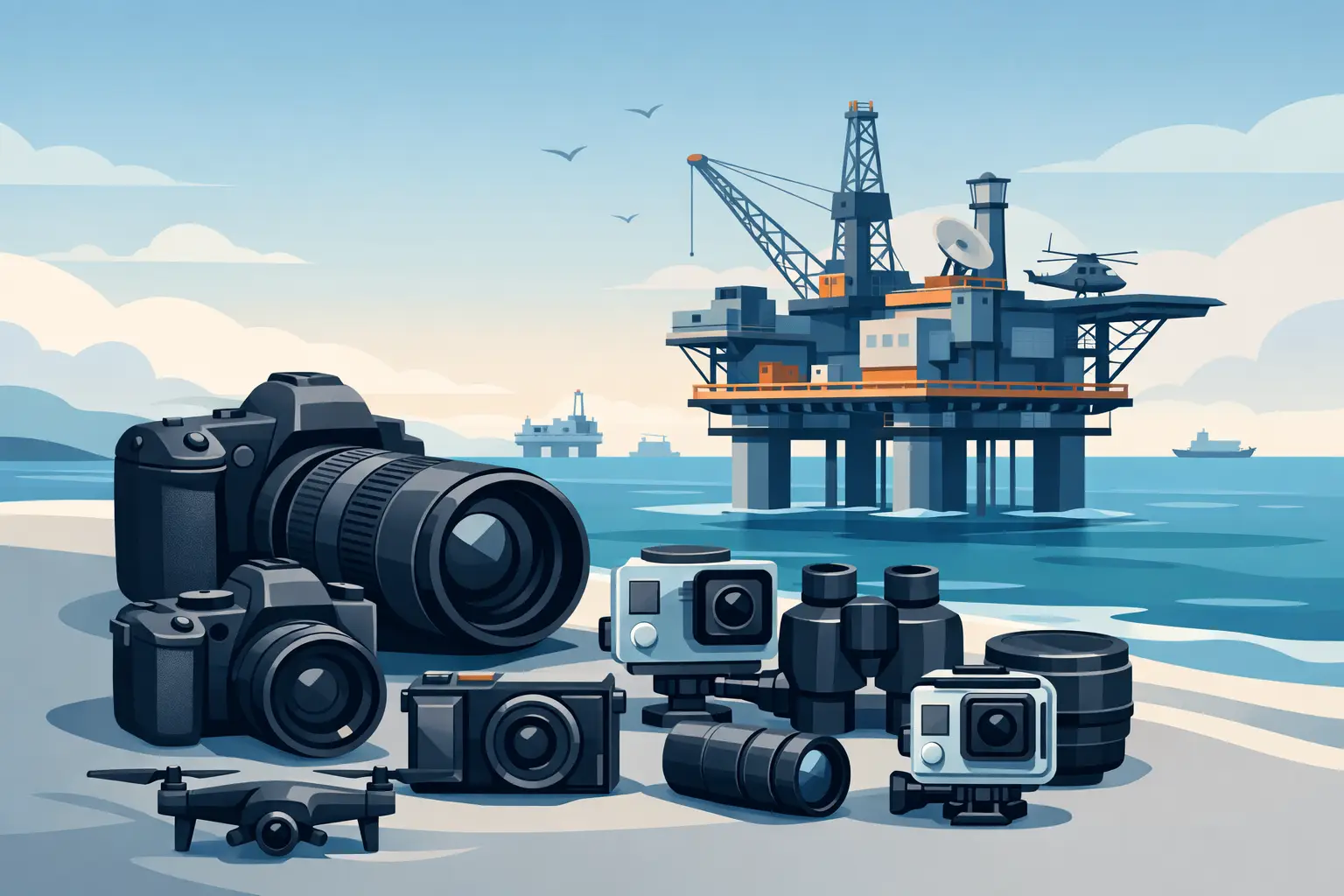
Offshore failures are expensive, but blind spots are worse. On a drilling platform or production asset, the best cameras for offshore rigs are not the ones with the biggest spec sheet. They are the ones that keep delivering clear video in salt spray, explosive atmospheres, heavy vibration, and low-visibility conditions without creating maintenance headaches for the operations team.
That is why offshore camera selection should start with risk, compliance, and uptime – not retail-style feature chasing. Procurement teams and operators need surveillance hardware that holds its rating, integrates with the wider network, supports remote viewing, and keeps recording when weather and operating conditions turn hostile.
What makes the best cameras for offshore rigs different
An offshore rig is one of the harshest deployment environments for any surveillance system. Corrosion, wind-driven rain, hydrocarbon vapor, structural movement, and wide temperature swings quickly expose weak housings, poor seals, and low-grade connectors. A camera that performs well onshore can fail early offshore if it was not engineered for marine and hazardous-area use.
The best fit usually starts with certified construction. For many offshore zones, that means explosion-proof or hazardous-area camera enclosures designed for operation where flammable gases may be present. The housing matters as much as the sensor. If ingress protection, marine-grade materials, cable glands, and mounting hardware are not specified correctly, even a strong imaging core becomes a short-lived investment.
Image performance also needs to match the task. A helideck, flare boom, perimeter walkway, loading point, machinery area, and splash zone all create different viewing demands. Some positions require wide-area situational awareness. Others need close inspection, optical zoom, or stable imaging in low light. There is no single camera type that solves every offshore problem.
The 8 best cameras for offshore rigs by application
1. Explosion-proof fixed bullet cameras
For perimeter coverage, access routes, deck monitoring, and fixed hazard areas, explosion-proof bullet cameras are often the most commercially efficient choice. They are straightforward to position, easier to standardize across multiple zones, and well suited to continuous recording.
The strongest options combine hazardous-area certification, high IP ratings, stainless steel or corrosion-resistant alloy construction, infrared support where permitted, and enough resolution to identify personnel, vessel movement, and operational activity. If your goal is dependable coverage with predictable installation costs, this category usually gives the best return.
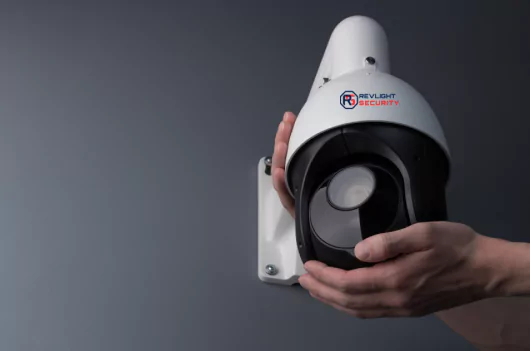
2. Explosion-proof PTZ cameras
Where one camera must cover a larger operational footprint, PTZ units remain a top-tier option. Offshore operators use them for crane observation, flare stack monitoring, berth views, and general situational oversight from elevated mounting points.
The trade-off is simple. PTZ cameras reduce the number of fixed positions required, but they add moving parts and often demand more deliberate maintenance planning. In exposed marine conditions, the quality of the pan-tilt mechanism, heater system, wiper option, and enclosure engineering has a direct impact on lifecycle cost.
3. Thermal cameras for offshore detection
Thermal imaging is one of the most valuable upgrades for offshore assets where visibility can change fast. Fog, darkness, glare, and smoke can limit standard visible-light cameras, while thermal units continue detecting heat signatures from personnel, vessels, and equipment anomalies.
They are especially effective for perimeter security, overboard detection, and early anomaly spotting around critical infrastructure. Thermal does not replace conventional imaging because identification detail is different, but as part of a layered surveillance system, it raises security performance considerably.
4. Dual-spectrum cameras
If budget allows, dual-spectrum cameras offer one of the most practical offshore combinations. These units pair visible imaging with thermal detection, giving operators verification and awareness in a single platform.
For many buyers, this category represents the best balance between operational intelligence and infrastructure efficiency. Instead of installing separate devices for thermal and visual coverage in every critical position, a dual-spectrum unit can reduce clutter and simplify monitoring workflows.
5. Low-light network dome cameras for sheltered zones
Not every part of an offshore installation faces the same exposure level. In partially sheltered process areas, interior technical spaces, and protected corridors, high-performance network dome cameras can be a strong fit when hazardous-area requirements are lower or managed by zone classification.
The priority here is not fashion or compact design. It is stable low-light performance, clean network integration, and reliable recording. Domes are often chosen where a more discreet profile is helpful and where full explosion-proof construction is not necessary for the designated area.
6. Underwater inspection cameras for subsea and hull views
For offshore platforms and marine support environments, underwater cameras serve a completely different but equally important role. They support structural inspection, splash-zone observation, subsea awareness, and hull or mooring assessment where direct visual access is limited.
These systems need pressure-rated construction, stable lighting performance, and transmission reliability over distance. A low-cost unit that looks acceptable in calm shallow water will not deliver offshore. Buyers should pay close attention to cable quality, connector sealing, and image stability in turbid conditions.
7. Gas and flame imaging cameras
Strictly speaking, these are not standard surveillance cameras, but on offshore assets they can be among the most valuable visual detection tools on site. Gas leak detection cameras and flame monitoring systems add a layer of early warning that conventional CCTV cannot provide.
For operators managing hydrocarbon risk, these systems support safety response, environmental control, and incident verification. They are typically deployed as part of a wider detection architecture rather than as standalone video devices, but they deserve a place in any serious offshore camera discussion.
8. Ruggedized marine-grade fixed cameras with edge analytics
Where operators want dependable imaging plus smarter event handling, ruggedized network cameras with edge analytics can improve response times without overloading the control room. Video analytics for intrusion zones, line crossing, occupancy patterns, or object presence can reduce manual monitoring demands.
That said, offshore analytics only work when the camera platform is stable enough to deal with movement, weather noise, and changing light. Analytics are useful, but they should never be prioritized over environmental durability and recording integrity.
How to choose the best cameras for offshore rigs
The right buying decision starts with zone classification. If the installation point is in a hazardous area, certification is not optional. Any shortlist should first be filtered by the relevant explosion-proof or hazardous-area approvals required by your engineering and compliance teams.
Next comes environmental survival. Look for corrosion-resistant housings, strong ingress ratings, marine-grade mounting components, vibration tolerance, and wide operating temperature capability. This is where many cheaper systems fall apart. A lower upfront price often becomes a higher service cost once failures begin offshore.
Then assess image purpose. If the camera must support identification, sensor resolution, lens selection, and mounting distance matter more than headline marketing. If the task is detection across a long perimeter or over water, thermal or dual-spectrum may outperform standard visible-light units. If the goal is operational process monitoring, frame stability and remote viewing reliability may be more important than extreme zoom.
Integration should also be treated as a commercial issue, not just a technical one. The best offshore camera is easier to justify when it works with your NVR, VMS, existing network topology, and remote access plan. Recording, playback, alarm handling, and bandwidth management all need to be considered early, especially for offshore assets where connectivity may be constrained.
Common buying mistakes offshore operators should avoid
One of the biggest mistakes is specifying cameras by resolution alone. A higher-resolution sensor in the wrong enclosure or with the wrong lens does not create better offshore surveillance. It only creates a more expensive mismatch.
Another common issue is underestimating maintenance access. Some camera positions look ideal on a drawing but become costly once technicians need safe access in poor weather or during restricted operating windows. A slightly higher-priced camera with better reliability can be the cheaper option over the life of the system.
There is also the temptation to over-centralize coverage with too few PTZ units. PTZ cameras are powerful, but fixed cameras still matter because they provide constant scene capture. If an operator is using the PTZ to investigate one event, it is no longer watching the rest of the area.
Why commercial buyers should think in systems, not single units
Offshore surveillance works best when cameras are specified as part of a wider security and monitoring system. That means matching cameras with recording hardware, marine network transmission, remote access requirements, and where needed, specialist detection tools such as thermal, gas, and underwater imaging.
For serious offshore operators, the value is not just in buying a camera. It is in buying coverage that remains online, captures usable evidence, supports safer operations, and reduces unnecessary service visits. That is where top-of-the-line offers earn their place – not by looking impressive on paper, but by protecting uptime in the field.
A smart offshore camera purchase should leave your team with fewer blind spots, fewer callouts, and a clearer path to control when conditions get rough.
🛡️ Secure Your Home or Business Today
Protect your home, office, shop, or business with reliable CCTV security cameras. Explore our range of CCTV cameras and find the right security solution for your needs.
Explore CCTV Cameras ✉️ Email Us

 Singapore :
+65-6708-9302
Singapore :
+65-6708-9302