

A missed gas release in a refinery rarely stays a small problem. It becomes downtime, evacuation, damaged equipment, production loss, and in the worst cases, fire or fatal exposure. This refinery gas detection guide is written for buyers and operators who need systems that work under pressure, not just systems that look good on a specification sheet.
Refineries are difficult environments for detection because hazards do not present in one neat, predictable way. Gas can collect in low points, drift with process ventilation, disperse outdoors, or escape intermittently through valves, seals, flanges, pumps, compressors, tanks, and loading areas. A practical detection strategy has to account for toxic exposure, combustible risk, and the operational reality that every unit has different priorities.
What a refinery gas detection guide should help you decide
A useful buying and deployment guide should answer three commercial questions fast. First, what gases matter most in your units and process zones? Second, what mix of fixed detection, open-path monitoring, and optical gas imaging gives the best coverage for your risk and budget? Third, how will the system integrate with alarm management, control rooms, and maintenance routines without creating extra operational drag?
That is where many projects go wrong. Teams focus heavily on the detector itself and not enough on placement, environmental interference, calibration planning, communications, and response logic. The best equipment in the wrong location will still leave blind spots. The cheaper system that demands constant intervention can also become more expensive over its life than a higher-grade option built for refinery service.
Start with the gases and the consequence profile
Every refinery has a different hazard map, but most detection plans revolve around combustible hydrocarbons and specific toxic gases tied to process units. Methane is a core concern in many hydrocarbon applications, but it is rarely the only one. Hydrogen sulfide, carbon monoxide, volatile organic compounds, and hydrogen may all require attention depending on process streams, sulfur recovery, reforming, storage, and loading operations.
Combustible detection is generally driven by explosion prevention and rapid leak response. Toxic gas detection is more closely tied to personnel safety, exposure control, and localized alarm escalation. The distinction matters because it affects sensor selection, alarm thresholds, and mounting height. A gas that is lighter than air will not behave like one that pools in trenches or enclosed low areas.
This is also where procurement decisions should stay grounded in site reality. If an area is exposed to high wind, washdown, corrosive atmospheres, vibration, or extreme temperatures, detector durability becomes part of detection performance. Buyers should not separate environmental hardening from sensing capability. In a refinery, those two are linked.
Fixed detectors, open-path systems, and gas imaging
Most refinery sites need more than one detection method. Fixed point detectors remain the backbone for many installations because they provide continuous monitoring at known risk points. They are effective near likely leak sources such as compressors, manifolds, pump skids, and process equipment, especially where the gas behavior is understood and the release area is confined enough for a point detector to respond quickly.
Open-path detection covers a wider line of sight and can be the better option for perimeter coverage, larger process zones, or areas where a gas cloud may travel before reaching a point sensor. It can reduce the number of individual devices required in some layouts, but line-of-sight planning and environmental factors become more critical.
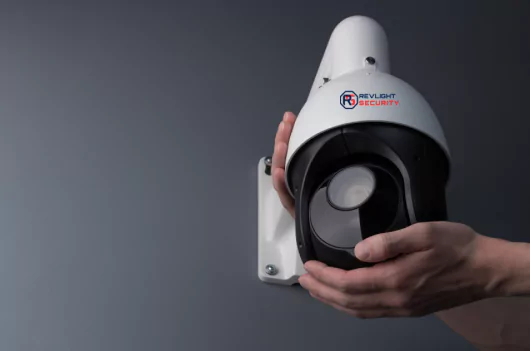
Optical gas imaging adds another layer that many refinery operators now treat as commercially valuable, not optional. A gas leak detection camera can help teams identify emissions that conventional methods may not localize quickly, especially during inspections, maintenance checks, or leak investigation programs. It is not a replacement for fixed life-safety detection, but it is extremely effective for finding fugitive emissions, verifying leak sources, and supporting faster intervention. For operators balancing safety, compliance, and product loss, that matters.
The right answer is often a combined approach. Fixed detectors deliver continuous alarm coverage. Open-path devices strengthen area monitoring where appropriate. Imaging supports inspection, verification, and emissions management. A single technology rarely gives the best return across an entire refinery.
Sensor choice is technical, but the buying decision is commercial
Catalytic bead, infrared, electrochemical, ultrasonic, and other sensing methods all have a place. The wrong move is choosing based on unit cost alone. Buyers should look at false alarm resistance, expected life, maintenance demand, poisoning risk, response time, and performance in the actual atmosphere where the detector will operate.
Infrared sensing is often attractive for hydrocarbon detection because it can perform well in oxygen-deficient environments and is not vulnerable to the same poisoning issues seen with some catalytic technologies. Catalytic sensors may still be suitable in certain applications, but they require closer consideration of contaminants and maintenance practices. Electrochemical sensors are widely used for toxic gas detection, though their service life and environmental sensitivity must be planned for, not assumed away.
Ultrasonic gas leak detection can be valuable in high-pressure outdoor applications where gas may disperse too quickly for concentration-based sensors to react early enough. That does not mean it belongs everywhere. It works best when the leak scenario, background noise, and installation geometry are properly evaluated.
For commercial buyers, the key question is simple. What sensing mix gives the earliest dependable warning with the lowest long-term cost of ownership for that specific unit? That is the decision framework that protects both safety and budget.
Placement determines whether the system succeeds
A refinery gas detection guide without placement discipline is incomplete. Detector location should be based on leak source analysis, gas dispersion expectations, ventilation patterns, congestion, elevation, and maintenance access. Mounting a sensor where it is easy to install but poorly positioned for gas behavior is a common and expensive mistake.
Heavy gases may accumulate lower. Light gases may rise. Outdoor wind can dilute or redirect a plume. Structures can trap gas in unexpected pockets. Process heat can alter dispersion. In enclosed or partially enclosed areas, air movement from fans and louvers can delay or accelerate sensor response depending on where the detector is mounted.
Coverage should also reflect operational consequence. Areas near ignition sources, occupied work zones, shutdown-critical equipment, and product transfer points usually justify tighter detection logic. Not every zone needs the same density, and over-instrumenting without purpose does not automatically improve protection. It can increase nuisance events and maintenance load if the design lacks discipline.
Alarms, integration, and response logic
Detection only creates value when it triggers a usable response. A refinery should define what happens at each alarm level, who receives the alert, and how the data moves into site operations. Local beacons and horns matter, but so do control room visibility, event logging, remote notifications, and integration with shutdown or ventilation actions where required.
This is one area where better infrastructure pays for itself. Operators benefit when detectors, video, network communication, and monitoring layers work together instead of existing as isolated systems. If a gas alarm can be verified visually, escalated quickly, and tied to a clear response workflow, the result is faster decision-making and less confusion during an active event.
For larger sites, centralized management also helps with trend analysis. Repeated low-level alarms in the same area can point to developing equipment issues before they become major incidents. That has direct maintenance value and direct commercial value.
Maintenance is part of the design, not an afterthought
Refinery operators know that every detection system looks strong on day one. The real test is whether it remains accurate and available after months of heat, vibration, contamination, and weather exposure. Calibration schedules, bump testing, sensor replacement intervals, and fault diagnostics should be reviewed before purchase, not after commissioning.
A lower purchase price can be misleading if the system demands constant service visits or frequent component replacement. On the other hand, premium equipment only justifies its price if supportability, spare strategy, and field reliability are clearly proven. It depends on site staffing, shutdown windows, and how critical continuous uptime is in each area.
This is where experienced suppliers stand apart. The strongest providers do not just sell detectors. They help buyers align device choice, system architecture, and maintenance demands with real operating conditions. That reduces lifecycle cost and avoids underperforming deployments.
Refinery gas detection guide for procurement teams
Procurement should press beyond brochure claims. Ask what gases the system is optimized to detect, what environmental limits apply, what certifications are relevant, how the devices communicate, and what the maintenance burden looks like over three to five years. Ask how the solution handles hazardous area requirements, alarm integration, and expansion as process units change.
It is also worth comparing capital cost against avoided loss. Faster leak detection can reduce product escape, shorten incident duration, protect personnel, support environmental performance, and prevent shutdown escalation. Those outcomes are easier to defend internally than a spec sheet full of isolated technical numbers.
For many industrial buyers, the best investment is a layered solution built around fixed detection and supported by advanced gas leak imaging where rapid leak identification matters. That approach gives stronger coverage and better operational visibility than relying on a single method alone. Providers such as Revlight Security operate in this space because refinery buyers increasingly want dependable detection tied to practical surveillance and monitoring outcomes, not standalone hardware.
The right system is the one that matches your process hazards, your site conditions, and your response capability without overcomplicating the operation. If a detection plan cannot hold up during a real release, it is not a bargain. It is a liability waiting for the wrong shift.
🛡️ Secure Your Home or Business Today
Protect your home, office, shop, or business with reliable CCTV security cameras. Explore our range of CCTV cameras and find the right security solution for your needs.
Explore CCTV Cameras ✉️ Email Us



 Singapore :
+65-6708-9302
Singapore :
+65-6708-9302