
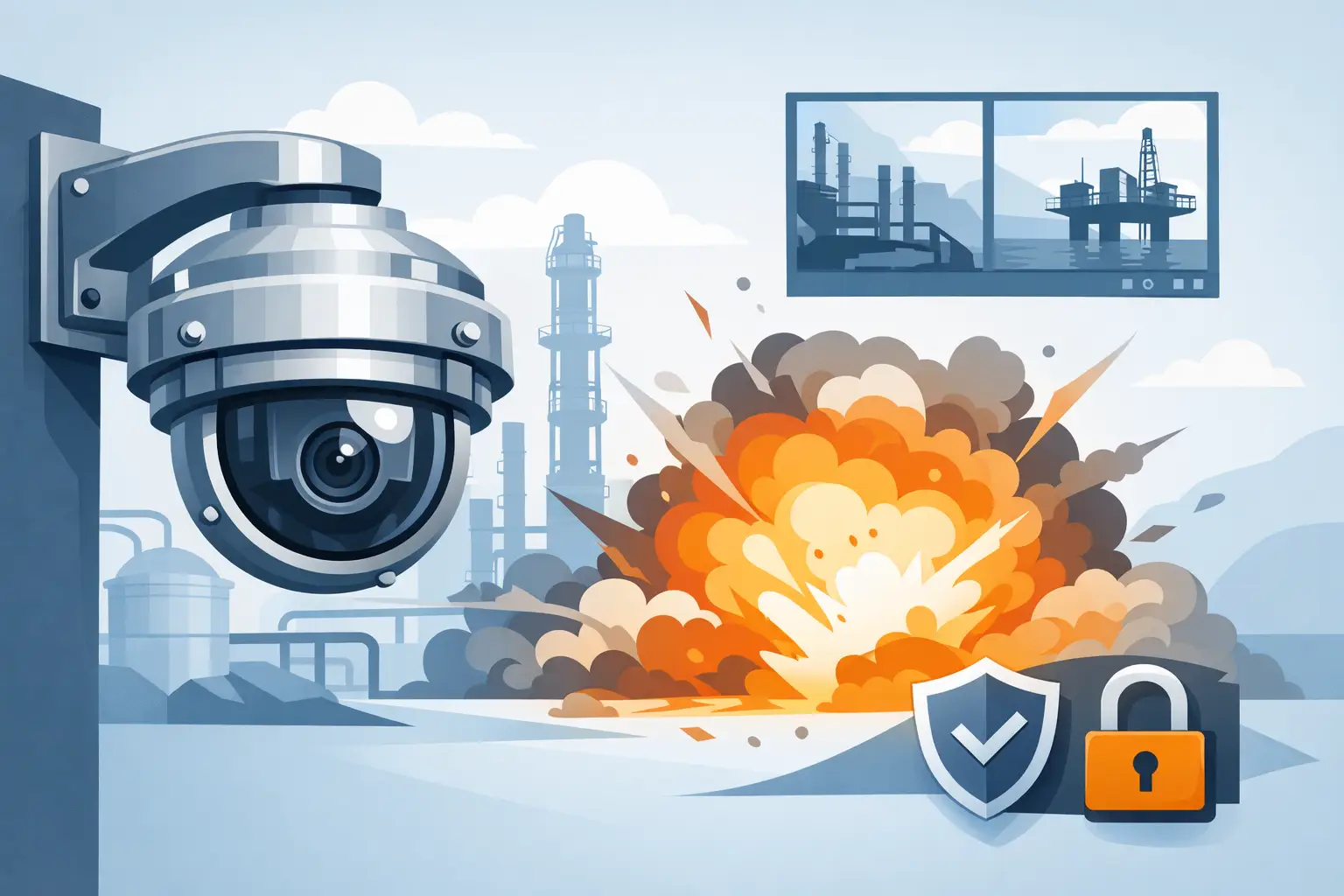
A standard camera can become a liability the moment it enters a hazardous zone. In refineries, offshore platforms, tank farms, chemical plants, and marine engine spaces, ignition risk is not a theoretical issue – it is part of daily operating reality. That is exactly why use explosion proof CCTV is such a practical question for operations leaders, procurement teams, and site engineers responsible for uptime, compliance, and personnel safety.
Why use explosion proof CCTV in hazardous areas
The short answer is simple. You use explosion proof CCTV because standard surveillance equipment is not designed to contain an internal ignition event or prevent hazardous gases, vapors, or dust from being exposed to a spark, hot surface, or electrical fault. In classified environments, that difference matters.
Explosion proof CCTV systems are built with sealed housings and certified construction methods intended for dangerous locations where flammable substances may be present. If a fault occurs inside the camera enclosure, the design is made to contain it. That allows operators to monitor critical areas without introducing unnecessary ignition sources.
For industrial buyers, this is not just about checking a specification box. It is about matching surveillance infrastructure to the actual risk profile of the site. If the area classification requires hazardous-area equipment, using commercial-grade cameras is a false economy. The upfront savings disappear quickly when the result is shutdown exposure, compliance issues, or unacceptable safety risk.
Safety is the first reason, but not the only one
Safety usually starts the conversation, and it should. However, the value of explosion proof CCTV goes much further than hazard containment.
In oil and gas, marine, power generation, and process industries, visibility is a productivity tool as much as a security tool. Operators need eyes on loading points, flare stacks, manifolds, compressor areas, process lines, storage zones, and restricted spaces. Supervisors need real-time confirmation that procedures are being followed. Control rooms need visual verification before dispatching personnel into sensitive areas.
When that visibility comes from equipment rated for the environment, the system becomes part of the site’s operating backbone. It supports security, operations, maintenance, and incident response from one position. That is a stronger investment case than buying cameras purely for perimeter monitoring.
Reducing the need to send personnel into danger
One of the clearest commercial benefits is fewer unnecessary physical inspections. If a camera gives a reliable live view of a hazardous process area, teams can often verify conditions remotely before committing staff. That can mean checking for leaks, observing transfer activity, confirming valve position, monitoring movement around restricted assets, or reviewing alarms before a technician enters the zone.
It does not eliminate fieldwork. It makes fieldwork more informed. In high-risk environments, that distinction is valuable. Better visual data supports safer planning, faster decisions, and less wasted time.
Supporting incident response and accountability
When something goes wrong, recorded video matters. Explosion proof CCTV can help confirm the sequence of events around an alarm, process upset, unauthorized access attempt, spill, or equipment failure. That footage supports internal reviews, contractor accountability, insurance discussions, and procedural improvement.
For sites with multiple contractors and shift teams, this is especially useful. A reliable video record reduces guesswork. It helps operations managers move from assumption to evidence.
Compliance pressure makes camera choice more important
In hazardous industries, buying decisions are rarely based on convenience alone. Equipment selection is tied to regulatory compliance, internal engineering standards, insurer requirements, and client expectations. CCTV is no exception.
If the installation area is classified, the camera system must align with the zone and gas or dust group requirements. That is where explosion proof CCTV earns its place. It is designed for environments where a normal housing, standard cable entry, or non-rated electrical component may not be acceptable.
This is also why product comparison should go beyond image resolution. Buyers should be looking at certification, enclosure material, operating temperature range, corrosion resistance, ingress protection, mounting suitability, and compatibility with the network and recording architecture already in place. A sharp picture is useful. A sharp picture from the wrong enclosure is a procurement mistake.
Not every hazardous area needs the same camera
This is where nuance matters. The answer to why use explosion proof CCTV depends partly on the site and zone classification. Offshore salt exposure, refinery vapor risks, dust-heavy processing areas, and marine vibration conditions do not create identical equipment demands.
Some installations need stainless steel housings for corrosion resistance. Others need extreme temperature tolerance, integrated wipers, thermal imaging support, or long-range optical performance. Some facilities prioritize fixed coverage of a process point. Others need PTZ functionality for active monitoring across larger operational zones.
The best result comes from matching camera design to actual site conditions, not simply choosing the highest-priced model or the broadest marketing claim.
The operational case is stronger than many buyers expect
A common misconception is that explosion proof CCTV is only a safety purchase. In reality, it often has a direct operational return.
First, it improves asset awareness. Critical infrastructure can be observed continuously without exposing staff to avoidable site visits. Second, it strengthens security around high-value equipment, hazardous storage areas, and remote industrial assets. Third, it helps reduce downtime by giving maintenance and control teams immediate visual context when alarms occur.
That visual context matters. An alert without video can trigger delay, overreaction, or unnecessary dispatch. An alert with live hazardous-area coverage lets teams prioritize correctly. In facilities where time, access, and shutdown windows are tightly controlled, that can translate into measurable savings.
Better evidence for remote and multi-site management
Many industrial operators now manage distributed infrastructure across terminals, platforms, substations, vessels, and production sites. Senior teams are not always physically present where decisions need to be made. Explosion proof CCTV helps close that gap.
With the right network setup, authorized personnel can review live and recorded footage remotely, verify field conditions, and support local teams faster. For procurement managers and directors, this adds another layer of value. The camera is not just watching an area. It is extending decision-making capability across the operation.
Why standard CCTV is not a realistic substitute
At first glance, some buyers may ask whether a standard industrial camera inside a protective housing can do the job. In most hazardous applications, that is the wrong approach.
Explosion proof CCTV is engineered as a complete solution for dangerous environments. It is not simply regular surveillance hardware with a tougher outer shell. The housing design, seals, cable entries, materials, and certifications are all part of the safety concept. Trying to approximate that with non-rated equipment introduces risk and usually creates problems during inspection, installation approval, or insurance review.
There is also the issue of durability. Hazardous sites often involve corrosive atmospheres, vibration, washdown exposure, heat, and heavy operational wear. A camera that survives in a warehouse may fail quickly on a platform, in a refinery unit, or near aggressive chemical processes. Failure in a hard-to-access zone is expensive. Replacement logistics, permits, labor, and downtime can outweigh any initial cost savings.
What buyers should look for before specifying a system
If you are evaluating systems, focus on fit rather than broad claims. Certification for the required hazardous area is non-negotiable. After that, image quality, low-light performance, thermal options, network integration, remote viewing capability, and recording compatibility become important.
The mechanical specification matters just as much. Housing material, mounting type, heater or blower support where needed, and resistance to marine or chemical corrosion all influence life-cycle value. Procurement teams should also ask practical questions about lead time, technical support, spare parts, and whether the supplier understands the operating environment rather than just the camera catalog.
A serious supplier should be able to discuss deployment in offshore, refinery, power, and marine contexts with confidence. That level of product knowledge usually saves time later in the project.
Why use explosion proof CCTV as a long-term investment
The strongest reason to invest is that it aligns surveillance with the reality of the site. It protects people, supports compliance, strengthens operational visibility, and helps safeguard high-value assets in areas where equipment failure or ignition risk cannot be treated casually.
For hazardous industries, the better question is often not why use explosion proof CCTV, but why risk using anything else. If a camera system is expected to perform in classified environments, it should be built for those environments from the start. That is how you get dependable monitoring, fewer compromises, and a security infrastructure that supports the business instead of creating one more vulnerability.
If you are planning a hazardous-area surveillance upgrade, the smartest next step is to specify for the environment you actually operate in, not the one you wish you had.
🛡️ Secure Your Home or Business Today
Protect your home, office, shop, or business with reliable CCTV security cameras. Explore our range of CCTV cameras and find the right security solution for your needs.
Explore CCTV Cameras ✉️ Email Us



 Singapore :
+65-6708-9302
Singapore :
+65-6708-9302