
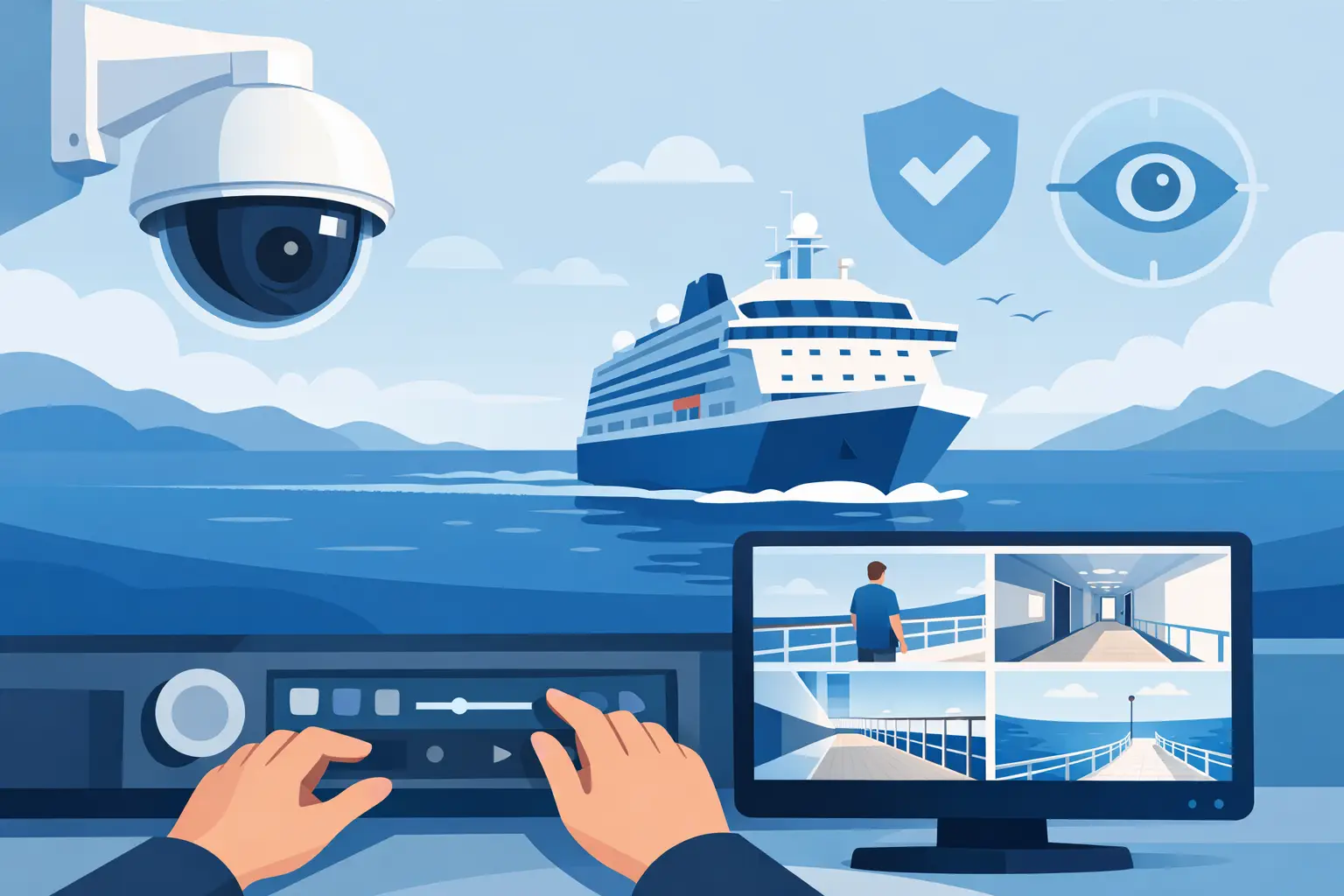
A ship can have cameras on every deck and still miss the footage that matters. That usually happens when the system was built around camera count instead of operational risk. If you are looking at how to improve shipboard video surveillance, the real job is to close visibility gaps, protect uptime, and make recorded video usable when an incident, inspection, or claim lands on your desk.
Marine surveillance is not a standard building security project with a different backdrop. Vessels deal with vibration, salt exposure, glare, darkness, bandwidth limits, changing crew patterns, and mechanical spaces that punish weak hardware fast. A better result comes from treating video surveillance as part of the vessel’s operating infrastructure, not just a compliance add-on.
Start with operational risk, not camera quantity
The fastest way to waste budget is to specify a fixed number of cameras before defining what the system needs to prove, detect, or support. Onboard video has different jobs depending on vessel type and route. A tanker may prioritize manifold operations, restricted zones, and engine room access. A cargo vessel may focus more heavily on deck activity, loading oversight, and perimeter visibility. Passenger operations add crowd management and incident verification.
That is why the first question is not how many cameras to install. It is which events create the highest financial, safety, and legal exposure. Once those are clear, camera locations, image quality, and retention targets become easier to justify to management and procurement.
In practice, most ship operators need the system to support four outcomes: deter unauthorized activity, verify incidents, improve crew oversight in critical zones, and provide evidence that stands up during review. If a proposed upgrade does not strengthen one of those outcomes, it may be extra hardware without much return.
How to improve shipboard video surveillance with better coverage planning
Coverage planning is where strong systems separate from average ones. Too many installations concentrate cameras in obvious public-facing positions while blind spots remain near ladders, access doors, machinery transitions, stern working areas, and cargo interfaces. Those are often the places where disputes and safety failures begin.
A proper coverage plan should account for vessel movement, line of sight obstruction, and changing light conditions across a full operating cycle. A camera that looks excellent at berth may become less useful offshore when vibration increases and weather changes. The same applies to deck washdown, spray, and reflection off wet surfaces.
Place fixed cameras where consistent scene monitoring matters most, and use PTZ coverage selectively for broad situational awareness. PTZ units can add value around open deck zones and perimeter observation, but they should not be treated as a substitute for dedicated fixed coverage in high-risk positions. If the camera must always capture the event, fixed placement is the safer investment.
It also pays to think vertically. Many onboard incidents involve stairwells, hatches, and narrow transition points between operational zones. These spaces are easy to overlook, yet they are ideal for identifying movement direction, access behavior, and event timing.
Focus on the zones that drive claims and investigations
On most commercial vessels, the highest-value surveillance zones include gangways, bridge access points, engine room entries, control spaces, cargo handling areas, pump rooms where permitted, stern and aft work zones, and restricted storage or security-sensitive compartments. For some operators, galley corridors, muster routes, and common crew access points also matter.
The point is not to monitor everything at maximum detail. It is to capture the right places with the right image quality so footage answers operational questions quickly.
Marine-grade hardware is not optional
One of the clearest answers to how to improve shipboard video surveillance is also one of the most overlooked: stop using hardware that was never built for marine conditions. Salt, humidity, vibration, temperature swings, and constant motion shorten the life of weak enclosures, unstable mounts, and low-grade connectors.
Marine-grade cameras, housings, and network components cost more upfront, but they usually reduce replacement frequency, service calls, and image degradation. That matters commercially. A failed camera in a refinery is a problem. A failed camera onboard a vessel at sea, where access to parts and technicians is limited, becomes a much more expensive problem.
Look closely at corrosion resistance, ingress protection, heater and blower support where needed, anti-vibration mounting, and lens protection against spray and residue. Hardware selection should also reflect hazardous area requirements if the vessel or adjacent operating environment demands it. There is no shortcut here. Environmental mismatch is one of the main reasons surveillance systems disappoint after deployment.
Improve recording quality without crushing storage
Higher resolution sounds like an automatic win, but more pixels are only useful if the network, recorder, and retention design can support them. Onboard systems often need to balance image quality with storage limits and satellite or remote access constraints.
A better approach is to assign quality based on operational importance. Critical identification points may justify higher resolution and frame rate. Lower-risk overview scenes usually do not. Good system design is about controlled prioritization, not maximum settings everywhere.
Compression settings, motion-based recording, scheduled profiles, and event-triggered capture can all improve storage efficiency. So can keeping a careful eye on how long footage actually needs to be retained. Some operators overbuild retention without a clear policy, then pay for storage they do not truly need. Others underbuild and lose evidence before an issue is reported. The right balance depends on route, vessel type, insurer expectations, and incident reporting patterns.
Make playback fast enough to be useful
Footage that takes too long to retrieve loses value. During internal investigations or port-side reviews, operators need quick playback, reliable timestamps, and straightforward export. That means the recorder, user interface, and file management setup deserve as much attention as the cameras.
If the system is difficult to search, crew will use it less and investigations will take longer. That raises labor cost and weakens confidence in the investment.
Strengthen the shipboard network behind the cameras
Even good cameras underperform on a weak network. Marine video systems need stable switching, clean power, protected cabling, and a design that accounts for distance, interference, and future expansion. Dropped streams and intermittent outages are often network problems first, not camera problems.
Segmenting surveillance traffic from other onboard data can improve reliability. So can using industrial and marine-rated networking equipment that tolerates the same environmental stress as the cameras themselves. Power over Ethernet can simplify deployment, but only when power budgets are calculated correctly and cable runs are managed with the vessel layout in mind.
Remote viewing is another area where poor planning shows up. Many operators want bridge access, control room access, and selective shore-side visibility. That is achievable, but only if permissions, bandwidth use, and cybersecurity controls are planned from the start. Remote access should support operations, not create another weak point.
Build for maintenance, not just installation
A surveillance system that looks good on handover day can still become unreliable within months if maintenance has not been designed into the project. Lens cleaning access, spare capacity, replacement planning, and health monitoring all matter more onboard than they do in many land-based sites.
Choose equipment layouts that technicians can reach safely and service without unnecessary disruption. Standardize where possible so replacement parts are easier to manage across a fleet. Keep enough recorder and switch headroom to add cameras or analytics later. These decisions protect the long-term value of the system.
Fleet operators should also define inspection routines. A camera can be online and still deliver poor evidence if the lens is contaminated, the angle has shifted, or low-light performance has degraded. Simple checks prevent larger failures.
Use analytics carefully in marine environments
Analytics can improve response times, but marine settings are demanding. Motion from waves, changing horizons, rain, spray, and low-light reflections can create false alerts if analytics are not tuned for the environment. That does not mean analytics should be avoided. It means they should be deployed where the scene is stable enough to support reliable triggers.
Access points, enclosed corridors, machinery entrances, and fixed operational zones usually produce better results than wide open deck scenes exposed to constant environmental movement. Buyers should be practical here. Analytics are valuable when they reduce manual review and support faster intervention. They are less valuable when they generate noise and frustrate operators.
Procurement decisions that improve results
For procurement managers and superintendents, the best buying decision is rarely the lowest line-item price. The real comparison is lifecycle value: service life, environmental fit, recording performance, supportability, and the cost of downtime or missed evidence.
Ask vendors direct questions about marine deployments, recorder performance, parts availability, integration support, and expected maintenance intervals. Ask how the design handles corrosion, vibration, and unstable lighting. If the answer is generic, the solution probably is too.
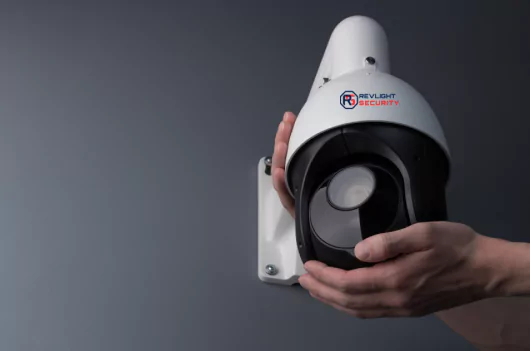
This is where specialist suppliers stand apart from general security vendors. A supplier with industrial and marine experience will design around operational realities instead of offering a repackaged warehouse camera system. Revlight Security works in exactly these hard-use environments, where surveillance has to perform under pressure, not just look competitive on a quote.
A strong shipboard video system should help your crew work smarter, help your managers verify facts faster, and help your business reduce avoidable loss. If your current setup cannot do that consistently, the right upgrade is not more cameras. It is a better surveillance strategy built for the vessel you actually operate.
🛡️ Secure Your Home or Business Today
Protect your home, office, shop, or business with reliable CCTV security cameras. Explore our range of CCTV cameras and find the right security solution for your needs.
Explore CCTV Cameras ✉️ Email Us


 Singapore :
+65-6708-9302
Singapore :
+65-6708-9302