
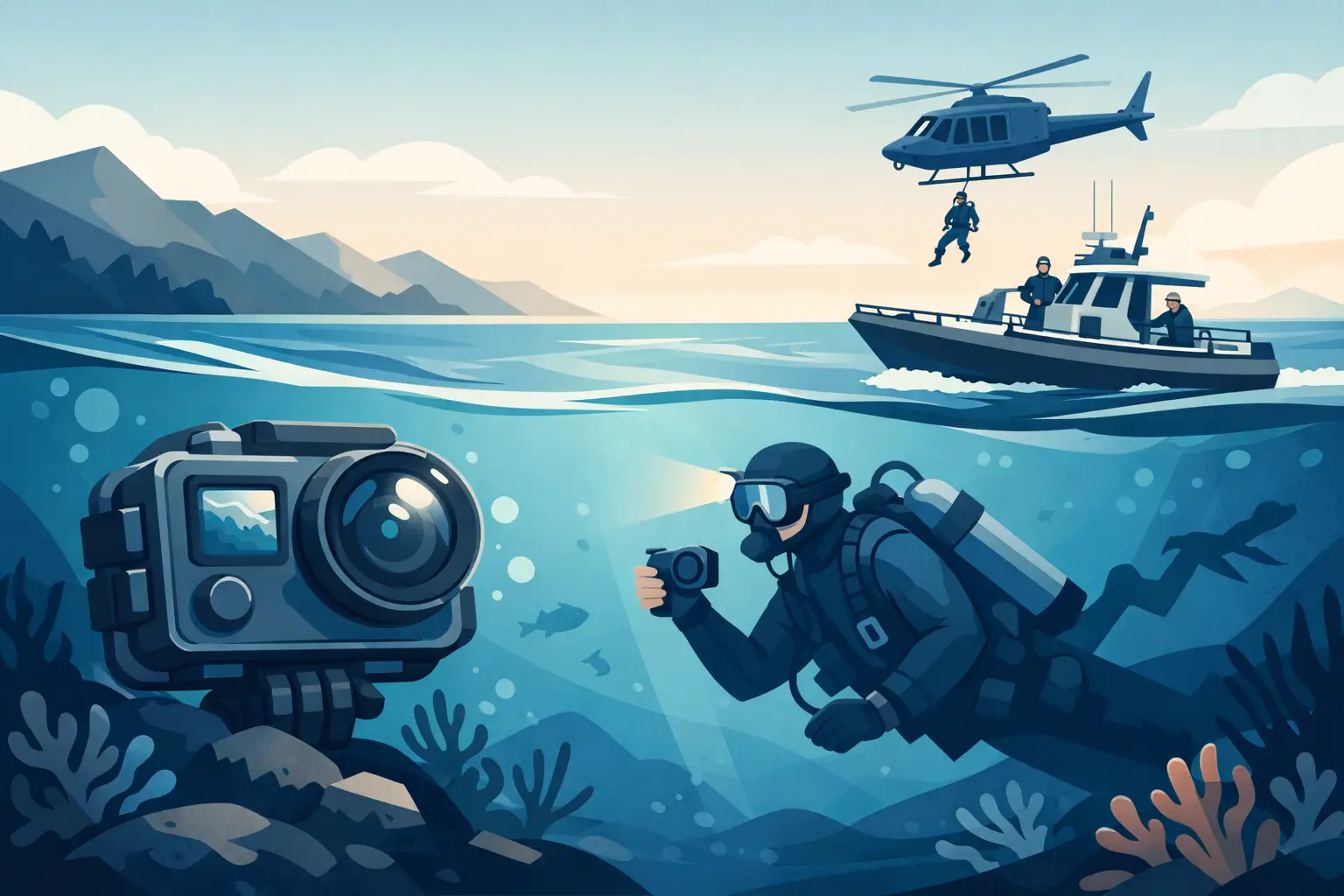
When a search pattern shifts from surface patrol to underwater inspection, camera performance stops being a spec-sheet exercise. For teams responsible for port security, hull inspection, search operations, and evidence collection, the right underwater camera for coast guards has to deliver usable video in current, silt, darkness, and salt-heavy conditions without creating more operational friction.
That requirement changes how buyers should evaluate equipment. Consumer underwater cameras are built for recreation. Coast guard and marine security deployments need professional imaging hardware that can stay stable under pressure, integrate with existing monitoring systems, and hold up in real working environments where downtime is expensive and missed visibility can stall an operation.
What coast guards actually need from an underwater camera
A coast guard unit rarely buys an underwater camera for one narrow purpose. The same platform may support jetty inspection one week, vessel underside checks the next, and recovery support after that. That means versatility matters, but it cannot come at the expense of image reliability.
The first priority is visibility where the human eye struggles. In coastal water, visibility can collapse fast because of turbidity, stirred sediment, algae, or poor light penetration. A camera that looks impressive in clear test footage may become nearly useless in a working harbor. Low-light sensitivity, strong sensor performance, and well-managed supplemental lighting usually matter more than headline resolution alone.
The second priority is build quality. Saltwater is punishing. Housings, seals, connectors, and cable entry points all face corrosion risk over time. If a system will be used around docks, patrol craft, offshore structures, or fixed marine assets, anti-corrosion construction is not a premium extra. It is part of baseline survivability.
The third priority is deployment fit. Some teams need a fixed underwater surveillance view at a marina, pier, or restricted berth. Others need a mobile system lowered from a boat or paired with an ROV. The right choice depends on whether the mission is continuous monitoring, tactical inspection, or incident response.
Underwater camera for coast guards: the key specifications
Procurement teams often start with resolution because it is easy to compare. That is reasonable, but underwater imaging punishes shallow buying criteria. A 4K camera with poor low-light behavior and weak optics can produce less useful evidence than a lower-resolution unit designed specifically for marine surveillance.
Sensor quality comes first. A larger, more capable sensor generally handles low light and contrast variation better, which is critical in deeper or murkier water. Wide dynamic range can also help when lighting conditions shift around reflections, surface glare, or artificial illumination.
Depth rating should be selected with margin, not with minimum compliance. If the expected operating depth is close to the rated limit, buyers are already taking an unnecessary risk. Pressure tolerance needs to reflect real operating conditions, contingency use, and installation variables.
Lighting is equally important. Integrated LEDs can improve visibility, but too much poorly controlled light can reflect suspended particles back into the lens and reduce clarity. In silty water, the balance between lens position, beam spread, and light intensity affects usable footage more than many buyers expect.
Cable and transmission design also deserve serious attention. A camera may capture strong video at the sensor level and still fail operationally if signal delivery is unstable. For fixed installations and longer runs, buyers should evaluate how the system handles power, video transmission, and compatibility with recorders or network infrastructure.
Fixed surveillance versus inspection systems
Not every underwater camera for coast guards should be bought as a general-purpose unit. In many cases, the best result comes from matching the camera category to the job.
A fixed underwater surveillance camera is best suited to continuous monitoring around berths, bridge supports, underwater perimeters, intake areas, and sensitive marine infrastructure. These systems are built to remain deployed and feed live or recorded video into a larger security environment. For coast guard or port security use, that can support threat monitoring, unauthorized diver detection, and ongoing structural observation.
An inspection camera system is different. It is more appropriate for hull checks, targeted underwater searches, or temporary deployment during an operation. These systems may be pole-mounted, cable-deployed, or integrated into submersible platforms. They are often faster to mobilize but less suitable for permanent perimeter coverage.
There is a trade-off here. Fixed systems offer persistent awareness and easier integration with command centers. Mobile inspection systems offer flexibility and lower installation commitment. Teams covering broad marine zones often end up needing both.
Marine conditions are the real test
Spec compliance matters, but marine conditions decide whether a camera earns its place. Coastal and harbor environments create overlapping stress factors: corrosion, fouling, vibration, tidal movement, impact risk, and inconsistent visibility.
Biofouling is a common problem that buyers sometimes underestimate. Over time, marine growth can reduce image quality or obstruct the lens entirely. Depending on the installation, maintenance planning should be part of the buying decision. A camera that performs well but requires frequent retrieval in a difficult location may create hidden operating costs.
Currents and mounting stability matter too. If the camera is installed on a marine wall, piling, or subsea structure, the mounting hardware has to keep the field of view stable enough for useful monitoring. Video that shakes, drifts, or misaligns under normal water movement can limit evidence value.
Temperature variation can also affect long-term reliability. While many systems are designed for harsh environments, buyers should still verify operating range, seal integrity, and cable durability for their region and deployment profile.
Integration matters more than standalone performance
For professional security buyers, a camera is rarely a standalone purchase. It has to fit into a wider surveillance architecture that may already include IP cameras, PTZ systems, thermal monitoring, AI-enabled recording, vessel-side observation, and remote access.
That is why compatibility should be assessed early. Can the underwater feed be recorded alongside topside cameras? Can operators view it remotely from a control room or patrol vessel? Can footage be archived in a format suitable for review and evidence handling? These questions affect procurement value as much as raw underwater image quality.
For ports, offshore facilities, and marine operators, integration can also improve response speed. If an underwater event is viewed in parallel with above-water perimeter cameras, teams get context faster. That shortens inspection delays and reduces blind spots around vulnerable marine assets.
This is where working with a specialist supplier matters. Revlight Security focuses on demanding-environment surveillance systems where environmental durability and system fit are just as important as camera specs.
How procurement teams should compare options
The fastest way to overspend is to buy for maximum specification without mapping the operational need. The fastest way to underspec is to treat underwater security like standard CCTV. The right path is more disciplined.
Start with the mission profile. Is the requirement constant underwater surveillance, periodic inspection, or both? Then define water conditions, expected depth, mounting method, transmission distance, and recording requirements. Once those are clear, camera selection becomes much more accurate.
Buyers should also think about serviceability. If a camera is installed in a difficult or hazardous marine location, easy maintenance and replacement planning can have major cost implications. A cheaper unit that fails more often is rarely cheaper in practice.
It also helps to evaluate the evidence standard expected from the footage. If the camera is being used for security incidents, regulatory review, or operational verification, image consistency matters more than marketing claims. Ask what the footage looks like in low-visibility water, not just in ideal demonstration conditions.
The best fit depends on the operational environment
There is no single best underwater camera for coast guards in every scenario. A harbor security team monitoring fixed underwater zones has different needs than a rapid-response patrol unit inspecting hulls after an alert. Offshore operators may prioritize depth tolerance and corrosion resistance, while port authorities may prioritize network integration and continuous recording.
That is why serious buyers should treat underwater camera procurement as an environment-specific surveillance decision, not a generic product purchase. The stronger approach is to match the camera to the mission, the water, the infrastructure, and the response workflow.
For coast guard, marine security, and offshore procurement teams, the right system is the one that keeps delivering usable underwater visibility when conditions are poor and timelines are tight. If a camera can do that consistently, it becomes more than an accessory to marine operations. It becomes a practical part of the security infrastructure you rely on when surface visibility is no longer enough.
The best buying decisions usually come from asking a simple question early: what does this camera need to prove underwater, and under what conditions does it have to keep proving it?
🛡️ Secure Your Home or Business Today
Protect your home, office, shop, or business with reliable CCTV security cameras. Explore our range of CCTV cameras and find the right security solution for your needs.
Explore CCTV Cameras ✉️ Email Us

 Singapore :
+65-6708-9302
Singapore :
+65-6708-9302