
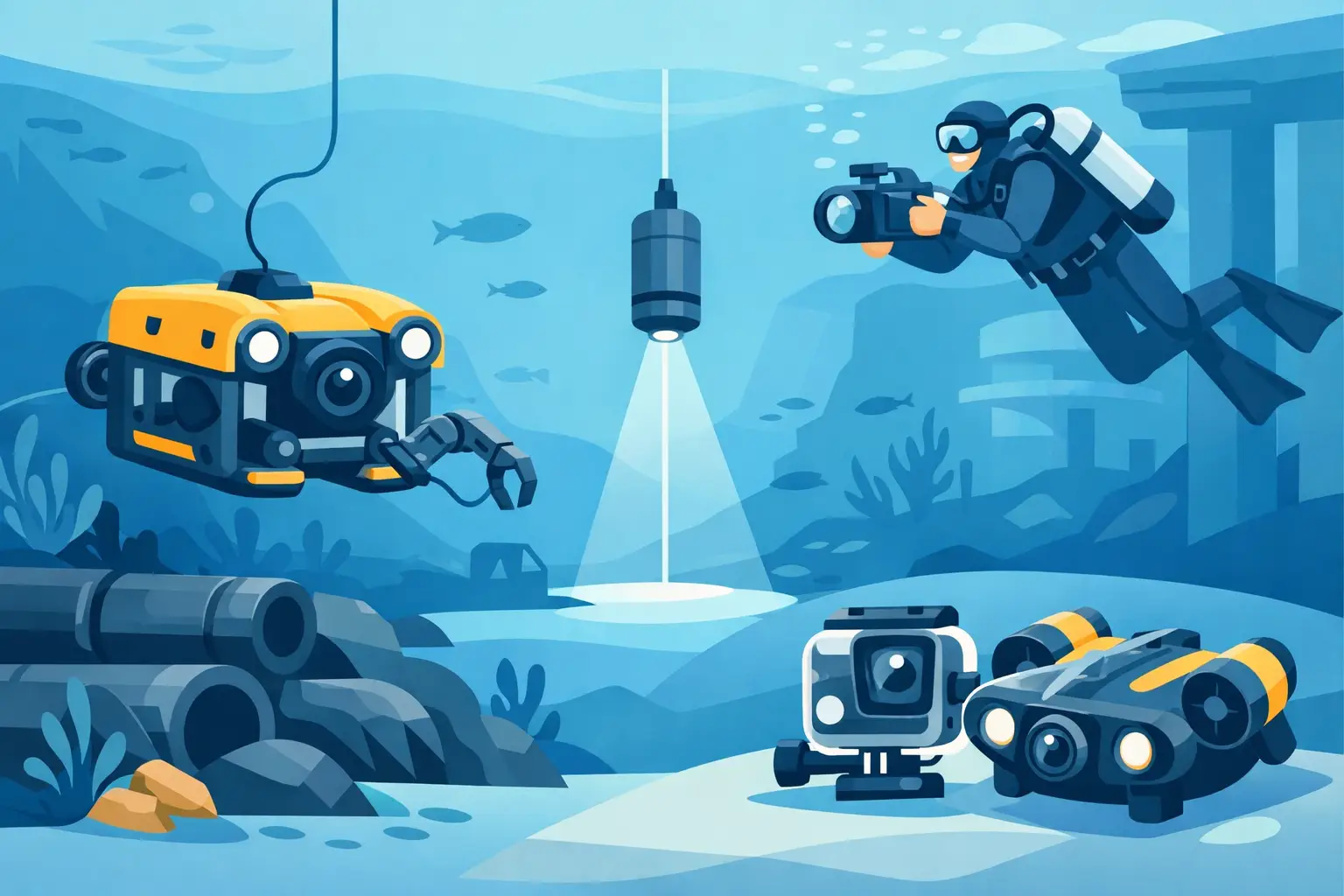
A failed inspection offshore rarely starts with a major system collapse. More often, it starts with poor visibility, weak lighting, or a camera feed that turns unreliable at the exact moment your team needs evidence. That is why choosing the best underwater cameras for inspections is not a minor equipment decision. It directly affects downtime, maintenance planning, safety reporting, and the speed of corrective action.
For industrial buyers, the right system is not the one with the most marketing claims. It is the one that survives depth, delivers usable images in low-visibility water, integrates with your existing monitoring setup, and keeps operating under pressure. In offshore platforms, ship hull inspections, intake tunnels, tanks, and submerged structural assets, camera performance has to be judged by results, not specs alone.
What makes the best underwater cameras for inspections
The best underwater inspection systems are built around operational reliability. Image quality matters, but only when it remains stable in real conditions. Murky water, suspended solids, biofouling, low light, current movement, and extended deployment times all expose weak equipment quickly.
A strong inspection camera system starts with a pressure-rated housing matched to your working depth. That sounds obvious, but depth margin is often where procurement mistakes begin. If your normal inspection depth is 100 meters, buying a system rated only slightly above that leaves little room for surge conditions, cable strain, or future use cases. Commercial operators are better served by systems with comfortable engineering tolerance.
Lighting is equally important. In many industrial environments, the limiting factor is not the sensor but the illumination. Integrated LED arrays with controlled beam spread usually outperform overly bright lighting that reflects back from turbidity and reduces usable detail. The goal is clear inspection footage of welds, corrosion points, marine growth, valves, supports, and submerged interfaces, not impressive brightness on paper.
Cable design also separates serious systems from commodity options. Inspection teams need dependable transmission over working distance, whether that means a short drop into a ballast tank or a longer run along a quay wall or subsea structure. Tether strength, abrasion resistance, signal integrity, and reel handling all influence field performance and total operating cost.
Matching camera type to inspection environment
There is no single winner for every site. The best underwater cameras for inspections depend on where and how they will be used.
Fixed underwater camera systems
Fixed systems are ideal when you need continuous monitoring rather than occasional inspection. They suit offshore structures, intake channels, dock walls, and process environments where operators want live viewing, recording, and remote access from a control room. In these applications, the camera becomes part of a larger surveillance and asset protection network.
The advantage is persistence. You do not need to redeploy equipment each time conditions change or an anomaly appears. The trade-off is installation planning. Fixed systems demand attention to mounting, cable routing, cleaning access, and integration with recording infrastructure.
Drop camera systems
A drop camera is often the practical choice for tanks, shafts, wells, splash zones, and targeted structural checks. These systems are efficient when inspection points change frequently and when crews need to lower, verify, record, and move on. For marine operators and industrial maintenance teams, that flexibility can reduce labor hours significantly.
The trade-off is coverage. A drop camera gives focused visual access, but it will not replace a broader permanent monitoring layout when you need continuous situational awareness.
PTZ underwater cameras
Pan-tilt-zoom capability adds strong value in larger underwater assets or where the operator cannot reposition the unit easily. PTZ allows remote directional control and closer visual review of suspect areas. This is especially useful around subsea supports, berthing structures, and underwater process equipment.
That said, more moving parts mean more maintenance consideration. In harsh fouling conditions, the best PTZ option is the one designed for industrial service intervals, not just feature density.
The 8 features that matter most before you buy
Industrial buyers comparing underwater inspection systems should focus on eight practical factors.
First is depth rating. Buy for your actual operating margin, not your minimum requirement.
Second is sensor performance in low light and turbid water. Resolution alone does not guarantee readable footage. A balanced sensor and lighting package usually performs better than a high-resolution sensor paired with poor illumination.
Third is lens field of view. Wider views help with orientation and general condition checks, while narrower views can produce better detail on joints, defects, and weld lines. Some operations need both.
Fourth is integrated lighting quality. Look at beam control, glare management, and service life, not just output claims.
Fifth is tether length and cable durability. Long cable runs create drag, handling issues, and possible signal loss if the system is not engineered correctly.
Sixth is output and recording compatibility. Procurement teams should confirm whether the camera supports the video format, recorder, monitor, or network environment already in place.
Seventh is housing material and corrosion resistance. Saltwater, chemical exposure, and galvanic risk can shorten equipment life quickly if the housing is not suited to the application.
Eighth is maintenance practicality. Lens cleaning, seal replacement, inspection intervals, and spare part access all affect lifecycle value.
How to compare systems without getting distracted by specs
Many buyers start with resolution and price. That is understandable, but it is rarely the best way to compare systems for industrial use.
A better method is to begin with the inspection objective. If your team is checking for structural cracking, coating failure, debris buildup, or valve condition, then image clarity at the relevant stand-off distance matters more than headline resolution. If the system will be used from a fixed mount, long-term reliability and network output matter more than deployment speed. If crews are mobilizing repeatedly across multiple vessels or facilities, setup time and cable handling may drive the real value.
This is also where commercially focused suppliers stand apart from general electronics sellers. A serious supplier should be able to discuss water conditions, deployment depth, output requirements, mounting constraints, and service expectations before recommending a product. That conversation usually reveals more than a spec sheet.
Common buying mistakes in underwater inspection cameras
One of the most common mistakes is underestimating the environment. Water that appears manageable from the surface may contain sediment, low ambient light, growth, or current that quickly reduces camera usefulness. Buying too light for the job often leads to repeat spend.
Another mistake is treating all waterproof equipment as inspection-grade. Industrial underwater cameras are not defined just by being sealed. They need stable output, dependable housings, durable connectors, and predictable performance during long operating periods.
Buyers also sometimes overlook system integration. A camera may capture acceptable footage on its own monitor, but if it does not fit your recording, remote viewing, or control setup, the operational value drops. For marine and energy operations, footage often needs to support maintenance planning, contractor verification, or compliance documentation. Compatibility matters.
Finally, there is the issue of serviceability. Lower-cost systems can look attractive in procurement reviews, but if replacement parts are difficult to source or downtime is prolonged when a seal or cable fails, the savings disappear fast.
Where premium systems justify the higher cost
Not every inspection program needs the highest-spec equipment. For occasional shallow checks in controlled water, a basic industrial-grade unit may be enough. But in offshore, refinery-adjacent marine, power generation, and heavy industrial settings, premium systems usually pay for themselves through better uptime and fewer failed inspections.
That value becomes clear when a camera is expected to deliver repeatable footage over long cycles, support remote review, or operate in corrosive conditions. Better housings, stronger connectors, cleaner video output, and more dependable illumination reduce rework. They also improve decision quality. When engineers can trust the footage, maintenance can be scheduled with more confidence and fewer unnecessary interventions.
For buyers seeking the best underwater cameras for inspections, the strongest option is usually the one built for your exact operating environment rather than the one with the longest feature list. Revlight Security serves this market with a clear focus on industrial-grade surveillance performance, where durability, visibility, and system reliability have to hold up under real commercial pressure.
The smartest purchase is the one that keeps your inspection team from going back twice for the same answer.
🛡️ Secure Your Home or Business Today
Protect your home, office, shop, or business with reliable CCTV security cameras. Explore our range of CCTV cameras and find the right security solution for your needs.
Explore CCTV Cameras ✉️ Email Us

 Singapore :
+65-6708-9302
Singapore :
+65-6708-9302