
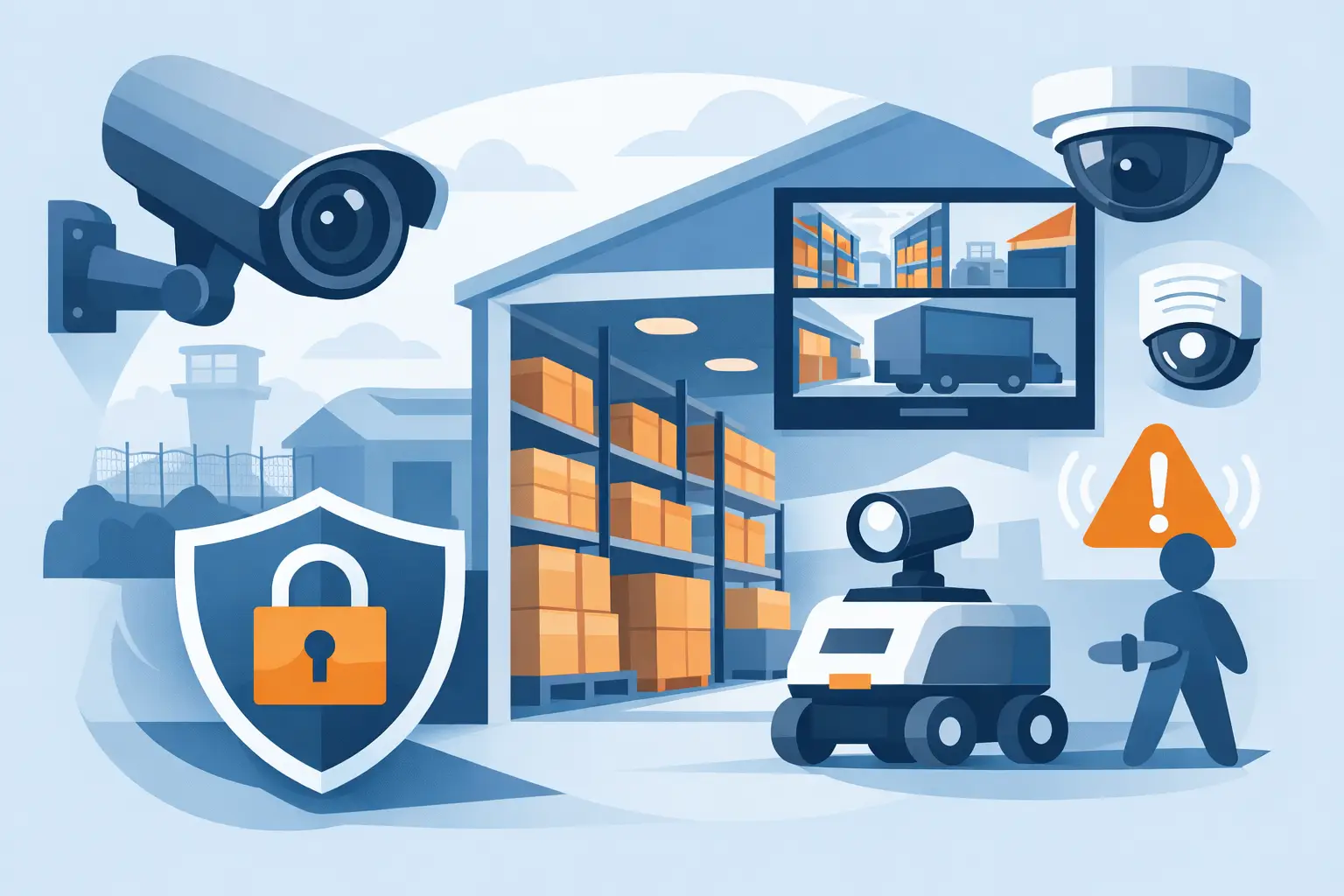
A warehouse does not fail on paper first. It fails at 2:13 a.m. when a blind spot goes unmonitored, a side door stays propped open, or a loading bay incident turns into a claim with no usable footage. That is why the best security systems for warehouses are not built around one device. They are built around layered coverage, reliable recording, and fast response across every vulnerable point in the operation.
For industrial buyers, the real question is not whether to invest in warehouse security. It is which system architecture will reduce loss, support compliance, protect staff, and keep operations moving without adding unnecessary complexity. A small distribution site has different needs than a hazardous materials facility, a marine warehouse, or a refinery-adjacent storage yard. The right answer depends on risk exposure, site size, inventory value, and environmental conditions.
What the best security systems for warehouses actually include
The strongest warehouse systems combine surveillance, intrusion detection, access control, and network resilience. Buyers often start with cameras, but cameras alone do not create control. A warehouse security system needs to record clearly, detect events early, preserve evidence, and give managers remote visibility when the site is unattended.
At minimum, most facilities should evaluate fixed and PTZ CCTV coverage, intrusion alarms, perimeter detection, controlled entry points, and centralized recording. For higher-risk operations, thermal imaging, long-range detection, gas-aware visual monitoring, and hardened network infrastructure may be just as important as standard video.
This is where many procurement decisions go wrong. Low-cost systems may look comparable in a quote, but they often fall short on environmental durability, night performance, retention capacity, integration options, and remote access reliability. In warehouses, performance under real operating conditions matters more than headline specs.
CCTV remains the backbone of the best security systems for warehouses
Video surveillance is still the first line of evidence and deterrence. In a warehouse setting, it should cover dock doors, picking aisles, cage storage, high-value inventory zones, parking areas, perimeter fencing, and vehicle approach routes. Indoor coverage helps with shrinkage, process disputes, and safety investigations. Outdoor coverage helps with trespassing, theft, and after-hours access.
Fixed cameras work well for entrances, narrow aisles, and points where consistent framing matters. PTZ cameras add value across large yards, loading areas, and long perimeters where operators may need to track movement or zoom in on incidents. Thermal cameras are especially useful for low-light sites, large outdoor areas, and facilities where visual detection through darkness, dust, or weather is a priority.
Image quality matters, but so does frame rate, storage design, and playback usability. A system that records high resolution for only a short retention window may be less useful than a balanced setup with longer archive periods and searchable event tagging. Warehouses dealing with claims, audits, or delayed incident reporting should pay close attention to retention requirements.
Access control decides who gets in and when
Unauthorized entry does not always come from outsiders. In many warehouse environments, internal misuse, credential sharing, and uncontrolled contractor access create just as much exposure. Access control gives operations managers a reliable way to define who can enter specific areas, at what times, and under what permissions.
A basic keypad on the main office door is not enough for a serious operation. Stronger systems use card, fob, PIN, or biometric credentials across entrances, storage cages, server rooms, and hazardous material zones. The best setups also create audit trails, so site leaders can verify who accessed a location and when.
This becomes even more important in industrial environments with shift changes, temporary labor, third-party logistics staff, and maintenance teams. If your warehouse handles regulated materials or mission-critical spares, access control should be treated as an operational safeguard, not just a security add-on.
Intrusion and perimeter detection close the gaps cameras miss
Even the best camera coverage has limits. If no one is actively watching live video, a site may not respond quickly enough to stop an intrusion in progress. That is why alarms and perimeter detection remain essential.
Door contacts, motion detectors, glass-break sensors, fence-line detection, beam sensors, and yard alerts all play a role depending on the site layout. Large warehouses with exterior storage, multiple gates, or low-traffic rear access points benefit from perimeter-first detection that triggers attention before an intruder reaches the building.
There is a trade-off here. Highly sensitive detection can generate nuisance alarms if the site has wildlife, heavy wind, vehicle movement, or irregular operating hours. The answer is not to avoid detection. It is to specify sensors correctly and integrate them with video verification so alarms can be assessed quickly and accurately.
Warehouse environment matters more than many buyers expect
A standard commercial security package may not survive an industrial warehouse. Heat, dust, moisture, corrosive atmospheres, vibration, and poor lighting all affect performance. If a facility sits near marine operations, chemical processing, fuel handling, or power infrastructure, the environmental specification becomes a major buying factor.
That is where industrial-grade equipment justifies its cost. Housings, ingress protection, networking components, and camera optics must match the site. A device that performs well in a retail stockroom may fail quickly in a coastal warehouse, refinery supply base, or exposed loading yard.
For buyers in oil and gas, marine, energy, and heavy industry, surveillance should be specified with the same discipline applied to any other operational system. Equipment selection needs to account for atmosphere, mounting conditions, viewing distance, and available network capacity. Revlight Security operates in this space because industrial surveillance is not a commodity purchase. It is a site-critical infrastructure decision.
Remote monitoring and network stability are now non-negotiable
Most warehouse managers are not sitting in a control room all night. They need remote access to live and recorded footage, alarm notifications, and system status from authorized devices. That sounds simple, but remote monitoring only works when the network backbone is stable and the system is designed for secure access.
A warehouse with weak wireless coverage, bandwidth bottlenecks, or fragmented systems will struggle to get value from remote surveillance. This is especially true for large compounds, dock operations, marine-connected facilities, and remote industrial sites. If cameras drop offline or playback lags during an investigation, the system is not doing its job.
The better approach is to design security and connectivity together. Reliable switching, wireless bridging where required, protected network paths, and centralized management create stronger performance than bolting cameras onto an aging network. Buyers should ask not only what the system records, but how consistently it delivers footage when it matters.
How to compare the best security systems for warehouses
When comparing options, start with operational risk rather than product count. A quote with more cameras is not automatically the better system. Look at what each proposal covers, how events are detected, how footage is stored, and how quickly managers can review and respond.
A good warehouse security proposal should answer practical questions. Can it identify faces at entrances and license plates at gates where needed? Does it support clear playback around dock disputes? Will it continue recording during network interruptions? Can it expand as the site adds bays, racking, or adjacent yard space? Is the equipment rated for the environment it will actually face?
Commercial buyers should also test the support model. Installation quality, commissioning, user training, and after-sales service have a direct effect on system performance. The best service provider is not the one with the cheapest hardware. It is the one that delivers a dependable system with the right specification and backs it with real technical support.
What works best for different warehouse types
A general distribution warehouse may get excellent results from a balanced mix of fixed CCTV, PTZ yard coverage, monitored intrusion alarms, and role-based access control. A cold storage facility may need equipment selected for low temperatures and condensation risk. A hazardous industrial warehouse may require thermal coverage, restricted-zone access management, and stronger detection around sensitive storage.
For remote sites or large external compounds, long-range perimeter surveillance and stable wireless network links become more important. For facilities handling high-value goods, tighter access segmentation and longer retention periods usually provide better value than simply adding more viewing angles.
That is the larger point. There is no single package that qualifies as the best security system for every warehouse. The best system is the one specified around your threat profile, operating model, and environment, then installed to perform under pressure.
Warehouse security is easiest to ignore when nothing has gone wrong. The smarter move is to specify a system before loss, downtime, or liability forces the decision. Get the coverage right, choose equipment built for the site, and make sure the network can carry the load. That is how security stops being a line item and starts protecting the operation every day.
🛡️ Secure Your Home or Business Today
Protect your home, office, shop, or business with reliable CCTV security cameras. Explore our range of CCTV cameras and find the right security solution for your needs.
Explore CCTV Cameras ✉️ Email Us



 Singapore :
+65-6708-9302
Singapore :
+65-6708-9302