
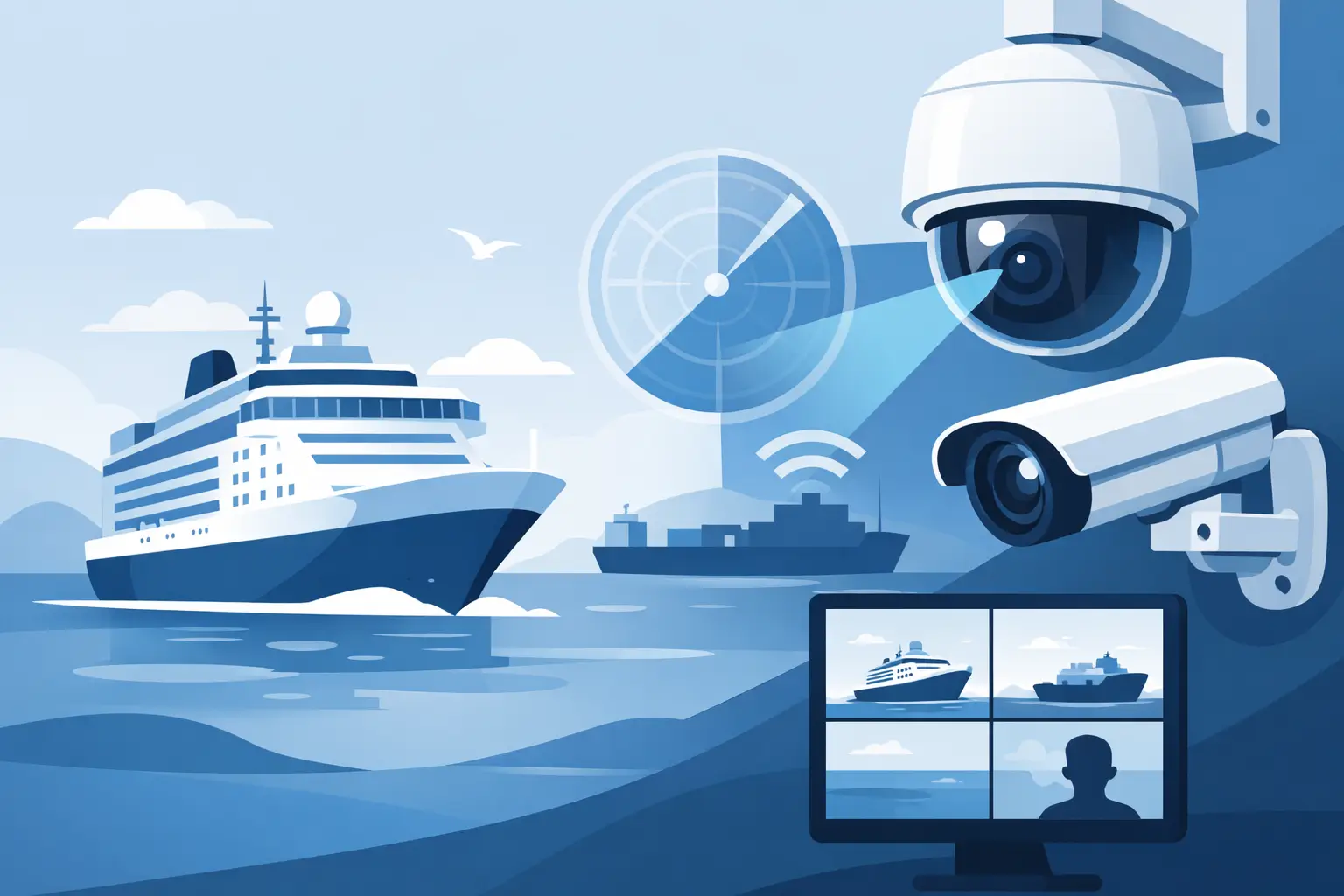
A blind spot on deck is not a minor inconvenience when you are managing cargo transfers, restricted areas, engine access, or perimeter watch in rough water. Cameras for ships surveillance need to do far more than capture video. They have to keep working through salt spray, vibration, darkness, glare, and constant motion while giving crews and operators footage they can actually use.
Marine operators do not buy surveillance systems for appearances. They buy them to reduce security risk, improve incident response, support investigations, protect crew, and maintain operational control across working vessels, offshore support fleets, tankers, cargo ships, and specialized marine assets. That means the right camera choice starts with performance in real shipboard conditions, not generic brochure claims.
What makes cameras for ships surveillance different
Shipboard surveillance is a demanding application because the environment is always working against the equipment. Salt air accelerates corrosion. Engine vibration stresses mounts and housings. Deck operations create impact risk, moisture exposure, and visibility issues from fog, rain, and reflected light. Standard commercial cameras often look acceptable on paper and then fail early when exposed to marine duty.
That is why marine-grade construction matters from the start. A proper system should be designed around corrosion-resistant housings, ingress protection suitable for exposed areas, stable imaging under vibration, and operating ranges that match the vessel’s route and workload. On a vessel, reliability is not just about uptime. It affects safety, evidence quality, and crew confidence in the system.
There is also the coverage challenge. A ship is not a flat parking lot with fixed lighting and predictable movement. You may need to monitor the bridge approaches, cargo deck, stern, side passages, engine room access, accommodation corridors, and boarding points, all with different lighting and risk profiles. One camera type will not cover every task efficiently.
The core camera types used in ships surveillance
Most vessel surveillance systems are built around a mix of fixed IP cameras, PTZ cameras, and thermal imaging cameras. Fixed cameras are the foundation for continuous monitoring of high-priority zones. They are ideal where you need a stable view of a deck lane, doorway, machinery access point, or loading area. Their value is consistency. When properly placed, they provide dependable recording for playback, incident review, and remote monitoring.
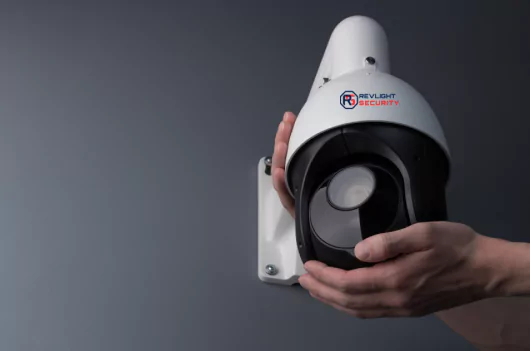
PTZ cameras add flexibility where operators need active control over a wider area. On open decks, port and starboard perimeter views, or elevated mast positions, PTZ units allow crews to track movement, zoom in on events, and change the field of view without installing multiple additional cameras. That can reduce hardware count in some applications, but it also creates a trade-off. A PTZ can only look in one direction at a time, so it should not replace fixed coverage in critical zones.
Thermal cameras solve a different problem. They are not mainly about seeing color detail or reading labels. They detect heat contrast, which makes them valuable in darkness, haze, glare, and poor weather where visible-light cameras struggle. For perimeter monitoring, man-overboard awareness support, machinery hot-spot observation, and operations in low visibility, thermal imaging can be a serious operational advantage. Buyers should be realistic, though. Thermal is excellent for detection, but visible cameras are usually still needed for identification and evidentiary detail.
Key specifications buyers should not gloss over
Resolution gets attention, but image quality offshore depends on much more than pixel count. A higher-resolution camera with poor low-light performance or weak image processing can produce footage that looks sharp in a datasheet and disappointing at sea. Wide dynamic range is especially important around reflective surfaces, open water, and mixed shadow conditions. Without it, bright sunlight and glare can wash out essential detail.
Low-light capability matters on every vessel that operates after sunset or through poor weather. Infrared support can help in close and mid-range scenes, although its usefulness depends on placement and atmospheric conditions. Thermal coverage may be the better answer for long-range detection or where visible lighting is inconsistent.
Ingress protection and corrosion resistance should be treated as commercial essentials, not premium extras. Outdoor cameras on ships should be selected with marine exposure in mind, including salt mist, water ingress, and constant humidity. Housing material, lens window quality, seals, and mounting hardware all influence service life. A lower upfront price often disappears quickly if the unit needs early replacement.
Compression, storage efficiency, and network behavior are also part of the buying decision. Vessel networks are not always generous, especially when surveillance traffic shares capacity with operational systems. Efficient video compression, sensible frame rate planning, and recording strategies based on risk areas can save storage and bandwidth without weakening security outcomes.
Where ship surveillance cameras should be installed
Coverage planning should reflect vessel operations rather than a generic layout. Boarding points are a priority because they support access control, visitor tracking, and incident review. Cargo handling areas are another common focus because they combine personnel movement, equipment traffic, and high-value activity. The stern and side decks often require perimeter awareness, especially during maneuvering, offshore work, or restricted-area operations.
Interior surveillance is equally important on many vessels. Machinery spaces, control access routes, stores, technical rooms, and shared corridors benefit from recording and playback when an event needs review. In some vessels, bridge-adjacent zones and communications-critical areas also justify dedicated monitoring. The right placement depends on operational risk, crew workflow, and whether the system is being designed for deterrence, evidence, active monitoring, or all three.
A good supplier will not push the same camera map onto every vessel. A tanker, offshore support vessel, patrol craft, and bulk carrier each present different surveillance priorities. Buyers should expect recommendations based on exposure level, blind spots, mounting options, and network architecture.
Recording, remote access, and system integration
A camera is only as useful as the system behind it. Onboard recording must be stable, searchable, and sized for the retention period your operation requires. Procurement teams should look at how many channels the recorder supports, whether playback is straightforward, and how footage can be exported after an incident. This is where category-level buying decisions often go wrong. The camera may be marine-ready, but the recording platform may be undersized or awkward to manage.
Remote access is another major factor for ship managers and operations teams. The ability to check live views, review footage, or verify alarms from shore can speed up decision-making and cut response times. But remote access has to be designed around vessel connectivity realities. Image quality settings, transmission priorities, and cybersecurity controls need to be planned together.
Integration with radar, detection systems, alarms, and marine network infrastructure can deliver stronger security outcomes than stand-alone video alone. For operators in oil and gas, chemical transport, and high-risk industrial marine environments, that wider system view often produces better value than simply adding more cameras. Revlight Security focuses on that level of deployment, where surveillance has to support operations rather than sit on the sidelines.
How to choose the right cameras for ships surveillance
The best buying process starts with operational questions, not catalog browsing. What incidents are you trying to reduce or document? Which areas require continuous recording, and which need operator-controlled viewing? Do you need nighttime identification, long-range detection, or both? How much onboard storage is realistic, and what network capacity is available for remote access?
Once those answers are clear, the camera mix becomes easier to define. Fixed marine IP cameras typically cover entrances, passageways, engine access points, and work zones. PTZ cameras are better for open-area observation and response-driven monitoring. Thermal cameras are justified where visibility is unreliable or where early detection adds measurable safety and security value.
Price should be weighed against operating life and maintenance burden. A cheaper unit that corrodes quickly, needs repeated service visits, or produces unusable footage is not a savings. Commercial buyers should focus on whole-life value, which includes durability, recording quality, supportability, and fit for the vessel’s actual conditions.
The strongest surveillance systems are built to match the vessel, the route, and the risk profile. When cameras are selected with that level of precision, they become more than a compliance measure. They become a working part of ship security, operational control, and incident accountability. If you are specifying a new marine system or replacing underperforming hardware, the right move is to choose equipment that is built for shipboard reality from day one.
🛡️ Secure Your Home or Business Today
Protect your home, office, shop, or business with reliable CCTV security cameras. Explore our range of CCTV cameras and find the right security solution for your needs.
Explore CCTV Cameras ✉️ Email Us

 Singapore :
+65-6708-9302
Singapore :
+65-6708-9302