
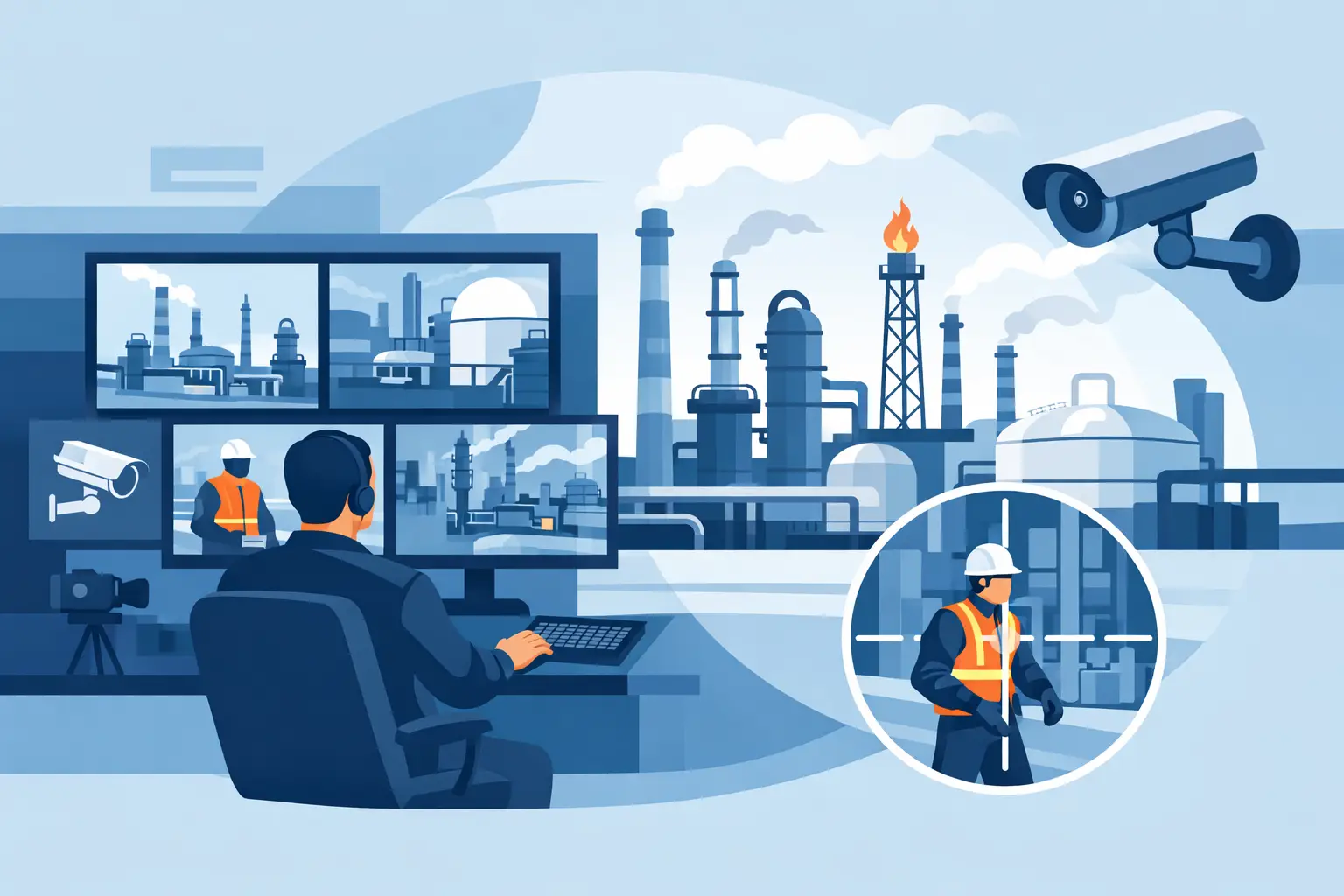
A missed plume at a loading rack, an unverified alarm at a tank farm, or a blind spot near a process unit can quickly become an operational, safety, and financial problem. This refinery video monitoring guide explains how to specify surveillance that gives operators usable evidence, faster awareness, and dependable coverage in hazardous industrial conditions.
A refinery is not a conventional commercial site with a few cameras at entrances. It is a large, changing process environment where heat, vapor, vibration, corrosive exposure, restricted zones, and long cable distances all affect surveillance performance. The right system must support security, safety, incident review, and operational visibility without creating another difficult-to-manage technology layer.
Start With Risk, Not Camera Count
The first question is not how many cameras a refinery needs. It is what each coverage zone must achieve. A perimeter camera may need to identify a vehicle approaching a gate. A camera at a crude unit may need to verify whether personnel are in a restricted area. A methane or gas detection camera may need to reveal an emissions event before it escalates into downtime, environmental exposure, or a costly response.
Build the design around site-specific risks and operating decisions. Separate the facility into zones such as perimeter fencing, gates, tank farms, loading areas, flare systems, process units, control access points, substations, marine berths, and maintenance corridors. For each zone, define what the operator must see, how quickly they need to see it, and whether footage is being used for deterrence, verification, investigation, or process support.
This approach prevents a common procurement failure: buying a high camera count with limited useful coverage. A lower quantity of properly positioned, industrial-grade cameras often delivers better results than a large system installed without field-of-view planning.
Refinery Video Monitoring Guide: Choose the Right Camera Type
Different refinery environments demand different equipment. One fixed camera specification cannot serve every area effectively. The most reliable designs combine camera types according to the operational task.
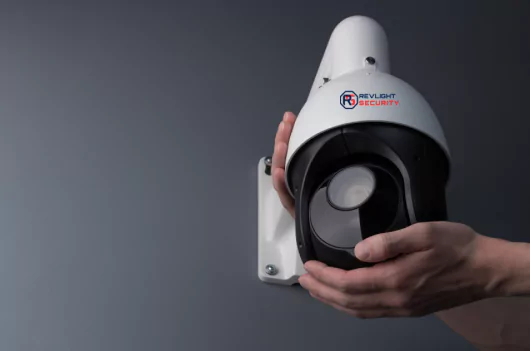
Fixed network cameras are well suited to stable views of gates, walkways, entrances, valve arrays, loading points, and equipment corridors. They provide consistent scene coverage and make it easier for operators to compare current conditions with recorded footage. Pan-tilt-zoom cameras are valuable for wide tank farms, long perimeters, jetties, and areas where an operator may need to inspect developing activity at distance. Their strength is flexibility, but they should not replace fixed coverage of critical points. When a PTZ camera turns toward one event, it stops watching the area it left.
Thermal imaging cameras can provide detection capability in darkness, smoke, haze, and difficult weather conditions where visible-light imaging is limited. They are particularly effective for perimeter monitoring, tank farm observation, and night operations. Thermal cameras show heat contrast rather than standard color detail, so they are often paired with visible cameras when identification or detailed incident evidence is required.
For leak surveillance, optical gas imaging equipment is a specialized category. Methane and hydrocarbon gas detection cameras can help teams locate emissions that are invisible to the naked eye. The correct technology depends on the gases of concern, viewing distance, ambient conditions, inspection routine, and whether the system is intended for continuous monitoring or targeted verification. Procurement teams should avoid treating gas detection cameras as ordinary CCTV products. Their value is tied to detection performance, deployment method, and the speed at which personnel can respond.
Specify for Hazardous and Harsh Environments
A camera that performs well in a warehouse may fail quickly in a refinery. Housing material, seals, temperature range, ingress protection, vibration tolerance, and electrical classification must match the installed location.
For classified areas, confirm the required hazardous-location certification before selecting equipment. The classification must align with the site’s engineering requirements and the specific zone where the device will be mounted. Do not assume that a weatherproof enclosure is suitable for hazardous vapor areas. Explosion-proof or intrinsically safe solutions are selected for a reason, and the consequences of an incorrect specification extend beyond replacement cost.
Environmental durability also deserves close attention. Coastal refineries and marine terminals may face salt spray and corrosion. Process areas can expose devices to chemical residues, dust, high temperatures, and washdown. Cameras located near rotating machinery may experience constant vibration. Specify suitable housings, mounting hardware, cable glands, and connectors as part of the system, not as an afterthought.
Lens selection matters just as much. Wide lenses cover more area but reduce detail at distance. Narrow lenses increase detail but can leave gaps. A proper site survey should establish mounting height, target distance, lighting conditions, obstructions, and required image detail before finalizing focal length.
Design the Network and Recording System for Continuity
Video surveillance is only as dependable as the network and recording infrastructure behind it. Refineries often cover large footprints, with remote units, control rooms, substations, and marine facilities that may be separated by significant distances. Bandwidth planning must account for image resolution, frame rate, compression settings, camera quantity, live viewing demand, and retention periods.
Higher resolution is not automatically better. It produces more detail but requires more storage and network capacity. For a fixed overview of a low-risk area, a moderate-resolution stream may be sufficient. For a gate lane, custody-transfer area, or critical process point, higher detail may be justified. The correct balance protects budget while preserving usable evidence.
Recording retention should be based on operating policy, investigation needs, insurance requirements, and regulatory obligations. Many sites need continuous recording at critical locations, while less sensitive views may use event-based recording. The key is to ensure that the recorder, storage array, and video management platform are sized for the actual configuration, including future expansion.
Redundancy should be considered for high-consequence zones. Network paths, recording servers, power supplies, and storage can all be designed with failover capability. The investment depends on the impact of losing visibility. A remote gate camera may tolerate a brief interruption; a camera used to verify an emergency condition may not.
Build Alarms Around Operator Action
An alarm that produces no clear action becomes background noise. Video analytics, thermal alerts, access-control events, perimeter sensors, and gas detection can all generate valuable notifications, but only when alarm logic is tuned to the site.
Define the expected workflow before activating alerts. Who receives the alarm? What live view should open? Does the operator need to notify field personnel, dispatch security, isolate an area, or record an event for later review? Clear escalation rules reduce response time and prevent confusion during a high-pressure incident.
False alarms are a real trade-off. Overly sensitive analytics may trigger on steam, wildlife, rain, vehicle shadows, or routine process movement. Under-sensitive settings can miss an intrusion or hazardous condition. Initial commissioning should include controlled testing during day, night, poor weather, and normal operating activity. Analytics need adjustment as the facility changes, particularly when construction, new piping, altered traffic flows, or seasonal conditions affect the scene.
Plan Installation Around Operations and Maintenance
The best surveillance design can still underperform if installation interferes with refinery operations or makes future service difficult. Coordinate camera locations with operations, safety, maintenance, IT, and electrical teams early. Consider access for cleaning lenses, replacing components, inspecting cable runs, and testing coverage without disrupting production.
Power availability and communications routes must be verified in the field. Wireless bridges can be useful across difficult areas, but they require line-of-sight assessment, interference planning, weather-rated equipment, and appropriate security controls. Fiber is often the preferred backbone for long-distance, high-bandwidth industrial video, though existing infrastructure and project timing may influence the final approach.
Cybersecurity belongs in the design discussion from the beginning. Segment surveillance devices appropriately, control user access, use strong credentials, maintain firmware under a managed process, and keep remote access governed by site policy. A video platform that is easy to reach from outside the facility but poorly protected creates an unnecessary exposure.
Buy for Lifecycle Value, Not the Lowest Initial Price
Refinery surveillance is a lifecycle investment. The lowest equipment quote can become the most expensive option when it produces poor images, fails under environmental stress, lacks compatible support, or requires frequent site visits for repair. Buyers should assess equipment quality, certification suitability, network compatibility, warranty terms, technical support, spare-part availability, and serviceability.
Ask suppliers to demonstrate expected image performance at the intended distance and lighting level. Request clear documentation for environmental ratings, hazardous-area approvals, recording capacity assumptions, and network requirements. A serious supplier should be able to discuss the complete system: cameras, detection technology, mounting, communications, recording, remote access, and operational workflow.
Revlight Security supports industrial buyers with specialized surveillance and detection equipment built around demanding refinery, marine, and energy applications. The strongest projects begin with a clear site objective and end with equipment that the operations team can rely on when visibility matters most.
A refinery monitoring system should make the next decision easier: verify the alarm, see the condition, protect the team, and keep the operation moving with confidence.
🛡️ Secure Your Home or Business Today
Protect your home, office, shop, or business with reliable CCTV security cameras. Explore our range of CCTV cameras and find the right security solution for your needs.
Explore CCTV Cameras ✉️ Email Us

 Singapore :
+65-6708-9302
Singapore :
+65-6708-9302