
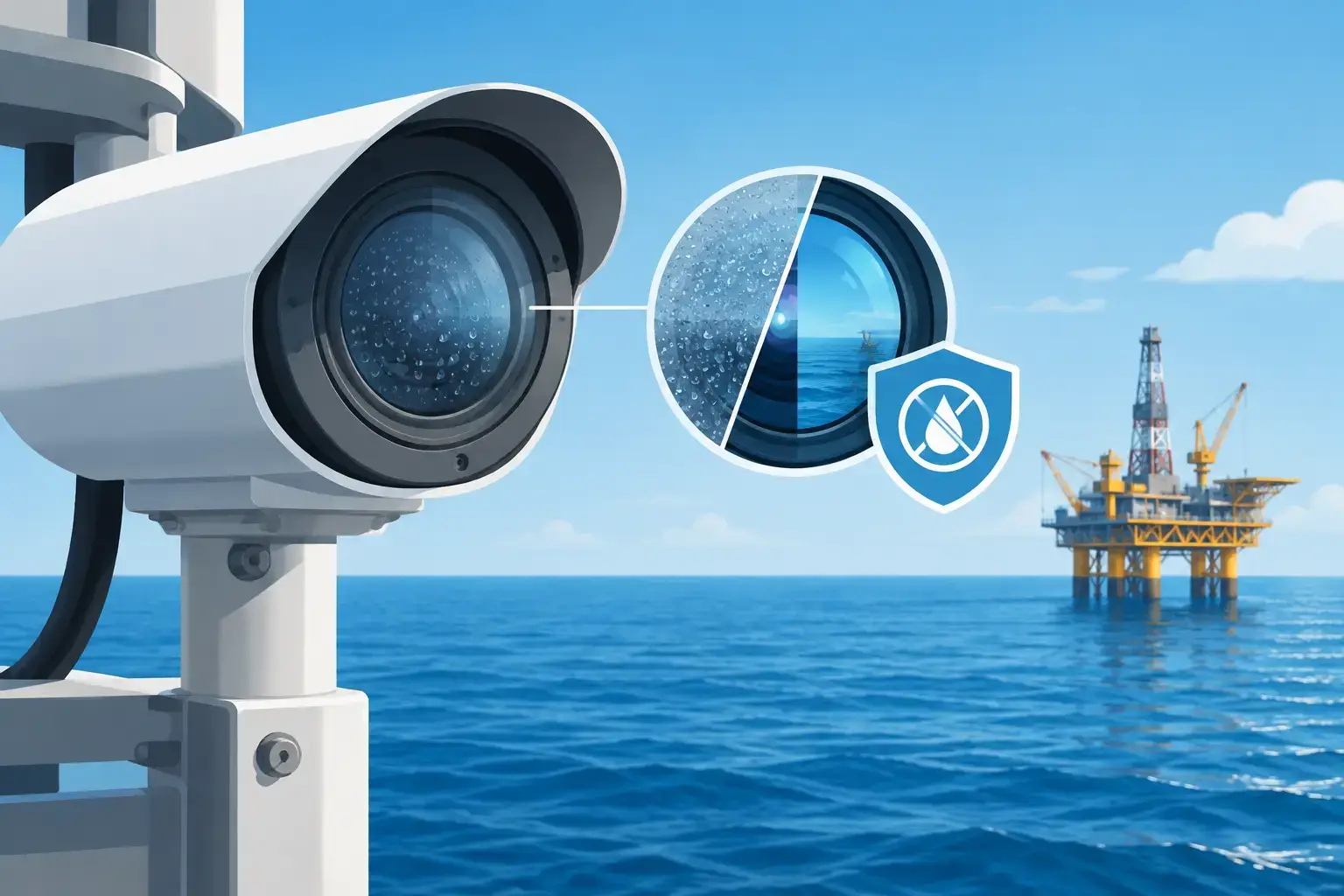
A fogged surveillance lens can turn a high-value monitoring system into a blind spot at the exact moment operators need visual confirmation. On an offshore platform, refinery perimeter, tank farm, or vessel deck, condensation can obscure leak detection zones, loading areas, access points, and process equipment within minutes. To prevent camera lens condensation, the system must be designed around the real temperature, humidity, airflow, and enclosure conditions at the installation point.
This is not a cosmetic issue. Moisture on a lens reduces contrast, softens image detail, triggers false video analytics events, and can prevent operators from verifying a developing incident. Reliable industrial surveillance requires more than a high-resolution camera. It requires environmental control around the optical path.
Why Industrial Camera Lenses Condense
Condensation forms when a lens surface falls below the dew point of the surrounding air. Warm, moisture-heavy air contacts a colder lens window, and water vapor becomes liquid droplets. The result is familiar: a milky image, glare around lighting, and a loss of detail that no software setting can restore.
Marine and offshore environments are especially demanding because conditions change rapidly. A camera may face hot sun in the afternoon, cool rapidly after rainfall, and then encounter salt-heavy air overnight. Refineries and chemical facilities introduce another challenge: localized heat sources, steam, washdown activity, and process vapor can create small climate zones that differ sharply from ambient weather reports.
The risk is not limited to outdoor locations. Condensation can develop inside an enclosure when humid air is trapped during installation, when cable glands are poorly sealed, or when a housing breathes through repeated heating and cooling cycles. That internal moisture is more serious because it can remain unnoticed until corrosion, haze, or electronic failure has already begun.
Prevent Camera Lens Condensation With Proper Enclosure Design
The enclosure is the first line of defense. A surveillance camera selected for industrial duty should be paired with a housing rated for the site, not simply placed in a generic outdoor box. Buyers should assess ingress protection, corrosion resistance, pressure requirements, operating temperature range, and compatibility with the required viewing window.
For offshore and marine deployment, salt spray and ultraviolet exposure accelerate deterioration of seals, fasteners, and window coatings. Stainless steel or marine-grade treated housings are typically a stronger long-term choice than standard painted enclosures. Where hazardous-area certification is required, the housing must also meet the applicable site classification without compromising thermal management.
A sealed enclosure reduces moisture entry, but sealing alone does not guarantee a clear lens. If humid air is enclosed during commissioning, it remains inside. Proper installation includes inspecting O-rings, tightening cable glands to specification, using suitable plugs on unused entries, and confirming that every gasket surface is clean and undamaged.
Use Heaters and Thermostatic Control
A low-wattage enclosure heater is one of the most effective tools for preventing condensation. Its job is not necessarily to make the camera hot. It raises the internal temperature just enough to keep the lens window above the dew point and to reduce relative humidity inside the housing.
Thermostatic control matters. A heater that runs continuously may consume unnecessary power, accelerate component aging, and create excessive temperature differences between the enclosure and outside air. A properly selected thermostatic heater operates when conditions demand it, protecting image quality while controlling operating costs.
For exposed installations, consider a heater combined with a circulation fan. Gentle internal air movement prevents localized cold spots near the lens window and distributes heat more evenly across the enclosure. This is particularly useful with larger PTZ housings and long-range surveillance units, where the front window may cool faster than the electronics compartment.
Select Windows That Suit the Environment
The enclosure window is part of the optical system. A scratched, contaminated, or low-quality viewing window can degrade image performance even when the lens itself is dry. In industrial environments, glass or optical-grade materials with appropriate coatings can improve resistance to salt deposits, oils, dust, and cleaning chemicals.
Hydrophobic coatings can help water bead and shed from the exterior surface, especially when rain or sea spray is the primary issue. They are not a substitute for heating, however. A coated window can still fog if its surface drops below the dew point. For severe exposure, specify an integrated wiper, washer, air purge, or other active cleaning method based on the contamination source.
Control Moisture Before It Reaches the Camera
Camera protection begins with placement. Avoid mounting directly beside steam vents, HVAC exhausts, washdown points, open process drains, or areas where warm humid air is forced toward a cooler structure. A small relocation, different mounting height, or adjusted viewing angle can significantly reduce condensation frequency without sacrificing coverage.
Sunrise and sunset exposure also deserve attention. A camera mounted against a cold steel structure can experience rapid lens cooling while nearby humid air remains warm. Thermal isolation brackets or a revised mounting arrangement may reduce the transfer of cold from the structure into the enclosure.
During installation, keep the enclosure open for the shortest practical time. Do not assemble the system during heavy rain, fog, or washdown activity if conditions can be avoided. If the housing has been opened in humid conditions, inspect it before energizing and use desiccant where the enclosure design permits it.
Desiccant packs absorb residual moisture and provide valuable protection during commissioning or service events. They are not permanent solutions. Saturated desiccant stops working, so maintenance teams need a replacement interval based on local humidity, enclosure volume, and inspection history.
Specify the Right Protection for Each Zone
There is no single anti-condensation package that fits every facility. A sheltered terminal camera in a dry climate may need only a well-sealed outdoor enclosure and periodic inspection. A deck-mounted unit on a vessel crossing warm and cold waters may require a heated marine housing, hydrophobic window treatment, and active cleaning equipment.
For refinery and gas processing applications, the camera’s role should guide the specification. A unit monitoring a flare area or pipe rack may face heat gradients and vapor. A gas leak detection camera must maintain a clear optical path because image degradation can affect operational confidence and response time. In these cases, environmental accessories should be treated as core system components, not optional add-ons.
Procurement teams should request operating limits for the complete assembly: camera, lens, housing, heater, fan, window, wiper, and power supply. It is not enough for individual parts to carry suitable ratings. The assembled system must perform reliably at the required temperature range and environmental classification.
Maintenance Checks That Keep Images Clear
Condensation prevention needs scheduled verification. Remote video health checks can reveal recurring haze, but they cannot replace physical inspection in harsh locations. Maintenance teams should inspect seals, gland compression, window condition, heater operation, and signs of internal moisture during planned service visits.
Watch for these warning signs:
- Fogging that appears at similar times of day or after rain
- Water marks or a persistent haze inside the enclosure window
- Corrosion around cable entries, fasteners, or gasket channels
- Repeated loss of image sharpness at a specific camera location
- Heater faults, unstable power, or a thermostat that fails to switch
A recurring problem usually indicates a design or installation issue, not simply bad weather. Replacing a camera without correcting the enclosure, mounting position, or moisture path wastes budget and leaves the same failure mechanism in place.
Build Condensation Control Into the Purchase Decision
The lowest initial equipment price can become expensive when crews must repeatedly clean windows, replace corroded components, or investigate intermittent visibility failures. Specify environmental protection at the beginning, particularly for critical coverage points where access is difficult or shutdown windows are limited.
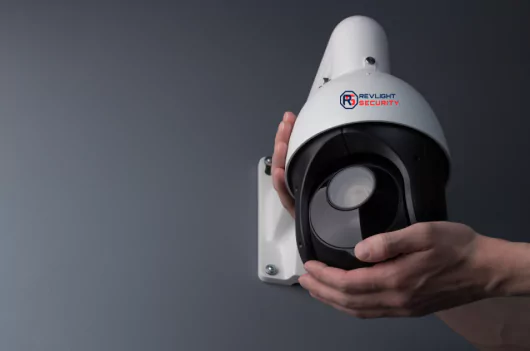
Revlight Security supports industrial buyers with surveillance solutions selected for demanding marine, energy, and process environments. The correct configuration should match the site’s exposure, hazard classification, power availability, required image performance, and maintenance capability.
A clear lens is not a minor specification detail. It is the condition that allows a surveillance system to deliver evidence, situational awareness, and operational assurance when the environment is working against it. Treat dew point control as part of the camera system from day one, and the image will remain available when your team needs it most.
🛡️ Secure Your Home or Business Today
Protect your home, office, shop, or business with reliable CCTV security cameras. Explore our range of CCTV cameras and find the right security solution for your needs.
Explore CCTV Cameras ✉️ Email Us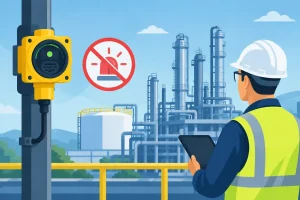



 Singapore :
+65-6708-9302