
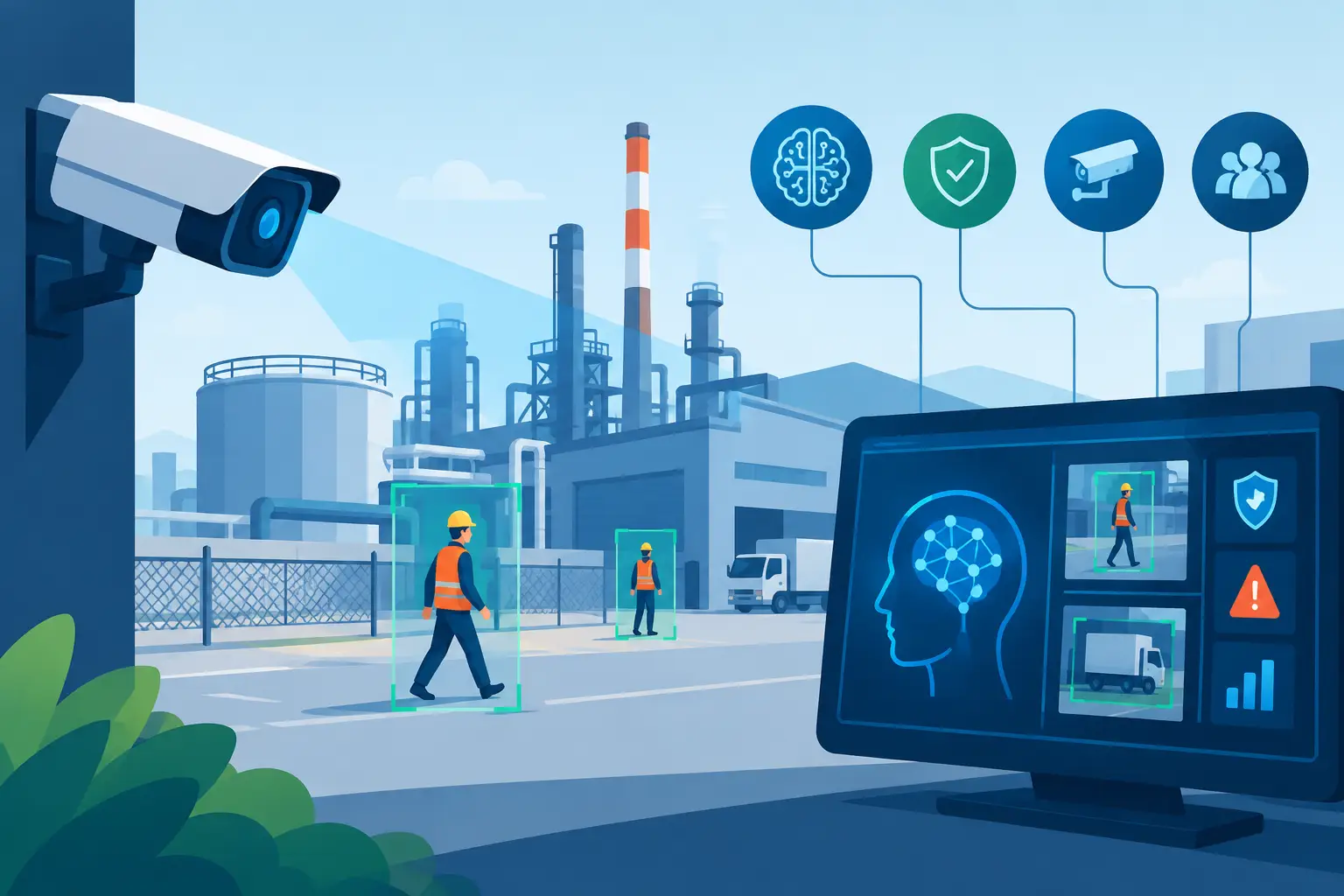
A refinery alarm does not create value simply because it activates. It creates value when the right team can verify what happened, understand the risk, and respond before a small release, intrusion, or equipment fault becomes downtime. That is where industrial AI trends are having their most practical effect: turning high volumes of video, sensor, and network data into prioritized operational intelligence.
For oil and gas operators, marine fleets, power facilities, and chemical plants, AI is not a replacement for experienced control room personnel or field engineers. It is a force multiplier. The strongest deployments reduce false alarms, shorten verification time, and direct attention toward conditions that warrant action. The result can be fewer unnecessary callouts, better environmental oversight, and stronger protection around critical assets.
Industrial AI Trends Moving From Hype to Operations
The most useful industrial AI applications are purpose-built around the realities of demanding sites: low visibility, harsh weather, restricted access, unstable communications, hazardous areas, and a constant stream of routine activity that can obscure a genuine event. General-purpose analytics may recognize a person or vehicle in a clean environment. Industrial-grade systems must distinguish between normal site behavior and a meaningful exception without creating an unmanageable alarm burden.
AI-assisted gas plume identification
Optical gas imaging and methane detection have become a major focus because a release can carry safety, compliance, environmental, and production consequences at the same time. AI-assisted analysis can help identify patterns consistent with a gas plume, distinguish movement from background heat or vapor, and escalate footage for operator review.
The critical word is assisted. A gas detection camera and its analytic model must be selected for the gas type, viewing distance, thermal conditions, site layout, and inspection objective. AI can improve the speed of review, but it does not remove the need for suitable sensing technology, correct placement, or a documented response process. Procurement teams should challenge any supplier promising universal detection performance from a single camera configuration.
Event-based video instead of constant video review
Industrial sites already produce more footage than most security teams can watch. One of the clearest trends is a move away from relying on continuous manual monitoring toward event-based workflows. AI flags a person entering a restricted zone, a vehicle stopped in an unusual location, activity around an unmanned asset, or a change in a monitored scene. Operators receive the event, the relevant footage, and the context needed to assess it quickly.
This approach is especially valuable at remote well sites, tank farms, offshore structures, substations, and vessel access points. It allows smaller teams to supervise wider estates without treating every motion alert as a security incident. The goal is not more notifications. It is fewer, more credible notifications.
Underwater condition awareness
Underwater cameras are increasingly part of inspection and security strategies for offshore platforms, ports, marine terminals, intake structures, and vessel hull areas. AI can support the review of subsea footage by identifying scene changes, tracking objects of interest, and organizing long inspection recordings around potential anomalies.
Conditions below the surface are difficult by nature. Turbidity, marine growth, currents, lighting, and visibility all influence image quality. An analytic model is only as useful as the usable image it receives. High-quality underwater housings, suitable illumination, cable integrity, and reliable recording remain the foundation. AI adds efficiency after those engineering basics are handled correctly.
The Commercial Case: Faster Decisions, Lower Operating Friction
Industrial AI is often presented as a technology purchase. Buyers should evaluate it as an operating-cost decision. The strongest return usually comes from preventing wasted time: fewer false dispatches, shorter incident verification, reduced manual footage searches, and less dependence on sending personnel into difficult or hazardous areas simply to confirm a condition.
For example, a security event at a remote energy asset may require a control room operator, a site supervisor, and a contracted response team to become involved. If analytics can show within minutes that the alert was caused by authorized maintenance activity, the organization avoids a costly escalation. Conversely, if the system identifies an unauthorized approach or a developing leak condition, the faster confirmation supports a faster and more proportionate response.
That said, return on investment depends on the starting point. A facility with poor camera coverage, unreliable recording, or fragmented network infrastructure should address those gaps before expecting AI to deliver high-value results. Analytics cannot compensate for blind spots, weak connectivity, or imagery that is unusable in the conditions that matter most.
Data Quality Is the Deciding Factor
The next phase of industrial AI trends will be shaped less by flashy interfaces and more by data discipline. Every system needs clear inputs, defined alarm rules, reliable timestamps, retention policies, and evidence that operators can retrieve when an incident is reviewed. If footage, sensor readings, and access events cannot be correlated, an AI alert may still leave the team guessing.
Network design is central to this outcome. Offshore and marine environments may contend with bandwidth constraints, radio interference, weather exposure, and intermittent connectivity. A practical architecture determines what processing should happen at the edge and what can be sent to a central platform. Edge analytics can reduce bandwidth demand by transmitting alerts and short event clips rather than continuous high-resolution streams. Centralized processing can be appropriate where dependable capacity and cross-site oversight are available.
Neither model is automatically superior. The right choice depends on the site’s communications profile, operational criticality, cyber requirements, and the level of local support available. For many operators, a hybrid design delivers the best balance: local detection for time-sensitive events and centralized storage or review for management oversight.
What Buyers Should Specify Before Selecting AI Surveillance
A serious procurement specification should define the problem before naming the feature. Asking for “AI cameras” is too broad to protect budget or performance. Ask what event must be detected, under which operating conditions, how quickly it must be verified, and what action follows the alert.
When comparing industrial surveillance and detection proposals, insist on clear answers across these areas:
- Detection objective: Define whether the priority is gas release awareness, perimeter activity, restricted-zone entry, subsea inspection, equipment condition, or another measurable event.
- Environmental performance: Confirm ratings and evidence for corrosion, temperature, salt spray, humidity, vibration, low light, hazardous areas, and underwater deployment where relevant.
- Alarm validation: Establish how the system suppresses routine activity, handles uncertain events, and allows an operator to review the supporting footage.
- Network and cybersecurity fit: Verify bandwidth demand, edge processing capability, user permissions, encryption, update controls, and compatibility with the existing network.
- Serviceability: Confirm access for cleaning, alignment, testing, replacement parts, remote diagnostics, and long-term technical support.
The most expensive mistake is purchasing advanced analytics without defining who owns the alarm after it appears. An alert needs an accountable recipient, an escalation path, and a response time expectation. Without those elements, even top-of-the-line detection equipment becomes another source of unattended data.
Human Oversight Remains Non-Negotiable
AI can classify, rank, correlate, and prompt. It cannot carry full responsibility for operational judgment. A suspected gas plume may require confirmation through established safety procedures. An apparent intrusion may be an authorized contractor whose schedule was not updated. A subsea anomaly may be sediment movement rather than damage.
This is why operators should build AI into a defined workflow instead of treating it as an autonomous security layer. Train control room staff on what each alert means, retain event evidence for review, and periodically measure false positives, missed events, and response times. Those results should feed back into camera placement, analytic settings, and operating procedures.
Revlight Security supports this outcome by focusing on surveillance and detection infrastructure suited to industrial conditions, where dependable imaging, communications, and recording must work together rather than operate as separate products.
The practical opportunity is clear: specify AI around the decisions your people need to make, test it in the conditions your site actually faces, and make every alert lead to a defined next step. That is how industrial intelligence becomes a security and operations advantage rather than another dashboard competing for attention.
🛡️ Secure Your Home or Business Today
Protect your home, office, shop, or business with reliable CCTV security cameras. Explore our range of CCTV cameras and find the right security solution for your needs.
Explore CCTV Cameras ✉️ Email Us


 Singapore :
+65-6708-9302
Singapore :
+65-6708-9302