

A camera that survives rain, salt, and vibration can still be the wrong choice for a refinery tank farm or a gas compression skid. In hazardous locations, the question is not just how to deploy explosion proof cameras, but how to deploy them so they keep operating, support investigations, and meet site safety requirements without creating delays or rework.
For procurement teams and operations leaders, deployment decisions affect far more than image quality. They shape installation cost, maintenance access, network performance, and whether your surveillance system actually delivers usable coverage in Zone or Class rated areas. A strong deployment plan protects people, supports compliance, and avoids the expensive mistake of treating hazardous-area cameras like standard industrial CCTV.
Start with the hazard classification, not the camera
The fastest way to get a deployment wrong is to start with a product datasheet before confirming the environment. Hazardous areas differ by gas group, dust risk, temperature class, and regional certification requirements. Oil and gas terminals, offshore platforms, marine loading areas, chemical plants, and power facilities often contain multiple risk zones within the same site.
That matters because explosion proof camera deployment is driven by the area classification first. A camera suitable for one classified area may not be suitable a few yards away if the ignition risk changes. Procurement managers should ask for the hazardous area schedule, engineering drawings, and site operating conditions before comparing models. Operations teams should also confirm whether washdown, corrosive atmosphere, extreme heat, low light, or heavy vibration are part of the real operating profile.
If the area classification is unclear, deployment should pause until it is verified. This is where delays begin, and it is also where avoidable overspending starts. Over-specifying every camera wastes budget. Under-specifying creates a much bigger problem.
How to deploy explosion proof cameras with the right coverage plan
Once the hazardous classification is confirmed, the next step is coverage design. Good coverage in hazardous environments is rarely about putting a camera at the nearest mounting point. It is about identifying what must be seen, from what angle, at what distance, and under what operating conditions.
A flare stack approach road needs very different coverage from a pump line, a manifold, or a marine transfer point. Some areas need wide situational awareness. Others need tighter views for valve status, perimeter activity, or personnel verification. A fixed camera often delivers better reliability and lower maintenance for critical views, while PTZ units can add operational flexibility in larger zones. The trade-off is simple – PTZ gives broader control, but fixed cameras usually provide more consistent evidence capture for a specific target.
Camera height also matters. Mount too low and the unit becomes vulnerable to obstruction, tampering, spray, or impact. Mount too high and facial detail, equipment readings, or close operational activity may be lost. In industrial plants, the best results usually come from balancing line of sight with maintenance access and cable routing practicality.
Pay attention to lighting and atmosphere
Hazardous sites rarely offer perfect visual conditions. Glare from process lighting, low-light night operations, steam, fog, gas haze, and reflective metal surfaces can all reduce image usability. That means deployment planning should include scene testing where possible, not just lens calculations.
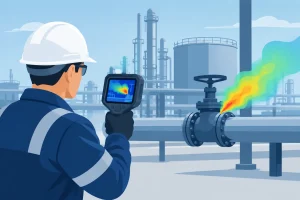
Infrared can help in some scenarios, but not every hazardous-area application benefits equally. In reflective environments or where vapor is common, IR performance can vary. Thermal or gas detection imaging may be the stronger choice for specific process-monitoring or perimeter applications. The right deployment plan matches the camera type to the operational objective instead of assuming one format covers every risk.
Infrastructure decides whether the system performs
Many surveillance projects fail at the infrastructure level, not the camera level. Power, network topology, bandwidth, enclosure access, and recording architecture all influence whether an explosion proof camera system performs reliably after handover.
In large industrial sites, cable distance and routing can be more difficult than the equipment selection itself. Hazardous-area certified cable glands, junction boxes, conduits, and mounting accessories must match the environment and the camera approvals. This sounds obvious, yet it is a common source of procurement and installation mismatch.
PoE may simplify deployment in some locations, but long runs, remote assets, and high-power devices can call for alternative power design. Fiber is often the stronger choice across larger facilities or marine environments where electromagnetic interference, distance, and network stability are concerns. Wireless can be effective in selected industrial or marine scenarios, but only when the RF environment, redundancy needs, and security controls are properly assessed.
Recording strategy matters too. If the camera is deployed for safety verification, incident review, or process oversight, retention time and playback quality cannot be treated as afterthoughts. Compression settings, frame rate, and event recording rules should align with the actual use case. A system that saves bandwidth by sacrificing detail may meet a specification on paper while failing the operation that funded it.
Installation quality is part of compliance
Knowing how to deploy explosion proof cameras means understanding that installation quality is part of the safety case. Hazardous-area cameras are not standard units with a stronger housing. The integrity of certified equipment depends on correct mounting, sealing, termination, and commissioning.
That includes torque settings, correct gland selection, approved accessories, and installation practices that do not compromise the enclosure rating. Even a top-of-the-line camera can become a liability if installed with incompatible components or modified in the field. For buyers, this is why low upfront pricing can be misleading. The better value comes from a supplier that understands complete hazardous-area deployment, not just product supply.
There is also the practical issue of maintenance clearance. Cameras mounted where technicians cannot safely access them without shutdowns or complex permits often cost more over time. A strong deployment plan considers cleaning, inspection, firmware updates, and replacement access from day one.
Commissioning should test operations, not just connectivity
A camera image on a monitor is not proof of a successful deployment. Commissioning should confirm focus, scene coverage, night performance, stream stability, alarm integration, and recording behavior under real site conditions. If the camera is intended to monitor a transfer point or support a control room response, operators should verify that the view is genuinely useful for that task.
This is also the right time to confirm cybersecurity settings, user access controls, and VMS integration. Industrial security now depends on both physical resilience and network discipline. Cameras placed in critical infrastructure environments must be treated as part of the broader operational technology landscape.
Environmental durability is not one-size-fits-all
Explosion proof is only one part of camera suitability. Offshore assets may require serious corrosion resistance. Marine installations may need housings and mounts designed for salt exposure, constant motion, and moisture intrusion. Refineries may need protection against chemical washdown and elevated ambient temperatures. Heavy industrial sites may present dust loading, vibration, and high-pressure cleaning.
This is where product selection and deployment planning overlap. The right housing material, lens window treatment, heater or blower configuration, and mounting hardware can significantly affect service life. Buyers looking for the ultimate in security surveillance systems should evaluate total environment fit, not just certification labels.
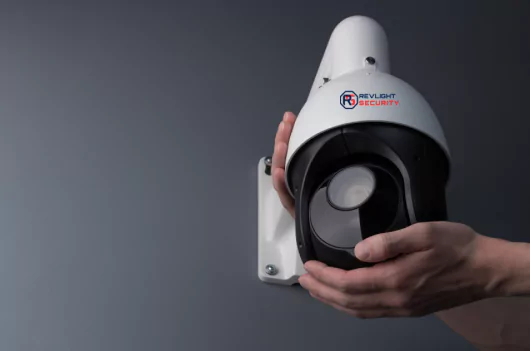
That is also where an engineering-backed supplier adds value. Revlight Security supports industrial buyers who need camera systems built for harsh, classified environments, with network and surveillance performance considered together rather than as separate decisions.
Budget control comes from scope discipline
Commercially, the best deployment is not always the one with the most cameras. It is the one that closes the highest-risk visibility gaps with the least operational friction. Some sites need full-area surveillance with remote access and centralized recording. Others need focused monitoring of transfer points, hazardous process zones, or marine interfaces.
A disciplined design reduces overspecification. For example, not every classified area needs PTZ coverage, analytics, thermal imaging, and maximum retention. But under-scoping the system can create blind spots that lead to repeat site visits, added installation work, and future capital requests. The stronger approach is to rank priorities: safety-critical views first, operational views second, convenience coverage last.
Procurement teams should also examine lifecycle cost. A lower-cost unit that fails early in corrosive conditions is rarely the better buy. The best service provider helps customers compare uptime, maintenance burden, certification suitability, and integration cost, not just unit price.
The best deployment plan is the one that survives real operations
Hazardous-area surveillance is not a box-checking exercise. It has to work when visibility drops, when operations continue through the night, and when incident review depends on clear recorded evidence. That means every deployment choice – classification, placement, network design, installation method, and maintenance access – has to support the environment it serves.
If you are planning how to deploy explosion proof cameras, push past generic CCTV thinking. Build the system around the hazard, the task, and the operating reality of the site. That is how you get dependable coverage, stronger asset protection, and a surveillance investment that keeps paying back long after installation is complete.
🛡️ Secure Your Home or Business Today
Protect your home, office, shop, or business with reliable CCTV security cameras. Explore our range of CCTV cameras and find the right security solution for your needs.
Explore CCTV Cameras ✉️ Email Us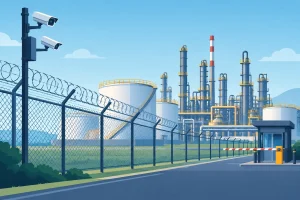


 Singapore :
+65-6708-9302
Singapore :
+65-6708-9302