
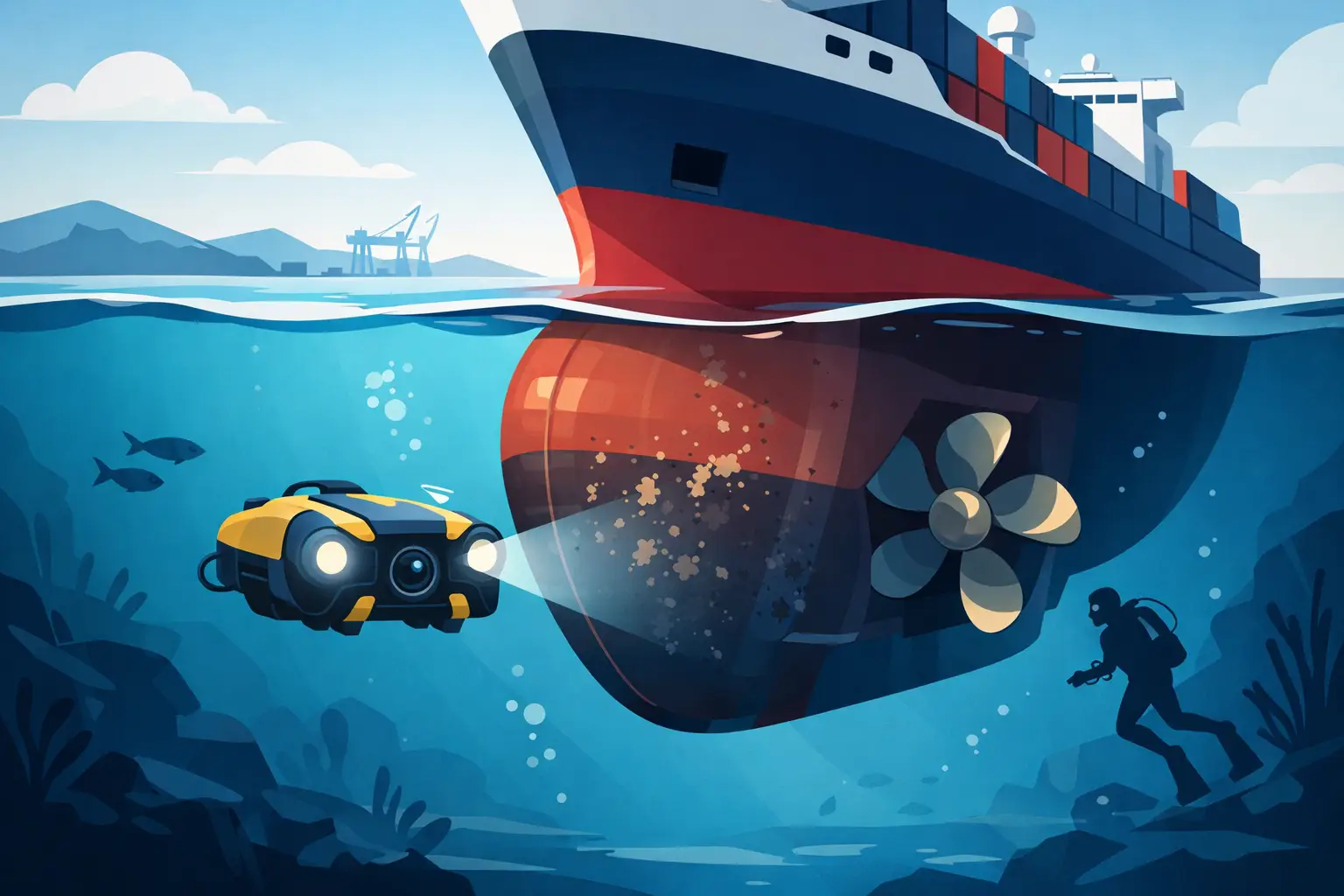
A vessel waiting for dry dock is expensive. Every day out of service affects schedules, charter commitments, maintenance budgets, and crew planning. That is why the question, “can underwater cameras inspect ship hulls,” matters to fleet managers and marine operators. The answer is yes – when the system is specified for the water conditions, depth, inspection objective, and evidence standard required.
Underwater camera systems give operators a direct visual view of submerged hull areas without immediately committing the vessel to dry dock. They can support routine condition checks, post-incident inspections, berth-side investigations, security sweeps, and maintenance planning. They do not replace every survey method or class requirement, but they can reduce uncertainty and help teams make faster, better-supported decisions.
Can Underwater Cameras Inspect Ship Hulls Effectively?
They can, provided the camera is treated as part of an inspection system rather than a standalone viewing device. Image quality depends on more than resolution. Water clarity, ambient light, suspended sediment, hull geometry, lighting angle, cable management, mounting method, and operator experience all affect what the team can see and document.
A properly configured system can reveal visible coating damage, corrosion patterns, marine growth, missing or degraded sacrificial anodes, impact marks, fouling around sea chests, damage near thrusters, and debris around intakes or outlets. It can also capture condition evidence before cleaning work, following contact with a quay or submerged object, or when a vessel has operated in a high-fouling port.
For commercial use, the value is not simply seeing the hull. The value is recording clear, traceable footage that maintenance, technical, insurance, and management teams can review remotely. A live image may help an engineer make an immediate decision. Time-stamped video and still-image capture create a usable maintenance record.
What Cameras Can and Cannot Confirm
Visual inspection is highly effective for surface conditions. If paint is blistered, an anode is consumed, a sea chest grille is obstructed, or a propeller area has visible damage, an underwater camera can provide direct evidence.
However, a camera cannot reliably measure steel thickness, determine the remaining section of a corroded plate, or prove the integrity of a weld beneath a coating. It may identify an area that needs closer attention, but ultrasonic thickness testing, nondestructive testing, diver examination, or dry-dock inspection may still be required. This distinction matters when building a maintenance program or presenting evidence to class, insurers, or regulators.
The best approach is to use camera inspection as an early-warning and verification tool. It helps operators identify where they need to spend time and budget, rather than treating the entire hull as an unknown.
Where Hull Camera Inspections Deliver the Strongest Return
Routine hull condition monitoring is one of the most practical applications. Operators can inspect high-risk zones at intervals based on operating profile, port conditions, vessel age, and known maintenance history. Areas near waterline transitions, sea chests, thruster tunnels, intakes, appendages, and propeller zones often deserve focused coverage.
Post-event inspection is another high-value use. After a suspected grounding, contact with floating debris, a berth impact, or an operational complaint involving vibration or reduced cooling flow, a camera system can quickly establish whether visible external damage is present. That can support a decision to continue operations, arrange a specialist intervention, or schedule an earlier yard visit.
Security inspections also matter. In sensitive ports, offshore facilities, and restricted marine environments, underwater surveillance can help inspect hull-adjacent areas, intakes, mooring zones, and submerged infrastructure for unusual objects or interference. For these applications, reliable recording, controlled access, and clear playback are as important as the camera image itself.
The Equipment Specification Makes the Difference
Marine operators should not purchase an underwater inspection camera based on resolution alone. A high-resolution sensor will not overcome poor lighting, backscatter from suspended particles, or an enclosure that is not rated for the planned depth and duty cycle.
Start with the operating environment. Harbor water, offshore water, river systems, and refinery intake areas present very different visibility and contamination conditions. In turbid water, adjustable lighting and careful lamp placement become essential. Lights positioned too close to the lens can illuminate particles directly in front of the camera, creating glare and reducing usable detail. A system designed with controlled illumination and appropriate beam angles produces more meaningful hull images.
Depth rating is equally critical. The housing, cable, connectors, and seals must be rated beyond the maximum expected working depth, with an appropriate operational margin. Saltwater resistance, corrosion-resistant materials, pressure-tested components, and protected cable terminations are baseline requirements for serious marine deployment.
Low-light performance should be evaluated alongside lighting output. Inspections often occur under a vessel, near docks, beneath offshore structures, or during low-visibility weather. A camera that retains detail in low ambient light gives the operator more flexibility and reduces dependence on excessive artificial illumination.
A productive ship hull inspection system should also support practical evidence management. Look for live monitoring, recording, playback, still capture, date and time overlays, and secure transfer to the vessel or shore-side network. Where multiple stakeholders need to review findings, remote access through a properly managed network can shorten decision cycles without compromising system control.
Selecting the Right Deployment Method
The inspection method should match the vessel and the task. Some systems are installed at fixed observation points for ongoing monitoring of specific areas. Others are mounted on remotely operated platforms, poles, or purpose-built deployment frames to scan wider hull sections. The correct choice depends on access, current, depth, inspection frequency, and the level of maneuverability required.
Fixed systems are valuable where operators need repeatable observation of intakes, offshore platform structures, berth infrastructure, or localized underwater assets. They deliver consistent camera positioning and can be integrated into a broader surveillance network.
Mobile inspection configurations are better suited to broad condition checks, incident response, and areas that cannot be observed from a single point. They provide flexibility but demand careful planning. Strong current, vessel movement, prop wash, and restricted access can all limit coverage. Procurement teams should assess not only camera performance, but also how the system will be deployed, stabilized, retrieved, maintained, and operated safely.
Questions to Ask Before Buying
A technically sound supplier should be able to answer direct questions about operating depth, lighting performance, cable length, connector protection, image output, recording options, network compatibility, and maintenance requirements. Ask for real operating parameters rather than broad claims about marine suitability.
It is also worth defining the inspection outcome before selecting equipment. Is the objective a quick visual check of a sea chest? A recorded hull condition survey? A security inspection at an offshore asset? A post-contact assessment requiring management review? Each use case changes the right balance of lighting, camera sensitivity, control capability, recording capacity, and deployment hardware.
For fleet operators, standardization can create significant savings. Using comparable equipment, recording procedures, naming conventions, and inspection checklists across vessels makes footage easier to review and maintenance trends easier to identify. It also reduces training demands and improves confidence in the evidence submitted by different crews or contractors.
Build Camera Inspection Into Maintenance Planning
The strongest results come when underwater inspection is scheduled, documented, and connected to maintenance decisions. A camera system should not sit unused until an incident occurs. Establish inspection triggers based on port calls, known fouling exposure, operational events, cooling performance concerns, and dry-dock lead times.
Each inspection should identify the vessel, location, date, water conditions, camera position, and areas reviewed. If an anomaly is found, record its location relative to identifiable hull features and capture both a wider context view and a close view. This creates footage that is useful after the immediate operation, when technical teams need to compare it with earlier records or plan a repair scope.
Revlight Security supplies specialist underwater surveillance solutions built for demanding industrial and marine environments. For buyers, the priority is clear: specify equipment that delivers dependable visual evidence under real operating conditions, not only in a clean-water demonstration.
A clear view below the waterline can turn an uncertain maintenance decision into a planned, defensible action. That is where a properly engineered underwater camera system earns its place in a vessel’s operating strategy.
🛡️ Secure Your Home or Business Today
Protect your home, office, shop, or business with reliable CCTV security cameras. Explore our range of CCTV cameras and find the right security solution for your needs.
Explore CCTV Cameras ✉️ Email Us


 Singapore :
+65-6708-9302
Singapore :
+65-6708-9302