
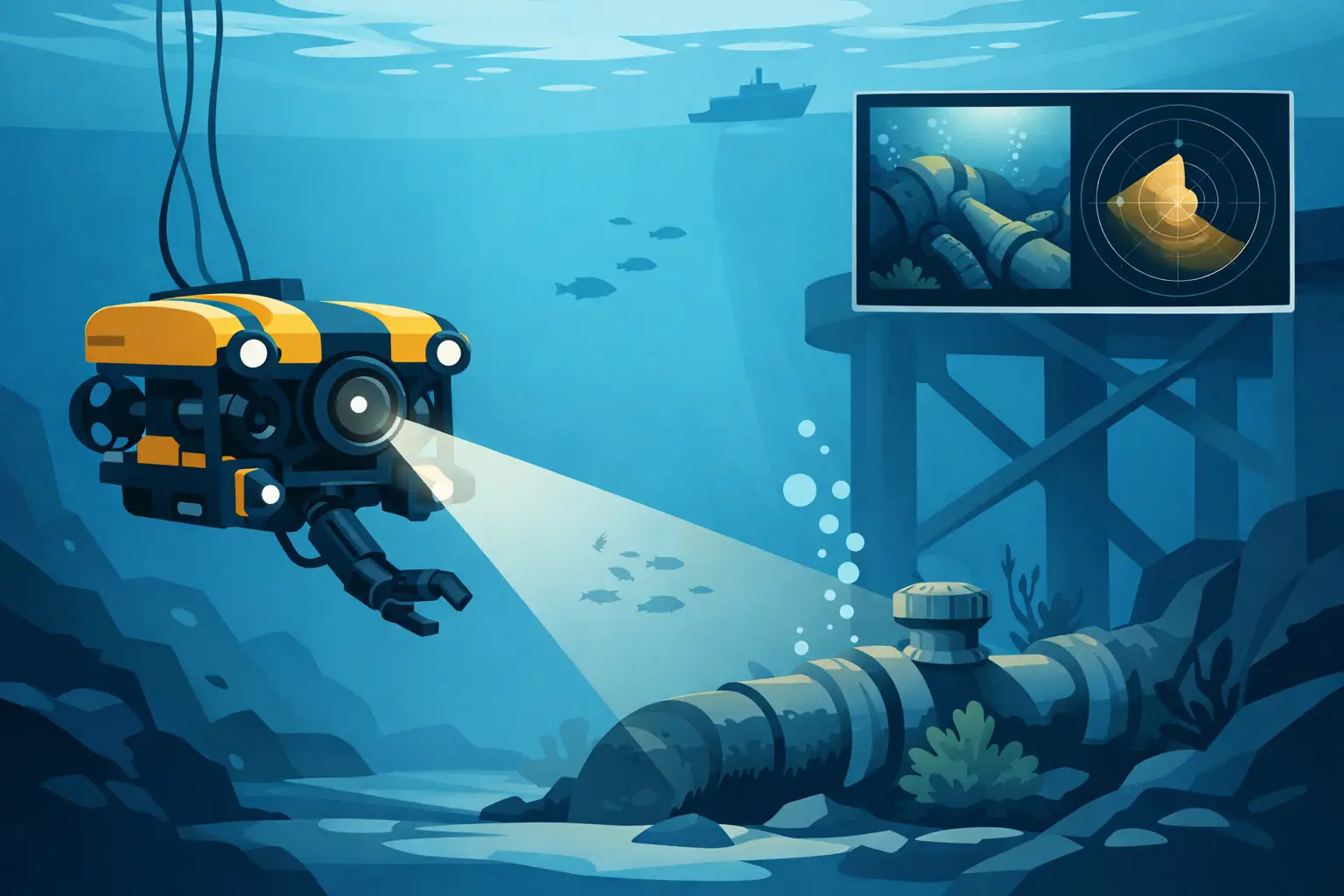
When a subsea inspection window is tight, vessel time is expensive, and visibility is poor, the camera system on your ROV stops being a simple accessory. It becomes the deciding factor between a clean inspection report and an expensive return trip. That is why ROV camera inspection systems matter so much for offshore platforms, marine operators, refineries with water assets, and industrial facilities that cannot afford blind spots below the surface.
For procurement teams and operations leaders, the real question is not whether an ROV needs a camera package. It is whether the system can deliver dependable image quality, recording, transmission, and survivability in the exact environment where you operate. Saltwater, turbidity, pressure, lighting loss, cable length, and integration demands all change what the right specification looks like.
What ROV camera inspection systems are expected to do
A serious inspection system has to do more than capture video. In practical offshore and industrial work, it must support identification, documentation, and decision-making in real time. Operators need to see weld conditions, corrosion, marine growth, structural damage, leaks, blockages, and equipment positioning without hesitation. Supervisors need reliable footage for review. Management needs a system that reduces reinspection costs and keeps assets online.
That means the best ROV camera inspection systems combine camera sensors, pressure-rated housings, lighting, transmission hardware, recording capability, and monitoring interfaces into one working inspection solution. Performance is judged on what comes back to the screen under real operating pressure, not just what looks good on a spec sheet.
In some deployments, a lower-light monochrome camera can outperform a higher-resolution color model because the water conditions are poor and artificial lighting is limited. In others, high-definition color output is the better choice because the inspection depends on distinguishing coating failure, identifying material change, or documenting precise visual evidence for compliance records. It depends on the task, the depth, and the level of detail required.
The features that separate working systems from weak ones
Image quality is the first buying criterion, but it should never be viewed in isolation. Resolution matters, yet low-light sensitivity can matter more in subsea work. A 4K claim has little value if the camera struggles with suspended particles, backscatter, or weak illumination. Buyers should look at how the system performs in murky water, around structures, and during long inspections where visual consistency matters.
Lighting is equally critical. Even a strong camera underperforms with poorly matched illumination. Integrated LED arrays, adjustable beam angles, and proper placement reduce glare and improve visibility on close-range structural work. For larger assets, lighting needs increase quickly, especially around jackets, hulls, intake structures, and subsea assemblies.
Pressure rating is non-negotiable. The housing, connectors, and seals must be selected for the true operating depth, with margin built in. This is not a place to buy on minimum tolerance. Failure at depth does not only damage equipment. It can interrupt inspections, delay maintenance planning, and add avoidable vessel and crew costs.
Signal transmission also deserves close attention. Some operators need live video at the control station with minimal latency for piloting and inspection decisions. Others also need high-quality onboard recording for post-mission review. Those are related needs, but they are not identical. A system that streams adequately may still fall short on archival quality, and a recording-focused setup may not offer the responsiveness needed for precise maneuvering.
Choosing ROV camera inspection systems for your environment
There is no universal best system because subsea inspection conditions vary too much. An inland power station intake inspection does not demand the same setup as a deep offshore structural survey. A ship hull assessment has different viewing distances and lighting challenges than a confined underwater pipeline check.
For shallow-water infrastructure work, compact systems with strong low-light performance and dependable recording are often enough. They can be cost-effective and easier to integrate into existing ROV platforms. For deeper or more technically demanding deployments, buyers usually need higher pressure ratings, better optics, stronger lighting packages, and transmission hardware designed for long-duration work.
The inspection objective should drive the specification. If your team is checking for broad condition changes, you may prioritize field of view and stable general imaging. If the work involves crack detection, fine marine growth differentiation, or close review of welds and connectors, detail and lighting control become more important. If evidence capture is central for insurance, compliance, or engineering review, recording quality and playback options move higher up the list.
This is where experienced suppliers add real value. A commercially attractive price means little if the system has to be modified later to meet operational reality. The better approach is to match the camera package to the asset class, mission profile, and reporting standard from the start.
Integration matters as much as the camera head
Many buying decisions go wrong because the focus stays on the camera unit alone. In the field, inspection performance depends on the full chain – camera, tether behavior, lighting, topside monitors, recording devices, network transmission, connectors, and control compatibility.
If a system does not integrate cleanly with your ROV, deployment becomes harder, maintenance becomes slower, and operator confidence drops. Mechanical fit, power requirements, connector standards, and communication protocols all affect uptime. Industrial buyers should also look at serviceability. A camera system that is difficult to maintain or replace in remote locations can become a liability even if its lab performance looks strong.
For fleets and multi-site operators, standardization is often the smarter commercial move. Using compatible ROV camera inspection systems across platforms can simplify training, spare parts management, maintenance planning, and reporting workflows. That does not mean every unit should be identical, but it does mean fragmentation should be controlled.
Why buyers prioritize recording, playback, and remote visibility
Modern inspection work is rarely just a live-view exercise. Buyers increasingly expect recording, playback, and remote review as standard operational functions. Inspection teams want a clear chain of evidence. Engineering teams want footage they can revisit. Managers want confidence that a maintenance or intervention decision is based on what was actually seen, not just what was verbally reported.
That is why systems with dependable onboard or topside recording offer a commercial advantage. Playback helps validate findings, train operators, and support maintenance planning. Remote visibility can also improve collaboration between vessel teams, onshore engineers, and client stakeholders when real-time input is needed.
In higher-risk sectors such as offshore energy, chemical processing, marine transport, and power generation, this capability supports faster decisions and tighter operational control. It can reduce duplicated inspections and shorten the path from detection to action. Those savings add up quickly when downtime, vessel charter, or shutdown windows are involved.
The cost question: cheaper upfront can cost more offshore
Procurement always has to balance performance and budget, but subsea inspection is one of those areas where low upfront pricing can become very expensive. If the image is unclear, the lighting is weak, or the system fails under environmental pressure, the cost is not limited to replacement equipment. It extends to labor, delay, asset exposure, and repeat deployment.
That said, overspecifying is also a mistake. Not every inspection needs the highest resolution, deepest pressure rating, or most advanced transmission stack. The right commercial decision is to buy for the mission, with enough margin for reliability and enough flexibility for foreseeable future use.
A strong supplier will be direct about those trade-offs. Some operations need premium imaging and full recording architecture. Others are better served by a simpler, durable system that performs consistently within a narrower range. The key is honest matching between equipment capability and operational demand.
What to ask before you buy ROV camera inspection systems
Buyers should press for practical answers, not broad marketing claims. Ask how the system performs in low visibility, what recording formats are supported, how lighting is configured, what the true pressure rating is, and how the package integrates with your existing ROV platform. Ask about connector durability, spare availability, maintenance intervals, and whether remote monitoring is supported.
It is also worth asking how the system has been configured for similar industries. Oil and gas operators, ship managers, and power facilities often share overlapping inspection needs, but the details differ enough that off-the-shelf assumptions can create problems later. A supplier with real sector knowledge should be able to speak clearly about those differences.
At Revlight Security, that practical view is exactly where value is created. Buyers in industrial and marine sectors do not need vague promises. They need top-of-the-line offers that stand up to harsh environments, support clear inspection outcomes, and protect budgets from avoidable repeat work.
The best ROV camera system is the one that gives your team confidence when conditions are poor and the stakes are high. If it helps you see clearly, record accurately, and act faster, it is doing more than supporting inspection – it is protecting the asset, the schedule, and the bottom line.
🛡️ Secure Your Home or Business Today
Protect your home, office, shop, or business with reliable CCTV security cameras. Explore our range of CCTV cameras and find the right security solution for your needs.
Explore CCTV Cameras ✉️ Email Us

 Singapore :
+65-6708-9302
Singapore :
+65-6708-9302