
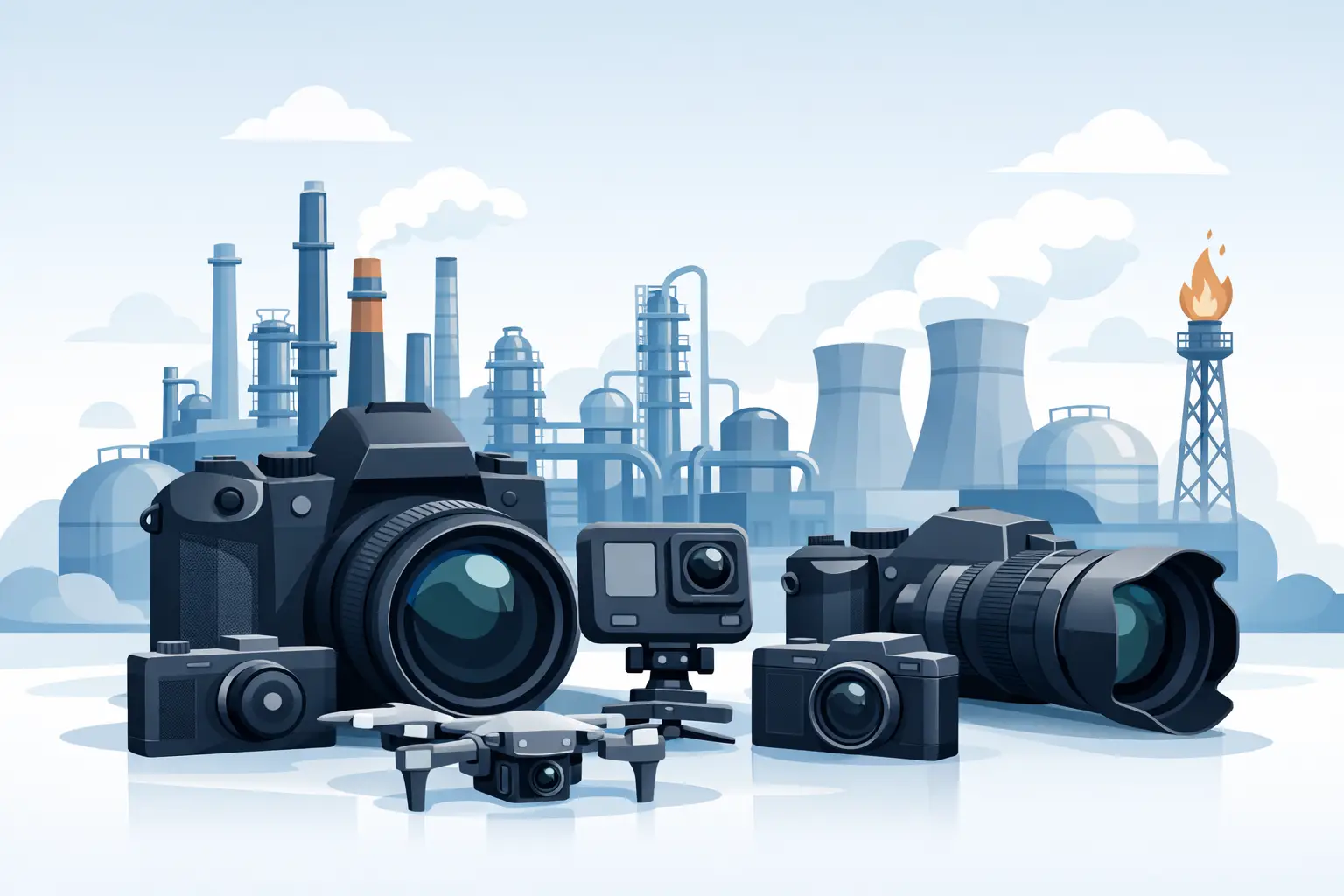
A standard commercial camera fails fast in a refinery. Heat, vapor, corrosive air, vibration, and hazardous area rules expose every weak point in the housing, lens, cable run, and network connection. That is why choosing the best cameras for oil refineries is not a basic security purchase. It is an operational decision that affects safety, uptime, incident response, and long-term maintenance cost.
Refineries need more than perimeter video. They need visual coverage that can perform across tank farms, process units, flare stacks, loading areas, control perimeters, and remote assets. In practice, that means the right mix of certified hazardous area cameras, thermal imaging, gas leak detection systems, PTZ coverage, and network-ready recording infrastructure. Buyers who treat all industrial cameras as interchangeable usually pay for it later in false alarms, blind spots, or expensive replacements.
What makes the best cameras for oil refineries different
The best cameras for oil refineries are built around risk class, environmental load, and operational purpose. A camera used for gate monitoring is not specified the same way as one installed near hydrocarbon processing equipment. In refinery environments, enclosure rating and hazardous area certification are as important as image quality.
You also have to look beyond the camera body. Lens selection, heater and blower support, corrosion-resistant materials, mounting design, and integration with video management software all affect performance. A lower-cost unit can look attractive at purchase stage, but if it cannot tolerate washdown, salt-laden air, or sustained high temperatures, it becomes the more expensive option very quickly.
For procurement teams, the key point is simple. The right camera is the one that fits the exact zone, hazard level, monitoring objective, and maintenance reality of the site.
1. Explosion-proof fixed cameras
For constant surveillance of process areas, fixed explosion-proof cameras are often the first requirement. These units are designed for hazardous locations where flammable gases or vapors may be present, and they provide stable, always-on coverage for critical assets.
Their strength is consistency. If you need uninterrupted monitoring of pump skids, manifolds, pipe racks, or restricted access points, a fixed camera gives operators a reliable visual reference without mechanical movement or coverage drift. The better units combine stainless steel or marine-grade housing with high ingress protection and certified operation in hazardous zones.
The trade-off is that fixed coverage is only as good as the original angle and lens choice. If the scene changes often, or if a single camera needs to monitor a wide operating area, fixed-only designs can create blind spots.
2. Explosion-proof PTZ cameras
Where operational flexibility matters, PTZ cameras are a strong refinery option. They allow operators to pan, tilt, and zoom across wider areas such as tank farms, loading bays, dock approaches, and perimeter corridors. This makes them useful for live incident assessment and remote inspections.
A good explosion-proof PTZ unit reduces the number of separate cameras needed in some layouts, which can lower infrastructure cost. It also gives control room teams more value during alarm verification because they can track movement and inspect details in real time.
That said, PTZ cameras should not replace all fixed positions. When a PTZ is looking in one direction, it is not watching another. In high-risk zones, the strongest approach is usually a combination of fixed coverage for continuous monitoring and PTZ support for situational control.
3. Thermal cameras for heat and intrusion detection
Thermal cameras have become one of the most valuable refinery surveillance tools because they do not depend on visible light. They detect heat signatures, which makes them effective at night, in smoke, through light haze, and across large outdoor areas.
In refinery use, thermal imaging is commonly specified for perimeter detection, hot spot monitoring, equipment overheating checks, and early fire awareness. For tank farms and remote process infrastructure, thermal coverage can improve response times where standard visible cameras struggle.
Not every thermal camera is equal. Resolution, detection range, analytics support, and calibration all matter. A lower-grade thermal unit may detect presence but fail to provide enough detail for operators to make quick decisions. That is why thermal should be selected based on the actual task, not just the fact that it is thermal.
4. Gas leak detection cameras
This is where refinery camera selection becomes more specialized. Gas leak detection cameras are designed to visualize certain hydrocarbon or methane emissions that cannot be seen by the naked eye. For refinery operators, that means a camera can become part of a faster leak investigation process, especially in difficult or elevated locations.
These systems are not a replacement for fixed gas detection networks, but they are a powerful complement. They help teams confirm suspected leaks, prioritize response, and inspect assets with less delay. In environments where emissions control, personnel safety, and process continuity all matter, that can make a measurable commercial difference.
The main consideration is application fit. Gas imaging performance depends on target gas type, background conditions, distance, and scene temperature. Buyers should specify around the refinery’s real leak scenarios, not generic marketing claims.
5. Dual-spectrum cameras
A dual-spectrum camera combines visible imaging and thermal imaging in one system. For refineries, that is a practical choice where operators need both context and heat-based detection from the same position. You get a conventional visual view for identification and a thermal channel for low-light and abnormal heat events.
This type of camera works particularly well in large outdoor process zones and perimeter lines where conditions shift throughout the day. It can simplify monitoring because one installed unit covers two surveillance jobs at once.
The cost is higher than a basic fixed camera, but the return can justify it when cabling, mounting access, and hazardous area installation are expensive. In many refinery settings, fewer but more capable devices are the smarter buy.
6. Corrosion-resistant marine-grade cameras
Refineries near coastlines, offshore transfer points, or high-humidity process areas need to pay close attention to corrosion resistance. Even certified hazardous area equipment can degrade early if the housing materials are not suitable for salt exposure or chemically aggressive atmospheres.
Marine-grade cameras with stainless steel construction and sealed connectors hold up better in these conditions. They are especially relevant for terminals, jetty facilities, offshore-related infrastructure, and any refinery section exposed to persistent moisture or chemical washdown.
This is one area where cutting cost usually backfires. Corrosion does not just affect appearance. It affects seals, mounts, cable entries, and long-term reliability.
7. Long-range perimeter cameras
Refinery security does not stop at the process unit. Long-range cameras are often needed for boundary fencing, approach roads, storage yards, and remote infrastructure corridors. These systems are built for detection and observation over extended distances, often with strong zoom capability and analytics support.
For larger sites, long-range visual and thermal pairing can strengthen perimeter awareness without forcing operators to manage dozens of short-range devices. That improves coverage efficiency and can reduce the time needed to verify a perimeter event.
The specification challenge is environmental interference. Heat shimmer, dust, rain, and distance all affect image usability. The best results come from matching the camera to the site geometry rather than chasing the biggest zoom number.
How to choose the best cameras for oil refineries
Start with hazardous area classification. If the camera is going anywhere near volatile gas or vapor risk, certification is not optional. After that, define the actual job of each device. Are you trying to record personnel access, detect intrusions, identify overheating equipment, verify emissions, or inspect a remote asset from the control room?
Then look at exposure. Temperature extremes, corrosive atmosphere, vibration, offshore spray, and maintenance access all shape the right specification. A technically strong camera that is difficult to service in place may still be the wrong commercial decision.
Network design matters too. High-performance refinery cameras generate large amounts of data, especially thermal and multi-sensor systems. Recording, playback, remote access, and bandwidth planning need to be addressed at the same time as camera selection. The best result is always a complete surveillance design, not a shopping list of standalone devices.
What buyers should expect from a serious supplier
Industrial buyers should expect more than product brochures. A serious supplier should understand hazardous area deployment, camera-to-network compatibility, storage demands, and the operational differences between refinery, marine, and energy sites. That level of support saves time during procurement and avoids specification mistakes that become costly after installation.
This is where an engineering-backed supplier stands apart. The best service provider will help match camera type to site risk, coverage objective, and total cost of ownership. For operators comparing top-of-the-line offers, that guidance is often as valuable as the hardware itself.
At Revlight Security, the focus is on dependable surveillance and detection equipment built for hard industrial environments, including refinery gas imaging, offshore camera systems, and network-ready monitoring solutions.
The right refinery camera system should earn its place every day – not just during an audit or after an incident. If your current coverage leaves operators guessing, that is usually the clearest signal that it is time to specify better equipment.
🛡️ Secure Your Home or Business Today
Protect your home, office, shop, or business with reliable CCTV security cameras. Explore our range of CCTV cameras and find the right security solution for your needs.
Explore CCTV Cameras ✉️ Email Us

 Singapore :
+65-6708-9302
Singapore :
+65-6708-9302