
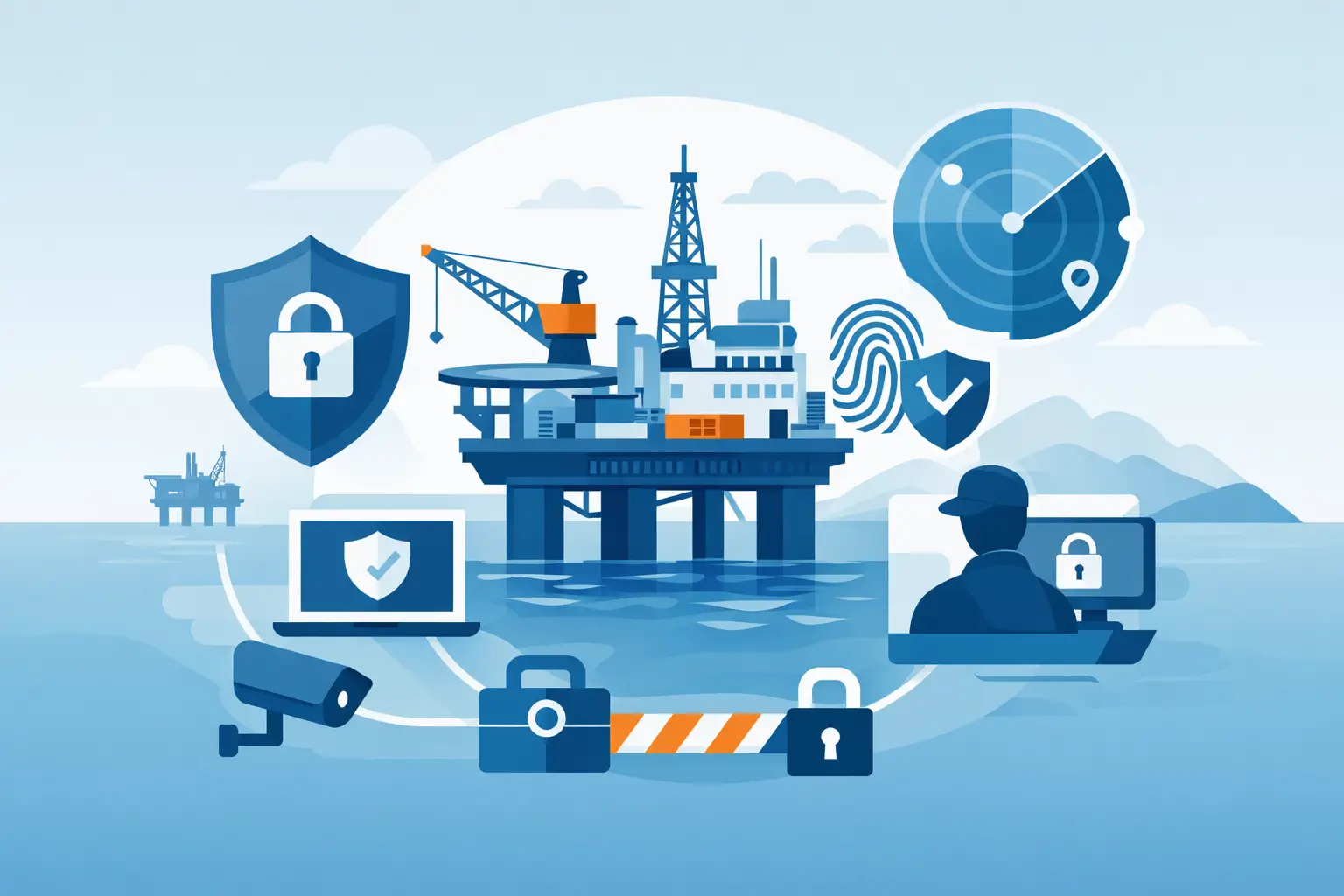
A security failure offshore rarely starts with a dramatic breach. More often, it begins with a blind loading area, an unreadable image in salt spray, a gas alarm without visual confirmation, or a network drop during a critical transfer. This offshore platform security guide is built for buyers who need surveillance infrastructure that keeps working when weather, corrosion, vibration, distance, and operational pressure expose weak specifications.
For offshore operators, security is not a standalone camera purchase. It is a connected operating capability that supports crew safety, asset protection, incident review, environmental response, and business continuity. The right system gives control rooms and shore teams reliable visual intelligence without creating another maintenance burden for offshore personnel.
Start With the Risks That Affect Production
A platform security plan should begin with operational risk, not a camera count. Procurement teams should ask where a delayed response would create the greatest safety, financial, or environmental consequence. On most facilities, these areas include access points, helidecks, crane and lifting zones, wellhead and process areas, marine transfer locations, perimeter approaches, and machinery spaces.
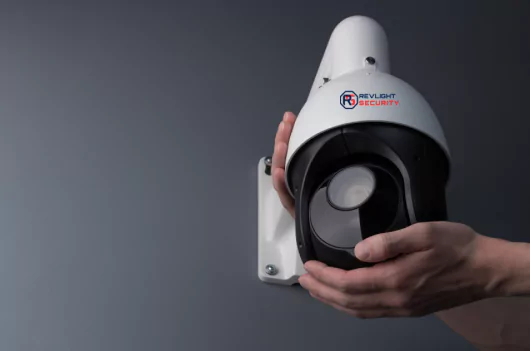
Each zone requires a different level of visibility. A fixed camera may be the right choice for an access gate or a narrow corridor where continuous coverage matters. Pan-tilt-zoom surveillance is more useful where operators need to follow vessel movements, lifting activity, or an unfolding event across a large deck area. Thermal imaging can add value during darkness, haze, or low-visibility weather, but it should complement rather than automatically replace visible-spectrum imaging. It depends on whether the response team needs detection, identification, or evidentiary detail.
Underwater areas deserve the same discipline. Subsea inspection cameras can support visibility around risers, hull interfaces, intake structures, moorings, and other submerged assets where routine observation is difficult. Specify lighting, pressure rating, cable length, mounting method, image quality, and remote viewing requirements before selecting equipment. A camera that performs well in a test tank may not deliver usable footage when marine growth, turbidity, currents, and vessel movement are present.
Offshore Platform Security Guide: Specify for the Environment
Offshore conditions quickly expose consumer-grade or lightly protected equipment. Salt fog attacks housings and connectors. Constant vibration affects mounts and cable terminations. Direct sun, wind-driven rain, condensation, and temperature changes degrade image quality and shorten component life. In hazardous areas, equipment selection also has to align with the applicable area classification and site engineering requirements.
A serious specification should define the operating environment in commercial terms. State the required enclosure protection, corrosion resistance, mounting material, operating temperature range, shock and vibration tolerance, cable and connector protection, and power arrangement. Stainless steel housings, marine-grade finishes, protected glands, and properly rated junction boxes are not cosmetic upgrades. They reduce replacement cycles, labor exposure, and unplanned downtime.
Do not accept vague claims such as “weatherproof” when the installation is exposed to open-sea conditions. Ask suppliers for the actual protection ratings, hazardous-area certifications where required, corrosion-control measures, and maintenance recommendations. The lowest initial price often becomes the highest ownership cost when a device requires repeated offshore replacement trips.
Design the Network Before Ordering Cameras
Video quality means little if footage cannot reach the people who need it. Offshore surveillance depends on a network design that accounts for bandwidth, latency, storage, power resilience, and remote access. This is especially critical when a platform uses satellite, microwave, cellular, or vessel-based communications with fluctuating capacity.
Start by separating essential video requirements from optional viewing. Control rooms may need live high-resolution streams from process-critical areas, while remote stakeholders may only need event clips, lower-bandwidth live views, or recorded playback. This approach controls network demand without sacrificing operational awareness.
A properly designed marine WiFi and network solution should include segmented traffic, managed switches, protected outdoor access points, and a clear path between field devices, local recording, and authorized remote users. Segmentation helps prevent a compromised office device or guest connection from reaching surveillance infrastructure. Strong credential controls, encrypted remote connections, user permissions, and audit logs should be standard requirements, not late-stage additions.
Local recording is equally important. When the link to shore is interrupted, the platform must continue capturing evidence. Determine how many days of retention are needed, the frame rate and resolution required per scene, and whether footage must be exported for investigations. Storage calculations should reflect the real camera configuration, including continuous recording, motion-based recording, analytics events, and redundancy. Under-sizing storage is a common procurement mistake because footage retention looks adequate on paper but collapses once the system is live.
Pair Visual Surveillance With Gas Detection
A conventional gas detector tells the operator that a hazardous condition may exist. An optical gas detection camera can help show where a release is occurring, how it is moving, and whether mitigation is working. For oil, gas, chemical, and refinery-adjacent operations, this added visual context can improve response coordination and reduce time spent searching for the source.
The technology must be selected for the target gas, expected release conditions, viewing distance, background temperature, and operating environment. It is not a substitute for fixed gas detection, maintenance programs, or emergency procedures. It is a high-value layer that supports faster confirmation and better situational awareness.
Place gas detection imaging where releases are most likely to develop or migrate, such as valve banks, compressor areas, flare-related equipment, processing modules, and transfer points. Camera positioning matters as much as device capability. A poor viewing angle, blocked line of sight, or unsuitable background can limit detection performance. Site surveys and operational input should drive placement.
Build Response Workflows Into the System
Security equipment delivers value when it shortens the path from alarm to action. That means defining who receives an alert, what image or video they can access, how an event is verified, and who has authority to escalate the response. A control room operator should not have to search through dozens of feeds while a crane alarm, vessel approach, or suspected gas release is underway.
Set up views around operational tasks. A marine coordinator may need a layout focused on approach routes and transfer zones. A process operator may need cameras and gas detection views grouped by module. A security supervisor may need access control, perimeter, and incident playback tools. These role-based displays make the system more usable than a generic wall of camera tiles.
Before handover, test the conditions that matter offshore: loss of communications, power switching, low-light images, alarm-driven recording, remote playback, user access changes, and export of incident footage. Acceptance testing should confirm more than whether each camera has a picture. It should prove that the complete system works under realistic operating conditions.
Buy for Lifecycle Value, Not Just Equipment Cost
The strongest offshore security purchase combines suitable equipment with engineering support, documentation, and a service model that recognizes the cost of offshore access. Compare suppliers on system design capability, environmental suitability, integration experience, commissioning support, spare-parts availability, and the quality of their after-sales response.
Ask for a clear bill of materials and identify what is included: mounts, housings, connectors, power supplies, network switches, recording hardware, licenses, configuration, testing, and training. Ambiguous quotations can hide the parts that turn an affordable device into an expensive installed system. Procurement managers should also require documentation that supports maintenance teams, including drawings, device locations, network details, configuration records, and recommended spare parts.
Revlight Security supplies specialist surveillance, gas detection, underwater imaging, and marine network solutions for industrial environments where equipment performance cannot be left to chance. The goal is not simply more cameras. It is dependable coverage, usable evidence, and faster decisions when operations are under pressure.
The best time to expose a weak security design is before equipment reaches the platform. Walk the facility with operations, maintenance, marine, IT, and safety stakeholders, then specify the system around the moments they cannot afford to miss.
🛡️ Secure Your Home or Business Today
Protect your home, office, shop, or business with reliable CCTV security cameras. Explore our range of CCTV cameras and find the right security solution for your needs.
Explore CCTV Cameras ✉️ Email Us

 Singapore :
+65-6708-9302
Singapore :
+65-6708-9302