
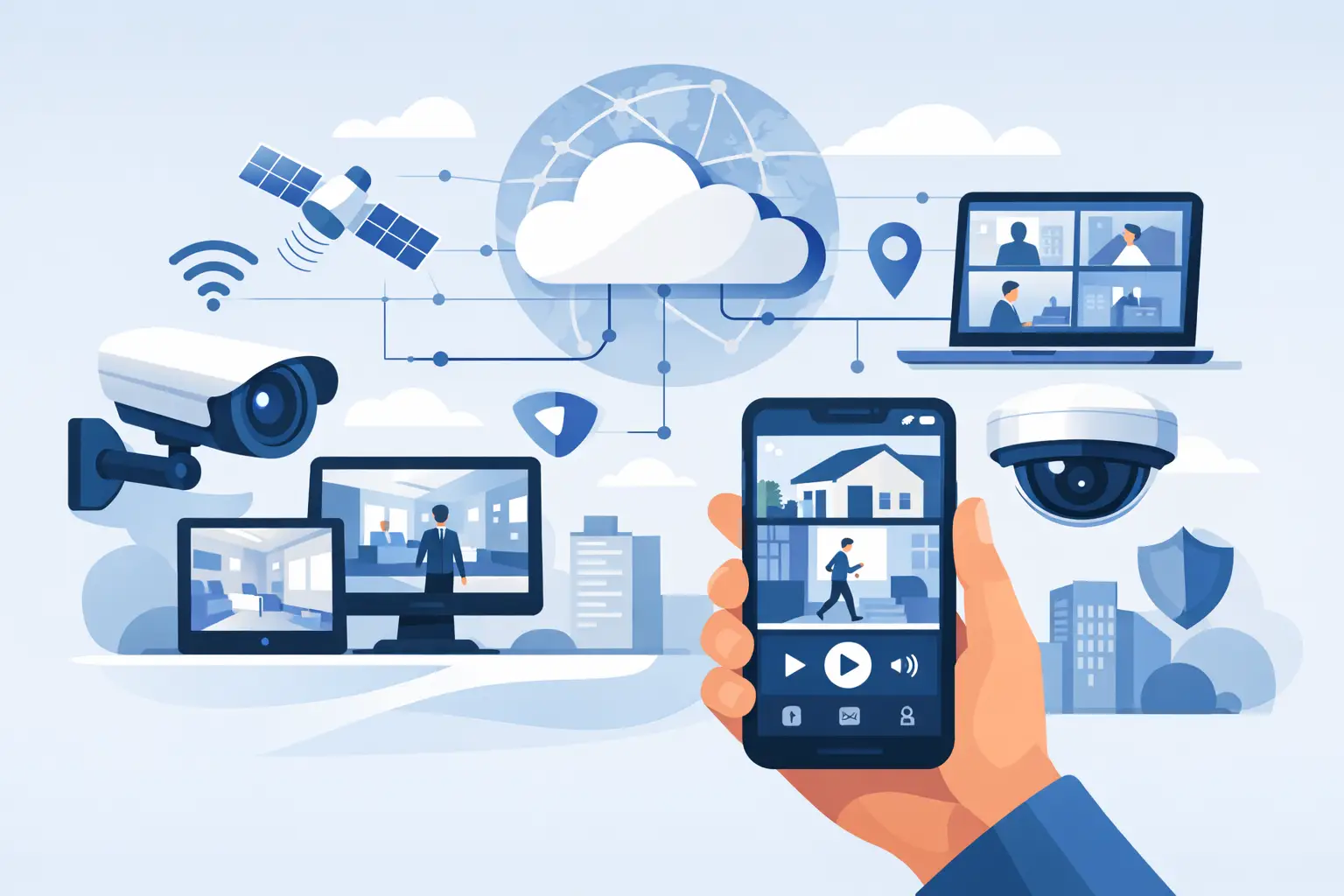
A compressor trip at 2:10 a.m. does not wait for a superintendent to reach the control room. Neither does a perimeter breach at a tank farm, a visibility issue on a vessel approach, or an alarm from a remote pump station. That is exactly why remote access surveillance systems have become a working requirement across oil and gas, marine, power, and heavy industrial operations. When critical assets are spread across hazardous, isolated, or hard-to-reach environments, decision-makers need live video, recorded evidence, and system control without being physically on site.
For industrial buyers, the value is not just convenience. It is operational control. A properly specified system lets authorized users view cameras from shore, from a vessel bridge, from a central security desk, or from a mobile command point. It also reduces wasted callouts, shortens response time, and gives managers a clearer picture of what is happening before they commit personnel into a live situation.
What remote access surveillance systems actually need to do
In a retail setting, remote viewing might mean checking a storefront after hours. In an industrial setting, the standard is much higher. Remote access surveillance systems need to handle harsh weather, vibration, salt exposure, explosive-risk areas, poor light, and unstable communications. They also need to fit into existing operational workflows rather than sit beside them as a disconnected security add-on.
That changes the buying criteria. Camera quality matters, but so do network architecture, storage strategy, access permissions, environmental ratings, and recovery options when connectivity drops. A system that looks impressive in a brochure can fail quickly offshore or at a refinery if the housings, cabling, or transmission layer are not designed for the environment.
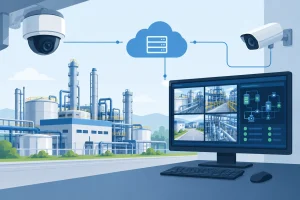
For most industrial facilities, remote access means more than logging into an app. It means secure, role-based viewing of live and recorded footage, health monitoring of connected devices, event-based alerts, and the ability to support investigations or operational decisions from a different location. In many cases, that also includes integration with radar, thermal imaging, intrusion detection, gas detection imaging, or marine communications infrastructure.
Where remote access surveillance systems deliver the most value
The strongest return usually comes from sites where distance and risk are already part of daily operations. Offshore platforms are an obvious example. Supervisors onshore may need immediate visual confirmation of deck activity, transfer zones, equipment areas, or restricted access points without sending additional personnel into exposed conditions. The same applies to unmanned or lightly staffed sites where cameras become a practical layer of constant oversight.
Marine operators face a different but related challenge. Vessels, ports, gangways, cargo areas, and approach routes all benefit from remote visibility, especially when masters, fleet managers, and operations teams need a shared view of the same incident. A dependable system can support navigational awareness, crew safety, and post-incident review, but only if the network can handle movement, changing signal quality, and saltwater exposure.
Refineries, chemical plants, and power facilities often use remote surveillance to tighten control over high-consequence zones. That may include perimeter lines, flare areas, loading points, process units, substations, and access-controlled buildings. Here, the benefit is often measured in response speed and accountability. Teams can verify alarms before dispatch, confirm permit conditions visually, and keep better records when an event needs review.
The core components behind a reliable system
A serious industrial setup starts with the right cameras for the task. Fixed units work well for wide-area monitoring and chokepoints, while PTZ cameras help operators inspect activity in more detail. Thermal cameras can add value where low light, fog, glare, or long-range detection are concerns. In specialized environments, buyers may also need underwater imaging, corrosion-resistant housings, explosion-protected equipment, or camera assemblies built for washdown and vibration.
The recording layer matters just as much. Some sites rely on network video recorders with local storage. Others use distributed recording to reduce single points of failure. Retention requirements vary by site, risk level, and internal policy, so storage should be sized for real operating conditions rather than ideal assumptions. High frame rates, multiple streams, and long retention periods can increase bandwidth and storage demands quickly.
Then there is connectivity. This is where many projects succeed or fail. Remote access depends on the strength of the transmission path, whether that is fiber, marine WiFi, licensed wireless links, cellular, satellite, or a hybrid design. There is no universal best option. Offshore assets may prioritize resilient long-distance communication. A refinery may have stronger fixed infrastructure but stricter cybersecurity requirements. A vessel may need an architecture that balances bandwidth limits with real-time access to priority cameras.
How to specify remote access surveillance systems for industrial sites
The best buying process starts with the operating problem, not the camera count. If the real objective is to verify alarms faster, reduce patrol pressure, support remote supervision, or improve evidence capture, the system should be designed around those outcomes. That keeps procurement focused on performance instead of feature overload.
A useful specification usually covers viewing requirements first. Who needs access, from where, and under what conditions? A control room operator has different needs than a fleet manager, site director, or captain. Some users need live viewing only. Others need playback, export capability, or camera control. Limiting access properly improves both security and usability.
Environmental conditions should come next. Exposure to explosive atmospheres, salt mist, heavy rain, dust, heat, and vibration will narrow the field of suitable equipment immediately. Industrial buyers should not accept consumer-grade components in mission-critical areas, even if the upfront price looks attractive. Lower-cost hardware often turns into repeat maintenance, shorter service life, and avoidable downtime.
It is also worth deciding early how the system will behave during a network interruption. Some operations can tolerate delayed remote access if local recording continues. Others need redundant links or failover options because visual oversight is tied directly to security or operational continuity. That is an engineering decision as much as a budget decision.
Security, compliance, and the trade-offs buyers should expect
Remote access creates value, but it also creates exposure if managed poorly. Any system that allows off-site viewing must be secured with strong authentication, user permissions, encrypted transmission, and proper network segmentation. For industrial operators, this is not optional. A surveillance system can easily become an entry point if it is installed as a convenience tool instead of managed as part of critical infrastructure.
There are practical trade-offs as well. Higher image quality improves identification and investigation, but it raises bandwidth and storage demand. Wider camera coverage can reduce blind spots, but too much visual information can overwhelm operators if layouts are not planned well. Cloud-enabled management may simplify some tasks, but certain operators will prefer tighter on-premises control for policy or compliance reasons.
That is why the strongest installations are rarely built around a single sales claim. They are built around site conditions, risk tolerance, network realities, and the cost of not seeing what matters when it matters.
Why industrial buyers are moving beyond basic CCTV
Basic CCTV still has a role, but it often falls short where distance, hazard, and response time are major concerns. Remote access surveillance systems are now expected to support wider operational goals. Security teams use them to verify alarms. Operations managers use them to check site conditions before dispatch. Marine operators use them to maintain oversight across moving assets. Engineering teams use recorded footage to investigate faults, validate events, and improve procedures.
This wider role is exactly why system quality has become a commercial issue, not just a technical one. Better visibility can reduce unnecessary site visits, improve response coordination, and support stronger asset protection. Over time, that can mean lower incident costs, better use of personnel, and more confidence across dispersed operations.
For buyers comparing options, the right supplier should be able to discuss more than resolution and price. They should understand hazardous-area deployment, marine communication constraints, industrial network design, and the difference between a standard installation and one that keeps performing in difficult conditions. That is where specialist providers such as Revlight Security stand apart, with top-of-the-line offers built around real-world surveillance demands rather than generic box solutions.
A remote surveillance project earns its value when teams trust it under pressure. If your site, vessel, or facility depends on fast visibility, controlled access, and dependable recording across challenging environments, the right system is not a luxury purchase. It is a practical step toward tighter control, safer operations, and fewer blind spots where they matter most.
🛡️ Secure Your Home or Business Today
Protect your home, office, shop, or business with reliable CCTV security cameras. Explore our range of CCTV cameras and find the right security solution for your needs.
Explore CCTV Cameras ✉️ Email Us

 Singapore :
+65-6708-9302
Singapore :
+65-6708-9302