
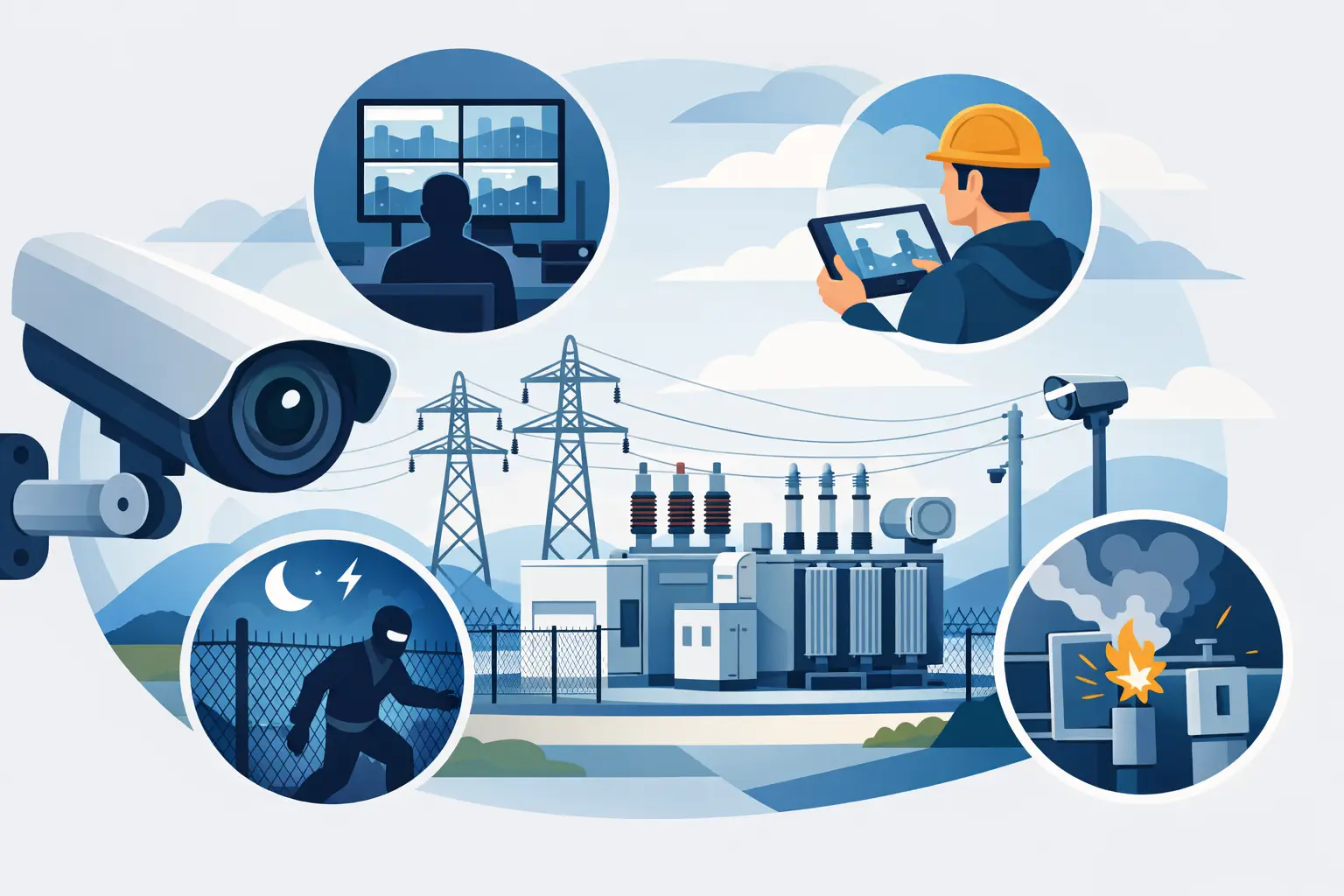
A transformer alarm at 2:00 a.m. creates an immediate operational question: is there smoke, unauthorized access, a damaged component, or a sensor issue? Sending personnel to verify every event costs time and exposes them to unnecessary risk. That is why use cameras in substations is not simply a security question. It is an operational decision that affects response time, asset protection, compliance, and outage management.
For utilities, power producers, and industrial facility operators, a correctly specified surveillance system provides more than recorded footage. It gives control rooms and field teams a live view of critical assets when conditions change. The strongest installations combine durable cameras, reliable networking, recording capacity, and remote access designed for the realities of high-voltage environments.
Why Use Cameras in Substations for Safety and Control
Substations contain energized equipment, restricted work zones, battery rooms, perimeter fencing, transformers, switchgear, and control buildings. A camera system gives operators visual confirmation before they send a technician into an uncertain situation. When an alarm is triggered, the control room can assess the area, verify whether people are present, and determine whether escalation is required.
This matters during equipment faults, severe weather, fires, suspected intrusions, and contractor activity. Video does not replace electrical safety procedures or qualified personnel. It does, however, provide the situational awareness needed to make better decisions before a crew is dispatched.
A well-positioned camera can also support safer switching operations. Remote operators can observe gate access, visible equipment conditions, and activity around designated work areas. For unmanned or lightly staffed sites, that added visibility can significantly reduce blind spots between routine inspections.
Faster Verification After Alarms
Traditional alarm inputs tell an operator that something has happened. Video helps establish what happened, where it happened, and whether the event is still developing. A perimeter alarm might indicate a fence breach, wildlife movement, wind-driven debris, or an attempted entry. Visual verification helps teams prioritize the response instead of treating every alert as the same level of threat.
This is especially valuable across a portfolio of remote substations. Rather than dispatching personnel to every alarm location, operations teams can review live and recorded video first. That can reduce unnecessary truck rolls while ensuring genuine incidents receive rapid attention.
Protect High-Value Infrastructure From Intrusion and Damage
Substations are critical infrastructure. Copper theft, vandalism, tampering, and unauthorized entry can create expensive damage and serious safety consequences. Cameras establish a visible deterrent at gates, fence lines, transformer yards, control houses, and equipment access points. When paired with lighting, intrusion detection, and access control, they become part of a stronger site-security strategy.
The key is coverage, not simply camera count. A wide scene view may show activity at a gate but fail to capture a face, vehicle plate, or action at an equipment cabinet. A properly engineered design typically separates perimeter observation from identification coverage and close monitoring of high-risk assets.
For example, fixed cameras can continuously cover fence approaches and access roads, while pan-tilt-zoom units provide operators with the ability to investigate a specific event. Thermal imaging can identify people or vehicles in darkness, fog, light rain, or challenging backlit conditions where conventional visible-light imaging has limits. Each technology has a role, and the best choice depends on the threat profile and the environmental conditions at the site.
Detect Equipment Conditions Before They Become Larger Events
Security is only one reason to deploy cameras. Visual and thermal monitoring can help maintenance and operations teams observe signs of developing equipment problems, including smoke, visible arcing, oil leaks, overheating components, cooling-system issues, or unexpected activity around transformers.
Thermal cameras are particularly useful where temperature change is an early warning indicator. They can continuously monitor selected equipment and trigger alerts when configured temperature thresholds are exceeded. That capability should complement, not replace, established condition-monitoring systems and inspection programs. Thermal performance depends on correct installation, target selection, distance, calibration, and environmental factors.
The commercial value is straightforward: earlier verification may limit damage, shorten fault investigation, and help teams direct maintenance resources where they are most needed. In a facility where downtime has major financial and service consequences, better visibility is an operational advantage.
Improve Incident Investigation and Compliance Records
After an incident, assumptions are costly. Recorded video provides a time-stamped account of site activity that can support internal investigations, insurance claims, contractor management, and security reviews. It helps answer practical questions: Who entered the site? Was a gate left open? Did a vehicle approach before an alarm? How did personnel move through the yard before an event?
Recording quality and retention time require planning. High-resolution video, long retention periods, and multiple camera streams require substantial storage and network capacity. Procurement teams should define what must be captured, how long footage must be retained, who can access it, and how recordings will be exported when needed.
For critical sites, it is also wise to consider recorder resilience. Local recording can preserve evidence during a temporary communications outage, while centralized monitoring can provide broader oversight across multiple locations. The right approach depends on available bandwidth, corporate security policies, and the level of operational continuity required.
Reduce Exposure at Remote and Unmanned Sites
Many substations are located far from operating centers, in areas with limited staffing and difficult access. Cameras extend the eyes of the control room without suggesting that remote monitoring can solve every problem. A camera cannot tighten a connection, repair a breaker, or replace a qualified field inspection. It can help determine when that visit is genuinely urgent.
This distinction matters for workforce efficiency. Remote visual checks can support routine oversight after storms, confirm whether access roads are clear, and help supervisors coordinate contractors arriving at the site. During high-risk events, operators can share a common visual picture before field crews mobilize.
Remote access must be secured. Industrial surveillance systems should be designed with segmented networks, encrypted communications, controlled user permissions, strong authentication, and a clear process for software updates. An exposed camera network can create a cybersecurity weakness, which defeats the purpose of improving site security.
Specify Cameras for the Substation Environment
Substation surveillance is not a standard commercial installation. Equipment must withstand weather, dust, vibration, temperature swings, glare, darkness, electromagnetic conditions, and potential corrosion. Camera housings, mounting hardware, power arrangements, network switches, cabinets, and cable routes all need to match the site environment.
When comparing solutions, buyers should assess four connected requirements:
- Image performance in the actual lighting and weather conditions, including low-light and thermal requirements.
- Environmental durability, with appropriate ingress protection, operating temperature range, corrosion resistance, and mounting design.
- Network and recording architecture, including bandwidth use, local storage, remote viewing, and resilience during communications loss.
- Integration capability with existing alarms, access control, SCADA-related operational procedures, and monitoring platforms.
The lowest initial purchase price is not always the lowest lifetime cost. A poorly placed camera, undersized recorder, weak wireless link, or unsuitable outdoor enclosure can produce unreliable video and repeated service calls. Industrial buyers should evaluate total system performance over years of use, not only the price of individual devices.
Build a System Around Real Operating Priorities
The best substation camera system starts with a site survey and a clear operational objective. Is the priority theft prevention, alarm verification, transformer monitoring, worker safety, or centralized visibility across dozens of unmanned sites? Most facilities need a combination, but the priorities determine where investment delivers the greatest return.
A practical design identifies critical views first: entry gates, perimeter approaches, transformer banks, switchgear areas, control house doors, battery rooms, and any location where alarms occur repeatedly. From there, camera type, lens selection, mounting height, lighting, communications, recording retention, and remote-viewing permissions can be specified with purpose.
Revlight Security supports industrial operators with surveillance and network solutions built around demanding operating environments, where dependable visibility is a business requirement rather than an optional feature.
Before approving a camera project, ask the control room what they need to see in the first five minutes after an alarm. Their answer will usually reveal the views, recording strategy, and system resilience that matter most.
🛡️ Secure Your Home or Business Today
Protect your home, office, shop, or business with reliable CCTV security cameras. Explore our range of CCTV cameras and find the right security solution for your needs.
Explore CCTV Cameras ✉️ Email Us

 Singapore :
+65-6708-9302
Singapore :
+65-6708-9302