
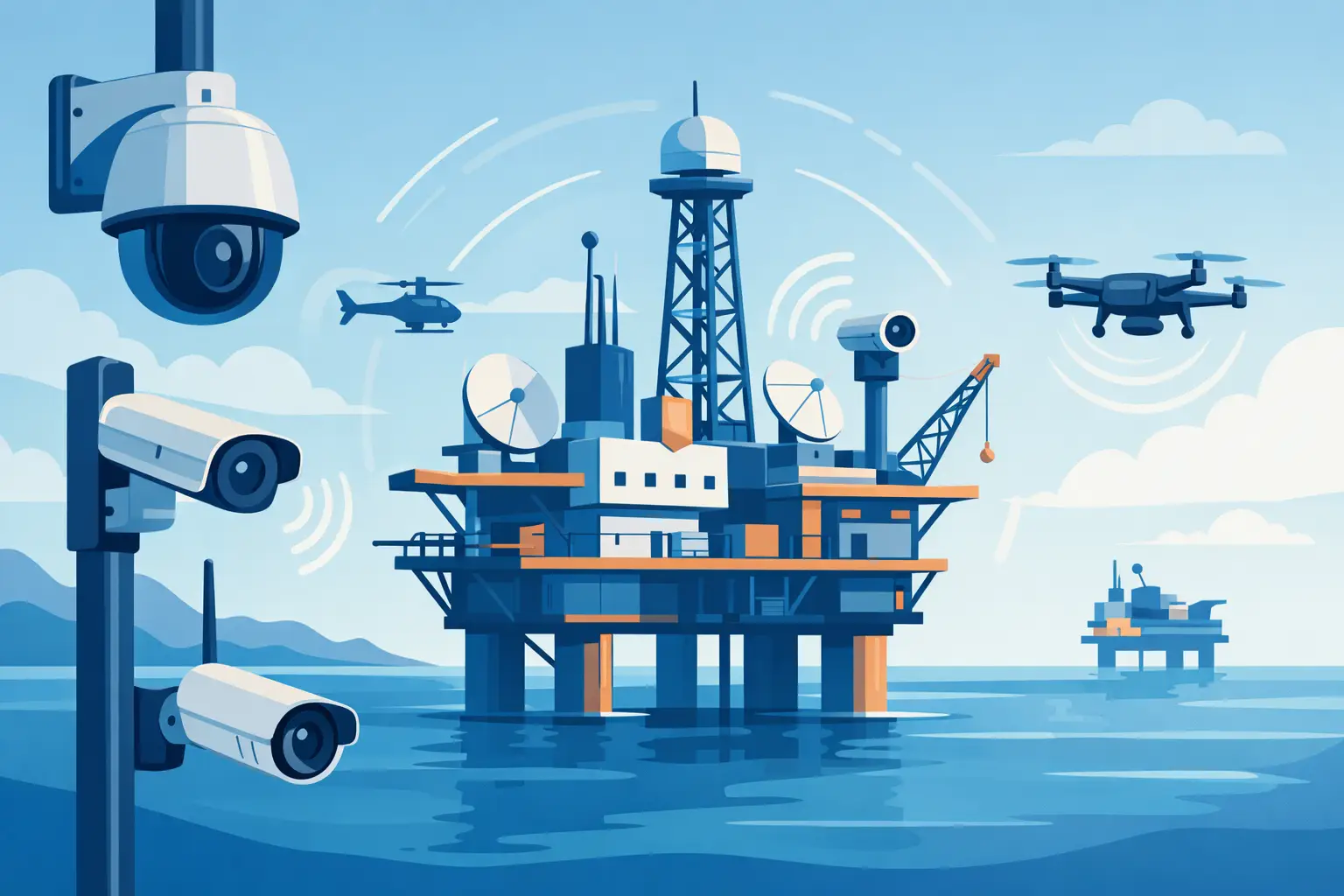
A blind spot on an offshore platform is not a minor security gap. It can delay a response to an unauthorized approach, conceal unsafe work near a critical asset, or leave operators without visual evidence after an incident. This offshore surveillance design guide is built for buyers who need surveillance infrastructure that works in salt spray, vibration, poor visibility, hazardous-area constraints, and limited connectivity – not just equipment that looks capable on a specification sheet.
The right design starts with operational risk, then matches cameras, detection technology, recording capacity, and network architecture to that risk. A low-cost system with poor coverage or an undersized network creates expensive gaps. A properly engineered system gives bridge crews, control rooms, maintenance teams, and security personnel clear situational awareness when conditions are at their worst.
Start the Offshore Surveillance Design With Critical Zones
Do not begin by selecting a camera model. Begin by mapping the decisions your personnel must make and the areas where delayed visibility creates operational, safety, environmental, or security exposure. On a fixed platform, this commonly includes the heliport, perimeter access points, crane and loading areas, wellhead zones, process decks, muster stations, accommodation entrances, and landing or supply-vessel interfaces. On vessels and floating assets, prioritize bridge approaches, engine and machinery spaces, weather decks, cargo handling locations, stern access, and restricted technical rooms.
Every zone needs a defined surveillance purpose. Perimeter coverage may require long-range identification and night performance. A crane deck may require wide-area observation and sufficient detail to review lifting activity. An enclosed machinery space may need continuous recording, clear low-light imaging, and a camera housing suited to heat, moisture, and vibration.
This distinction matters because one camera type cannot deliver the best result everywhere. Wide-angle coverage reduces blind spots but provides less detail at distance. A narrow field of view provides identification at range but can miss movement outside its scene. The strongest layouts combine overview coverage with targeted views of high-consequence points.
Design for Verification, Not Just Visibility
A camera should answer a practical question: Who entered? What happened? Was PPE being used? Is a valve position visible? Is a vessel approaching a restricted area? If the image cannot answer the question at the needed distance, lighting condition, and viewing angle, the camera placement is not adequate.
During site planning, account for obstructions that appear after commissioning. Pipework, temporary equipment, container stacks, crane booms, railings, and personnel traffic can all compromise a perfect drawing. Field verification is essential. It is also wise to specify adjustable mounts and allow room for future repositioning where operations change frequently.
Select Equipment for the Offshore Environment
Offshore equipment is exposed to conditions that rapidly expose weak product choices. Salt-laden air attacks housings, fasteners, cable entries, and connectors. Constant vibration can affect mounts and connections. Humidity, temperature swings, rain, washdown, and wind-driven spray put pressure on seals and enclosures.
Specify marine-grade construction and corrosion-resistant materials for exterior installation. Confirm the environmental protection rating, operating temperature range, vibration tolerance, heater or blower requirements, and suitability for the exact mounting location. A camera mounted under partial cover faces different exposure than one installed at an open deck perimeter.
Hazardous-area classification must be addressed before purchase, not after installation. Where a location is classified, select equipment certified for the applicable zone or division and gas group. This includes cameras, junction boxes, network hardware, power supplies, and any associated accessories within the classified boundary. Mixing compliant and noncompliant components can create project delays, rework, and unacceptable operational risk.
For subsea inspection or monitoring, underwater camera systems require a separate engineering review. Depth rating, pressure resistance, illumination, cable type, connector integrity, mounting geometry, and water clarity all affect usable image quality. The goal is not simply to place a camera below the surface. It is to deliver a stable, reviewable view of the target asset over the required operating period.
Build the Network Before Adding Camera Counts
Camera quantity drives bandwidth, storage, switch capacity, power requirements, and the resilience of the entire surveillance system. Adding cameras without confirming network capacity is a common route to dropped frames, delayed live video, unreliable playback, and frustrated operators.
Calculate bandwidth using the selected resolution, frame rate, codec, scene complexity, and recording mode. High-motion scenes such as vessel approaches, lifting operations, or turbulent water demand more bandwidth than a quiet corridor. Variable bitrate can reduce average demand, but the network still needs headroom for peak conditions.
A dedicated surveillance network is often the right commercial and operational choice for critical offshore assets. It separates video traffic from business and control systems, simplifies fault finding, and supports clearer cybersecurity boundaries. Managed industrial switches, fiber uplinks where appropriate, protected cable routes, and properly sized PoE budgets should be part of the original design.
Marine WiFi systems can extend viewing access across operational areas, but wireless should not be treated as a substitute for well-planned fixed infrastructure. Radio interference, steel structures, weather, vessel movement, and changing deck layouts can affect coverage. Use wireless where it provides a clear operational advantage, then validate signal strength, roaming behavior, encryption, and redundancy in real site conditions.
Remote Access Must Be Controlled
Remote viewing gives shore teams and authorized managers faster access to live conditions and recorded evidence. It also expands the attack surface. Use role-based permissions, strong authentication, encrypted connections, controlled user provisioning, and audit trails. Keep surveillance devices segmented from operational technology networks unless a formally approved architecture allows integration.
The value of remote access is speed of decision-making. The requirement is disciplined access control. Both must be designed together.
Size Recording for Investigations and Operations
Recording capacity should reflect retention obligations, incident investigation requirements, connectivity limitations, and camera criticality. A system that retains video for only a few days may be insufficient when offshore logistics delay incident reporting or retrieval. Conversely, storing maximum-quality continuous footage from every camera for months can create unnecessary capital and maintenance expense.
Set retention by zone and use case. Critical access points, loading operations, process areas, and safety-sensitive locations may justify continuous high-quality recording. Lower-risk views may use motion-triggered recording, scheduled recording, or reduced frame rates. The correct balance depends on the evidence standard required and the likelihood that an event will need review.
Use network video recorders or server-based recording platforms designed for the duty cycle, camera load, and environmental conditions. Include storage health monitoring, RAID protection where justified, time synchronization, export controls, and a tested process for retrieving footage. Footage is only valuable if personnel can locate, view, and preserve it quickly after an event.
Integrate Gas Detection Where Visual Confirmation Matters
Conventional video surveillance and optical gas detection serve different purposes, and the strongest designs may use both. Methane and gas leak detection cameras can help identify emissions that are not visible to the human eye, providing visual confirmation of a suspected release and helping teams assess its location and movement.
These systems are especially valuable around process equipment, piping routes, compressor areas, tank infrastructure, and other locations where leak detection supports safety and environmental objectives. Performance depends on the gas of concern, detection distance, background temperature, wind, viewing angle, and line of sight. They should complement – not replace – fixed gas detectors, maintenance programs, and site response procedures.
Specify the detection workflow as clearly as the equipment. Define who receives an alert, how the scene is verified, how recordings are preserved, and what escalation follows. Technology delivers the greatest return when it is connected to a response process that crews understand.
Commission, Test, and Maintain for Real Conditions
Commissioning is the point where a design becomes a working security asset. Test each camera during day and night conditions, verify target identification at required distances, confirm recording and playback, check remote access permissions, and prove that alarms or detection events reach the right users. Document final fields of view and retain configuration records for every device.
Maintenance should be planned around offshore realities. Lens contamination, salt buildup, corroded fittings, damaged cable glands, storage warnings, network faults, and firmware exposure can slowly reduce system performance. Routine inspections and health monitoring protect the investment and prevent a failure from being discovered only after an incident.
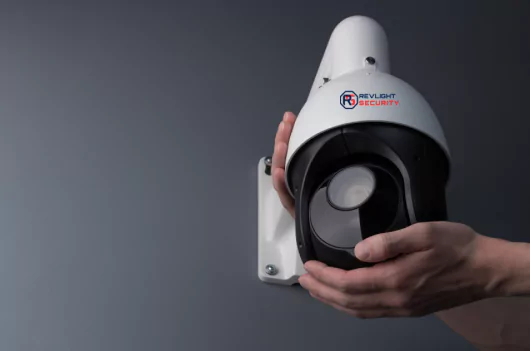
Revlight Security supports industrial operators with top-of-the-line surveillance, detection, and network solutions selected for demanding marine, oil and gas, and energy environments. The commercial objective is straightforward: specify only what the site needs, but specify it correctly enough to deliver dependable coverage, evidence, and response capability.
A well-designed offshore surveillance system does more than record activity. It gives the people responsible for the asset a clearer view of risk, a faster path to verification, and better information when every minute counts.
🛡️ Secure Your Home or Business Today
Protect your home, office, shop, or business with reliable CCTV security cameras. Explore our range of CCTV cameras and find the right security solution for your needs.
Explore CCTV Cameras ✉️ Email Us


 Singapore :
+65-6708-9302
Singapore :
+65-6708-9302