
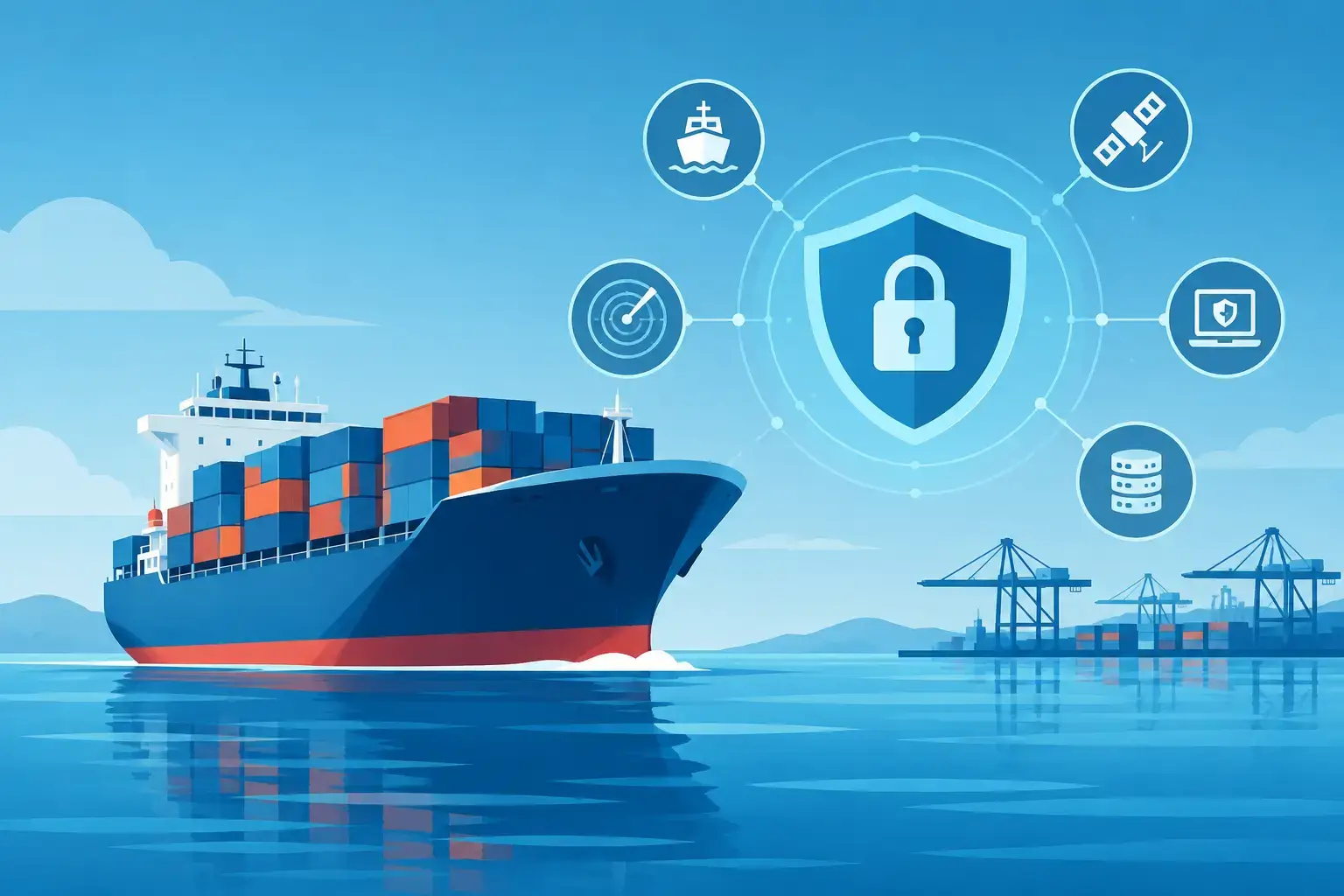
A vessel can leave port with every mechanical system checked, then become exposed through a poorly managed crew Wi-Fi connection, an unattended remote-access account, or a networked camera installed without segmentation. Maritime cybersecurity trends are pushing ship operators, offshore facilities, and industrial marine teams to treat these exposures as operational risks, not simply IT issues.
The target is no longer limited to the bridge. Connected navigation equipment, engine monitoring, CCTV systems, cargo controls, satellite communications, access control, and shore-side support platforms all expand the attack surface. For procurement managers and operations leaders, the priority is clear: purchase security infrastructure that performs in harsh environments while supporting controlled, auditable network access.
Maritime Cybersecurity Trends Reshaping Vessel Operations
IT and operational technology are converging
Ships and offshore assets increasingly depend on connected operational technology, or OT. Machinery sensors transmit performance data to shore teams. Engineers access maintenance records through onboard networks. Security cameras feed into network video recorders and remote monitoring stations. These connections improve visibility and reduce unnecessary callouts, but they also create paths between business systems and operational equipment.
The risk is not identical on every vessel. A coastal workboat with limited connectivity has different requirements from an LNG carrier, offshore platform, or tanker with extensive automation. Still, the principle remains the same: systems that affect navigation, propulsion, safety, cargo, or environmental compliance should never share unrestricted access with routine office traffic or guest devices.
Network segmentation is becoming a purchasing requirement rather than an optional technical enhancement. Separate VLANs, managed switches, industrial firewalls, and clearly defined access rules help contain incidents. If a noncritical device is compromised, it should not provide a route to the bridge, machinery controls, or safety systems.
Remote access is under heavier scrutiny
Remote diagnostics save time and expense. A manufacturer, integrator, or shore-based engineering team can investigate equipment faults without waiting for the vessel to reach port. The commercial value is real, particularly when downtime affects charter commitments, production schedules, or cargo operations.
However, persistent remote connections are attractive targets. Shared passwords, open ports, and accounts that remain active after a contractor finishes work create avoidable exposure. Current maritime cybersecurity trends favor remote access that is approved for a specific user, system, and time window. Multi-factor authentication, encrypted connections, role-based permissions, and session logging are now baseline controls for serious operators.
The trade-off is speed versus control. An emergency repair may require immediate support, but that does not justify an unmanaged permanent connection. Well-designed remote access processes let authorized teams respond quickly without giving every third party broad access to vessel networks.
Satellite communications and marine Wi-Fi need tighter governance
Higher bandwidth at sea has changed how crews, managers, and vendors use vessel networks. Better satellite services and marine Wi-Fi can support reporting, crew welfare, remote surveillance, and video review. They can also blur the boundary between operational traffic, business activity, and personal use if the network is not properly designed.
A single flat network is no longer acceptable for a connected vessel. Crew internet access should be separated from operational and security systems. Quality of service settings should prioritize essential traffic. Firewall rules should prevent unnecessary device-to-device communication, while bandwidth policies should protect critical functions when demand rises.
For operators investing in marine Wi-Fi or network upgrades, hardware selection matters. Equipment must withstand vibration, salt air, temperature shifts, and power variations, but physical durability alone is not security. Managed network equipment with access controls, monitoring capability, and support for segmentation delivers far greater long-term value than low-cost consumer-grade alternatives.
Surveillance systems are becoming cybersecurity assets
Network surveillance is often purchased for security, incident review, safety oversight, and operational awareness. On vessels, docks, offshore platforms, and marine industrial facilities, cameras provide critical evidence when there is a collision, unauthorized boarding, cargo dispute, equipment issue, or safety event.
Yet every connected camera, recorder, and viewing workstation is also a network endpoint. Default credentials, unsupported firmware, exposed web interfaces, and poorly configured remote viewing can turn a surveillance system into an easy entry point. The best surveillance infrastructure must be selected and deployed with cybersecurity in mind.
This means using professional-grade cameras and recording platforms that support strong credential management, controlled user permissions, encrypted administration, and timely firmware maintenance. It also means placing surveillance equipment on an appropriate network segment instead of treating it as a simple plug-and-play addition. Remote viewing should be restricted to approved personnel, with activity logs available for investigation.
For offshore installations, underwater cameras add another operational layer. They support inspection of subsea structures, hull areas, intakes, and other difficult-to-reach assets. When these systems connect to surface networks or remote monitoring environments, they require the same attention to authentication, network separation, and lifecycle support as every other connected security device.
Where Maritime Cybersecurity Spending Delivers Results
The strongest cybersecurity programs are not built by buying a single appliance or running an annual compliance exercise. They are built through disciplined design, clear ownership, and equipment that can be supported throughout its service life.
Start with an accurate asset inventory. Operators should know what is connected, who owns it, which software version it uses, how it communicates, and whether it has a legitimate business purpose. This sounds basic, but vessel upgrades frequently introduce unmanaged devices that remain in service for years. A network diagram that is wrong by even a few endpoints can delay incident response when minutes matter.
Next, identify systems that require protection first. Bridge-related networks, propulsion support, cargo systems, safety controls, security recording, and shore connectivity deserve different security policies based on their operational impact. Not every device needs identical controls, but every device should have controls appropriate to the risk it presents.
Procurement teams should also evaluate supplier support before purchase. Ask whether firmware updates are available, how long the manufacturer supports the product, whether credentials can be changed, whether access logs can be retained, and whether the equipment works with managed industrial network architecture. A lower upfront price can become expensive when a device cannot be patched or integrated securely.
Incident Readiness Is Becoming a Commercial Requirement
Cyber incidents can interrupt far more than email and reporting. They can delay port calls, disrupt cargo handling, limit remote support, compromise video evidence, and force crews into manual workarounds. For oil and gas, energy, chemical, and marine operators, the financial consequences can extend through downtime, contractual exposure, safety concerns, and regulatory scrutiny.
That is why response planning is gaining weight in vessel management and industrial security programs. Crews and shore teams need clear instructions for recognizing suspicious activity, isolating affected systems, preserving evidence, and escalating the event. A plan that exists only in a policy folder will not help a chief engineer or captain under pressure.
Training should be role-specific. Crew members need to recognize phishing attempts, suspicious USB media, and unusual login requests. Engineers need procedures for vendor access and system changes. Operations managers need visibility into who can authorize isolation decisions and how continuity will be maintained if a connected system is unavailable. Technical controls matter, but disciplined people and processes often determine whether a minor event becomes a major disruption.
Build Security Into the Next Upgrade
The next network, surveillance, or communications upgrade is the right time to correct weak architecture. Adding managed switching, segmented marine Wi-Fi, secure remote access, and professionally supported surveillance equipment during a planned project is usually more cost-effective than retrofitting controls after an incident.
Revlight Security supports operators that need dependable surveillance and network solutions built for demanding industrial and marine environments. The goal is not to add technology for its own sake. It is to deliver usable visibility, controlled access, reliable recording, and security infrastructure that strengthens operations rather than complicating them.
The most useful next step is practical: review one vessel or facility network as it exists today, identify every connected security and communications device, and confirm who can reach it. That single exercise often reveals where the next cybersecurity investment will protect the most value.
🛡️ Secure Your Home or Business Today
Protect your home, office, shop, or business with reliable CCTV security cameras. Explore our range of CCTV cameras and find the right security solution for your needs.
Explore CCTV Cameras ✉️ Email Us


 Singapore :
+65-6708-9302