
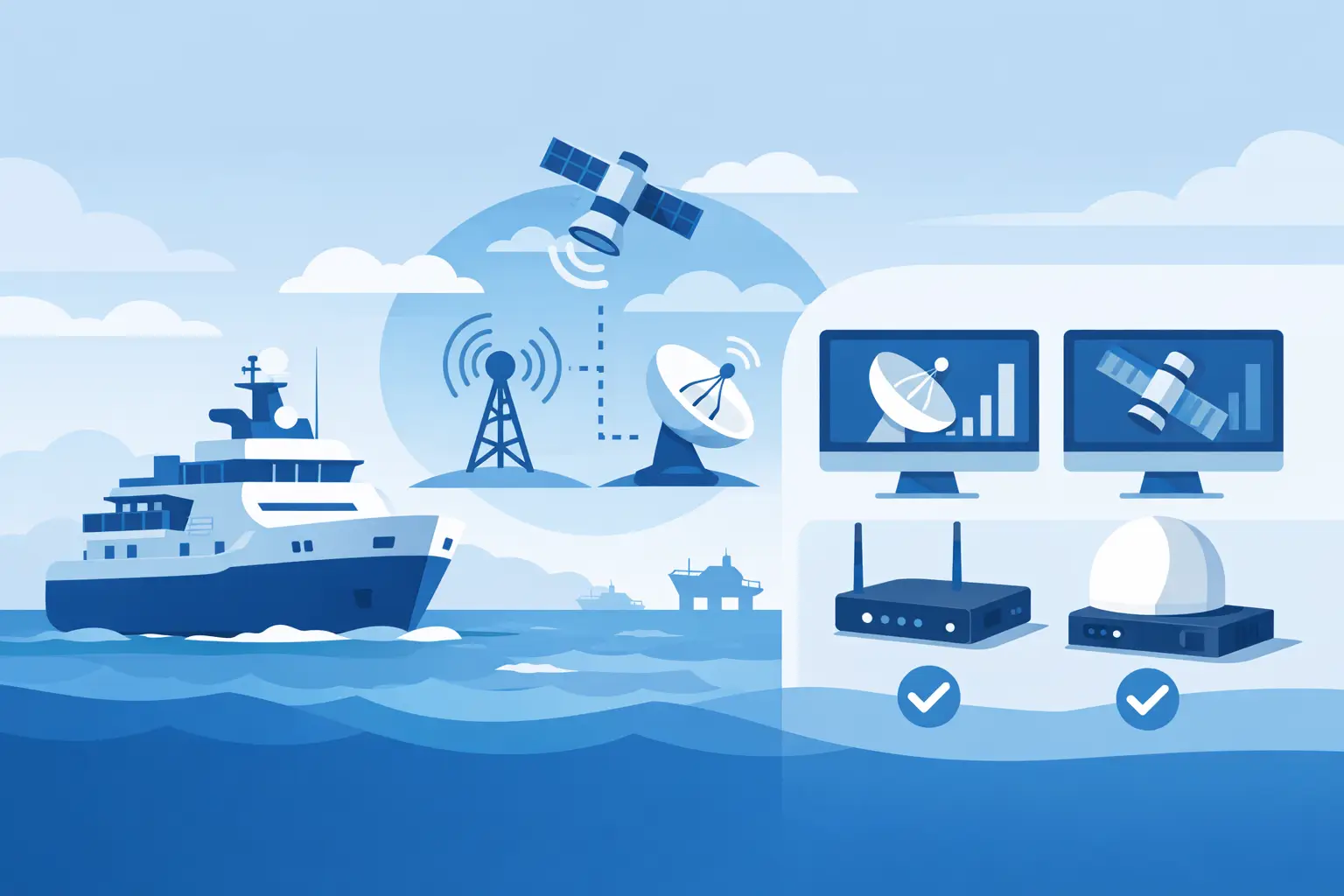
A network failure at sea is rarely just an IT problem. It can interrupt bridge-to-engine-room communications, isolate surveillance footage, delay maintenance decisions, and leave crew without a reliable path to shore support. Knowing how to compare marine network solutions starts with the operational consequences of downtime, not a specification sheet.
For ship managers, offshore operators, captains, and engineering teams, the right system must do more than provide internet access. It must carry priority traffic, support security devices, withstand marine conditions, and remain manageable when the vessel is thousands of miles from the nearest technician. The lowest hardware price can become the most expensive decision when coverage gaps, weak cybersecurity, or difficult service procedures begin affecting operations.
Start With the Vessel’s Operational Requirements
Before comparing brands, antennas, switches, or subscription plans, define what the network needs to support. A harbor tug, offshore supply vessel, tanker, cruise vessel, and fixed offshore platform may all require connectivity, but their traffic patterns and risk profiles are very different.
A basic operational network may support crew welfare connectivity, email, electronic documentation, and standard voice communications. A higher-specification installation may also need to carry IP surveillance, access control, alarm systems, engine monitoring, cargo data, remote diagnostics, and live video from hazardous or remote areas. Each added application increases the importance of bandwidth control, segmentation, power resilience, and cybersecurity.
Ask operational teams where coverage is required, not simply where equipment will be installed. Signal needs can extend from the bridge and accommodation spaces to machinery rooms, deck areas, loading zones, workshops, and external work locations. Steel bulkheads, watertight doors, machinery, and cargo configurations can severely reduce wireless performance. A design that looks adequate on a vessel drawing may fail in the real operating environment.
How to Compare Marine Network Solutions by Coverage
Wireless coverage is often the first visible measure of network quality, but it should be assessed by usable service, not theoretical range. Vendors may quote maximum coverage figures achieved under ideal, open conditions. Marine installations are not ideal conditions.
Compare proposed access point placement, antenna type, radio frequency capability, and the survey method used to validate the design. A proper solution should account for steel construction, high-interference areas, outdoor exposure, and the separation between operational zones. In practical terms, crews need stable connections where they work, while security teams need dependable links to surveillance equipment without dropped video streams.
For larger vessels and offshore assets, centralized management is equally valuable. The ability to see access point health, connected devices, signal strength, and recurring faults from one interface reduces troubleshooting time. This is especially useful for fleet managers responsible for multiple assets across different routes and regions.
Do not assume that more access points automatically produce better coverage. Poor channel planning can create interference between access points, while low-quality cabling or inadequate power delivery can limit performance before the wireless network is even tested. The right design balances coverage density with clean radio planning and maintainable infrastructure.
Measure Bandwidth, Latency, and Traffic Priority
A marine network must be sized for its real applications. Bandwidth demand is no longer limited to crew browsing. High-resolution IP cameras, cloud synchronization, remote system support, software updates, and operational reporting can all consume capacity quickly.
Compare the available uplink options and how the system handles changing connections. Depending on the vessel’s operating pattern, connectivity may involve shore Wi-Fi, cellular service, satellite communications, or a combination of these. The critical issue is not only the maximum advertised speed. It is how the network performs when available bandwidth falls, latency rises, or a primary connection becomes unavailable.
Traffic prioritization is a key differentiator. Operational systems, alarm traffic, voice communications, and surveillance recording should not be competing equally with recreational crew traffic. Look for quality-of-service controls that allow defined applications and users to receive priority. This protects essential communications when demand is high.
For surveillance-heavy installations, calculate video requirements with care. Camera count, resolution, frame rate, compression settings, recording retention, and remote viewing demand all affect network loading. A network that carries a few live camera streams may become unstable when simultaneous remote playback, software updates, and crew usage occur. Procurement decisions should be based on peak use cases, not average use alone.
Assess Resilience in a Marine Environment
Marine network equipment faces vibration, salt exposure, temperature variation, humidity, electrical noise, and restricted maintenance access. Commercial office-grade hardware is rarely a suitable long-term answer for critical vessel operations.
When evaluating solutions, compare the environmental rating of access points, switches, enclosures, cables, connectors, and power equipment. Outdoor and exposed locations require equipment designed for the conditions, with appropriate protection against corrosion and water ingress. Internal machinery spaces may require additional consideration for heat, vibration, and electrical interference.
Resilience also means designing for failure. Determine whether the network supports redundant power, alternate uplinks, protected switching paths, and automatic failover. Not every vessel needs full redundancy across every component. A smaller workboat may need a focused, cost-controlled architecture, while a tanker or offshore platform may require multiple layers of protection for safety and security systems.
The right question is: what happens when one connection, switch, power source, or access point fails? A supplier should be able to explain the likely operational effect and the recovery path without vague assurances. This clarity helps procurement teams compare the real value of a lower-cost system against a more engineered offer.
Compare Cybersecurity as Part of the System Design
A connected vessel has a wider attack surface than a standalone security installation. Network cameras, crew devices, remote maintenance tools, onboard computers, and shore connections all need controlled access. Cybersecurity should be specified from the beginning, not added after equipment is deployed.
Look for network segmentation that separates bridge, operational technology, surveillance, administration, and crew traffic. This limits the impact of compromised devices and prevents nonessential use from reaching sensitive systems. Secure remote access, user authentication, encrypted communications, firewall policies, and timely firmware support should also be part of the comparison.
Pay close attention to management responsibility. Some systems are sold with advanced security features that are never configured or reviewed after commissioning. Determine who monitors alerts, applies updates, maintains user permissions, and supports incident response. A technically capable platform still creates exposure if it is left unmanaged.
For operators with strict compliance obligations, ask whether the proposed architecture can produce useful records for audits and investigations. Clear event logs, device inventories, access records, and configuration backups can save significant time after a security incident or equipment failure.
Check Integration With Surveillance and Detection Equipment
Marine networks increasingly sit at the center of the vessel security environment. They must support IP cameras, network video recorders, thermal surveillance systems, access control, perimeter monitoring, and specialized detection equipment without creating bottlenecks.
Compare switch capacity, Power over Ethernet capability, available ports, fiber options, and compatibility with the surveillance devices planned for the vessel. Power budgets matter. A switch may have enough ports for every camera but insufficient power to operate them all, particularly when using high-performance outdoor cameras, illuminators, or pan-tilt-zoom units.
Integration should also support practical operations. Security staff need reliable live viewing and playback. Engineers need straightforward diagnostics. Shore teams may need controlled remote access to video or system status. A well-designed network makes these functions available without exposing the entire vessel environment to unnecessary risk.
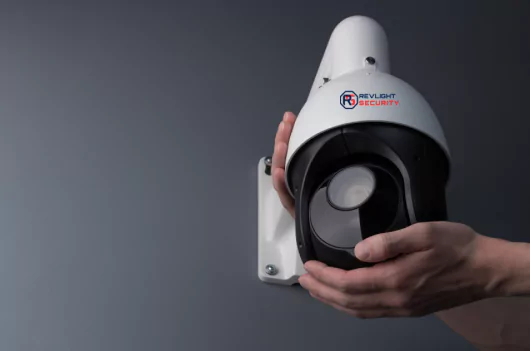
Revlight Security approaches network planning as part of the wider surveillance infrastructure, helping buyers align connectivity capacity with the cameras, recording requirements, and operating conditions that matter on site.
Compare Lifecycle Cost, Not Just Purchase Price
The purchase price is only one part of the commercial decision. Installation complexity, cable runs, power upgrades, configuration time, licensing, replacement parts, support availability, and future expansion can change the total cost significantly.
A lower-priced system may be suitable where coverage needs are limited and service access is easy. However, it may not be the right choice for a vessel where downtime requires diversion, specialist attendance, or delayed cargo activity. Conversely, a top-of-the-line offer can be excessive if it includes redundant capacity and features that the vessel will never use. The best value comes from matching the design to the asset’s real operating risk.
Request a clear bill of materials, expected installation scope, warranty terms, software or management fees, and recommended spares. Also ask how additional cameras, access points, or connected devices can be added later. A network that supports phased expansion can protect capital budgets while avoiding a full replacement when operational requirements grow.
Use a Practical Evaluation Process
The strongest procurement decision combines technical comparison with operational testing. Start by documenting applications, coverage zones, critical traffic, expected device counts, and future expansion plans. Then compare suppliers against the same requirements rather than allowing each proposal to define success differently.
Request evidence of marine or offshore deployment experience, proposed coverage drawings, bandwidth assumptions, resilience design, cybersecurity controls, and commissioning support. If the project is significant, require a site survey or practical validation before finalizing the scope. This reduces the risk of discovering coverage failures after installation, when changes are more expensive and disruptive.
A marine network should give the vessel greater control, not another source of uncertainty. Select the solution that protects critical communications, supports surveillance performance, and gives your team a clear path to maintain service when conditions become difficult.
🛡️ Secure Your Home or Business Today
Protect your home, office, shop, or business with reliable CCTV security cameras. Explore our range of CCTV cameras and find the right security solution for your needs.
Explore CCTV Cameras ✉️ Email Us


 Singapore :
+65-6708-9302
Singapore :
+65-6708-9302