
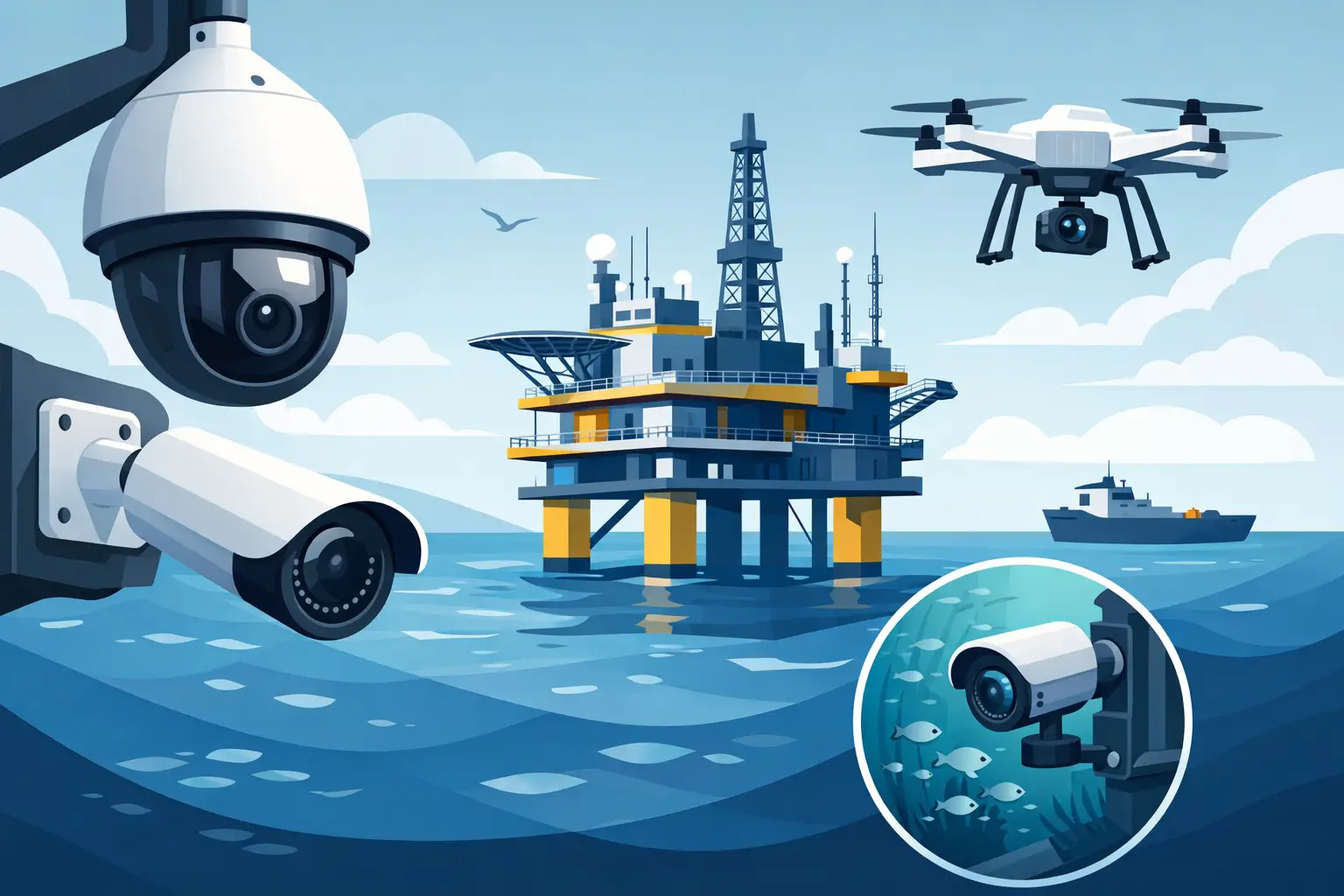
Offshore Camera Selection Starts With the Environment
A camera that performs well onshore can fail quickly when exposed to salt spray, vibration, hydrocarbon risk, and unstable connectivity. The best cameras for offshore platforms are not defined by image resolution alone. They are engineered as part of a safety, security, and operational visibility system that must keep working through harsh weather, corrosive air, and demanding shift patterns.
For procurement teams and platform operators, the objective is clear: specify surveillance equipment that protects people, supports incident investigation, reduces unnecessary physical inspections, and delivers useful video to the control room or a remote operations center. The right selection depends on where the unit will be installed, what it must detect, and how footage will move across the network.
Start With the Critical Surveillance Task
Offshore facilities rarely need one camera type everywhere. A helideck, perimeter approach, crane zone, process module, pump area, accommodation block, and subsea structure present different risks and viewing requirements. A successful design begins by matching the device to the operational task rather than buying a single camera format for the entire asset.
Fixed-position cameras are the core choice for entrances, corridors, muster points, equipment skids, work areas, and access gates. Their value is consistency. Once correctly positioned, they provide a continuous evidential view of a defined area, with predictable coverage for recording and playback.
Pan-tilt-zoom systems are a stronger fit for broad deck coverage, vessel approaches, loading operations, flare stacks, crane movements, and areas where an operator may need to investigate activity in real time. Optical zoom matters more than a high pixel count when the target may be hundreds of feet away. Specify a unit with sufficient zoom range, accurate presets, and stable movement in high winds.
Thermal imaging should be considered where visibility cannot rely on ambient lighting. It can identify people, vessels, and heat anomalies through darkness, smoke, haze, and many poor-weather conditions. Thermal is not a replacement for visible-light imaging when identification-quality detail is required. In many high-value locations, the best result is a dual-sensor system that combines thermal detection with a visible channel for verification.
Underwater camera systems serve a separate but valuable role. They support inspection of subsea structures, risers, jackets, splash-zone areas, hull interfaces, and marine growth conditions without automatically committing personnel to a difficult visual inspection. Housing depth rating, lighting design, cable length, and deployment method must be evaluated together. A clear image is of little value if the system cannot safely reach or remain stable at the inspection point.
Hazardous-Area Certification Is Not Optional
The most expensive camera is the one that cannot be installed in its intended zone. Process areas may require equipment certified for hazardous locations, based on the site classification and applicable regulatory standard. Procurement specifications should identify the required certification before equipment comparison begins.
Do not treat a hazardous-location enclosure as a generic add-on. The complete installed assembly matters: camera, housing, cable glands, junction boxes, power supply, mounting arrangement, and any ancillary components in the classified area. A compliant camera package can be compromised by an incorrect cable entry or poorly selected field accessory.
Explosion-proof or flameproof camera housings are often necessary around wellheads, separators, compressors, tank systems, and other hydrocarbon-handling equipment. These housings are heavier and more costly than standard outdoor models, which makes mounting engineering and access planning essential. The trade-off is justified when the surveillance point sits in a classified location and operational continuity is non-negotiable.
Corrosion Resistance Determines Service Life
Saltwater exposure punishes weak materials. Offshore camera systems need marine-grade housings, protected fasteners, durable seals, and finishes designed to resist corrosion. Stainless steel is widely specified for severe locations, but material grade, coating quality, mounting hardware, and contact between dissimilar metals all affect real-world life expectancy.
Ask suppliers how the unit manages water ingress, condensation, and salt accumulation. An IP rating is useful, but it is only one part of the answer. Look at operating temperature range, heater and blower options, sunshield design, wiper availability, lens window protection, and the quality of the sealing system. For exposed positions, a built-in wiper or washer arrangement can preserve useful visibility far better than a unit that requires frequent manual cleaning.
Vibration is another practical concern. Cameras installed near generators, pumps, crane structures, or vessel interfaces need rigid brackets and purpose-designed mounts. A high-resolution image becomes unusable when vibration causes constant blur or shifts the field of view. Mounting is part of camera performance, not an afterthought for the installation crew.
Build Around Low-Light and Adverse-Weather Performance
Offshore security does not pause after sunset. The selected camera should deliver usable images under the actual lighting conditions at the installation point, not just in ideal product demonstrations. Low-light sensors, infrared illumination, wide dynamic range, and proper lens selection all contribute to performance.
Wide dynamic range is particularly useful at doorways, accommodation entrances, control-room approaches, and external access points where bright daylight and shadow can exist in the same scene. Infrared illumination can help in controlled ranges, but reflective surfaces, fog, rain, and sea spray can reduce its value. For long-range detection in changing weather, thermal imaging often provides the more dependable first layer.
Do not assume that more megapixels automatically produce better evidence. Higher resolution can increase bandwidth, storage demand, and sensitivity to poor lighting. A well-selected sensor, lens, illumination plan, and recording configuration will outperform an over-specified camera installed without regard for the scene.
Network Design Is Part of the Camera Purchase
A camera system is only as useful as its network path. Offshore platforms often operate with limited backhaul capacity, segmented operational networks, and strict cybersecurity requirements. Before selecting camera quantities and resolution, calculate expected bandwidth under normal recording, live viewing, alarm events, and remote playback.
Modern video compression can reduce traffic, but it should be configured carefully. Excessive compression can remove the detail needed to confirm an event. A practical system uses recording profiles that suit each location: lower bandwidth for general situational awareness and higher-quality settings for access control, critical process areas, and evidential zones.
Power planning deserves equal attention. Power over Ethernet can simplify local installation, while long cable runs, hazardous-area interfaces, and remote marine structures may require alternative power arrangements. Include surge protection, network redundancy where justified, managed switching, and clear labeling in the design. These details reduce troubleshooting time when an outage occurs during a critical operation.
Cybersecurity must be specified from the beginning. Require unique credentials, role-based user permissions, encrypted management access, supported firmware, network segmentation, and a documented update process. Surveillance systems should strengthen the security posture of an offshore asset, not create another unmanaged entry point.
Storage, Recording, and Remote Access Requirements
The correct retention period depends on site policy, incident requirements, local regulations, and available storage. Calculate capacity based on actual camera count, resolution, frame rate, compression settings, motion or event recording rules, and retention days. A storage estimate based on a generic per-camera figure is rarely reliable enough for a major offshore deployment.
Recording servers or network video recorders should be selected for the operating environment and expected load. For critical facilities, consider redundant storage, health monitoring, and failover recording. Remote access should give authorized managers and security personnel the ability to view live video and retrieve footage without exposing the platform network to unnecessary risk.
The user experience matters commercially. Operators need fast camera selection, clear presets, reliable playback, and export functions that support investigations. If the interface is too complex, personnel will not use the system effectively when time is limited.
How to Compare the Best Cameras for Offshore Platforms
When evaluating proposals, compare complete systems rather than headline specifications. A lower initial equipment price can be outweighed by difficult installation, premature corrosion, excessive network consumption, or frequent maintenance trips. The strongest commercial decision considers total cost of ownership across the expected service life.
Request clear confirmation of hazardous-area approvals, material specifications, ingress protection, operating limits, warranty terms, spare-part availability, and technical support. Review sample footage from comparable offshore conditions where possible. Ask how the supplier will support commissioning, camera positioning, network configuration, and fault diagnosis after installation.
For a typical platform, the most effective package combines fixed cameras for permanent coverage, PTZ units for operator-led observation, thermal systems for detection in poor visibility, and underwater inspection equipment where subsea assets need routine visibility. That layered approach gives operations teams coverage that is more useful than relying on one device type to solve every problem.
A well-engineered surveillance system should make the next decision easier: confirm a safe route, verify a work area, investigate an alarm, or preserve a clear record of what occurred. Revlight Security helps offshore operators specify purpose-built camera and network solutions that deliver that level of operational control.
🛡️ Secure Your Home or Business Today
Protect your home, office, shop, or business with reliable CCTV security cameras. Explore our range of CCTV cameras and find the right security solution for your needs.
Explore CCTV Cameras ✉️ Email Us


 Singapore :
+65-6708-9302
Singapore :
+65-6708-9302