
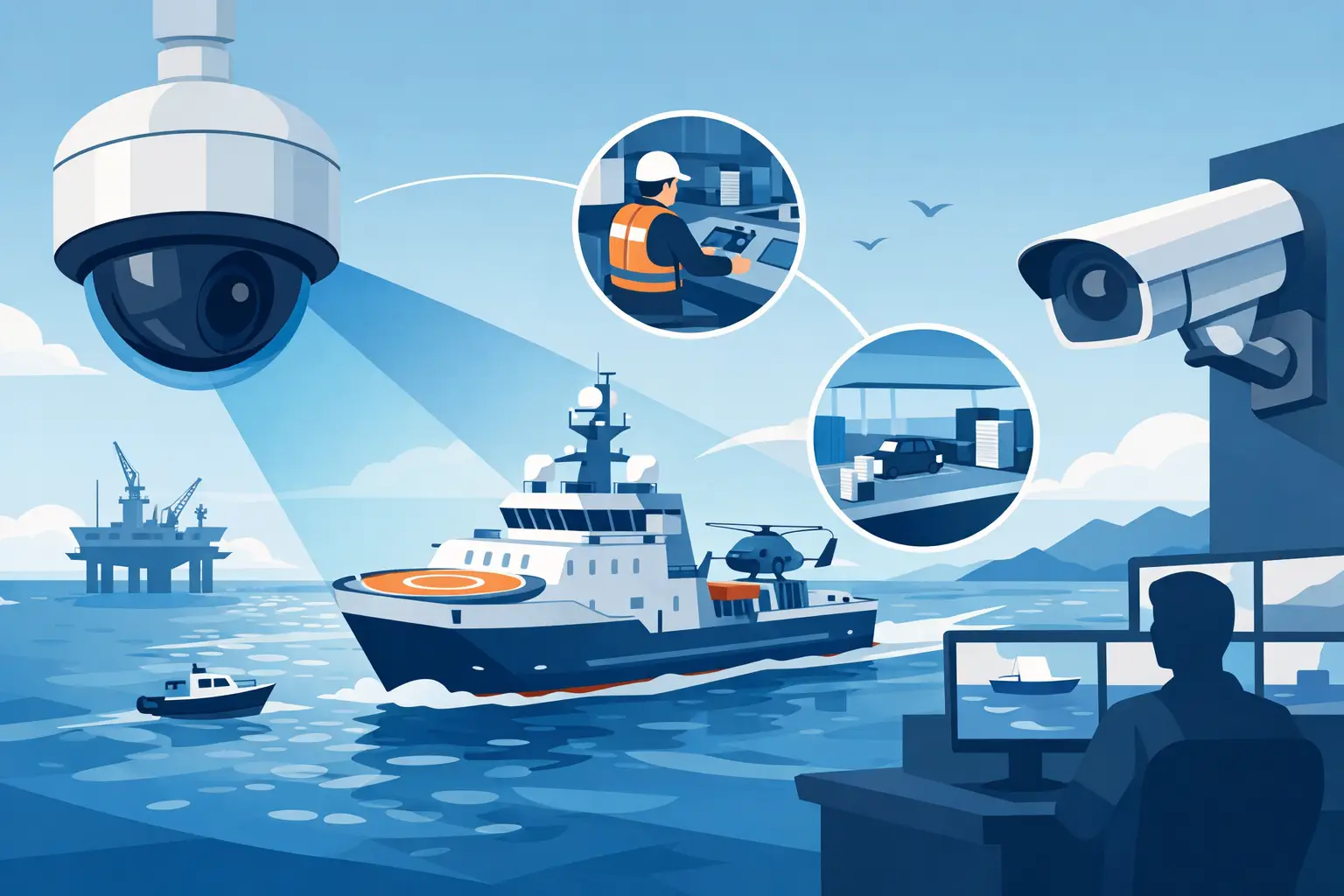
A camera spec can look perfect on paper and still fail where it matters – class review, installation approval, or onboard performance. That is why a practical DNV camera compliance guide matters for shipowners, offshore operators, and industrial buyers who cannot afford delays, rejected documentation, or equipment that does not hold up in service.
In marine and offshore projects, compliance is not a marketing badge. It affects procurement timelines, vessel readiness, insurance confidence, and long-term maintenance costs. If your surveillance or detection system is intended for a classed vessel, offshore asset, or a harsh industrial environment tied to marine standards, the approval path needs to be understood before the purchase order is issued.
What a DNV camera compliance guide should actually cover
A useful DNV camera compliance guide should do more than say a unit is “approved” or “suitable for marine use.” Buyers need to know what part of the system is covered, under which conditions, and where the limits are.
That starts with scope. In some cases, the approval applies to a specific camera model. In others, it may extend to an enclosure, mounting arrangement, power supply, or network component. A camera with marine-rated housing does not automatically mean the recorder, switch, connectors, or cable path meet the same standard. This is where procurement teams get caught – one compliant component inside a non-compliant system.
It also needs to address environmental performance. Marine and offshore surveillance equipment may be exposed to vibration, salt mist, humidity, electromagnetic interference, temperature swings, and mechanical shock. If a camera is being installed on deck, near cargo operations, in machinery spaces, or around offshore process areas, those conditions are not side notes. They define whether the solution will last or become a recurring replacement problem.
Why DNV compliance matters beyond the certificate
For commercial operators, DNV-related compliance is about risk control and project efficiency. When a class society requirement is overlooked, the cost is rarely limited to the price of the camera. It can trigger redesign, rewiring, delayed commissioning, additional documentation work, and repeated onboard attendance.
There is also an operational issue. A surveillance system used for deck monitoring, engine room oversight, perimeter visibility, process observation, or remote inspection has to deliver usable images in real conditions. A camera may pass a basic review but still be poorly matched to glare, vibration, low light, or corrosive exposure. Compliance and fitness for purpose overlap, but they are not identical.
For procurement managers, the right question is not simply, “Is this DNV approved?” The stronger question is, “Is this exact system configuration aligned with the vessel class, installation location, and operating duty?” That is how expensive assumptions get removed early.
DNV camera compliance guide for buyers: what to verify first
Before comparing camera prices or lead times, confirm the approval basis. Ask for the actual certification details and verify whether the offered unit matches that documentation exactly. Small changes in heater options, lens configuration, enclosure material, or power input can affect the approved configuration.
Then look at the application environment. A camera inside a control room has very different demands from one mounted on an exposed mast, above a helideck, or near hazardous processing areas. In offshore and marine projects, location drives specification. The best service provider will not sell a single camera type as the answer to every position onboard.
Cable infrastructure should be reviewed just as carefully. Marine buyers often focus on the visible device and overlook connectors, junction boxes, power conditioning, surge protection, and network resilience. If these are not suitable for the environment, the approved camera at the end of the line will not save the installation from failure.
Documentation is the next checkpoint. For classed projects, technical files need to be clean, current, and easy to present. That typically means drawings, data sheets, certification references, material details where relevant, and installation instructions aligned with the approved use case. If a supplier is vague here, expect delays later.
The common gaps in camera compliance projects
One of the biggest gaps is confusing marine-grade with class-compliant. A stainless enclosure, an IP rating, and corrosion resistance are valuable, but they do not automatically satisfy DNV expectations. Marine durability supports compliance, but it is not the same thing.
Another issue is system mixing. Buyers may source cameras from one vendor, network hardware from another, and storage or viewing hardware from a third. That can work, but only if the final system is engineered as a whole. Otherwise, you end up with mismatched voltages, unsupported protocols, weak housing interfaces, or approval gaps between components.
There is also the temptation to overbuy. Not every marine surveillance point needs the highest-spec camera in the catalog. In fact, over-specifying can increase project cost without improving security outcomes. A machinery space camera may need dependable heat tolerance and vibration resistance more than extreme zoom capability. A deck coverage unit may need strong low-light handling and weather protection more than advanced analytics. Smart procurement is about matching performance to duty, not chasing features for their own sake.
Choosing compliant cameras for harsh marine and offshore use
The right selection process starts with the operational purpose. Is the camera there for security, navigation support, process observation, incident review, remote engineering visibility, or environmental monitoring? Each use case changes what matters most.
For security and perimeter coverage, image stability, low-light performance, and integration with recording and remote access systems usually lead the discussion. For process or equipment monitoring, buyers should pay closer attention to continuous uptime, resistance to contamination, and image clarity under fixed operating conditions. In offshore or hazardous industrial settings, explosion-protection requirements may also enter the specification, and that introduces another layer beyond standard marine compliance.
This is where an engineering-backed supplier adds commercial value. The lowest equipment price is rarely the lowest delivered cost if the system needs modifications, replacement hardware, or extra labor after review. Top-of-the-line offers only make sense when they reduce approval friction and improve service life.
A strong supplier conversation should cover mounting position, field of view, cleaning access, backhaul method, recording requirement, onboard network load, and future maintenance. If those points are skipped, the proposal is likely built around inventory rather than project performance.
Installation and integration can make or break compliance
Even a well-chosen camera can underperform if installed poorly. Mounting integrity matters in high-vibration zones. Cable routing matters in exposed weather areas. Power quality matters where voltage fluctuations or interference are common.
Integration matters just as much. Buyers in shipping, offshore energy, and industrial plants often want surveillance systems tied into central monitoring, vessel networks, alarm platforms, or remote operations workflows. That is practical and often necessary, but it creates more decision points. Bandwidth planning, recording retention, cybersecurity, and user access control all affect the final design.
The commercial advantage comes from getting this right the first time. A system that supports recording, playback, and remote access under real operating conditions gives operators a measurable return. It reduces blind spots, strengthens incident response, and limits unnecessary attendance in hazardous areas.
How to buy with fewer surprises
The best procurement approach is simple: define the environment, define the purpose, and demand proof for the offered configuration. Ask whether the camera itself is approved, whether the complete assembly is aligned with the intended installation, and what supporting components are required to maintain compliance and reliability.
It also helps to challenge vague sales language. Terms like marine-ready, heavy-duty, or offshore-capable are not enough on their own. Serious buyers should expect model-specific evidence, practical installation guidance, and a clear explanation of where the product fits best.
For fleets and multi-site operators, standardization can be attractive, but it should be done carefully. A common platform may reduce training and spare holdings, yet different vessel classes and equipment zones may still require variations. The right balance depends on the operating profile, not just purchasing convenience.
At Revlight Security, this is where specialist supply makes the difference. Industrial and marine operators do not need generic surveillance packages. They need dependable security infrastructure matched to harsh environments, class expectations, and real operational demands.
A good compliance decision should leave you with more than a certificate. It should leave you with a camera system that installs cleanly, performs under pressure, and keeps paying back through uptime, visibility, and fewer avoidable service calls.



 Singapore :
+65-6708-9302
Singapore :
+65-6708-9302