
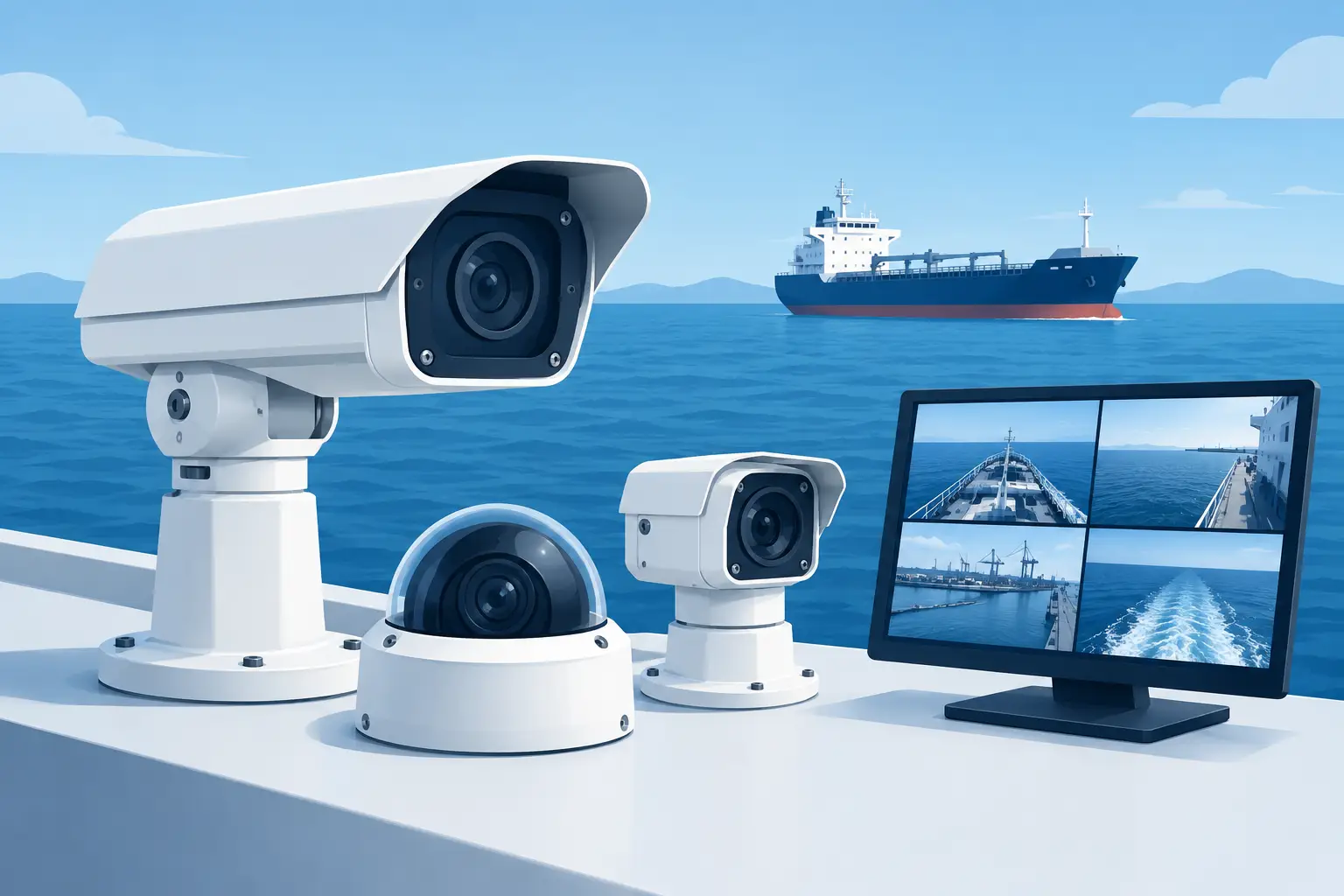
A camera package that fails during heavy weather, vibration, salt exposure, or a machinery alarm is not a security asset. It is a maintenance liability. The best DNV certified cameras for marine operations are selected around verified compliance, application-specific housing, network design, and dependable recording – not simply image resolution or a low purchase price.
For shipowners, offshore operators, refinery teams, and energy facilities, surveillance equipment must support operational control. It needs to give crews clear visual confirmation at access points, decks, engine rooms, loading areas, crane zones, and other high-consequence locations. The right specification also reduces repeat replacement costs, avoids difficult retrofit work, and gives shore teams the footage they need when an incident requires review.
What DNV Certification Means for Camera Procurement
DNV requirements are commonly associated with equipment intended for marine and offshore use, where electrical systems, communications equipment, and installed hardware must tolerate demanding environmental and operational conditions. Depending on the project, the requirement may relate to DNV type approval, product certification, class rules, or the approval of the wider vessel system.
That distinction matters. A supplier should not present a standard IP camera in a marine enclosure as a DNV-certified solution unless the relevant camera assembly, components, and documentation meet the project requirement. Certification is not a marketing badge. It is evidence that needs to align with the equipment being delivered, the vessel class, the installation location, and the flag or client specification.
Before requesting quotations, procurement teams should state whether they need DNV type-approved equipment, class-compliant installation support, or documentation for a specific survey and handover process. This prevents expensive confusion after equipment has reached the vessel or offshore site.
The Best DNV Certified Cameras by Operating Area
There is no single best camera for every marine or industrial site. A bridge wing, an engine room, a hazardous loading zone, and a subsea inspection point have fundamentally different exposure levels and surveillance objectives. The best DNV certified cameras are therefore a matched system rather than one model repeated everywhere.
Fixed marine network cameras for exterior coverage
Fixed network cameras are usually the core of a vessel surveillance system. They provide continuous coverage of gangways, stern areas, embarkation points, deck machinery, perimeter approaches, and cargo zones. For exposed installation, specify a corrosion-resistant housing, suitable ingress protection, vibration tolerance, stable mounting hardware, and a lens selection that delivers usable identification at the required distance.
Image quality remains essential, but high resolution alone will not solve a poorly designed view. A wide-angle camera may show that activity occurred on deck, while a narrower field of view may be needed to identify personnel, monitor a valve position, or verify access through a controlled gate. Low-light performance, wide dynamic range, and effective infrared capability should be assessed against the actual lighting environment, including glare from floodlights and reflections from wet surfaces.
PTZ cameras for live operational oversight
Pan-tilt-zoom cameras are valuable where operators need to follow vessel approaches, monitor transfer activity, inspect broad deck areas, or investigate an alarm in real time. Their flexibility can reduce the number of fixed units needed across an open area. However, PTZ coverage is active coverage: when the camera is focused in one direction, it is not recording detail elsewhere.
For that reason, PTZ units work best alongside fixed cameras that maintain continuous evidential recording. Select marine-rated PTZ equipment with dependable movement, optical zoom suited to the viewing distance, preset positions, and integration with the video management system. A camera that can be rapidly called to an alarm position is more valuable than one with a long feature list that crews cannot use under pressure.
Explosion-protected cameras for hazardous zones
Refineries, chemical facilities, offshore process areas, fuel handling locations, and certain marine spaces may require explosion-protected camera assemblies. In these applications, area classification comes first. The enclosure, cable glands, connectors, power arrangements, and installation method all need to match the hazardous-area standard and zone classification.
Do not assume DNV approval replaces hazardous-area compliance, or vice versa. A suitable solution may need both marine approval documentation and certification for the applicable hazardous environment. Buyers should provide zone details, gas group, temperature class, ambient temperature range, and the required field of view. This produces a defensible specification and stops unsuitable equipment from reaching a critical work area.
Underwater cameras for hull and subsea inspection
Underwater camera systems support inspection of hulls, sea chests, thrusters, risers, moorings, and offshore structures without turning every visual check into a major dive operation. Here, depth rating, pressure sealing, cable design, lighting output, and image clarity in low-visibility water are the deciding factors.
An underwater unit should be specified as part of a complete inspection package, including topside display or recording equipment, controls, cable management, and suitable deployment hardware. Saltwater penetration and connector failures can take a system out of service quickly, so proven sealing and serviceable components are commercially significant. For operators managing multiple assets, standardized inspection systems also simplify crew familiarization and spare-part planning.
Build the Camera System Around Uptime
A certified camera is only one part of the surveillance chain. The network, recording platform, power supply, storage capacity, monitors, and remote-access controls determine whether footage is available when it is needed. A top-of-the-line camera connected through an unstable network or undersized recorder will not deliver the expected operational value.
Start with the required camera count, recording retention period, resolution, frame rate, and critical viewing points. These factors determine storage capacity and network bandwidth. Then consider redundancy for essential areas. Separate network paths, protected power supplies, uninterruptible power, and recording health alerts can prevent a single equipment fault from creating a blind spot.
Remote access should be designed carefully. Fleet managers and security teams may need live views and playback from shore, but unrestricted access creates cybersecurity exposure. Use role-based permissions, controlled credentials, segmented networks, and a clear process for software updates. This is especially relevant where camera systems share vessel infrastructure with operational technology or marine communications.
Questions That Separate a Serious Offer From a Basic Quote
A commercially sound supplier should be ready to confirm exactly what approval applies to each proposed camera, housing, accessory, and system component. Request current certificates, technical data sheets, environmental ratings, hazardous-area documentation where applicable, and clear confirmation of any limitations on use.
Also ask how the equipment will be mounted, powered, connected, commissioned, and maintained. Camera performance is often lost through small installation failures: unsuitable brackets, poor cable termination, unprotected connections, incorrect lens positioning, or inadequate lighting. A lower-priced package can become the more expensive choice when it requires repeat yard work, additional technician time, or early replacement.
Service support deserves equal attention. Marine operators need defined lead times for replacements, available spares, configuration records, and technical assistance when equipment is deployed far from the original installation port. Revlight Security supplies specialized surveillance and detection equipment for demanding industrial environments, with system selection focused on performance, operational fit, and long-term value.
Specify for the Real Operating Environment
The strongest procurement decision is based on the condition the camera will face on its worst day, not the image it produces during a warehouse demonstration. Confirm compliance requirements early, match each camera type to its duty, and protect the full surveillance infrastructure behind it. The result is a system that helps crews see clearly, respond faster, and keep critical operations under control when conditions are least forgiving.
🛡️ Secure Your Home or Business Today
Protect your home, office, shop, or business with reliable CCTV security cameras. Explore our range of CCTV cameras and find the right security solution for your needs.
Explore CCTV Cameras ✉️ Email Us

 Singapore :
+65-6708-9302
Singapore :
+65-6708-9302