
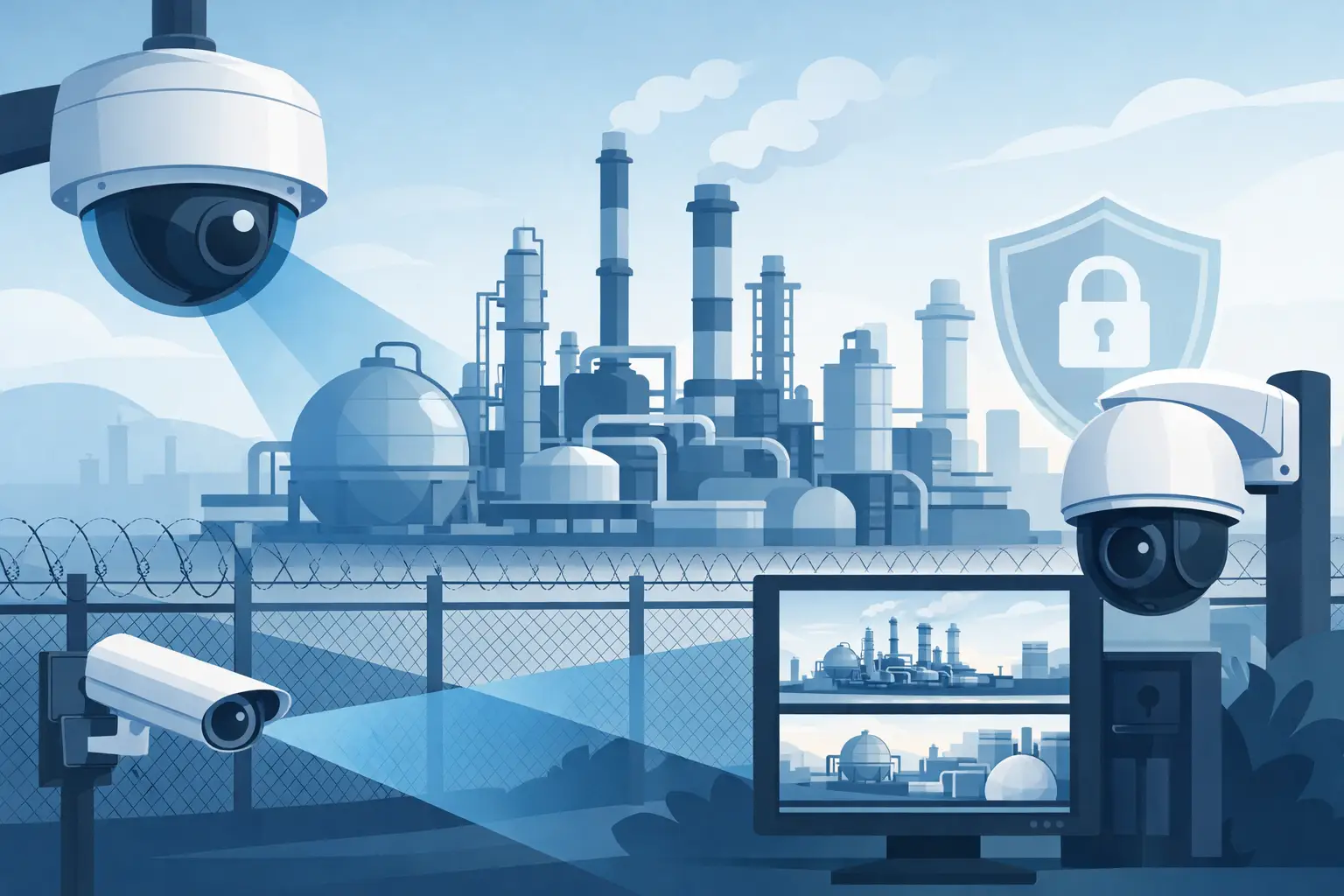
A refinery fence is not a single security line. It is a long, exposed operating boundary shaped by pipe racks, tank farms, rail spurs, loading areas, access roads, glare, vapor, and changing weather. The top refinery perimeter cameras are selected to see meaningful activity at distance, verify alarms quickly, and preserve usable evidence when a site needs it most.
For procurement and operations teams, the purchase decision should not begin with megapixels or a catalog price. It should begin with the threat, the distance to be covered, the condition of the perimeter, and the response process after an intrusion alert. A camera that produces a clear daytime image but cannot identify activity through darkness, fog, flare glow, or heat haze is not delivering full perimeter protection.
What Top Refinery Perimeter Cameras Must Deliver
A refinery perimeter system has to perform beyond ordinary commercial surveillance. Fence lines can extend for miles, and the most vulnerable areas are often the least convenient to power, network, or patrol. Cameras must operate reliably around hydrocarbons, salt air, dust, high winds, vibration, extreme heat, and heavy rain, depending on the facility location.
The strongest systems combine detection, assessment, and evidence. Detection means the system recognizes a person, vehicle, or other potential intrusion. Assessment means an operator can determine whether the event requires a response. Evidence means recorded video remains clear enough to support an investigation, incident review, insurance claim, or regulatory process.
That distinction matters. A broad-view camera may show that someone entered an area, yet provide no useful facial, clothing, vehicle, or activity detail. A long-range pan-tilt-zoom unit may capture detail but leave blind spots if it is the only device protecting a wide boundary. Effective refinery security uses each format where it produces the most value.
Thermal Cameras for Darkness and Visual Obstruction
Thermal imaging is often the first priority for exposed refinery boundaries. Rather than relying on visible light, thermal devices detect differences in heat signatures. A person crossing a dark fence line, moving behind sparse vegetation, or approaching through low light can remain visible even when conventional video loses contrast.
Thermal coverage is particularly valuable near unlit boundaries, tank farms, remote gate approaches, and waterfront edges. It can also reduce dependence on extensive white-light illumination, which may be undesirable near neighboring communities or sensitive operations. Thermal imaging does not replace visible-light video, however. It detects effectively, but a paired visible camera is usually better for color, markings, and detailed visual verification.
The right thermal lens depends on field of view and detection range. A wide field protects a larger area but shows less detail at distance. A narrow lens sees farther but covers less ground. This is why lens selection should be based on a site survey and measured distances, not a generic range claim.
Long-Range PTZ Cameras for Active Verification
Pan-tilt-zoom cameras give security teams the ability to follow an event after a fixed camera, fence sensor, radar unit, or thermal device generates an alert. Positioned on elevated poles, buildings, or towers, they can inspect a gate, track a vehicle along a service road, or verify movement near a critical process area.
For refinery use, look for precise movement control, strong optical zoom, stable image performance, preset positions, and dependable operation in high wind. Digital zoom alone cannot create detail that was never captured. Optical zoom and sensor quality are the foundation of useful long-range assessment.
PTZ cameras are most effective when operators have a clear alarm workflow. If a control room must search dozens of views to find an event, the value of the camera falls. Alarm integration, mapped presets, and direct control-room access make the system faster to use under pressure.
Fixed Multi-Sensor Coverage for Long Fence Runs
Fixed cameras remain the backbone of most perimeter layouts. They provide continuous observation of selected zones without depending on an operator to point a camera in the right direction. Multi-sensor units can cover broad areas from a single mounting location, reducing pole requirements and simplifying installation where trenching or civil work is expensive.
At long fence runs, overlapping fields of view are essential. Coverage should account for the direction an intruder may travel, not merely the view from the nearest pole. Angled views frequently provide better detection than cameras aimed straight down a fence, especially when terrain, vegetation, or infrastructure creates visual masking.
Match Camera Technology to the Refinery Zone
Not every perimeter segment requires the same device. A uniform camera specification may appear simple during procurement, but it can waste budget in low-risk areas and leave critical locations underprotected. Site conditions should drive the design.
A typical refinery perimeter may require:
- Thermal and visible-light pairs at remote fence lines and dark approaches.
- Long-range PTZ coverage at main gates, road corridors, rail access points, and waterfront entries.
- Fixed or multi-sensor cameras around tank farms, maintenance yards, and contractor access zones.
- Hazardous-area rated housings where equipment is installed within classified locations.
- Marine-grade protection for jetties, docks, coastal terminals, and sites exposed to salt spray.
The camera is only one part of the security architecture. Radar, fence-mounted intrusion detection, beam systems, access control, and video analytics can all provide the first alarm. The camera then becomes the verification tool that helps operators avoid unnecessary dispatches while responding decisively to genuine threats.
Environmental Ratings Are a Procurement Requirement
Refinery buyers should treat environmental suitability as a core specification, not an accessory. Standard commercial equipment may fail early when exposed to corrosive air, continuous vibration, extreme ambient temperatures, or wind-driven debris. Frequent replacement costs more than the original purchase price and creates security gaps during maintenance.
Look closely at ingress protection, corrosion resistance, operating temperature range, heater and blower requirements, surge protection, mounting hardware, and cable protection. Coastal and offshore-connected facilities need special attention to salt corrosion. Desert and inland processing sites may prioritize heat management, dust sealing, and sun-shield performance.
Where cameras are deployed in or near classified areas, the housing and installation method must align with the applicable hazardous-location requirements. This is not an area for assumption. A technically capable camera installed in the wrong enclosure can create operational risk and delay approval.
Network Design Determines Whether Video Is Usable
High-resolution video, thermal streams, analytics, and multiple remote users can create significant network demand. A perimeter project should include bandwidth planning, storage calculations, power availability, cybersecurity controls, and a practical maintenance approach from the start.
Remote poles may require fiber, wireless backhaul, solar-supported power, or protected network cabinets. Wireless links can be highly effective across difficult terrain, but they need clear path planning, interference assessment, weather considerations, and security controls. A low-cost connection that drops during adverse weather is a poor match for a critical boundary.
Storage policy should reflect incident timelines. Many facilities need enough retention to investigate events reported days or weeks later, while high-priority cameras may require longer retention or higher frame rates. Record continuously where the risk justifies it, and use event-driven recording where it improves storage efficiency without sacrificing needed evidence.
Cybersecurity should be specified alongside video performance. Segmented networks, controlled user permissions, encrypted communications, patch management, and audit visibility protect the surveillance system from becoming a route into operational networks. Security infrastructure must support refinery operations without introducing avoidable exposure.
Avoid the Cheapest-Camera Trap
Low initial cost can be attractive when a project involves many poles and long cable runs. Yet the least expensive device often creates higher operating costs through poor night performance, frequent service visits, weak housings, limited integration, or unusable recorded footage. The real comparison is lifecycle value: equipment durability, installation complexity, bandwidth load, maintenance time, and the quality of decisions operators can make from the video.
The best procurement process asks suppliers to prove performance against the actual site. Request target distances, sample footage in comparable conditions, environmental specifications, integration details, warranty terms, and support expectations. A demonstration should show more than a clean daytime image. It should test low light, glare, long-range movement, alarm handoff, and recorded playback.
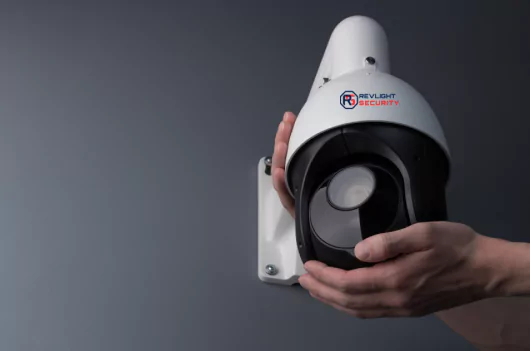
Revlight Security supplies specialist surveillance and detection equipment designed for demanding industrial and marine environments, helping buyers align camera capability with real operational risk rather than generic security claims.
A refinery perimeter is only as secure as the operator’s ability to recognize an event and act on it. Specify cameras around the decisions your team must make at 2 a.m., during poor weather, and at the farthest point of the site. That is where a perimeter investment proves its value.
🛡️ Secure Your Home or Business Today
Protect your home, office, shop, or business with reliable CCTV security cameras. Explore our range of CCTV cameras and find the right security solution for your needs.
Explore CCTV Cameras ✉️ Email Us


 Singapore :
+65-6708-9302
Singapore :
+65-6708-9302