
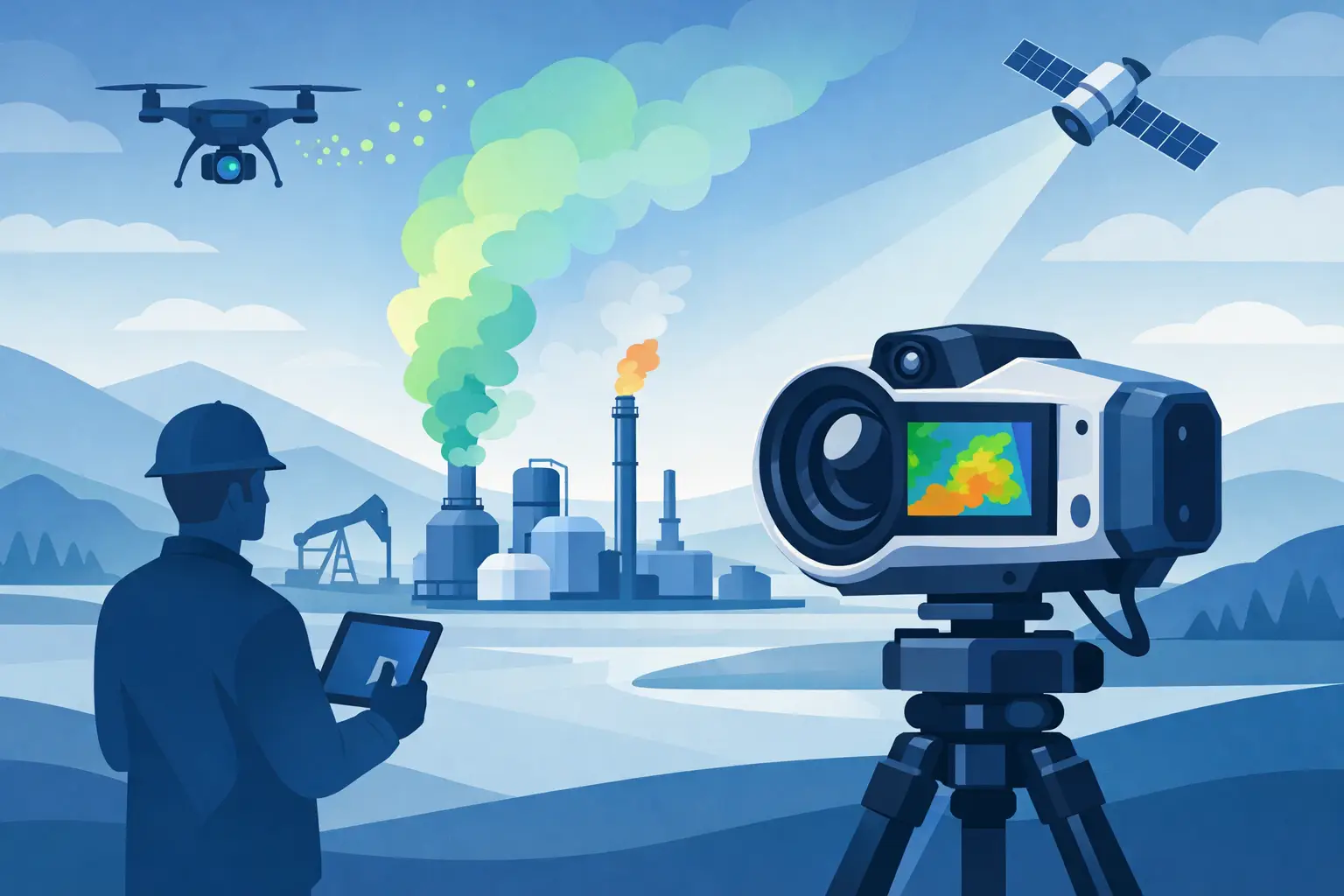
A methane leak does not wait for the next scheduled inspection, and neither should the detection strategy around it. The methane detection camera future is moving beyond periodic surveys toward continuously informed operations, where teams can locate emissions faster, document corrective action clearly, and direct maintenance resources where they have the greatest commercial impact.
For refineries, gas processing facilities, terminals, offshore assets, and power infrastructure, this shift is not about adding another screen to the control room. It is about reducing lost product, limiting exposure to regulatory action, protecting operating continuity, and giving management reliable evidence that an emissions program is working.
Why methane imaging is becoming an operations priority
Methane has long created a difficult inspection problem. It is often invisible to the human eye, can escape through small components, and may be released intermittently rather than continuously. A visual walkdown can confirm corrosion, damage, or an open valve position, but it cannot reliably show a gas plume. Conventional gas sensors are essential in defined locations, yet they do not always reveal the source, direction, or full behavior of a leak across a complex process area.
Optical gas imaging changes that assessment. A properly specified methane detection camera can reveal gas movement in real time, allowing an operator or inspection crew to identify where an emission is originating and how it is dispersing. That visual context matters. It helps maintenance teams distinguish a minor fugitive release from a condition that requires immediate isolation, engineering review, or a controlled shutdown.
The business case is equally direct. Every confirmed methane leak can represent product loss, safety risk, unplanned labor, reporting exposure, and reputational cost. The strongest programs treat gas imaging as operating infrastructure rather than a compliance-only purchase.
The methane detection camera future is continuous, connected, and targeted
The next phase is not simply higher-resolution imaging. It is a more connected detection architecture that combines fixed monitoring, scheduled inspections, alarm integration, recorded evidence, and remote review. This gives operations directors and asset managers a clearer picture of emissions performance across the facility instead of a series of isolated inspection reports.
Fixed coverage will expand around critical leak zones
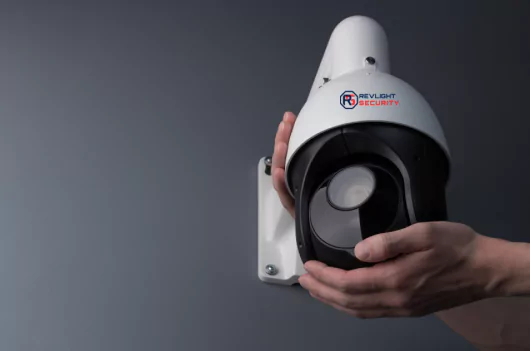
Fixed methane detection cameras are particularly valuable where release consequences are high or physical access is difficult. Compressor stations, tank farms, loading areas, flare systems, valve manifolds, offshore process modules, and remote pipeline infrastructure are all candidates for persistent coverage.
A fixed installation can watch a defined zone repeatedly and support immediate verification when process conditions change. Instead of sending personnel to investigate every suspected event, control-room staff can review the image stream, confirm whether gas is present, and dispatch the right team with better information. This can shorten response time while reducing unnecessary field exposure.
Coverage design still requires engineering discipline. Camera placement, stand-off distance, viewing angle, background thermal contrast, prevailing wind, lighting conditions, and obstructions all affect usable results. The right answer is not always maximum camera count. It is the right camera count, correctly positioned around credible leak paths and high-value equipment.
Intelligent analytics will reduce review burden
As facilities add more visual systems, the challenge becomes managing the volume of data. The most useful future systems will help operators prioritize events instead of forcing them to watch long periods of footage. Analytics can support plume indication, scene-change alerts, zone-based alarms, event tagging, and faster retrieval of recorded sequences.
Analytics must be treated as an operational aid, not an automatic declaration that a leak has been quantified or fully characterized. False alerts can occur when weather, steam, heat sources, moving equipment, or background conditions affect the image. A professional deployment includes alarm logic, verification procedures, and operator training so that the system drives action without creating alarm fatigue.
For procurement teams, this means evaluating the entire workflow. Ask how footage is recorded, how events are searched, whether remote supervisors can review footage securely, and how alarms connect to existing security or process monitoring environments. Camera performance is only one part of a usable solution.
Remote expertise will improve decision speed
Many industrial assets operate with lean site teams, especially offshore and at geographically remote facilities. Secure remote access allows an environmental manager, reliability engineer, security lead, or third-party specialist to review a suspected emission without waiting to travel to site.
That capability can improve the quality of maintenance decisions. A remote reviewer can compare current imagery with previous events, identify recurring leak points, and help determine whether a repair should be planned during the next maintenance window or escalated immediately. Recorded before-and-after evidence also gives supervisors a practical way to verify that a corrective action has resolved the issue.
Network design is central here. Industrial camera systems need dependable bandwidth, secure segmentation, appropriate storage, and resilient communications. A high-performance detection camera cannot deliver its full value if recordings are inaccessible, remote viewing is unreliable, or cybersecurity requirements have been treated as an afterthought.
Better evidence will reshape compliance work
Environmental reporting requirements and stakeholder scrutiny continue to increase across the oil and gas, marine, chemical, and energy sectors. Inspection records based only on written observations can leave important questions unanswered: What was observed? Where was it found? When did it occur? Was the repair verified?
Time-stamped visual evidence provides a stronger audit trail. It can support maintenance tickets, inspection logs, contractor accountability, incident reviews, and emissions reduction initiatives. When paired with clear site procedures, recorded methane imaging gives managers a more defensible record of detection and response.
However, buyers should avoid overstating what imaging alone can do. A camera that visualizes methane is not automatically a certified measurement instrument for calculating mass flow or total emissions volume. Some compliance programs will still require additional measurement methods, calibrated sensors, sampling, or engineering calculations. The correct system depends on the reporting framework, site risk profile, and the operational decision the data must support.
This is where a supplier should add real value. The goal is not to sell a camera in isolation. It is to specify a detection and surveillance configuration that fits the facility’s inspection regime, hazardous-area requirements, data retention policy, network environment, and response procedures.
What buyers should specify now
The most effective purchasing decisions start with the asset, not the catalog. A refinery may need wide-area coverage of process units and rapid response support. An offshore platform may prioritize corrosion-resistant housings, vibration tolerance, low-light performance, and reliable network connectivity. A gas terminal may focus on perimeter-adjacent equipment, loading operations, and long-term video retention.
When comparing options, assess detection capability under expected site conditions, field of view, environmental rating, hazardous-area suitability, recording and playback functions, remote access controls, integration options, and support for preventive maintenance. Also consider who will use the system day to day. A solution that only a specialist can interpret will not produce the same operational return as one that trained control-room and maintenance personnel can use confidently.
It is also wise to define success before installation. Useful measures may include time from alert to verification, repeat leaks at repaired components, time required to close maintenance actions, avoided field callouts, and availability of video evidence for audits. These indicators turn a detection investment into a measurable operating improvement.
From finding leaks to managing emissions performance
The greatest change ahead is cultural as much as technical. Methane detection cameras are becoming part of a broader discipline of condition monitoring, where teams identify abnormal behavior early, retain the evidence, and improve the asset based on what the data shows.
For industrial operators, that means fewer blind inspections and more informed maintenance decisions. For procurement managers, it means evaluating dependable surveillance infrastructure rather than chasing isolated specifications. Revlight Security supports this approach with industrial detection and surveillance solutions designed around demanding operating environments.
The next equipment decision should begin with a practical question: where would faster visual confirmation of a methane release change the outcome for your operation? The answer will point directly to the zones, workflows, and system capabilities worth investing in now.
🛡️ Secure Your Home or Business Today
Protect your home, office, shop, or business with reliable CCTV security cameras. Explore our range of CCTV cameras and find the right security solution for your needs.
Explore CCTV Cameras ✉️ Email Us

 Singapore :
+65-6708-9302
Singapore :
+65-6708-9302