
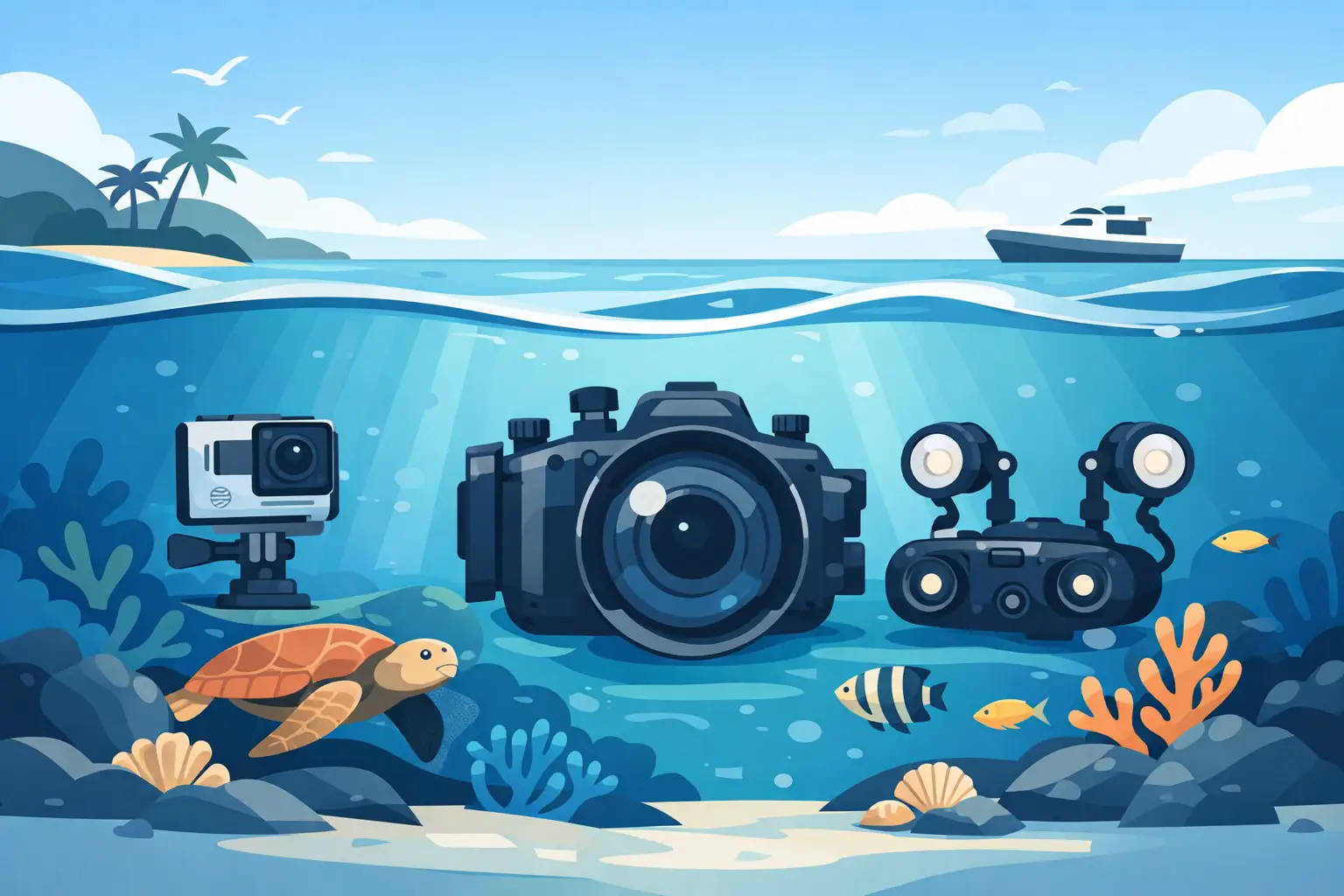
Saltwater destroys ordinary surveillance equipment long before a visible failure appears. Chloride corrosion attacks fasteners, cable terminations, housings, and circuit boards, while spray, humidity, vibration, and temperature swings create additional points of failure. For offshore platforms, vessels, ports, and coastal industrial sites, the question is not simply what cameras work in saltwater. The better question is whether the complete surveillance assembly is engineered to remain reliable through continuous marine exposure.
The right solution depends on where the equipment will operate. A camera mounted above deck in constant spray faces different risks than a unit installed in a protected machinery space, while a submerged inspection system requires pressure-rated engineering that surface-mounted equipment cannot provide. Selecting the correct system protects asset visibility, reduces replacement cycles, and gives operations teams dependable evidence when an incident occurs.
What Cameras Work in Saltwater Environments?
Marine-rated fixed network cameras, protected pan-tilt-zoom systems, thermal imaging units, and purpose-built underwater camera systems can work in saltwater when their enclosure, seals, cabling, and mounting hardware match the operating environment. The camera module alone is never the full answer. Saltwater resistance is a system specification.
For exposed offshore and vessel applications, look for equipment built around marine-grade stainless steel or appropriately coated aluminum housings. Grade 316 or 316L stainless steel is generally the preferred choice where salt spray is persistent because it offers stronger resistance to chloride attack than standard stainless alloys. Powder-coated or marine-coated housings can also perform well, provided the coating system, fasteners, and mounting brackets are designed as one compatible assembly.
A high ingress-protection rating is essential, but it should be interpreted correctly. IP66 is suitable for powerful water jets, while IP67 indicates temporary immersion resistance under defined test conditions. Neither rating automatically confirms suitability for permanent subsea installation. Equipment intended for sustained underwater use needs a stated depth or pressure rating, verified seals, and a cable entry system designed for the same pressure exposure.
Saltwater Exposure Is More Than Water Ingress
Procurement teams often focus on the IP rating and overlook the corrosion pathways surrounding it. Saltwater can enter a system through damaged glands, poorly terminated connectors, scratched coating, incompatible metals, and condensation inside a supposedly sealed enclosure. A camera may remain operational after rain exposure yet fail rapidly when salt deposits remain on the housing and draw moisture from the air.
Galvanic corrosion is a frequent marine installation problem. It occurs when dissimilar metals are connected in the presence of an electrolyte such as seawater. For example, a stainless housing mounted directly to an unsuitable aluminum bracket may corrode at the interface. Specify compatible brackets, bolts, washers, and isolation materials from the start rather than treating installation hardware as an afterthought.
Optical performance also degrades in saltwater environments. Salt film on the viewing window can reduce image clarity, create glare at night, and make infrared illumination less effective. In high-spray areas, specify a camera housing with a wiper, washer system, hydrophilic window treatment, or a maintenance plan that includes scheduled lens cleaning. A clear lens is not a cosmetic detail. It determines whether operators can identify activity, read markings, and respond with confidence.
Match the Camera Type to the Deployment Zone
Above-Deck and Coastal Perimeter Coverage
Fixed marine network cameras are the practical choice for access points, gangways, loading areas, crane zones, perimeter fences, and vessel approaches. They provide continuous coverage of a defined scene and are usually simpler to install and maintain than moving systems. For these deployments, prioritize corrosion-resistant housing, wide operating temperature tolerance, low-light performance, and secure network connectivity.
Where the scene is broad or changing, a protected pan-tilt-zoom system adds operational value. Operators can follow vessel movements, inspect elevated structures, and investigate alarms without sending personnel into hazardous areas. However, moving mechanisms introduce more maintenance considerations. The unit should have marine-rated bearings, sealed motors, protected cable routing, and a housing designed to prevent salt crystallization from interfering with movement.
Thermal imaging systems are particularly effective for nighttime perimeter surveillance, man-overboard support areas, vessel detection, and monitoring in fog, smoke, or low contrast conditions. Thermal imaging does not replace visible-light coverage for identification, but it can detect heat signatures when conventional imaging is limited. The best deployments combine both technologies according to the operational risk, rather than expecting one sensor to solve every surveillance requirement.
Machinery Spaces and Process Areas
Inside engine rooms, pump rooms, refineries, and industrial process areas, humidity, vibration, oil mist, and corrosive atmospheres may be as damaging as saltwater. Choose equipment with industrial environmental protection, vibration-resistant mounting, and suitable hazardous-area certification where flammable gas or combustible dust may be present.
This is also where system integration matters. A camera that feeds into a network video recorder, control room display, alarm platform, or remote monitoring center must retain stable connectivity during electrical noise and network load. PoE can simplify installation for shorter runs, while fiber is often the stronger choice for long distances, lightning-prone structures, and locations requiring electrical isolation.
Submerged Inspection and Underwater Monitoring
Underwater camera systems must be selected by depth rating, water clarity, lighting needs, cable length, and required viewing angle. A unit rated for shallow harbor inspection is not automatically suitable for offshore structure inspection, intake monitoring, hull observation, or subsea infrastructure work.
Pressure is the defining requirement. Water pressure increases with depth, placing sustained force on the housing, window, seals, and cable penetrator. Specify the operating depth with an appropriate safety margin, not merely the maximum depth expected under ideal conditions. The enclosure should also use materials that resist both corrosion and long-term pressure cycling.
Lighting requires equal attention. Water absorbs light quickly, and suspended particles can reflect illumination back into the lens. Properly positioned external lighting, controlled beam angles, and suitable window geometry produce a clearer image than simply increasing light output. For industrial underwater applications, image quality should support the task at hand, whether that is observing an intake, confirming an obstruction, monitoring marine growth, or documenting asset condition.
Specify the Complete Marine Surveillance System
A dependable saltwater surveillance project is built from compatible components. The camera, enclosure, mount, cable, connector, network switch, recorder, and power protection should all meet the site conditions. One low-grade connector can compromise a high-specification camera system.
When comparing quotations, require suppliers to confirm housing material, ingress rating, operating temperature, corrosion protection, connector type, cable jacket suitability, mounting hardware, and power method. Ask how the system will handle remote viewing, recording retention, playback, user access control, and alarm events. These are operational requirements, not optional extras.
For offshore installations, surge protection and grounding strategy deserve special scrutiny. Lightning activity, generator switching, and long cable runs can damage cameras and network equipment even when the housing is fully sealed. Isolation, protected power distribution, and correctly specified industrial network hardware reduce costly outages and avoid unnecessary service visits.
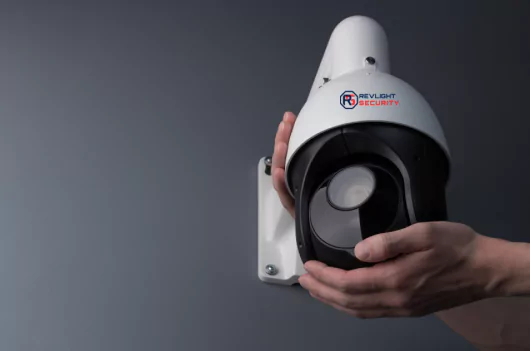
Revlight Security supports marine and industrial buyers with surveillance systems selected around the actual deployment environment, from exposed deck coverage to specialized underwater monitoring. The objective is clear: deliver reliable visual intelligence where standard equipment cannot remain dependable.
A Practical Procurement Standard for Saltwater Sites
Before approving any equipment, define whether it will be exposed to spray, occasional immersion, continuous submersion, chemical washdown, direct sun, vibration, or hazardous gases. Then confirm that the supplier’s specification addresses every one of those conditions. Do not accept a generic claim that a camera is waterproof or weatherproof without the supporting material, rating, and installation details.
Also consider service access. A system that requires frequent removal for cleaning or repair may create unnecessary vessel downtime, permit requirements, and labor cost. Select locations that allow safe access, provide visibility without excessive zoom dependence, and protect the equipment from direct mechanical impact where possible.
The most cost-effective saltwater camera is rarely the lowest-priced unit. It is the system that stays online, delivers usable images, and avoids repeated replacement in the environment where your operation actually runs. Specify for the water, the weather, and the mission, and your surveillance infrastructure will keep earning its place long after basic equipment has failed.
🛡️ Secure Your Home or Business Today
Protect your home, office, shop, or business with reliable CCTV security cameras. Explore our range of CCTV cameras and find the right security solution for your needs.
Explore CCTV Cameras ✉️ Email Us


 Singapore :
+65-6708-9302
Singapore :
+65-6708-9302