
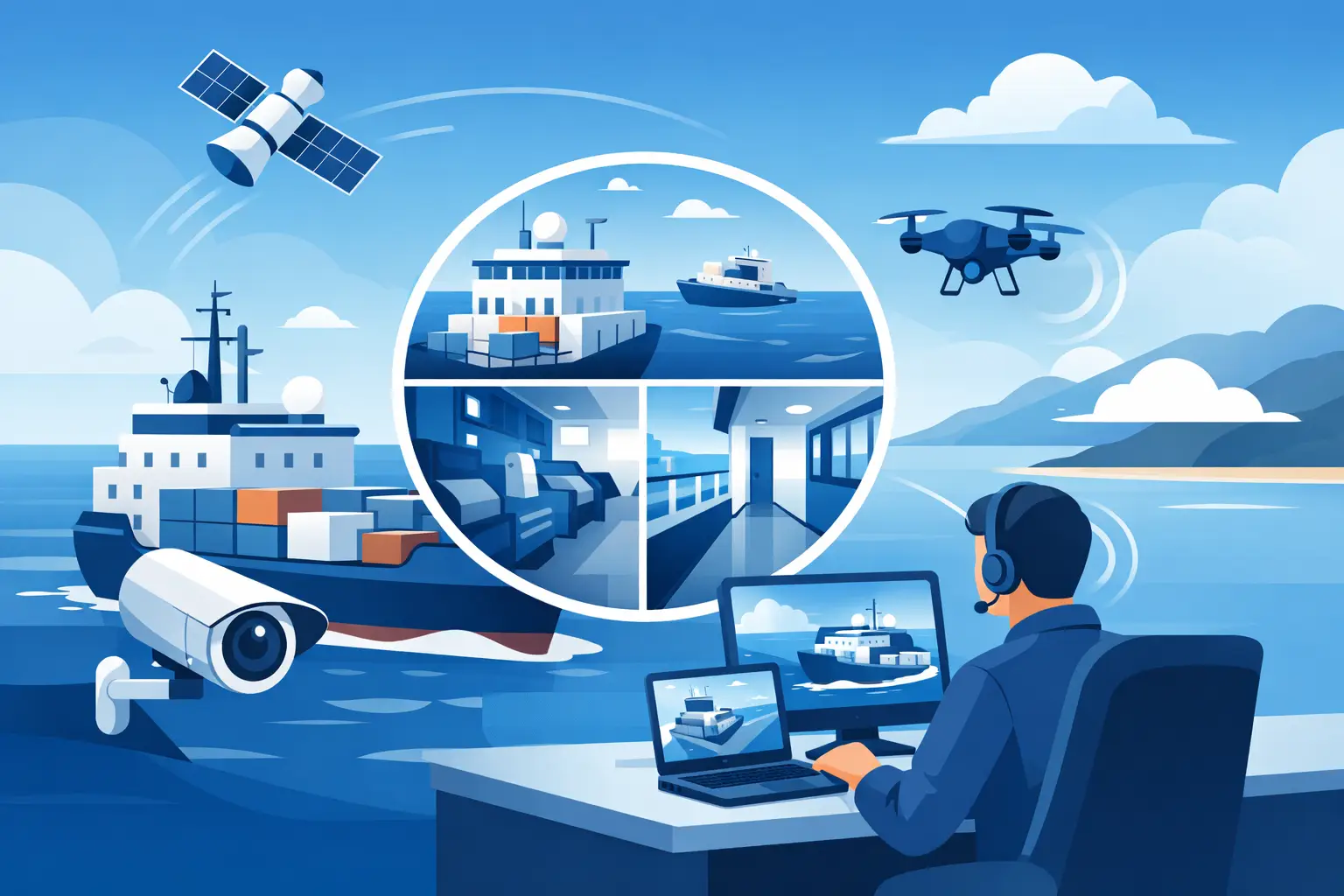
A machinery alarm at 02:00, an unattended gangway, a disputed cargo transfer, or an unexpected person on deck can become expensive fast when the right people cannot see what is happening. Remote vessel CCTV access puts verified live and recorded video in front of shore managers, superintendents, captains, and authorized technical teams without waiting for the vessel to reach port.
For commercial fleets and offshore operators, this is not a consumer convenience feature. It is a working security and operations capability. The right system helps teams investigate incidents sooner, support crews without unnecessary travel, protect high-value assets, and maintain a clear record of events in difficult marine conditions.
Why remote vessel CCTV access matters
Vessels operate beyond the reach of normal site security infrastructure. A shore-based operations manager may need to assess a deck operation, check access to a restricted area, review activity around critical equipment, or confirm conditions before dispatching support. Without remote video, decisions rely on radio reports, still images, and delayed retrieval of local recordings.
That delay has a cost. It can prolong downtime, complicate insurance claims, increase the burden on onboard personnel, and leave security concerns unresolved. Live viewing and controlled playback allow the designated team to establish what happened, when it happened, and what action is required.
Remote access also changes how fleet resources are used. A superintendent can review a reported issue from shore before arranging a visit. A security manager can investigate an alert across multiple vessels from one control location. An engineer can provide visual support during troubleshooting when integrated cameras cover relevant spaces. The result is faster decisions with fewer unnecessary mobilizations.
A marine CCTV system needs more than an internet connection
Marine connectivity is valuable, but bandwidth at sea is not unlimited or consistent. Satellite, cellular, vessel Wi-Fi, and port-side connections can all vary by route, weather, location, and service plan. A CCTV system designed for a fixed facility may perform poorly if it attempts to transmit every stream at maximum quality over a constrained connection.
A properly specified vessel system manages this reality. It records high-quality footage locally on a network video recorder or onboard server while using configurable remote streams for live viewing. Authorized users can select a lower-bandwidth live stream for routine checks, then retrieve a higher-quality recording when an incident requires detail.
This approach protects the evidence value of recorded footage without consuming available communications capacity. It also means the vessel retains local recording even when there is no reliable external connection. Remote access should enhance onboard surveillance, not replace local resilience.
Local recording remains the operational foundation
Every deployment should begin with recording retention requirements. Consider the number of cameras, required image quality, expected retention period, motion activity, and whether continuous recording is needed in specific areas. Engine rooms, bridge approaches, cargo zones, accommodation entrances, and perimeter decks may have very different operational requirements.
Storage capacity is only one part of the decision. Recording hardware should be selected for vibration, temperature variation, salt exposure risk, and continuous-duty operation. Power stability matters as well. A system that restarts after a power event without recording properly is not delivering the level of protection a vessel operator expects.
Remote viewing must be controlled, not open
The strongest remote vessel CCTV access setup does not expose a recorder directly to the public internet. It uses secure network architecture, controlled user permissions, encrypted communications, and access paths that can be managed by the operator’s IT or marine network team.
Different users should receive different rights. A captain may need live access to all operational views. A shore security team may need playback access for incident review. A contractor may only require temporary access to specific cameras during a scheduled maintenance window. Role-based permissions reduce unnecessary exposure while keeping the system practical for real operations.
Where remote viewing delivers measurable value
The best camera positions are driven by operational risk, not by camera count alone. A vessel with sixteen poorly placed cameras may provide less useful evidence than a smaller system designed around actual activity, access routes, and blind spots.
Deck and perimeter coverage can help operators monitor boarding points, gangways, mooring areas, stores deliveries, and activity near restricted spaces. During port calls, these views give shore teams an additional method to review access events and support incident investigations.
In machinery and technical spaces, fixed surveillance can assist with situational awareness during alarms, maintenance work, or unusual equipment conditions. Cameras do not replace inspection procedures or crew judgment, but they can give a remote technical team immediate visual context before advice is issued or attendance is arranged.
Cargo areas and transfer points benefit from clear, correctly positioned coverage where operations, safety controls, and security requirements justify it. In oil, gas, chemical, and offshore environments, equipment selection must match the area classification. Standard cameras are not suitable for every location. Hazardous-area rated equipment, correctly designed cable routes, and compliant installation practices are essential where flammable gas or vapor may be present.
Selecting cameras and network equipment for marine conditions
Salt spray, vibration, humidity, ultraviolet exposure, and frequent temperature changes are everyday realities at sea. This is why a marine CCTV purchase should not be based on image resolution alone. Enclosure rating, corrosion resistance, mounting design, connector protection, operating temperature, and power method all affect long-term performance.
For exposed deck locations, rugged housings and appropriately rated outdoor cameras are critical. For low-light zones, infrared performance, wide dynamic range, and lens selection should be matched to the scene. A camera aimed into bright deck lighting or toward open water can produce unusable footage if glare and contrast have not been considered during design.
Network design deserves the same attention as camera selection. Managed switches, segmented networks, power-over-Ethernet budgets, cable quality, surge protection, and properly planned wireless bridges all influence system reliability. Marine Wi-Fi can extend access around a vessel or across a working area, but it should be engineered around coverage, interference, roaming needs, and security policies rather than treated as a quick add-on.
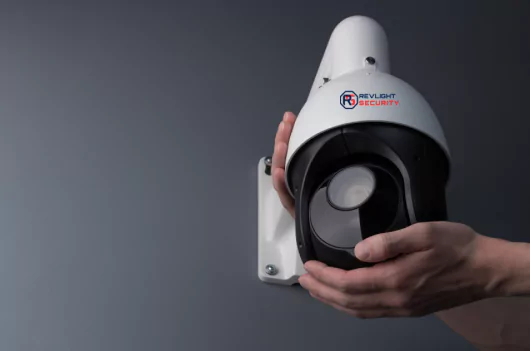
Revlight Security supplies specialized surveillance and network solutions built around these operational requirements, including camera, recording, and connectivity options for demanding industrial and marine applications.
Build a remote access policy before deployment
Technology alone does not determine whether remote CCTV will be useful. Operators should define who may view footage, under which circumstances, how long recordings are retained, and how evidence is exported when an incident occurs. A clear policy prevents confusion between vessel command, fleet operations, security, IT, and third-party service providers.
Privacy and labor considerations must also be addressed. Cameras should be placed for security, safety, and legitimate operational oversight, not indiscriminate monitoring. Avoid coverage of private areas and clearly communicate the purpose of installed surveillance according to applicable company policy and local requirements.
It is equally important to test the system under normal vessel conditions. Verify live viewing through the actual offshore connection, measure bandwidth consumption, confirm playback retrieval, test user permissions, and review image quality at night and during poor weather. A demonstration in port is not the same as dependable performance on a working route.
Common mistakes that reduce system value
The most frequent mistake is buying for maximum specification on paper rather than for the vessel’s operating environment. High-resolution cameras can be useful, but only if network capacity, storage, lighting, lens angle, and mounting position support the expected result.
Another problem is treating remote viewing as the only requirement. If the vessel loses connectivity, local recording must continue. If shore users cannot find the correct clip quickly, a large archive has limited practical value. If passwords are shared among multiple users, the access control model has already failed.
Finally, avoid a one-size-fits-all camera layout. A tug, tanker, offshore support vessel, cargo ship, and workboat have different security priorities, deck layouts, connectivity options, and compliance needs. A site survey and operational review should shape the design before equipment is selected.
When a vessel team can see the right location, at the right time, with the right authorization, video becomes more than a record of past events. It becomes a practical decision tool that helps protect people, operations, and assets wherever the vessel is working.
🛡️ Secure Your Home or Business Today
Protect your home, office, shop, or business with reliable CCTV security cameras. Explore our range of CCTV cameras and find the right security solution for your needs.
Explore CCTV Cameras ✉️ Email Us


 Singapore :
+65-6708-9302
Singapore :
+65-6708-9302