
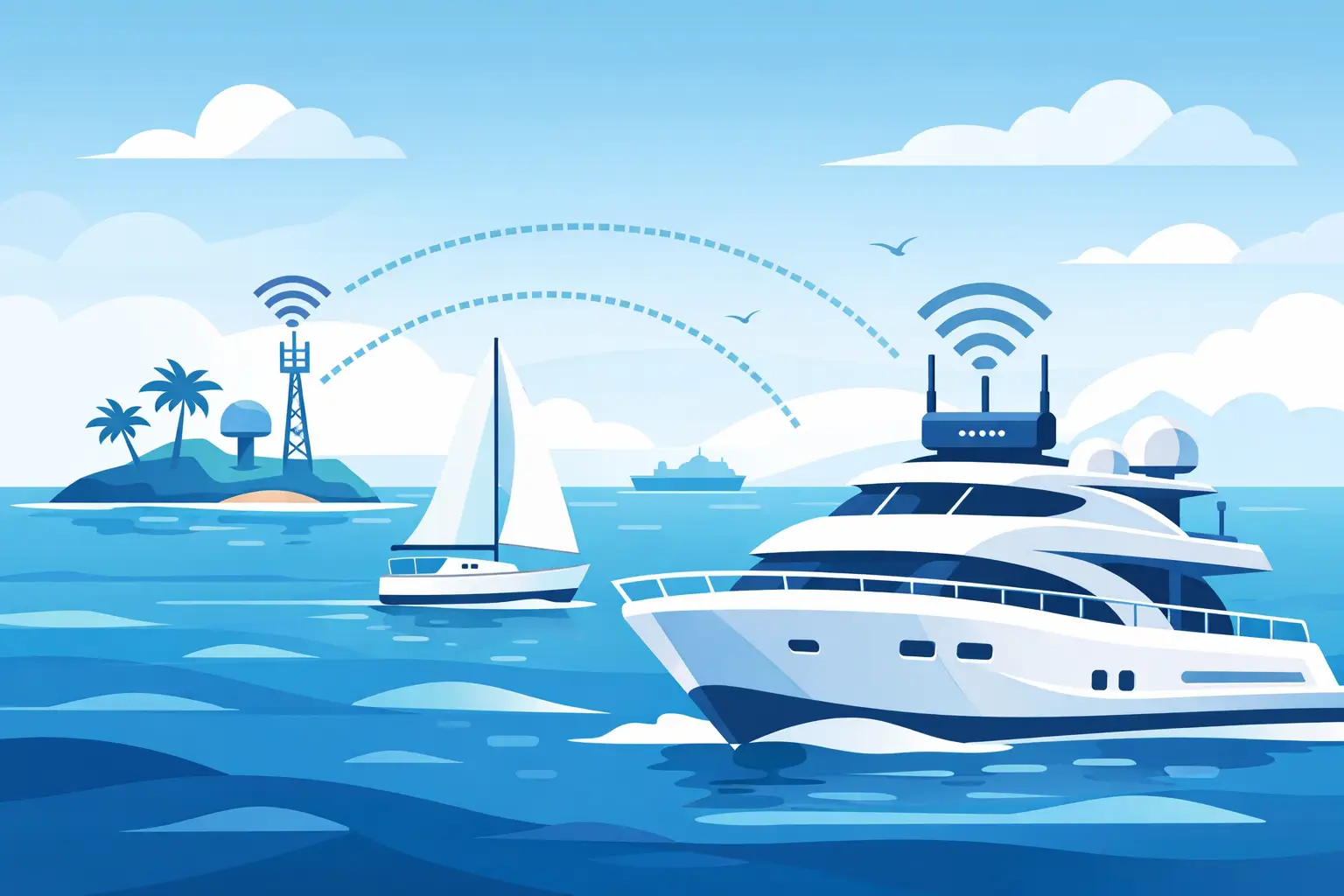
A marine WiFi project usually fails long before the first antenna goes up. The real problems start when coverage assumptions are copied from land, cable runs are underestimated, and environmental hardening is treated like an upgrade instead of a requirement. If you are planning how to deploy marine wifi networks across vessels, docks, terminals, offshore structures, or mixed marine assets, the priority is not just coverage. It is stable performance under salt exposure, vibration, motion, interference, and operational pressure.
For procurement teams and marine operators, the commercial question is simple: will the network support operations without becoming a recurring maintenance problem? A well-planned marine WiFi system improves crew communications, supports surveillance traffic, connects inspection devices, and gives operations teams better visibility across working areas. A poor one creates dead zones, packet loss, service calls, and avoidable downtime.
How to deploy marine WiFi networks without weak points
The first decision is not brand, price, or even radio standard. It is defining what the network must carry. A marina guest access network has very different requirements from a vessel-to-shore surveillance link or an offshore platform network supporting IP cameras, monitoring systems, and operational data. Start with applications, because applications drive bandwidth, latency tolerance, redundancy needs, and security controls.
If the network will carry video surveillance, remote playback, live monitoring, access control traffic, and routine crew connectivity, you need to separate critical and non-critical traffic from the start. That affects VLAN design, QoS policy, uplink sizing, and hardware choice. If all traffic is treated the same, performance will drop precisely when the system is under stress.
Coverage mapping also needs to reflect the actual marine environment. Open deck space may appear simple, but steel bulkheads, cranes, containers, masts, and superstructure elements all change RF behavior. Reflections can either help or hurt. In many deployments, fewer well-positioned access points outperform a larger number of poorly coordinated units. More hardware does not automatically mean more usable coverage.
Start with a marine site survey, not a catalog
A serious deployment begins with a site survey that accounts for physical layout, movement, line of sight, and power availability. On a vessel, that means considering deck levels, enclosed compartments, bridge areas, engine spaces, and any zones where metal density is high. At a port or terminal, it means reviewing berth distances, storage yards, gangways, administrative areas, and expected vessel positions.
Environmental conditions matter just as much as the map. Salt mist, direct spray, UV exposure, shock loading, and temperature swings change what hardware is viable. Marine WiFi equipment should not be selected like standard office networking gear in a weatherproof box. Enclosures, connectors, cable jackets, and mounting hardware all need marine-grade suitability if you want the system to last.
The survey should also identify interference sources. Radar, VHF systems, onboard electronics, industrial equipment, and nearby wireless networks can affect channel planning. In busy marine and offshore zones, the airspace can be crowded. Assuming clean spectrum is one of the most expensive shortcuts in deployment planning.
Hardware choices that hold up offshore
When buyers compare systems, they often focus on throughput figures. Those numbers matter, but durability and deployment fit matter more. The best service provider will specify equipment that survives the operating environment while delivering the throughput the application actually needs.
Outdoor-rated access points and bridges should be selected for ingress protection, corrosion resistance, and stable operation in motion-heavy conditions. Antenna choice is equally important. Omnidirectional antennas can work well in open localized coverage areas, but directional antennas are often the better answer for point-to-point or vessel-to-shore links where focused signal strength and reduced interference are priorities.
Mounting height is another trade-off. Higher placement can improve line of sight and coverage footprint, but it can also increase exposure to wind loading and complicate maintenance. On working vessels and offshore assets, accessibility is not a minor issue. If replacing a failed unit requires disruption to operations, the lifetime cost rises quickly.
Cable and connector quality should be treated as core infrastructure, not accessories. Signal loss, water ingress, and corrosion at connection points are common reasons marine networks degrade over time. Industrial-grade PoE switching, protected cable pathways, and proper grounding are part of a dependable build.
Backhaul is where many projects are won or lost
Marine WiFi access is only as useful as the backhaul behind it. In some deployments, fiber across terminal areas is the best answer. In others, licensed or unlicensed wireless bridges, cellular failover, or satellite integration will be necessary. There is no single default design.
For example, a harbor deployment serving surveillance and operations around fixed assets may justify fiber-fed distribution with wireless edge coverage. A moving vessel connecting intermittently to shore infrastructure needs a different approach, often with local onboard distribution and selective synchronization to shore when backhaul quality is available. Offshore installations may require a hybrid architecture that prioritizes operational traffic and limits recreational or non-essential bandwidth use.
This is where commercial discipline matters. Paying for premium access points while under-sizing the uplink creates frustration and support costs. On the other hand, overspending on backhaul for low-priority use cases reduces return on investment. The correct design follows the critical application path.
Security and segmentation are not optional
Any discussion of how to deploy marine wifi networks should include network security from the first design review. Marine assets and industrial sites are high-value targets, and wireless infrastructure expands the attack surface if it is not properly segmented and controlled.
At minimum, separate operational technology traffic, surveillance traffic, business traffic, and guest traffic. Use strong authentication, role-based access, and monitored management interfaces. Remote administration should be controlled tightly, especially where offshore or vessel connectivity creates pressure for convenient access methods.
Surveillance systems deserve special attention. If the WiFi network supports IP cameras, remote viewing, or recording transfer, bandwidth reservation and device isolation are both important. A video stream that drops during an incident is not just a technical fault. It is a security failure with operational and commercial consequences.
For buyers in oil and gas, refining, marine transport, and energy operations, compliance expectations also shape deployment choices. Logging, encrypted traffic handling, and controlled access policies should be planned into the system rather than retrofitted later.
Installation, testing, and tuning in live conditions
A marine WiFi network is not finished when devices power on. It is finished when it performs under real operational load. That means post-installation testing should include roaming behavior, throughput verification, failover checks, and application-level performance review.
Test the network in the conditions it will actually face. A vessel at berth can behave differently from a vessel underway. A dock area may perform well during low traffic periods and degrade once equipment, vehicles, and workers are active. Weather can also expose weaknesses that looked acceptable during installation.
Channel tuning, transmit power adjustment, and antenna alignment often need refinement after deployment. This is normal. What matters is building enough commissioning time into the project to get the result right. Rushed sign-off tends to shift costs into support and remedial work later.
Documentation is another area where strong suppliers separate themselves. Clear network maps, IP schemes, hardware schedules, and maintenance guidance reduce future downtime and help onboard teams manage the system with confidence.
Maintenance planning protects the investment
Marine conditions punish neglected infrastructure. Salt contamination, connector wear, mounting fatigue, and software drift all affect long-term performance. A maintenance plan should include inspection intervals, firmware policy, spare unit strategy, and fault response procedures.
For larger operators, standardizing hardware across fleets or multiple sites can reduce training overhead and spare stock complexity. That kind of standardization also speeds troubleshooting. If every vessel or facility has a different wireless design, support costs rise and response times slow down.
This is where a specialist supplier adds value beyond product delivery. Revlight Security focuses on dependable industrial and marine network solutions because the buying decision is not only about hardware. It is about reducing risk, protecting surveillance uptime, and securing better long-term operating value.
The strongest marine WiFi deployments are not the ones with the longest specification sheet. They are the ones designed around the environment, the traffic, and the business case. If your network needs to support security, visibility, and daily operations in harsh marine conditions, build it like infrastructure, not convenience tech. That is how you get performance that holds up when the job gets demanding.




 Singapore :
+65-6708-9302
Singapore :
+65-6708-9302