
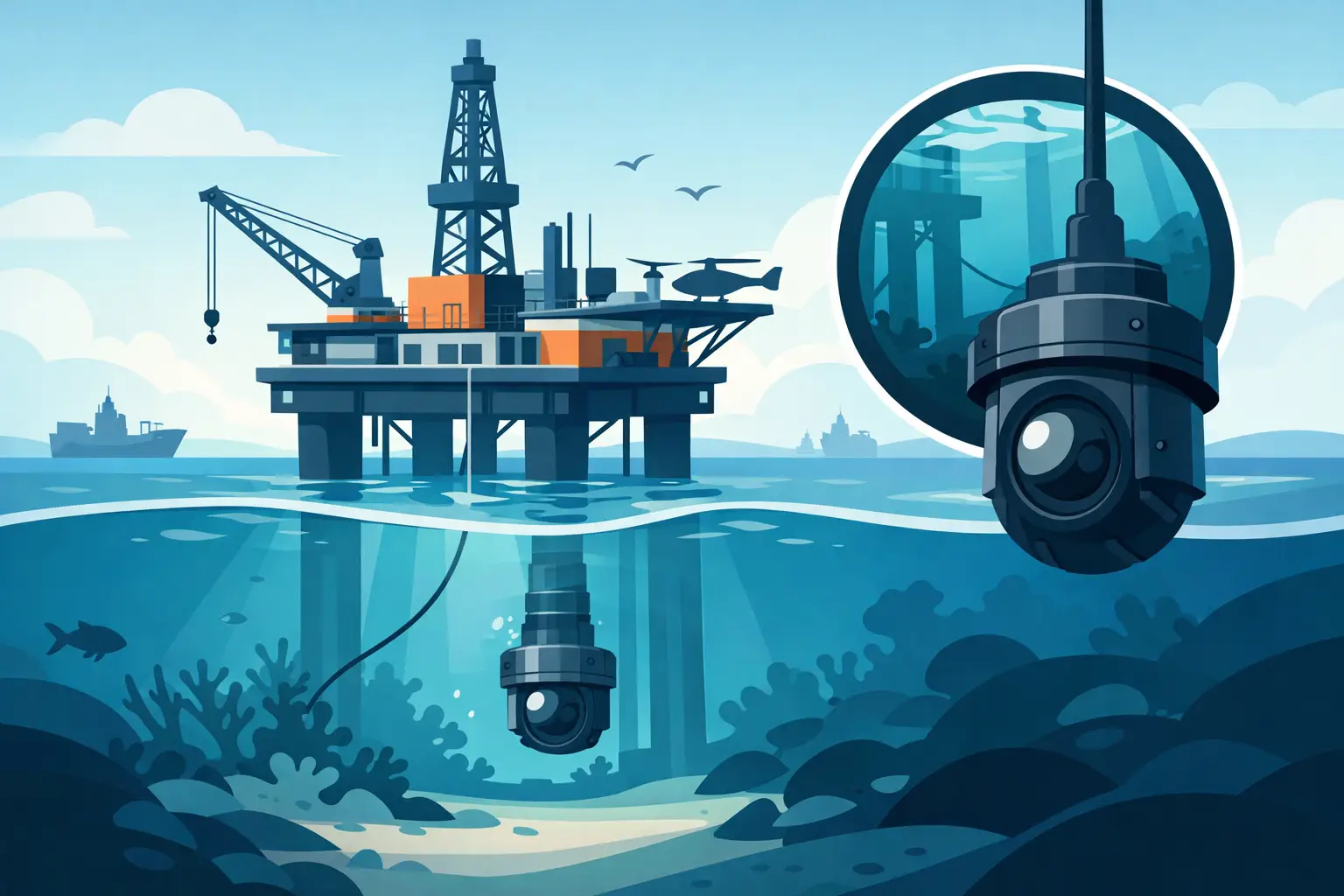
A weak camera plan offshore fails in the same way most rig failures do – slowly at first, then all at once. One blind transfer point, one unverified alarm, or one dead camera on a flare boom can turn a manageable incident into lost production, added risk, and expensive reactive maintenance. That is why an offshore rig camera deployment example matters to operations teams that need working visibility, not just a camera count on a quotation.
For procurement managers, OIMs, superintendents, and marine engineers, the real question is not whether a rig needs surveillance. It is how to deploy a system that performs in salt spray, vibration, explosive atmospheres, and constant operational movement without becoming another failure point on the asset. The right design starts with operational purpose, then matches camera type, network path, recording capacity, and environmental protection to the actual rig layout.
What an offshore rig camera deployment example should show
A useful offshore rig camera deployment example does more than list devices. It shows how the system supports safety, security, and production at the same time. On a typical offshore platform or drilling unit, cameras are deployed to verify process conditions, monitor personnel movement, secure restricted access areas, observe crane and helideck activity, and support remote situational awareness from the control room or onshore operations center.
The strongest deployments are built around critical views. That usually means perimeter access points, loading and supply interfaces, main deck work zones, hazardous process areas, utility spaces, stair towers, and marine approach lines. In higher-risk operations, operators also want visual coverage of flare structures, wellhead zones, moonpool activity, and overside work areas where standard supervision is difficult.
This is where many projects go wrong. Buyers are sometimes pushed toward a high camera quantity without enough attention to lens selection, low-light performance, corrosion resistance, or network resilience. Twelve badly placed cameras create more operational frustration than six cameras engineered correctly.
A practical offshore rig camera deployment example
Consider a midsize offshore production platform with a control room, helideck, crane loading area, process skid zone, accommodation access points, and two marine approach sides. The operator wants live monitoring, playback for incident review, remote access from shore, and dependable recording during network interruptions.
In this deployment, fixed explosion-protected cameras are installed at the process skids, hydrocarbon handling areas, and compressor zone where hazardous area compliance is non-negotiable. These cameras are selected for certified use in classified environments and specified with housings designed for corrosive offshore conditions. They are not chosen simply because they are rugged. They are chosen because they remain stable under real rig exposure – salt, wind-driven rain, temperature swings, and continuous vibration.
PTZ units are then assigned to the helideck, crane operations sector, and main deck overview positions. These locations benefit from zoom capability and operator control because activity patterns change constantly. A fixed view is often enough for access doors, corridors, and ladder transitions, but it is not enough for dynamic lifting operations or vessel interface monitoring where the area of concern shifts by the minute.
Below deck or in enclosed utility spaces, compact marine-grade fixed cameras provide coverage of machinery access routes, electrical rooms, and storage areas. These locations usually demand less dramatic optics but still require reliability, clean video, and dependable housing integrity. If humidity control is poor, condensation management becomes part of the camera specification, not an afterthought.
At the network layer, cameras are commonly segmented through industrial PoE switches in protected cabinets, with fiber uplinks connecting remote deck zones back to the main control network. This matters because offshore distances, EMI, and lightning exposure can quickly degrade weaker copper-only designs. Local edge recording at strategic nodes can also protect evidence retention if the main recorder or uplink path is temporarily lost.
Recording is handled through an NVR platform sized for the retention target and stream complexity. On a live asset, retention periods are often driven by incident review needs, insurance requirements, and internal compliance procedures. There is no single right number of days. A rig with frequent lifting operations and contractor turnover may justify a longer archive than a low-traffic unmanned installation.
Camera placement is about decisions, not just visibility
The best camera deployments are built around what operators need to confirm. Can the control room verify whether a gas alarm is associated with visible process abnormality? Can security confirm who accessed a restricted zone? Can a crane supervisor review movement around the laydown area after a near miss? Can shore-based management log in and assess live deck conditions without calling offshore for a verbal update?
That is why placement strategy should separate general awareness cameras from decision-support cameras. A general overview camera helps establish context. A decision-support camera needs a viewing angle, image quality, and positioning that lets personnel identify specific activity or equipment status. If every camera is deployed for wide coverage, the system looks comprehensive on paper but often lacks operational value.
Lighting also changes the answer. Offshore installations operate through glare, shadows, mist, and nighttime conditions that can wash out poor sensors. A camera that performs adequately in daylight may become nearly useless during a wet night transfer or flare reflection event. Infrared can help in some zones, but in reflective metallic environments it can also create image problems. This is a classic it-depends decision and should be validated per location.
Hazardous area compliance cannot be treated as a checkbox
An offshore rig camera deployment example is incomplete if it ignores area classification. Buyers need to distinguish between safe area devices, marine-grade devices, and certified hazardous area cameras. They are not interchangeable, and the cost difference exists for a reason.
In Zone-classified locations, explosion-protected camera assemblies are part of the site safety architecture. The wrong device can create compliance issues, shorten service life, or introduce unacceptable operational risk. Even adjacent non-hazardous areas need careful review because boundary assumptions are often oversimplified during early design stages.
This is also where lifecycle value matters. Lower-cost equipment may reduce initial spend, but if it fails early offshore, replacement logistics, labor access, permit requirements, and downtime quickly erase the savings. Serious operators buy for total installed performance, not just invoice price.
Network and remote access design drive long-term value
Many offshore users now expect cameras to serve multiple stakeholders. The control room needs live views. Security teams need event review. Onshore management wants remote access. Engineering may want video support during inspections or shutdown planning. That makes network planning central to the deployment, not secondary.
Bandwidth must be managed realistically. High-resolution streaming from every camera at maximum settings is rarely the smartest approach offshore. Stream profiles should be tuned by use case. Critical operational cameras may justify higher frame rates or image quality, while secondary areas can run lighter settings to preserve capacity and storage.
Cybersecurity also belongs in the design conversation. Remote access is valuable, but unmanaged access creates obvious exposure. Segmented architecture, role-based permissions, and controlled external connectivity are part of a serious industrial surveillance offer. For many buyers, this is now a procurement requirement rather than a technical preference.
What buyers should expect from the system specification
A serious proposal should explain why each camera is being deployed, what environmental rating it carries, how it will be mounted, how power and network paths will be protected, and what recording outcome the customer can expect. If the specification only lists model numbers and quantities, it is not yet a deployment plan.
Commercially, the most effective systems balance capital cost against uptime, maintenance access, and operational usefulness. Some sites need a high-density layout. Others achieve better value with fewer cameras and stronger placement logic. There is no benefit in oversupplying hardware that the crew does not use or trust.
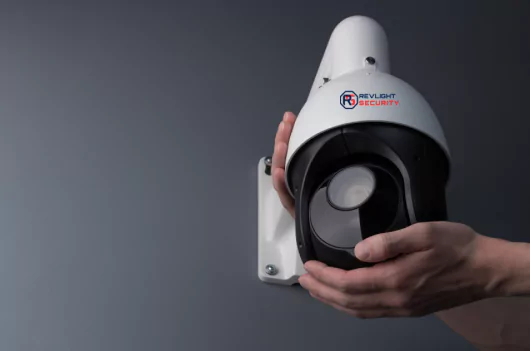
For industrial buyers comparing options, the strongest supplier is the one that understands offshore conditions as an engineering problem and a business problem. Revlight Security focuses on that intersection – delivering top-of-the-line offers built for visibility, reliability, and measurable security outcomes in harsh environments.
A camera deployment offshore should earn its place every day, whether that means verifying a deck operation, protecting a hazardous process area, or giving shore teams a clear live picture when timing matters most. If the system helps your team make faster, better decisions under pressure, it is doing the job it was bought to do.
🛡️ Secure Your Home or Business Today
Protect your home, office, shop, or business with reliable CCTV security cameras. Explore our range of CCTV cameras and find the right security solution for your needs.
Explore CCTV Cameras ✉️ Email Us


 Singapore :
+65-6708-9302
Singapore :
+65-6708-9302