
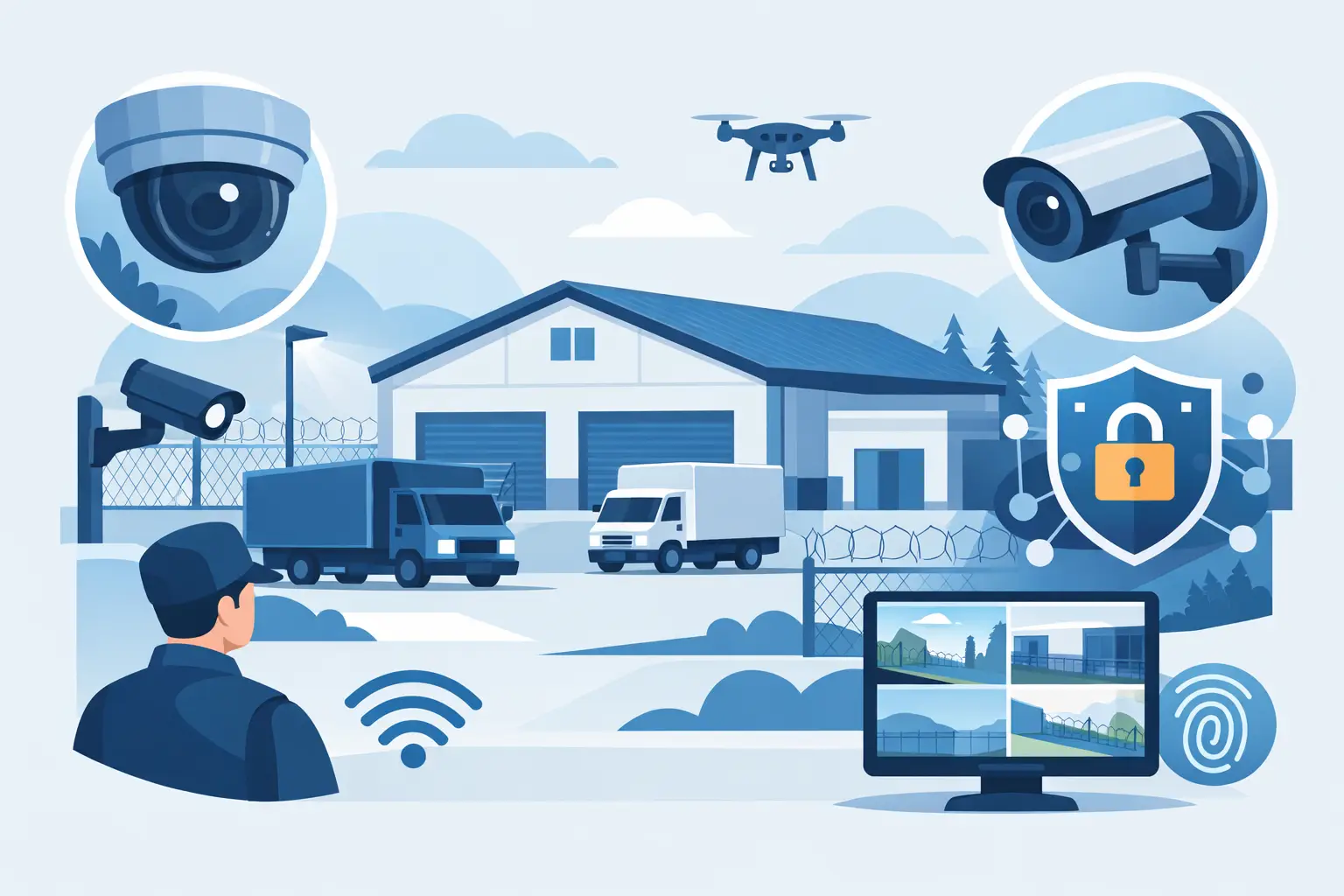
A warehouse fence line can look fully covered on paper and still leave real gaps in the field. One camera pointed the wrong way, one exposed switch cabinet, or one poorly segmented network can turn a perimeter system into a weak point instead of a deterrent. If you are evaluating how to secure warehouse perimeter cameras, the job is not just mounting devices on poles. It is designing a surveillance edge that stays visible, connected, protected, and usable when conditions get difficult.
For procurement teams and operations leaders, that distinction matters. Perimeter cameras are often expected to do several jobs at once – deter intrusion, support investigations, provide live verification, and feed remote operations centers. When they fail, losses show up quickly in theft, downtime, claims exposure, and site access risk. A serious perimeter design reduces those costs and gives your team faster, cleaner decision-making.
How to secure warehouse perimeter cameras starts with risk mapping
The best perimeter camera systems begin before the first bracket is installed. A warehouse perimeter is rarely uniform. One side may border a public road, another may face a rail spur, truck yard, canal, or service alley. Lighting conditions change by corner. So do access patterns, concealment points, and response times.
Start by identifying where intrusion is most likely and where a detection delay would hurt the most. Gates, blind fence returns, loading yard approaches, fuel storage areas, rooftop ladder access, and employee parking edges usually rank high. If your team treats the entire perimeter as one flat problem, camera coverage tends to be spread too evenly. That looks efficient in a layout drawing but usually wastes budget on low-risk stretches while underprotecting critical zones.
This is also where environment comes into play. Warehouses near ports, refineries, chemical plants, and energy infrastructure face harsher conditions than a standard inland distribution center. Salt air, dust, vibration, wind, and temperature swings affect image quality and hardware lifespan. Buyers should expect enclosure ratings, heater or blower options, anti-corrosion materials, and industrial-grade networking to be part of the conversation, not add-ons at the end.
Camera placement is more important than camera count
More cameras do not automatically create more security. Poorly placed units simply create more footage to review. Effective perimeter protection depends on overlapping views, controlled angles, and clear detection zones.
A common mistake is mounting cameras too high to avoid tampering. Height does help with survivability, but excessive elevation flattens detail and makes identification harder. For most warehouse perimeters, the right mounting height balances tamper resistance with useful facial, vehicle, and movement detail. It also depends on whether the camera is intended for wide-area situational awareness or tighter analytic detection.
Corners and gate approaches deserve special treatment. A single wide-angle view might show activity, but it may not provide enough detail for verification or follow-up. Pairing overview coverage with tighter field-of-view cameras often produces better security results than relying on one device to do everything. This is especially true at entry and exit points where plate capture, driver visibility, and trailer movement need different image priorities.
Lighting cannot be treated as separate from camera security. If a perimeter camera depends on nearby floodlights and those fixtures fail, your security posture changes immediately. Integrated low-light performance, infrared design, and scene-appropriate illumination help maintain continuity. That said, infrared has trade-offs. It can create reflective hotspots on fencing, vehicles, or wet ground if poorly aimed. A proper night test is worth more than a daytime commissioning checklist.
Physical protection matters as much as image quality
If a warehouse perimeter camera can be disabled with a ladder, a rock, or a cut cable, the image sensor is only part of the solution. Physical hardening protects the investment and keeps the system operational under pressure.
Use tamper-resistant housings, secure pole and wall mounts, protected junction boxes, and armored or concealed cabling where possible. External runs should be minimized, and cabinets should be locked and monitored. In high-risk facilities, it is smart to treat edge devices like critical infrastructure rather than accessories. That means considering impact resistance, vibration tolerance, and environmental sealing from the start.
Power resilience also deserves attention. Perimeter cameras often fail for simple reasons – unstable power, exposed injectors, overloaded switches, or long cable runs that degrade performance. A dependable design uses industrial network hardware, surge protection, grounded enclosures, and backup power where uptime matters most. For larger sites, distributed architecture can outperform a centralized setup because one local failure is less likely to blind the whole perimeter.
This is one area where commercial buyers should push suppliers hard. A lower upfront camera price means very little if network cabinets, power distribution, and enclosure protection are underbuilt. The real cost is measured over years of operation, maintenance visits, and incident exposure.
Secure the network behind the cameras
Knowing how to secure warehouse perimeter cameras also means securing the system behind them. A perimeter device is not just a lens on a pole. It is a network endpoint, and if it is left exposed, the warehouse edge becomes a cyber risk as well as a physical one.
Basic hardening should be mandatory. Change default credentials, enforce strong authentication, disable unused services, isolate surveillance traffic, and keep firmware current under a controlled maintenance policy. Remote access should be tightly managed, not left open for convenience. If the site depends on third-party monitoring or centralized operations, access control needs to be role-based and logged.
Segmentation is especially important in industrial facilities. Surveillance traffic should not sit loosely beside operational systems, warehouse management platforms, or broader corporate networks without clear separation. The right network design limits lateral movement if a device is compromised and protects video performance from congestion.
Wireless links can be effective for perimeter coverage when trenching is impractical, but they must be engineered properly. Interference, encryption, bandwidth, and failover all affect reliability. In environments with marine, port, energy, or industrial interference factors, cutting corners on wireless design can create recurring outages that look like random camera faults. They are not random. They are predictable engineering issues.
Detection, verification, and response must work together
A camera system that records everything but triggers useful action too slowly is expensive evidence, not active protection. The strongest warehouse perimeter designs connect video with detection logic and response procedures.
Video analytics can be highly effective at fence lines, gate corridors, and sterile zones, but only when scenes are stable and rules are tuned for the site. Analytics in a cluttered perimeter with blowing debris, shadows, moving vegetation, and inconsistent lighting need careful calibration. Otherwise, teams end up ignoring alerts because the nuisance rate is too high.
For some facilities, pairing cameras with thermal coverage, intrusion detection, or gate status inputs improves confidence and reduces false alarms. This is where system design becomes commercially valuable. A better-integrated perimeter can reduce guard workload, shorten incident verification time, and improve after-hours response without simply adding headcount.
Recording strategy matters too. Retention time, image resolution, frame rate, and event tagging should match actual operational needs. Procurement teams sometimes buy based on maximum specs without asking how investigations are really conducted. If your team needs to review truck movement at shift change, fence approaches overnight, or remote yard access during storms, storage and playback settings should support those use cases directly.
Maintenance is part of security, not an afterthought
Perimeter cameras live in the most punishing parts of the site. Dirt buildup, lens contamination, spider webs, vibration, salt residue, and misalignment all reduce performance over time. A camera that was properly commissioned six months ago may now be missing the exact detail you need.
That is why service planning should be built into the purchase decision. Inspection intervals, cleaning procedures, health monitoring, firmware management, and replacement lead times affect long-term protection. For industrial operators, the best service provider is not the one who disappears after installation. It is the one who supports uptime with practical maintenance discipline and hardware that is matched to the environment.
This is also where standardization can save money. Using too many camera types, mounts, and network components across a multi-building site complicates spares, training, and troubleshooting. Standardized platforms often lead to faster repairs and more predictable performance, especially across larger warehouse estates.
Choosing the right supplier for perimeter security
Buyers should look beyond catalog specifications and ask whether the supplier understands industrial perimeter conditions. A good sales pitch is easy. Engineering-backed advice is harder to find and far more valuable.
Ask how the proposed system handles harsh weather, network segmentation, edge power protection, nighttime verification, and maintenance access. Ask what happens if one switch fails, one link drops, or one gate floods with glare at sunset. If those answers are vague, the design is probably not ready.
For higher-risk operators, top-of-the-line offers should include more than cameras alone. The ultimate in security surveillance systems comes from matching imaging, detection, network resilience, and environmental durability into one workable perimeter strategy. That is the difference between equipment that looks impressive in a quote and equipment that holds up when the perimeter is tested.
Warehouse perimeter security is won in the details people usually rush past. Get those details right, and your cameras stop being passive watchers and start becoming dependable operational assets that protect the site every hour they are needed.
🛡️ Secure Your Home or Business Today
Protect your home, office, shop, or business with reliable CCTV security cameras. Explore our range of CCTV cameras and find the right security solution for your needs.
Explore CCTV Cameras ✉️ Email Us



 Singapore :
+65-6708-9302
Singapore :
+65-6708-9302