
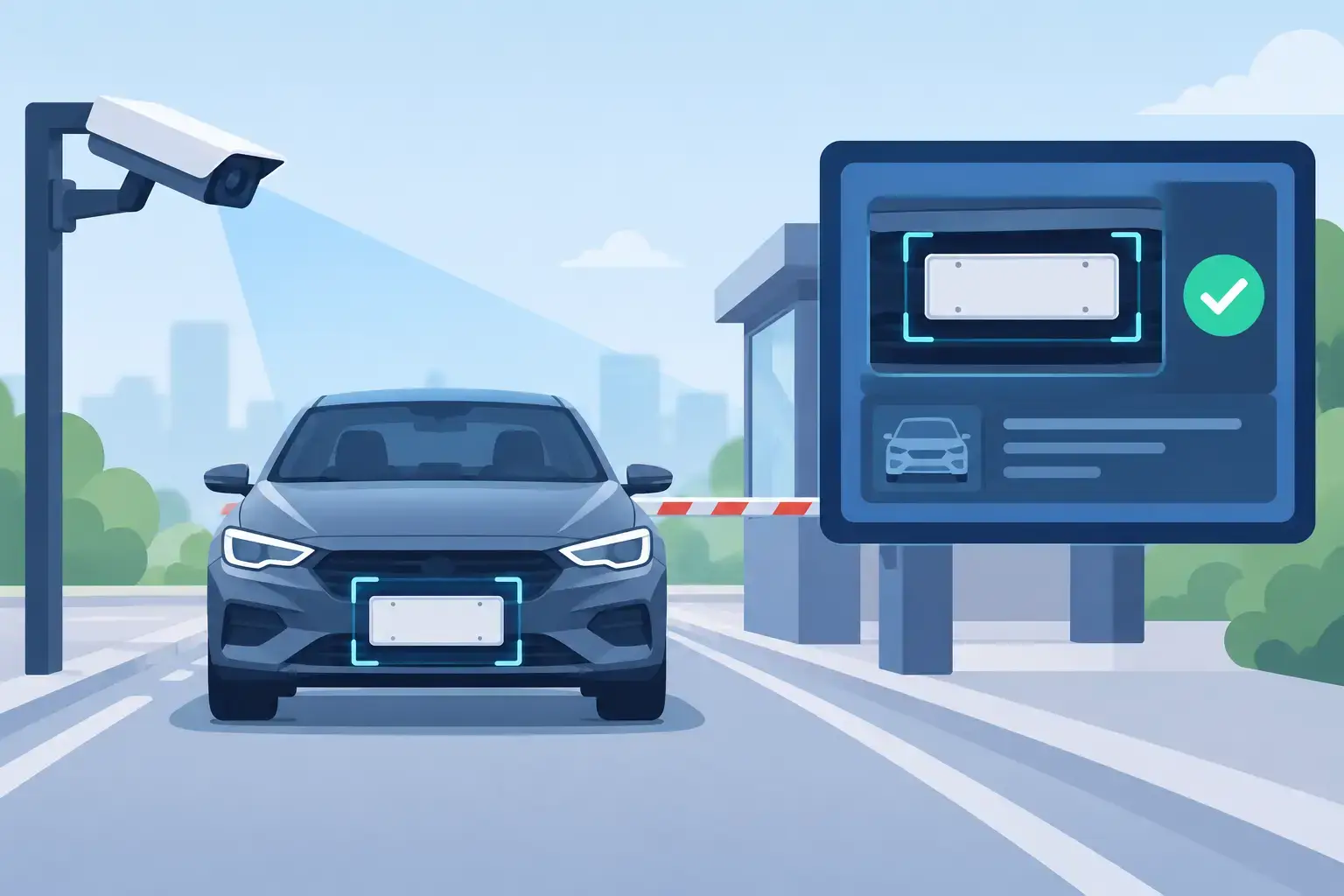
A vehicle can pass a refinery gate in seconds, but the operational consequences of an unknown plate can last far longer. To deploy AI license plate recognition effectively, industrial operators need more than a camera pointed at an entrance. They need a purpose-built system that captures usable plate data in difficult lighting, connects to access and incident workflows, and stays reliable under demanding site conditions.
For refineries, terminals, power stations, ports, marine facilities, and remote energy assets, license plate recognition is a practical control point. It can verify approved contractor vehicles, flag restricted vehicles, document deliveries, accelerate gate investigations, and create a searchable vehicle movement record. The value comes from dependable reads and disciplined deployment, not from software claims alone.
How to Deploy AI License Plate Recognition at Industrial Sites
Start by deciding what the system must do after it reads a plate. A security team investigating a perimeter alarm needs fast search and playback. A gatehouse needs a clear approval or alert signal before a vehicle enters. Operations may need delivery verification, while compliance teams may require a defined record of vehicle movements.
These are related use cases, but they do not always need the same design. A high-security vehicle entrance may require a dedicated recognition lane, barriers, intercoms, and integration with access control. A broad roadway outside a terminal may be better served by an evidence-focused design that records traffic and alerts on specific watchlist entries. Trying to force every location into one configuration usually reduces read accuracy and wastes budget.
Define the vehicle workflow first
Map the route from the public approach road to the final controlled area. Identify where vehicles slow down, stop, turn, merge, or queue. These points determine the best recognition zones. A plate read is most dependable when the vehicle is traveling at a predictable speed and the plate has a consistent viewing angle.
At a staffed gate, the recognition event can support the guard rather than replace the guard. The system can display the plate number, time, lane, and associated vehicle image for a quick comparison against approved access records. At unmanned entrances, the same event can trigger a barrier command only when the plate, credential, and any required operating rules match.
Set clear response rules before installation. For example, a non-approved plate may trigger an alert to the gatehouse, while a vehicle on a restricted list may initiate a higher-priority security procedure. Without defined ownership, alerts become background noise and the system loses commercial value.
Survey the scene, not just the gate
A proper site survey measures more than mounting height and power availability. Review headlight glare, shadows from pipe racks or container stacks, reflective surfaces, dust, salt spray, rain, fog, vibration, and vehicle approach angles. In marine and offshore-adjacent environments, corrosion resistance and protected cable routing deserve the same attention as analytics performance.
License plate recognition cameras should be selected for the actual lane width, reading distance, expected vehicle speed, and plate formats in use. A wide field of view may look useful on a planning drawing, but it can leave too few pixels on the plate for a dependable read. Dedicated recognition coverage is often the right choice for a critical entry lane, while an overview surveillance camera provides the wider context needed for investigations.
Positioning matters. Avoid placing the recognition camera where a vehicle can be heavily angled, where headlights shine directly into the lens, or where gate arms and truck trailers frequently obstruct the plate. Test day and night conditions before finalizing the installation. A site that performs perfectly at noon may fail at shift change, when glare, rain, and traffic density increase together.
Build the Infrastructure Around the Recognition Point
AI recognition is only as dependable as the network, storage, power, and field hardware supporting it. Industrial sites frequently have long cable runs, segmented networks, restricted mounting locations, and communications paths that must remain available during harsh weather or operational disruption.
Use industrial-grade network equipment and enclosure protection appropriate to the environment. Where copper distance, electrical noise, or lightning exposure is a concern, fiber connectivity may be the stronger option. Remote gates may require managed wireless bridges or other engineered backhaul, but these links should be validated for bandwidth, latency, interference, and failover behavior before they carry operational traffic.
Storage planning should account for two types of evidence: the searchable recognition records and the supporting video. A plate event without an associated vehicle image can be difficult to defend during an investigation. Retain enough footage to show the vehicle, its direction of travel, occupants where legally appropriate, and the surrounding activity at the entrance.
Design for degraded operation
Remote terminals and industrial sites cannot assume constant connectivity. Decide what happens if the central server, network link, or access-control connection is unavailable. A local recorder or edge device may continue capturing plate events and video until communications are restored. Gate permissions may also need a defined fallback mode so critical deliveries and emergency response are not delayed unnecessarily.
This is where procurement decisions affect operations. Lower-cost equipment can appear acceptable in a demonstration, then create recurring service calls when exposed to heat, vibration, moisture, power variation, or network instability. Top-of-the-line components are justified when the lane controls entry to a high-value, hazardous, or regulated operation.
Configure AI Rules for Useful Security Outcomes
Recognition software should be configured around the site’s actual risk profile. Approved vehicle lists may include company fleet vehicles, scheduled contractors, emergency services, recurring suppliers, and authorized visitor vehicles. Restricted lists may include vehicles connected to a security incident, revoked contractor access, or a location-specific exclusion.
Avoid treating every unmatched plate as a critical alarm. Delivery schedules change, rental vehicles are common, and plate data can be incomplete or obscured. A sensible policy separates routine exceptions from urgent security concerns. This reduces nuisance alerts and helps operators act decisively when a true event occurs.
For multi-site operators, central management can provide a consistent watchlist and reporting structure across refineries, docks, warehouses, and power assets. However, local site managers still need authority over lane rules, retention periods, and operational exceptions. Central visibility is valuable, but it should not create delays at the gate.
Protect data and maintain auditability
License plate data is operationally useful and can also be sensitive. Limit platform access to personnel with a defined business need, use individual user accounts, and maintain activity logs for searches, exports, and configuration changes. Set retention periods based on security requirements, contractual obligations, local regulations, and available storage capacity.
Integration should also be controlled. When recognition connects to gate barriers, visitor management, access control, or command-center platforms, define exactly what data is exchanged and which system is the source of truth. A poorly planned integration can create duplicate records, conflicting permissions, or an unintended path into a protected operational network.
Commission the System Under Real Conditions
A commissioning test should use the vehicles the site actually receives: passenger vehicles, pickups, tankers, service trucks, contractor vans, and vehicles with different plate conditions. Test every lane in daylight, darkness, wet weather when possible, and during busy arrivals. Record the result of each test and correct camera aim, exposure settings, illumination, or analytic rules before handover.
A strong acceptance plan should verify at least these operational points:
- Plate reads are accurate at the expected vehicle speeds and lane positions.
- The system associates each read with usable video evidence and a precise timestamp.
- Alerts reach the correct operator or security workflow without excessive delay.
- Local recording and recovery behavior work during simulated network loss.
- Authorized personnel can search, export, and audit events according to site policy.
Training should focus on decisions, not just dashboards. Gate personnel need to know what to do when a plate does not match. Security teams need a repeatable method for searching vehicle history after an incident. Maintenance staff need basic checks for lens cleanliness, enclosure condition, camera alignment, network health, and storage capacity.
Choose a Deployment Partner That Understands the Environment
The right supplier will ask about lane geometry, vehicle behavior, hazardous-area requirements, communications, retention, and response procedures before recommending equipment. That approach prevents the common mistake of buying a general surveillance package for a specialized recognition task.
Revlight Security supports industrial operators with security infrastructure selected for demanding facilities, including site-ready surveillance, network solutions, recording, remote access, and environment-specific system design. The best service provider is not the one that promises the most features. It is the one that delivers a system your operators can trust when a vehicle reaches the gate at the worst possible moment.
Treat license plate recognition as part of the facility’s operating controls, not as an isolated analytic feature. When the camera view, network path, response rules, and evidence retention are engineered together, every vehicle movement becomes clearer, faster to verify, and far easier to investigate.
🛡️ Secure Your Home or Business Today
Protect your home, office, shop, or business with reliable CCTV security cameras. Explore our range of CCTV cameras and find the right security solution for your needs.
Explore CCTV Cameras ✉️ Email Us


 Singapore :
+65-6708-9302