
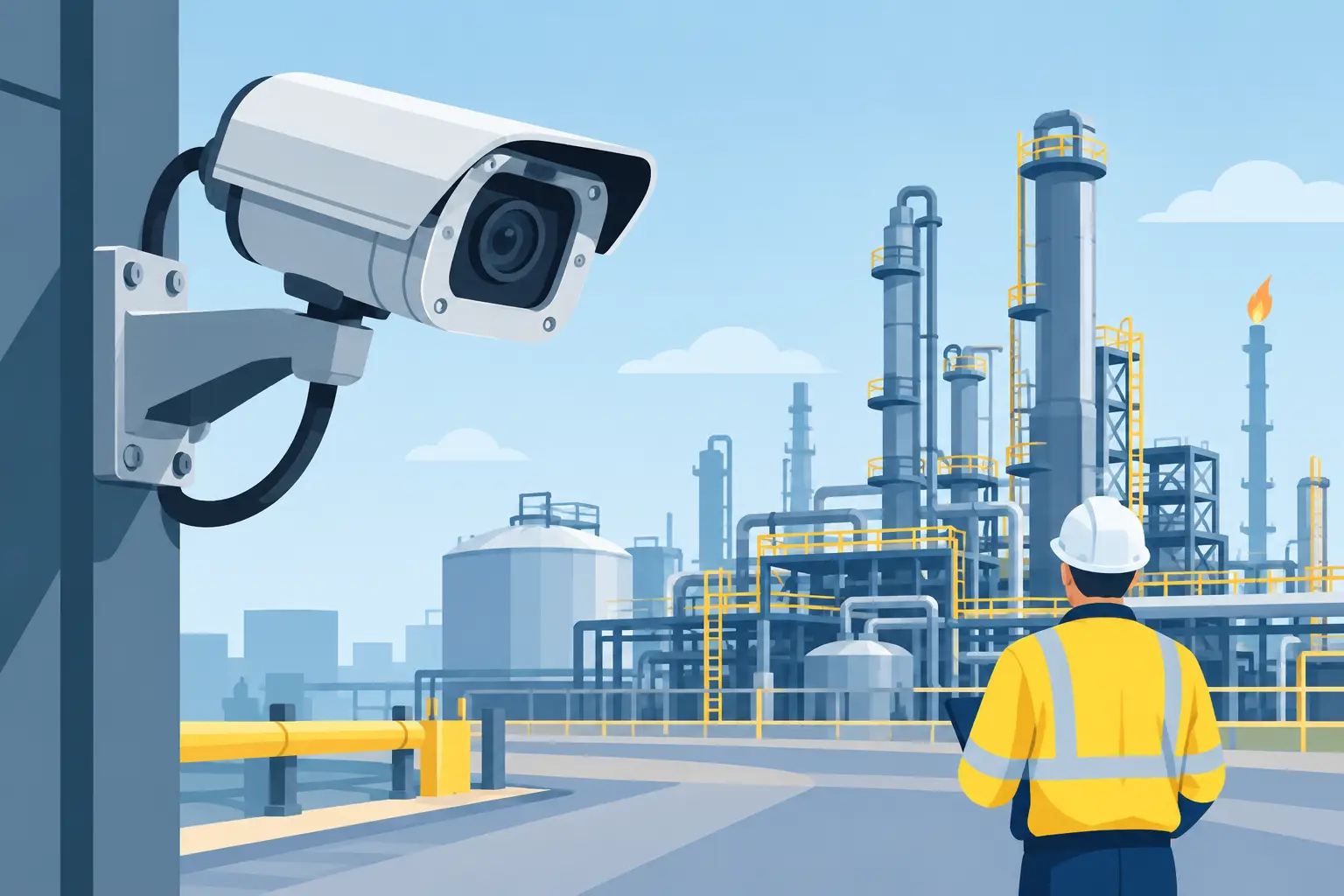
A camera mounted in the wrong enclosure can become more than a security failure. At a refinery, offshore platform, chemical processing area, or fuel handling zone, it can introduce an ignition risk and create costly compliance exposure. This hazardous area camera guide is built for industrial buyers who need surveillance that performs under demanding conditions without compromising site safety requirements.
The right system must do more than provide a clear image. It must be certified for the classified location, suited to the temperature and corrosive conditions, compatible with the network, and practical to maintain over its operating life. Buying on price alone often produces the most expensive result: replacement equipment, delayed commissioning, restricted coverage, or an installation that fails inspection.
Start With the Area Classification
Hazardous area cameras are selected around the risk present at the installation point, not simply the wider facility name. A refinery can include non-classified buildings, Class I Division 2 process perimeters, and Class I Division 1 locations around active vapor-release sources. An offshore asset may require equipment rated for a gas zone while also dealing with salt spray, vibration, and extreme weather.
In North American projects, specifications commonly reference the National Electrical Code classification system, including Class I, Division 1 and Class I, Division 2. International projects frequently use IECEx or ATEX zoning, such as Zone 1 and Zone 2. These frameworks are related but not interchangeable. Procurement teams should confirm the required approval with the site owner, engineering authority, insurer, and local authority before issuing a purchase order.
A practical rule applies: the camera, housing, cable entry devices, glands, junction boxes, and installation method must all support the required protection concept. A certified camera alone does not make a complete installation compliant.
Division and Zone Ratings Are Not a Shortcut
Division 1 or Zone 1 equipment is intended for locations where ignitable gas, vapor, or mist may be present during normal operation. Division 2 or Zone 2 equipment is designed for areas where that hazardous atmosphere is not expected during normal operations but may occur under abnormal conditions.
Higher-rated equipment may appear to offer a simple safety margin, but it carries trade-offs. It can cost more, weigh more, require specialized mounting, and limit available features. The best purchase is the correctly certified solution for the documented classification, with enough operational capability to protect the asset.
What a Hazardous Area Camera Must Deliver
Industrial surveillance is not judged by a showroom image. It is judged by whether operators can identify a flare condition, verify a valve position, observe a loading operation, investigate a perimeter alarm, or support incident review when visibility is poor.
Image performance should be matched to the surveillance task. Wide-area monitoring may require a fixed lens with strong low-light capability. Tank farms, jetties, and offshore decks may benefit from PTZ coverage that allows operators to inspect changing areas remotely. Thermal imaging can provide detection where darkness, smoke, haze, or difficult lighting makes visible-light video less effective. It should be selected for its intended detection range and target type, not treated as a universal replacement for visual identification.
For critical locations, buyers should also assess these operating requirements:
- Minimum and maximum ambient temperature, including solar loading and local process heat.
- Ingress protection against dust, washdown, rain, and sea spray.
- Corrosion resistance of the enclosure, fasteners, brackets, and cable entries.
- Vibration tolerance for offshore structures, marine vessels, pumps, and rotating equipment areas.
- Required video resolution, frame rate, optical zoom, infrared capability, and recording retention.
A high-resolution camera can still underperform if its lens selection is wrong, its field of view is too broad, or the available network bandwidth cannot carry the selected stream. Define what the operator must see at each point before specifying the camera.
Choose the Enclosure and Materials for the Environment
Hazardous area protection and environmental durability are separate decisions. A camera can meet the correct explosion-protection standard yet deteriorate early when exposed to marine salt, chemical wash, sulfur compounds, humidity, or sustained UV exposure.
Marine and offshore installations typically require corrosion-resistant stainless steel construction, appropriately rated cable glands, and mounting hardware designed for the same environment. Onshore chemical and energy facilities may need attention to chemical compatibility, high ambient temperatures, airborne dust, and regular washdown routines.
Do not overlook window material and cleaning access. A lens window affected by salt deposits, oil film, condensation, or dust can make a premium camera ineffective. In exposed positions, specify practical maintenance access or consider wiper, washer, sunshield, and heater functions where justified by the operating conditions. These additions should be evaluated as part of the full certified assembly.
Plan Power, Network, and Recording Before Installation
The camera is one component of a security infrastructure. The best surveillance coverage depends on reliable power, properly protected cabling, switching capacity, recording storage, and operator access.
Power over Ethernet can simplify certain deployments, but available power must be checked against the load of PTZ movement, heaters, washers, illuminators, and any environmental controls. In remote industrial areas, long cable runs, voltage drop, and electrical isolation requirements can determine whether PoE, local power, fiber, or a hybrid design is the better choice.
Network architecture matters just as much. High-resolution streams from multiple cameras can place a substantial load on constrained offshore or vessel connections. Use stream settings that reflect the purpose of each channel. A critical loading arm or process interface may need higher image detail and frame rate than a low-traffic access route. Recording policies should reflect operational, safety, and investigation requirements rather than a generic retention target.
Remote access is valuable for corporate security teams and technical support, but it must be controlled. Segmented networks, user permissions, encrypted communications, current firmware, and audit controls help reduce the risk of turning a surveillance system into a network weakness.
Build the Specification Around the Use Case
The strongest procurement specifications describe the operational outcome first, then the required approvals and technical features. “Explosion-proof camera” is too broad to protect a project. It leaves unanswered questions about classification, temperature class, environmental rating, network protocol, viewing distance, mounting position, and support expectations.
For a refinery perimeter, the priority may be reliable detection across long fence lines with clear incident playback. For a process unit, the priority may be safe observation of valves, pumps, and personnel access points. For a ship or offshore platform, system resilience, corrosion protection, remote viewing, and vibration resistance may take precedence over maximum resolution.
This is also where integration should be addressed. Confirm compatibility with the video management system, network video recorder, control room monitors, alarm inputs, and existing camera protocols. ONVIF support can assist integration, but it does not guarantee that every advanced function will work exactly as required in a mixed-vendor environment. Validate critical functions before site-wide deployment.
Avoid Common Buying Errors
The most frequent error is treating certification as a label rather than a project requirement. Buyers should request evidence of the precise approvals relevant to the intended location and confirm that product marking, documentation, and installation instructions match the equipment supplied.
Another costly mistake is underestimating installation accessories. Incorrect glands, unsuitable conduit arrangements, unsupported mounting, or non-rated junction boxes can undermine an otherwise well-selected system. Engage the electrical installer and hazardous area authority early, particularly where equipment must be mounted near process equipment or routed through restricted cable paths.
Finally, avoid selecting a camera only from a datasheet headline. Resolution, zoom, and IP rating are useful comparison points, but they do not prove image usability, environmental fitness, or system compatibility. A technical review that considers the live scene, lighting, distance, classification, and communications path will reduce change orders and improve long-term results.
A Better Procurement Path
Start with a site survey and classification drawings. Identify each surveillance objective, viewing distance, mounting constraint, power source, network route, and environmental exposure. Then match approved camera assemblies to those requirements and confirm the installation components needed to preserve the certification strategy.
For major projects, standardizing approved camera types across similar zones can reduce spares inventory, simplify operator training, and speed maintenance. It should not force a single format into every location, however. Fixed cameras, PTZ units, thermal systems, and specialized marine-rated assemblies each have a place when selected for a defined job.
Revlight Security supports industrial operators with specialized surveillance and detection equipment designed around demanding marine, energy, and hazardous-site applications. The commercial value is clear: dependable coverage helps protect personnel, reduce blind spots, strengthen incident evidence, and keep critical operations under observation.
Select hazardous area surveillance as part of the safety and operations plan, not as an afterthought near project closeout. The right certified camera system gives teams usable visibility where standard equipment should never be installed.
🛡️ Secure Your Home or Business Today
Protect your home, office, shop, or business with reliable CCTV security cameras. Explore our range of CCTV cameras and find the right security solution for your needs.
Explore CCTV Cameras ✉️ Email Us

 Singapore :
+65-6708-9302
Singapore :
+65-6708-9302