
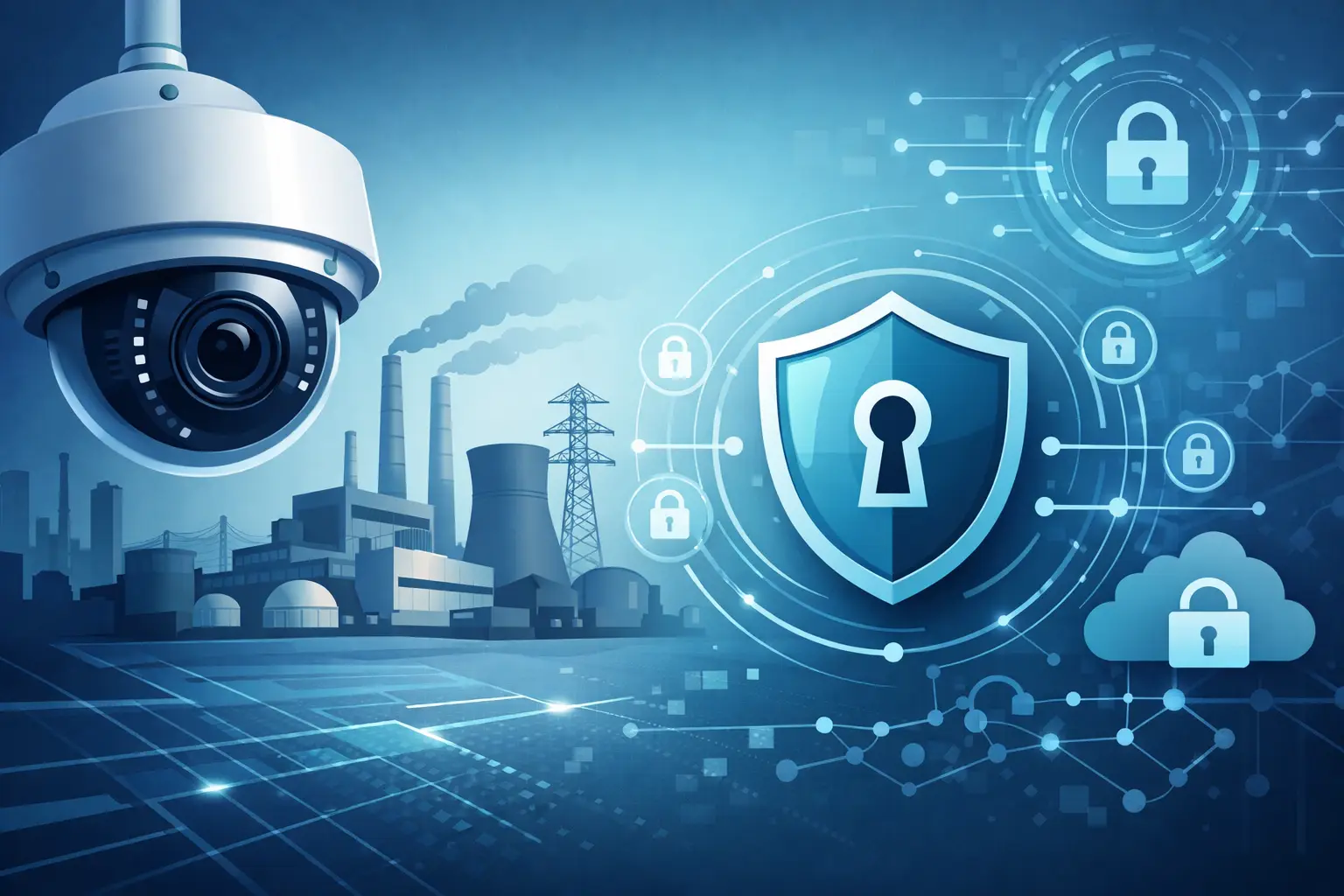
A camera mounted above a refinery loading rack or on an offshore deck can become an overlooked entry point into the network. So, are IP cameras cyber secure? They can be, but an IP camera is only as secure as its configuration, network design, firmware management, and the people who can access it. For industrial operators, treating surveillance as a standalone security purchase is a costly mistake.
A modern IP surveillance system delivers high-value operational visibility: live monitoring, recorded evidence, remote inspection, perimeter coverage, and support for safety investigations. The same network connectivity that makes these functions valuable also creates an attack surface. A poorly protected camera can expose video feeds, consume network resources, provide a foothold for attackers, or compromise confidence in evidence during a critical incident.
Are IP Cameras Cyber Secure by Default?
No. IP cameras are not cyber secure simply because they come from a recognized manufacturer or are installed by a qualified contractor. Security depends on the entire deployment. Default usernames, weak passwords, obsolete firmware, exposed web interfaces, and unrestricted remote access all create avoidable risk.
This distinction matters in oil and gas, marine, energy, chemical, and power environments. Surveillance networks often span remote sites, harsh locations, vessel networks, control rooms, and third-party service connections. Cameras may be installed for years in hard-to-reach areas, which makes missed updates and undocumented changes more likely. A device that remains operational is not necessarily a device that remains secure.
Cyber security also varies by camera class and application. A basic office camera has very different requirements from a marine-rated unit connected through vessel WiFi, an offshore underwater camera, or a thermal and gas detection system supporting high-consequence operations. Buyers should assess the device, its management platform, the network path, and the operational impact if video or control access is interrupted.
Where the Real IP Camera Risks Begin
The most common problems are not sophisticated zero-day attacks. They are basic gaps that remain open because surveillance equipment is deployed quickly, managed by multiple teams, or excluded from the organization’s formal cyber security program.
Default credentials are a clear example. Factory usernames and passwords are widely known and frequently targeted by automated scanning tools. If a camera is connected to a reachable network before credentials are changed, it may be exposed from day one. Shared administrator accounts create a second problem: when several employees or contractors use the same login, there is no meaningful accountability and access cannot be removed cleanly when roles change.
Remote access is another major concern. Operations teams need live video from control rooms, ships, remote sites, and authorized mobile workstations. That does not mean every camera should be reachable directly from the public internet. Direct port forwarding, exposed device web pages, and unmanaged cloud relay services can turn an operational convenience into a security liability.
Firmware is equally important. Manufacturers issue updates to address vulnerabilities, correct software defects, and improve device stability. Yet industrial sites may delay updates because cameras are located in hazardous zones, maintenance windows are limited, or no one owns the update process. That trade-off must be managed deliberately. Running unpatched equipment indefinitely is rarely an acceptable strategy for critical infrastructure.
Finally, video management servers, network video recorders, switches, and storage systems deserve the same scrutiny as the cameras themselves. A secure camera connected to an insecure recorder does not produce a secure system. Surveillance is an ecosystem, not a collection of lenses.
Build a Secure Architecture, Not Just a Camera Network
The strongest protection starts with network separation. Cameras should operate on a dedicated surveillance network or segmented VLAN, separated from business systems, guest WiFi, and operational technology wherever practical. Segmentation limits what an attacker can reach if a camera account or device is compromised.
A properly designed industrial deployment should also control traffic between segments. Cameras need to communicate with approved recorders, management servers, time services, and authorized monitoring workstations. They do not need unrestricted access to every network resource. Firewall rules should permit only the protocols and destinations required for operation.
For remote monitoring, use an authenticated VPN, secure gateway, or managed access platform rather than exposing individual cameras. This creates a controlled entry point where access can be logged, reviewed, and removed. Multi-factor authentication should protect administrator accounts and any remote user with authority to change camera settings, export footage, or alter recording policies.
Encryption matters as well. Encrypted management sessions help prevent credentials and configuration commands from being intercepted. Where supported, encrypted video transport protects sensitive visual information as it crosses untrusted or shared network paths. Encryption has processing and compatibility implications, especially in large deployments or bandwidth-constrained marine networks, so it should be engineered as part of the system design rather than added without testing.
Five Controls That Make IP Camera Systems Safer
The following controls deliver measurable protection without compromising the availability operations teams depend on:
- Replace every default credential before the device enters service. Use unique, strong passwords or centralized identity controls where supported.
- Maintain a complete asset register showing camera model, serial number, location, firmware version, IP address, owner, and support status.
- Segment surveillance traffic and restrict inter-network access with documented firewall rules.
- Apply manufacturer firmware updates through a scheduled, tested change-management process.
- Disable unused services, unused accounts, automatic port forwarding, and any remote access feature that has not been approved for the site.
These measures are basic, but they are not minor. They turn camera cyber security from an assumption into a managed operational control.
Selecting Cyber-Secure IP Cameras for Harsh Environments
Procurement teams should evaluate cyber security before equipment reaches the purchase order stage. Asking whether a camera has high resolution, infrared coverage, or marine-grade housing is necessary, but not sufficient. The technical specification should also require documented firmware support, secure password policies, role-based user permissions, encrypted communications, audit logging, and a defined vulnerability disclosure and update process.
Support lifecycle is often missed. A low-cost camera may appear attractive when comparing unit prices, but the savings disappear if the manufacturer stops releasing security updates or if replacement becomes necessary before the wider surveillance system is ready for renewal. For remote industrial sites, availability of technical support and replacement hardware also affects the true cost of ownership.
Compatibility requires equal attention. Cameras, recorders, video management software, network switches, and remote viewing tools must work together without forcing insecure workarounds. If a project team has to enable old protocols, retain default certificates, or expose ports to make the system function, the design needs to be corrected before commissioning.
Environmental reliability and cyber security should be specified together. Equipment operating in salt spray, extreme temperatures, vibration, hazardous areas, or offshore locations must remain physically dependable while also supporting current security controls. The best service provider is not simply the one offering the lowest equipment price. It is the supplier that can match camera performance, network design, and lifecycle support to the operating environment.
Ownership After Commissioning Is the Deciding Factor
A secure deployment can weaken quickly when responsibility is unclear. Security, IT, operations, and maintenance teams all have a role, but one accountable owner must oversee the surveillance asset lifecycle. That owner should know which systems are connected, who has access, when firmware was last reviewed, and what happens if a camera, recorder, or remote connection is suspected of compromise.
Incident planning is particularly valuable. If unusual traffic appears on the surveillance network, teams should be able to isolate the affected device without losing visibility across the entire facility. If credentials are exposed, authorized staff need a documented method to revoke access, rotate passwords, preserve relevant logs, and verify that recording continues. For sites relying on video for safety, security, or incident evidence, availability and integrity are both essential.
Cyber security reviews should also follow operational changes. A vessel refit, refinery expansion, new remote monitoring station, or network upgrade can alter trust boundaries that were safe when the system was first installed. Reassessing surveillance at these points is faster and less expensive than correcting exposure after an incident.
IP cameras can deliver the ultimate in security surveillance systems for demanding industrial environments, but only when cyber protection is engineered into the purchase, installation, and support plan. Treat every connected camera as a managed network asset, and it will provide visibility without becoming the blind spot in your security program.
🛡️ Secure Your Home or Business Today
Protect your home, office, shop, or business with reliable CCTV security cameras. Explore our range of CCTV cameras and find the right security solution for your needs.
Explore CCTV Cameras ✉️ Email Us

 Singapore :
+65-6708-9302
Singapore :
+65-6708-9302