

A gas camera installed at the wrong angle can miss the very release it was purchased to identify. Knowing how to install refinery gas cameras is therefore not a simple mounting exercise. It is a controlled engineering task involving hazardous-area classification, process knowledge, power and network design, and a commissioning plan that proves the system can support operations when visibility matters most.
For refinery operators, the objective is clear: obtain dependable visual detection coverage around high-risk equipment without introducing a new ignition, reliability, or cybersecurity problem. The right installation turns specialist imaging into a usable operational asset for control rooms, maintenance teams, security personnel, and incident investigators.
Start With the Detection Objective
Before selecting a mounting point, define what the camera must detect and who will act on the information. A fixed optical gas imaging system may be intended to visualize methane, hydrocarbons, sulfur hexafluoride, or another target gas, depending on the camera’s spectral capability. It is not a replacement for fixed gas detectors, personal monitors, process instrumentation, or established emergency procedures. It adds visual evidence that can help teams locate, assess, and verify a suspected release.
The detection objective drives every later decision. A camera covering a compressor seal area has a different field-of-view requirement than one watching tank vents, loading racks, flare headers, or pipe-rack valves. Consider expected leak sources, normal wind direction, probable vapor travel, operating temperatures, background contrast, and whether personnel need live video, recorded evidence, alarms, or all three.
Process safety, operations, maintenance, instrumentation, IT, and security should review the coverage plan together. Procurement teams should require this level of coordination before accepting a low-price equipment quote. A technically unsuitable system costs more than a properly specified system when it has to be repositioned, recabled, or replaced after startup.
Confirm Hazardous-Area Compliance Before Installation
Refineries contain locations where flammable gas or vapor may be present under normal operation or abnormal conditions. The camera, junction boxes, cable glands, power supplies, heaters, illuminators, and associated accessories must be suitable for the classified area where they will operate.
Start with the facility’s current area-classification drawings and installation standards. In the United States, this commonly means confirming the applicable Class, Division, Group, and temperature code requirements, or the facility’s Zone-based requirements where used. Do not assume that an explosion-protected camera housing makes every component in the installation compliant. A non-rated connector, incorrect gland, open conduit entry, or unapproved field modification can compromise the entire installation.
Match the equipment certification to the actual site classification, ambient temperature range, corrosion exposure, and process conditions. Coastal and marine-adjacent refineries may require higher corrosion resistance, while hot process areas may require specialized thermal management. If the camera includes pan-tilt functionality, wipers, washers, or integrated analytics hardware, verify the rating of each assembly rather than relying on a general product description.
Installation should be completed by qualified personnel working under the refinery’s permit-to-work, isolation, gas-testing, and change-control procedures. This protects personnel and preserves the equipment’s certification basis.
Choose Camera Positions That Support Real Detection
The most expensive gas camera cannot compensate for a poor line of sight. Camera placement should be based on the likely release path, not merely on the nearest available steelwork. Locate the unit where it can observe target equipment with minimal obstruction from pipework, handrails, insulation, platforms, or moving vehicles.
Height matters, but higher is not always better. An elevated position can widen coverage and reduce the chance of accidental impact, yet excessive distance may reduce the usable detail required to identify a plume. In some applications, two targeted viewpoints provide better operational coverage than one wide-angle view. This is particularly relevant around dense compressor trains, valve manifolds, and loading areas with multiple potential leak points.
Account for background conditions. Optical gas imaging performance can depend on temperature contrast between the gas and the background. A view dominated by open sky, hot reflective metal, steam, glare, or frequent heat shimmer may be less useful than a carefully selected angle across stable process equipment. Conduct a site survey during representative operating conditions whenever possible.
Mount the camera on a rigid structure with low vibration and safe maintenance access. Avoid supports that transmit heavy machinery vibration or move substantially in wind. The mount must remain stable enough to preserve the scene configuration over time, especially when video analytics, alarm zones, or comparison reviews are part of the operating workflow.
Design Power, Cabling, and Networking as One System
A refinery gas camera is only useful if video reaches the right team reliably. The installation design should address power availability, cable routing, network capacity, storage retention, remote access, and failure recovery before field work begins.
Use approved cable types, conduit systems, glands, and sealing methods for the environment and area classification. Separate power and communications routes where required by site standards, and protect exposed runs from mechanical damage, ultraviolet exposure, chemical attack, and water ingress. Label every cable, junction box, switch port, and camera address clearly. Clear documentation reduces downtime when maintenance crews need to isolate a fault under pressure.
For networked systems, calculate bandwidth using the selected resolution, frame rate, compression setting, number of users, and recording policy. Optical gas imaging footage may require settings that preserve subtle visual changes, so aggressive compression can undermine the reason for installing the system. Storage sizing should reflect the operational need for continuous recording, event recording, retention periods, and export requirements for investigations.
Cybersecurity belongs in the installation scope. Place cameras on a managed industrial network architecture, use unique credentials, restrict user permissions, maintain approved firmware, and segment video traffic where appropriate. Remote access should be controlled through the refinery’s established security policy, not improvised with exposed devices or shared passwords.
Install, Aim, and Configure the Camera Correctly
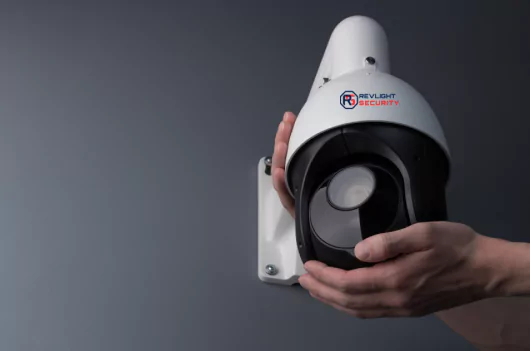
Once the engineering package is approved, install the mounting hardware, certified enclosure components, cabling, and camera in accordance with manufacturer instructions and site procedures. Inspect seals, fasteners, conduit entries, grounding arrangements, and protective earth connections before energizing the equipment.
Aiming requires more than centering equipment in the image. Frame the likely leak source and the probable plume path while allowing enough surrounding context for operators to recognize the unit, line, or asset involved. Set focus carefully at the working distance. If the camera supports presets, create named views that correspond to plant areas and use terminology familiar to control room and maintenance teams.
Configure image settings for the site conditions rather than accepting factory defaults. Exposure, gain, contrast, filtering, frame rate, and alarm sensitivity may need adjustment based on ambient temperatures, process heat, vibration, and lighting changes. Excessive sensitivity can produce nuisance alarms; insufficient sensitivity can delay response. The correct setting is established through tested performance, not guesswork.
Integrate alarms with the video management system, operator displays, and approved notification workflow. Where the system interfaces with gas detection or process alarms, define clearly whether it is providing confirmation, situational awareness, or an automated response input. These functions should be documented in the cause-and-effect philosophy and reviewed by responsible engineering teams.
Commission With a Measurable Acceptance Test
Commissioning is where an installation becomes a defensible operational system. Verify video quality in the control room, recording and playback performance, time synchronization, user permissions, alarm delivery, network resilience, and failover behavior. Test the camera at day and night conditions if the application requires around-the-clock coverage.
The acceptance test should demonstrate that the installed field of view meets the approved coverage plan. Where safe and permitted, use a controlled test method selected by site safety and engineering teams to validate visibility of the target gas or a suitable test medium. Document test conditions, weather, distance, camera settings, results, and corrective actions.
Train the people expected to use the system. Operators need to know what a suspected plume may look like, what false indications can occur, and which escalation procedure applies. Maintenance personnel need access instructions, inspection intervals, cleaning requirements, and a clear process for reporting degraded image quality. A camera that produces useful video but is not understood by its users will not deliver the intended safety or operational value.
Maintain Detection Performance After Startup
Refinery conditions change. Lenses collect contamination, supports loosen, new pipework obstructs views, and network configurations evolve. Include gas cameras in the preventive maintenance program, with inspections based on exposure and criticality. Check enclosure integrity, lens cleanliness, image clarity, mounting stability, cable condition, recording status, and alarm functions.
Review footage after significant process changes, construction work, severe weather, or recurring nuisance alarms. A small adjustment to the field of view or image profile can restore useful detection performance. Revlight Security supports refinery operators with specialist surveillance infrastructure designed for demanding industrial environments, but the best results always come from matching the equipment, installation design, and operating procedure to the actual site risk.
Treat each gas camera as part of the refinery’s wider detection strategy, then maintain it with the same discipline applied to any critical field asset. That approach keeps the system credible when a release must be found quickly and acted on with confidence.
🛡️ Secure Your Home or Business Today
Protect your home, office, shop, or business with reliable CCTV security cameras. Explore our range of CCTV cameras and find the right security solution for your needs.
Explore CCTV Cameras ✉️ Email Us



 Singapore :
+65-6708-9302
Singapore :
+65-6708-9302