
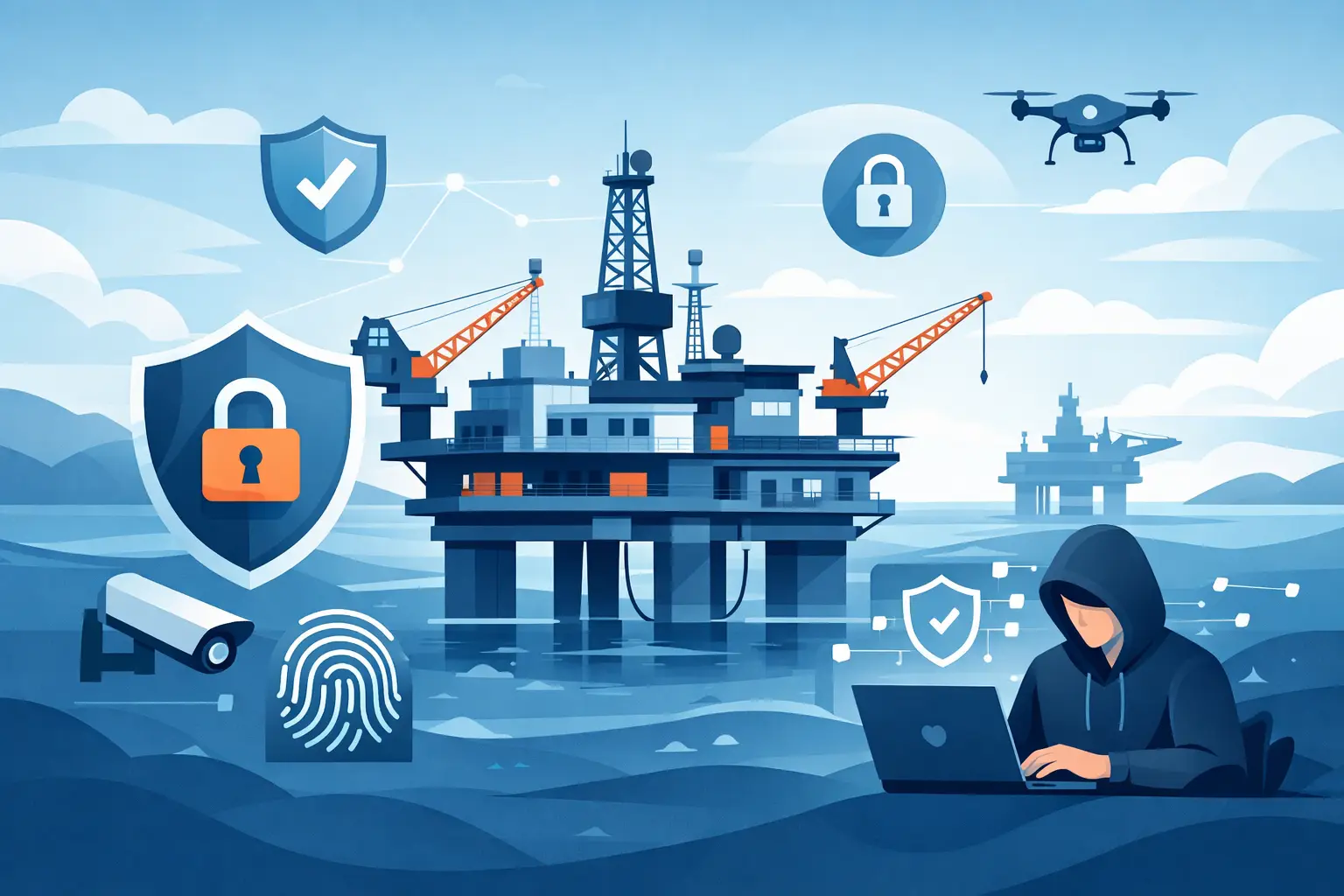
An offshore platform does not get second chances. When visibility drops, weather turns, or a vessel approaches where it should not, the gap between normal operations and a serious incident can be measured in seconds. That is exactly why buyers keep asking how to secure offshore platforms in a way that holds up under salt, vibration, remote operations, and constant exposure.
The short answer is that platform security is never one device, one checkpoint, or one control room screen. Effective protection comes from a layered system built around surveillance, intrusion awareness, communications resilience, and fast operational response. For procurement teams and operations leaders, the real job is choosing equipment that performs offshore without creating maintenance headaches or network bottlenecks.
How to secure offshore platforms with a layered design
A workable offshore security strategy starts by treating the platform as several security zones, not a single site. The helideck, crane areas, risers, walkways, perimeter edges, landing points, machinery spaces, subsea structures, and control rooms all carry different risks. A generic setup leaves blind spots. A zone-based design gives operators better visibility and more useful alerts.
Surface surveillance is usually the first layer. Fixed marine-grade cameras give continuous coverage over access routes, landing areas, process zones, and deck operations. The priority is not just image quality. Offshore buyers need stable performance in glare, spray, fog, low light, and heavy weather. Housings, corrosion resistance, ingress protection, and reliable network transmission matter just as much as resolution.
The second layer is detection. Visual coverage tells you what is happening, but dedicated detection systems tell you when something is changing before the problem becomes obvious. Gas leak detection, methane monitoring, thermal imaging, and perimeter analytics can all strengthen platform security, especially in areas where a visible incident may arrive late.
The third layer is communications. A platform can have excellent cameras and sensors, but if the network is weak, operators lose access to live feeds, playback, and alerts at the worst time. Marine WiFi, point-to-point links, onboard switching, and hardened network components are central to offshore resilience. The security system has to move video and event data reliably between deck equipment, control rooms, support vessels, and remote oversight points.
Then comes response. Security only pays off when teams can verify, communicate, and act quickly. That means clear camera placement, recording and playback capacity, role-based access, alarm integration, and sensible operating procedures. The strongest installations reduce decision time. They do not bury teams in noise.
Start with the threats that actually affect offshore platforms
Too many projects begin with a product list instead of a threat picture. Offshore assets face a mix of security and operational risks that overlap. Unauthorized boarding, theft, stowaway activity, restricted-zone breaches, and suspicious vessel approaches are obvious concerns. But so are gas leaks, reduced visibility around critical structures, and failures in remote monitoring that leave crews without situational awareness.
This is where trade-offs matter. A production platform with frequent vessel traffic may need broader perimeter observation and tighter landing-point monitoring. A remote unmanned or lightly manned installation may need stronger remote access, automated alerts, and lower-maintenance hardware. A drilling unit with intense deck activity may put more emphasis on recording, playback, and incident review. The right answer depends on the platform type, crew profile, logistics pattern, and exposure level.
Security planning should also reflect offshore realities that land-based buyers sometimes underestimate. Salt corrosion shortens equipment life if materials are poorly chosen. Wind movement can affect image stability. Reflections from water and metal surfaces can reduce useful visibility. Bandwidth constraints can make high-camera-count systems difficult to manage unless compression, storage, and network architecture are planned properly from the start.
Surveillance systems that work offshore
If you are selecting surveillance hardware for a platform, durability is not a feature. It is the baseline. Cameras and enclosures need to tolerate marine corrosion, vibration, washdown conditions, and wide temperature swings. Equipment should be selected for long-term reliability, because every maintenance visit offshore costs time, crew effort, and often vessel support.
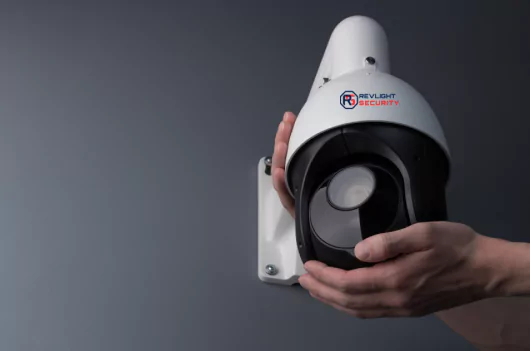
Fixed-position cameras are essential for persistent coverage of key areas. They are best used where operators need consistent visual references – gangways, muster points, process areas, access doors, crane bases, and deck edges. Pan-tilt-zoom units are useful for wide-area observation and incident tracking, but they should support, not replace, fixed coverage. Depending only on movable cameras often creates blind periods when operators are focused elsewhere.
Underwater surveillance is another area where offshore operators gain real value. Subsea cameras can help monitor legs, risers, splash zones, mooring areas, and underwater activity around the platform. That matters for inspection support, anomaly verification, and awareness around vulnerable marine structures. It also gives operations teams more complete visual intelligence than a topside-only setup.
Recording quality matters as much as live viewing. Offshore incidents are often reviewed after the fact for compliance, root cause analysis, and contractor management. Systems should support dependable recording retention, straightforward playback, and export options that do not slow down investigation work.
Detection closes the gap that cameras alone cannot fill
Knowing how to secure offshore platforms means understanding where standard video reaches its limit. Cameras are excellent for verification, but they do not always provide the earliest warning. That is why integrated detection matters.
Gas and methane detection cameras can add a major safety and security advantage in processing and transfer areas. They help teams identify leaks faster and verify the source visually, which can improve response speed and reduce uncertainty. Thermal devices also strengthen monitoring in low-visibility conditions and can help spot heat anomalies around machinery, infrastructure, or vessel approaches at night.
Detection should be deployed where it helps decisions, not where it simply adds cost. High-risk process zones, enclosed or semi-enclosed areas, transfer points, and difficult-to-observe sections of the platform usually justify the investment first. Buyers should focus on event quality. A smaller number of well-placed, dependable detectors is often worth more than a larger number of poorly positioned devices generating constant nuisance alarms.
Access control and networking are part of platform security
A secure offshore platform is not just a camera job. Access points, crew movement, contractor entry, and restricted-area control all need to feed the same operational picture. That can include credential checks, door events, ladder or hatch monitoring, and remote verification tied to nearby cameras.
The network behind the system is equally important. Offshore platforms need stable transmission for live video, recorded footage, remote diagnostics, and alarm data. Marine WiFi and hardened network infrastructure help bridge operational areas and support vessel connectivity without relying on fragile ad hoc setups. If the network is undersized, image delays, dropped feeds, and limited remote access will undermine the entire security investment.
This is one of the most common buying mistakes. Teams spend heavily on cameras, then under-spec the switching, storage, wireless backhaul, or remote access architecture. The result is a system that looks good on paper and struggles under real load. A serious supplier will size the network and surveillance package together, not as separate conversations.
What procurement teams should ask before they buy
Commercially, the best offshore security system is the one that lowers exposure without creating constant service calls. Procurement managers should ask direct questions about marine suitability, maintenance intervals, spare strategy, remote support, integration options, and network demands. A cheaper unit that fails early offshore is usually the expensive choice.
It is also worth challenging vague claims. Buyers should ask how many cameras the system supports, what recording periods are realistic, how remote viewing performs under bandwidth limits, and what happens when parts of the network go down. Platform security has to keep working during imperfect conditions. That is the test that matters.
For many operators, the strongest route is a package approach – surveillance, underwater monitoring, detection, and marine networking engineered to work together. That simplifies procurement, installation, and long-term support. It also gives operations teams one clearer path to accountability. Revlight Security focuses on exactly that kind of environment-specific security infrastructure for offshore and industrial buyers who need dependable performance, not generic catalog hardware.
How to secure offshore platforms without overspending
Overspending usually comes from poor system design, not from buying quality equipment. Start with the highest-risk zones, cover critical operations first, and make sure the network can carry the load. Then expand where the next operational gain is clear.
That approach gives buyers better control over capital spend while still improving security outcomes early. It also avoids another common problem – installing more devices than the team can realistically monitor or maintain. Effective offshore security is disciplined. It puts money where visibility, detection, and response improve most.
Offshore security is a long-game purchase. Weather, corrosion, distance, and safety obligations punish shortcuts fast. If you want a system that keeps paying back, buy for service life, image reliability, detection value, and network stability from day one. That is how serious operators protect the platform, the crew, and the continuity of the operation when conditions stop being forgiving.
🛡️ Secure Your Home or Business Today
Protect your home, office, shop, or business with reliable CCTV security cameras. Explore our range of CCTV cameras and find the right security solution for your needs.
Explore CCTV Cameras ✉️ Email Us

 Singapore :
+65-6708-9302
Singapore :
+65-6708-9302