
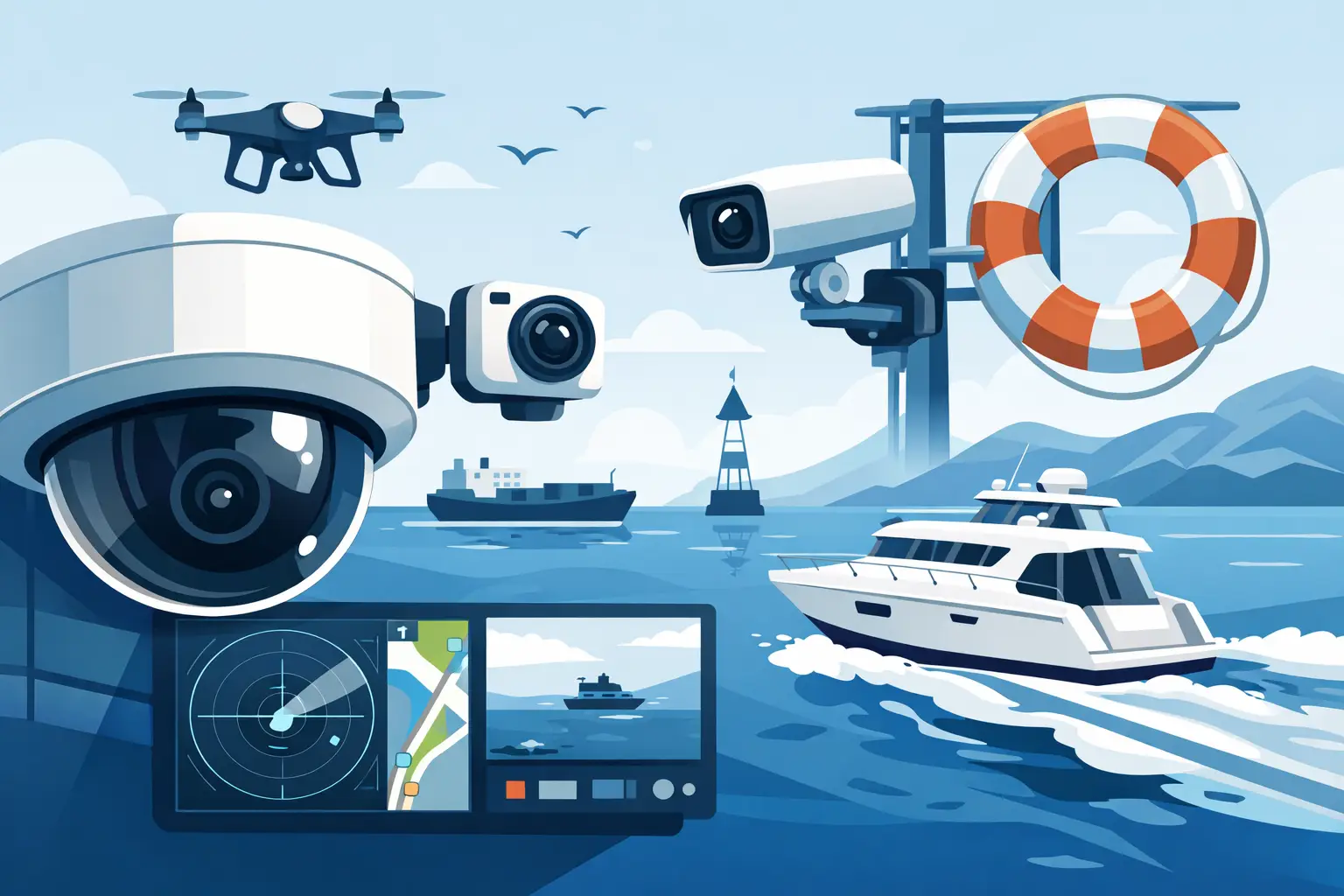
A near miss on deck rarely starts as a major event. More often, it begins with a blind spot – an unmanned gangway, a poorly covered cargo zone, an engine room access point, or a stern operation that no one can verify after the fact. That is exactly why buyers ask when are marine cameras required. The short answer is that they are required whenever regulation, operational risk, insurer expectations, or security exposure makes visual verification necessary. The longer answer matters more, because marine surveillance is not one-size-fits-all.
When are marine cameras required by law or policy?
Marine cameras are sometimes required by formal regulation, but just as often they become effectively mandatory through class guidance, flag state rules, port requirements, charter party obligations, or internal company policy. For vessel operators and offshore asset managers, that distinction matters. A camera system may not be named in every rulebook, yet still be necessary to meet security, monitoring, and incident-recording expectations.
On passenger vessels, ferries, port terminals, and high-traffic access points, surveillance is frequently tied to safety and security management. Operators may need continuous visual monitoring of embarkation areas, restricted spaces, vehicle decks, or public circulation zones. In these cases, cameras support compliance with broader safety and security frameworks rather than acting as a standalone requirement.
For commercial shipping, tankers, offshore support vessels, and workboats, the requirement often comes from risk profile. If the vessel handles hazardous cargo, conducts complex deck operations, manages remote watchstanding, or operates in piracy-prone or high-security areas, camera coverage becomes far harder to justify not having. Procurement teams know the real standard is often practical defensibility. If an incident occurs, can the operator show what happened, when it happened, and who was involved?
Situations where marine cameras are required in practice
The phrase when are marine cameras required often points to a purchasing decision rather than a courtroom test. In practice, cameras move from optional to required when the cost of not having visibility becomes too high.
One clear example is restricted area monitoring. Engine room entrances, bridge access, control rooms, cargo manifolds, pump rooms, and critical electrical spaces all present security and operational risk. If unauthorized entry, tampering, or unsafe behavior could create downtime, injury, or liability, fixed marine-grade cameras are usually the right specification.
Another is deck operation oversight. Mooring stations, crane activity, towing points, winch areas, and stern working decks are difficult to supervise continuously, especially in poor weather or low light. Cameras are used here to extend visibility to the bridge, control stations, or remote supervisors. In many operating environments, this is not a luxury feature. It is part of safe execution.
Gangways and boarding points are another frequent trigger. Where crew changes, contractor boarding, pilot embarkation, or visitor management must be documented, camera recording provides a reliable audit trail. On offshore installations and service vessels, it also helps settle disputes over timing, procedures, and condition at transfer points.
Cargo handling creates another threshold. Tanker operators, chemical carriers, and industrial marine assets often need visual confirmation around loading arms, hose connections, transfer areas, and hazardous process zones. The need here is not only security. It is also operational assurance, especially when live monitoring can reduce response time during abnormal events.
Safety, security, and evidence all drive the requirement
Marine surveillance is usually justified by three business outcomes: preventing incidents, strengthening security, and preserving evidence. Buyers who focus on only one of these often under-specify the system.
From a safety standpoint, cameras reduce blind spots and support better decision-making. Bridge teams can monitor aft operations. Engine control personnel can verify access activity. Offshore supervisors can watch exposed work areas without placing additional staff in hazardous zones. That improves response speed and helps validate whether procedures were followed.
From a security standpoint, marine cameras protect against theft, unauthorized boarding, sabotage, and internal misconduct. This is especially relevant in ports, anchored vessels, offshore facilities, and mixed-access industrial sites where multiple contractors and service providers may come and go. Without recorded footage, many investigations stall immediately.
From an evidence standpoint, recorded video protects the operator. Claims involving cargo damage, boarding incidents, slips, collisions, equipment misuse, and procedural breaches are easier to assess when there is clear footage. That has direct commercial value. It can shorten disputes, support insurers, reduce false claims, and protect reputations.
When are marine cameras required on offshore and hazardous sites?
Offshore environments raise the standard. On platforms, FPSOs, marine terminals, and support vessels working near hazardous zones, camera systems are often required because the consequences of poor visibility are much higher. A small incident can escalate quickly when hydrocarbons, heavy equipment, weather exposure, and remote operations are involved.
In these settings, ordinary surveillance hardware is not enough. Cameras may need explosion-proof housings, corrosion-resistant construction, heated enclosures, wide dynamic range, infrared capability, and stable network integration across marine communications infrastructure. The question is no longer simply whether a camera is needed. It is whether the system is engineered for the environment.
This is where buyers need to be precise. A camera required for a machinery space is not necessarily suitable for an exposed deck. A unit installed at a jetty may need different ingress protection and networking support than one mounted inside a control area. If the site includes hazardous gas exposure, the specification must match that reality. Commercially, the cheapest unit often becomes the most expensive mistake.
Insurance, charterers, and client standards can make cameras mandatory
Many marine operators discover that cameras become required before any regulator explicitly says so. Insurers may push for improved surveillance after repeated claims. Charterers may require vessel security enhancements for certain routes or cargoes. Major industrial clients may insist on visual monitoring capability before approving a contractor, terminal operator, or offshore service provider.
This is common in oil and gas, chemical handling, energy infrastructure, and high-value marine logistics. Buyers are increasingly asked to prove not only that a site is secure, but that incidents can be reviewed remotely and historically. A vessel or facility without adequate camera coverage may still operate, but it can lose commercial attractiveness fast.
That is why many operators now treat cameras as part of baseline infrastructure, alongside communications, alarms, and access control. They are not buying video alone. They are buying operational proof, remote oversight, and faster incident response.
What makes a marine camera system truly fit for purpose?
If marine cameras are required, the next question is what level of system is required. A basic camera count does not answer that. Coverage, durability, recording retention, low-light performance, remote access, and network reliability all matter.
A fit-for-purpose system should match the operating environment and the monitoring objective. If the goal is deck safety, placement and field of view are critical. If the goal is forensic review, image quality and storage retention matter more. If the site is unmanned or lightly manned, remote access and alarm integration become essential.
For professional buyers, environmental durability should never be an afterthought. Salt spray, vibration, shock, washdowns, temperature swings, and electrical noise all affect performance. Top-of-the-line offers in marine surveillance are built for those conditions, not adapted to them after installation.
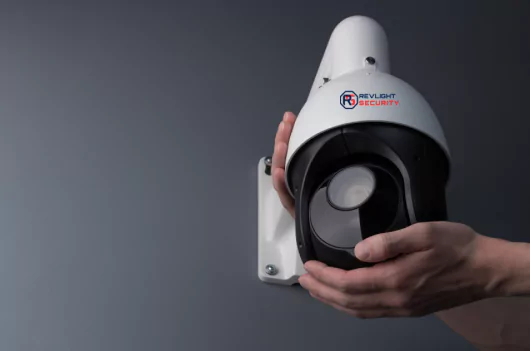
Revlight Security works in exactly this space, supplying specialist surveillance and detection systems for marine, offshore, and industrial operators that need dependable performance where failure is costly.
The real answer to when are marine cameras required
Marine cameras are required when visibility is tied to safety, security, compliance, insurance, operational control, or commercial accountability. On some assets, that requirement is explicit. On others, it is driven by risk and buyer expectations. Either way, waiting until after an incident to address surveillance gaps is usually the worst-value option.
The strongest operators do not ask whether they can get by without cameras. They ask where visual coverage will reduce exposure, improve response, and protect the business. That is the buying mindset that delivers long-term savings, stronger security outcomes, and fewer avoidable surprises at sea.
🛡️ Secure Your Home or Business Today
Protect your home, office, shop, or business with reliable CCTV security cameras. Explore our range of CCTV cameras and find the right security solution for your needs.
Explore CCTV Cameras ✉️ Email Us

 Singapore :
+65-6708-9302
Singapore :
+65-6708-9302