

When a site does not need eight or sixteen channels, overbuying becomes a budget problem fast. A 2 camera DVR package is often the smarter fit for gate coverage, fuel transfer points, control room access, small vessel monitoring, remote compounds, and other focused surveillance jobs where two critical views matter more than a long feature list.
For procurement teams and operations managers, that matters. The right package delivers clear recording, dependable playback, and straightforward remote access without forcing you into a larger system than the application requires. In industrial environments, the value is not in buying the most channels. It is in buying the right coverage, the right recorder, and the right level of durability for the conditions on site.
Why a 2 camera DVR package makes sense
A two-camera system sits in a practical middle ground. It is more capable than a single-camera setup because it lets you monitor two separate risk points at once, yet it stays easier to install and lower in cost than larger packages. That is exactly why it works well for compact industrial assets, smaller marine applications, temporary infrastructure, isolated buildings, and expansion phases where surveillance is being rolled out in stages.
Two cameras also force a sharper planning process. Instead of scattering coverage, buyers usually place one camera on approach or perimeter activity and the second on the most important operational zone. That pairing is often enough to document entry events, verify incidents, support investigations, and reduce blind spots around targeted assets.
There is also an operational benefit that buyers sometimes miss. Smaller DVR packages are simpler to manage. Footage review is faster, storage is easier to estimate, and system training for crews or facility staff takes less time. For teams already balancing safety, production, and compliance demands, a streamlined surveillance setup can be the better commercial choice.
What to look for in a 2 camera DVR package
Not all packages are built for industrial use. Some are fine for light-duty environments but become unreliable when exposed to vibration, heat, salt air, dust, moisture, or nonstop operation. That is where specification quality starts to separate serious equipment from low-end retail bundles.
Recording quality and frame rate
The first question is image usability. If footage cannot clearly show an event, a plate, a face, or an operational detail, the package has limited value. Buyers should look closely at supported resolution, recording modes, and frame rate per channel. Higher resolution improves detail, but storage demand increases with it, so the right balance depends on the risk being monitored.
For a stable gate or fixed access point, a moderate frame rate may be fully adequate. For moving vehicles, loading activity, or marine deck operations, smoother recording can make a real difference during playback. The best fit depends on the scene, lighting, and what the footage must prove after an incident.
Storage capacity and retention time
A DVR is only as useful as the footage it retains. Industrial buyers should estimate how many days of video are required and whether recording will run continuously, on motion, or on a schedule. Continuous recording is common in high-risk environments, but it consumes storage quickly.
Retention needs vary. A refinery access point may require longer archives for incident review. A vessel may prioritize shorter cycles with quick retrieval. The package should support the storage volume your operation actually needs, not just the minimum needed to get the system online.
Remote access and playback
For many operators, remote visibility is now expected. A good 2 camera DVR package should support secure remote viewing and efficient playback so managers, captains, engineers, or security staff can verify conditions without being physically at the recorder.
That said, remote access is not just a convenience feature. In spread-out industrial operations, it helps reduce response time and unnecessary callouts. Still, connectivity realities matter. Offshore, marine, and remote energy sites may deal with limited bandwidth, so buyers should check how the recorder handles low-bandwidth viewing and whether playback remains practical in the field.
Camera housing and environmental protection
This is where many low-cost packages fall short. Industrial and marine sites need cameras and associated hardware that can tolerate environmental stress. Outdoor placement may call for weather resistance, corrosion protection, and reliable performance in high heat or cold. Marine deployments add salt exposure and vibration. Processing areas may require extra attention to mounting strength and housing integrity.
A package can look attractive on price and still become expensive if cameras fail early or require repeated maintenance visits. Buyers should evaluate the full deployment environment before comparing offers on cost alone.
Where a 2 camera DVR package works best
A two-camera package is most effective when the surveillance objective is clear. One common setup covers the entry route and the second covers the key operational area. On a vessel, that could mean gangway access and deck activity. At a small industrial outbuilding, it could mean the exterior approach and the equipment room entrance. At a fuel or utility site, it may mean the gate and the transfer point.
This format also works well for phased upgrades. Many organizations do not replace an entire surveillance estate at once. They improve one risk zone first, verify results, and expand later. A 2 camera DVR package is a practical entry point because it delivers measurable security gains without a large initial capital commitment.
It is also a strong fit for temporary or semi-permanent operations. Construction support areas, mobile industrial compounds, and short-cycle field deployments often need dependable recording without the scale of a full facility system. In these cases, simplicity is a strength, not a limitation.
Where two cameras may not be enough
There are trade-offs, and serious buyers should weigh them early. Two cameras can cover high-priority views, but they will not solve every surveillance problem on a complex site. If your operation needs overlapping coverage, wider perimeter visibility, multiple process areas, or detailed chain-of-custody recording, a two-channel package may be too narrow.
The same applies if risk grows over time. Some buyers start with two cameras and quickly realize they need four or eight channels because the site footprint expands or incident patterns change. That does not mean a two-camera system was the wrong first move. It means expansion planning should be part of the decision from the beginning.
A commercially sound purchase looks beyond day one. If there is a realistic chance of growth, ask whether the package can integrate into a broader surveillance strategy or whether it will need full replacement later.
How to compare 2 camera DVR package options
Price always matters, but serious procurement decisions should focus on total value. A cheaper package may save money upfront while creating higher operating cost through poor image quality, weak housing durability, limited storage, or difficult support. A better package often pays back through longer service life, fewer failures, and faster incident review.
Compare the package as a complete system. Look at the recorder, the cameras, the cables or transmission method, storage, power requirements, and the practical support behind it. Ask what the system is designed to do in real operating conditions, not just what appears on a spec sheet.
Industrial buyers should also consider installation reality. Mounting points, cable runs, lighting conditions, and network availability all affect performance. A package that looks simple in theory can become inefficient if it is poorly matched to the site layout. The strongest suppliers help buyers align system format with the environment, risk profile, and operational goal.
A focused package with real commercial value
For the right application, a 2 camera DVR package delivers strong value. It keeps surveillance targeted, recording reliable, and costs under control. That is why it remains a practical choice for industrial yards, marine assets, utility sites, plant access points, and remote operational infrastructure where two high-value views can make the difference between unanswered questions and usable evidence.
At Revlight Security, this kind of system fits buyers who want dependable performance without paying for excess channel capacity they do not need. The key is choosing a package built for the conditions, not just the catalog page.
If you are specifying surveillance for a smaller footprint or a tightly defined risk area, keep the decision simple. Buy for the environment, buy for the recording objective, and buy for the footage you may need when the pressure is on.
🛡️ Secure Your Home or Business Today
Protect your home, office, shop, or business with reliable CCTV security cameras. Explore our range of CCTV cameras and find the right security solution for your needs.
Explore CCTV Cameras ✉️ Email Us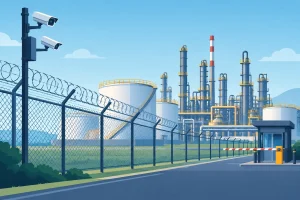



 Singapore :
+65-6708-9302
Singapore :
+65-6708-9302