
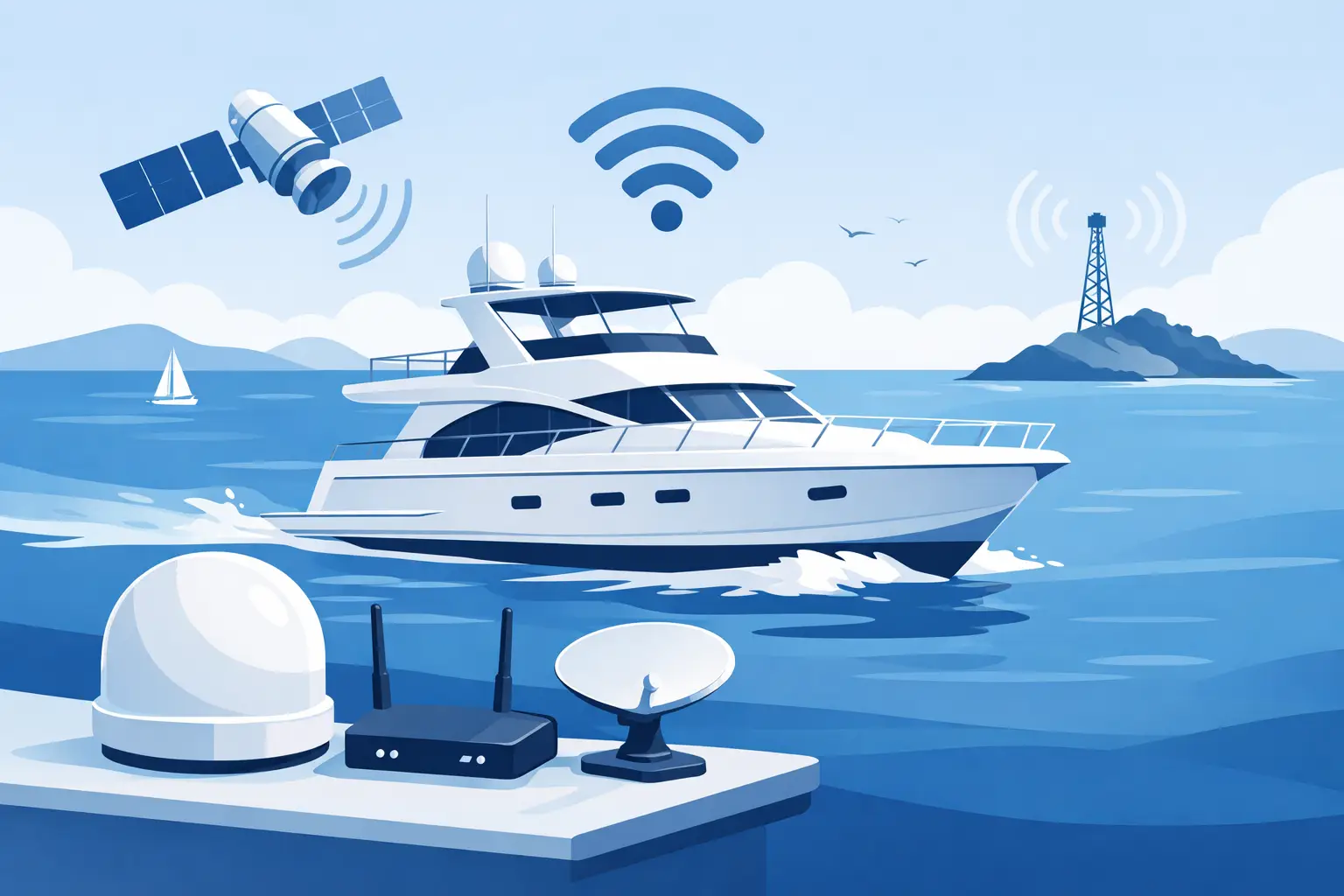
A weak connection offshore is not a minor inconvenience. It can slow reporting, interrupt remote monitoring, limit crew communications, and create blind spots across critical vessel systems. That is why knowing how to select marine wifi system hardware correctly matters from the start. The right system supports operations, security, and uptime. The wrong one creates recurring cost, poor coverage, and constant troubleshooting.
Marine WiFi is not a consumer networking purchase with a waterproof label added on. Buyers in shipping, offshore energy, port operations, and industrial marine environments need equipment designed for salt exposure, vessel motion, electrical noise, long operating hours, and mixed traffic loads. You are not just buying internet access. You are buying network stability in a difficult environment where failure has operational consequences.
How to select marine wifi system for real operating conditions
The first decision is not brand or price. It is operating profile. A crew transfer vessel near shore has very different requirements from a drilling support vessel, harbor patrol craft, offshore platform, or commercial ship moving between ports. If you skip this step, you will likely overspend on the wrong features or underbuy and face signal loss where it matters most.
Start with the physical environment. Consider whether the system will operate mainly in coastal waters, at port, ship-to-ship, ship-to-shore, or on fixed offshore infrastructure. Distance requirements shape antenna selection, radio power, and mounting position. Steel bulkheads, cranes, containers, masts, and enclosed spaces can also disrupt coverage. In many marine deployments, the challenge is not simply getting a signal onto the vessel. It is distributing that signal reliably through cabins, bridge spaces, deck areas, control rooms, and equipment zones.
The next factor is traffic type. Some buyers need basic crew internet and business communications. Others also need support for IP cameras, remote diagnostics, VoIP, telemetry, control systems, and local data transfer between shipboard devices. These use cases place very different demands on throughput, latency, and prioritization. If surveillance video and operational traffic share the same network, your marine WiFi system should be built with enough capacity and management control to prevent congestion.
Coverage, range, and bandwidth are not the same thing
This is where many purchasing decisions go off track. A long-range radio does not automatically provide good onboard coverage. A high-bandwidth access point does not guarantee stable connection across steel compartments. And strong advertised speed means very little if the system cannot maintain performance in rough weather, interference, or vessel movement.
Range matters most when you are bridging distances between vessel and shore, vessel and vessel, or platform and support craft. In those cases, directional antennas, line-of-sight planning, and elevation are often more important than raw device specifications. Onboard coverage is different. It depends on access point placement, antenna design, obstructions, and how many users or connected devices are active at the same time.
Bandwidth should be sized around actual load, not marketing numbers. A vessel carrying 10 crew with light internet use has one profile. A larger ship supporting crew welfare access, CCTV backhaul, maintenance systems, and operational reporting has another. If your operation relies on video transmission, remote playback, or access to networked detection systems, headroom is essential. Buying to the minimum specification may reduce the upfront quote, but it usually increases long-term cost.
Environmental durability should be a buying requirement, not a bonus
Marine environments punish weak equipment quickly. Salt spray, humidity, vibration, UV exposure, rain, washdown, and temperature shifts all affect network performance and hardware life. That means enclosure rating, corrosion resistance, connector quality, and mounting integrity should be treated as core specifications.
For exterior deployments, marine-grade construction is not optional. Procurement teams should look closely at ingress protection, materials, cable management, and whether the equipment is designed for continuous duty in exposed conditions. A low-cost unit may appear competitive at purchase, but if connectors corrode, seals fail, or brackets loosen under vibration, replacement and labor costs erase that saving fast.
Power input also deserves attention. Many vessels and offshore assets have specific DC power standards or integration requirements. Confirm compatibility early, along with surge protection and grounding needs. In harsh industrial settings, the installation quality and power design can be just as important as the wireless hardware itself.
Single access point or full vessel architecture?
Smaller boats sometimes perform well with a simple setup, especially when the goal is localized onboard access near the bridge or saloon. But larger vessels and industrial marine sites rarely benefit from a one-device approach. Multiple access points, segmented zones, centralized management, and dedicated backhaul links are often necessary to achieve stable performance.
This is especially true when the network supports more than crew internet. Once you add surveillance devices, remote access, playback, workstations, and operational systems, a proper architecture becomes the smarter commercial decision. It reduces dead zones, improves security, and gives operators better visibility into performance.
Security and control should be built in
Any buyer responsible for offshore or industrial communications should treat wireless security as non-negotiable. A marine WiFi system may carry operational data, user credentials, video streams, or maintenance records. Weak access control or poor segmentation can expose the vessel or facility to unnecessary risk.
Look for systems that support modern encryption, user management, VLANs or traffic separation, and remote administration. Captive portals may be useful for crew access, while segregated SSIDs can separate business traffic from personal devices. In commercial marine operations, quality of service settings also matter. If all traffic is treated equally, a spike in recreational use can affect essential applications.
Remote monitoring is another major advantage. Technical teams should be able to check device health, link status, bandwidth use, and fault conditions without waiting for an onboard complaint. That saves time, supports preventive maintenance, and helps justify the investment to operations leadership.
How to compare marine WiFi systems without getting distracted by specs
When buyers compare models, there is a temptation to focus on headline speed, promotional range claims, or the lowest quoted price. Those figures have value, but they do not tell the whole story. The better approach is to compare systems against operational outcomes.
Ask whether the system will maintain stable links in your expected coverage area. Ask how it handles interference and obstruction. Ask what happens when user numbers rise. Ask whether it supports integration with onboard surveillance and network infrastructure. Ask what maintenance burden it creates over three to five years.
Support and deployment guidance should also influence the purchase. Marine networking is highly site-specific. Antenna selection, mounting height, cable runs, and placement strategy all affect final performance. A serious supplier should help align the hardware to the operating environment instead of pushing a generic kit. That is where engineering-backed support creates real value.
Cost, lifecycle, and return on investment
The lowest acquisition cost rarely delivers the best return. A better marine WiFi system can reduce service calls, improve crew welfare, support remote diagnostics, and strengthen uptime across connected equipment. For fleet operators and offshore assets, those gains add up quickly.
It is also worth considering future expansion. If there is a reasonable chance you will add cameras, sensors, remote workstations, or additional onboard users, select a system with room to grow. Replacing an undersized network after deployment is more expensive than buying correctly the first time.
Commercial buyers should calculate total cost of ownership, including installation complexity, maintenance frequency, expected service life, downtime risk, and support responsiveness. In industrial sectors, the right answer is usually the system that performs reliably under pressure, not the one that looks cheapest in a spreadsheet.
The best buying approach for marine operators
If you want to know how to select marine wifi system solutions with confidence, match the system to the mission, not the catalog. Define your coverage area, user load, traffic mix, environmental exposure, and integration requirements before comparing product options. Then choose hardware with the durability, security, and management features to support long-term use.
For professional marine operators, WiFi is part of the wider operational infrastructure. It affects communications, monitoring, productivity, and in many cases security performance. That makes specification discipline essential. A supplier with marine and industrial networking experience can help avoid underperformance, premature failure, and costly redesign.
Revlight Security works in environments where uptime, visibility, and reliability are expected, not hoped for. If your vessel, port facility, or offshore site depends on stable wireless performance, the right system is the one that keeps working when conditions are at their worst. That is the standard worth buying to.
🛡️ Secure Your Home or Business Today
Protect your home, office, shop, or business with reliable CCTV security cameras. Explore our range of CCTV cameras and find the right security solution for your needs.
Explore CCTV Cameras ✉️ Email Us



 Singapore :
+65-6708-9302
Singapore :
+65-6708-9302