
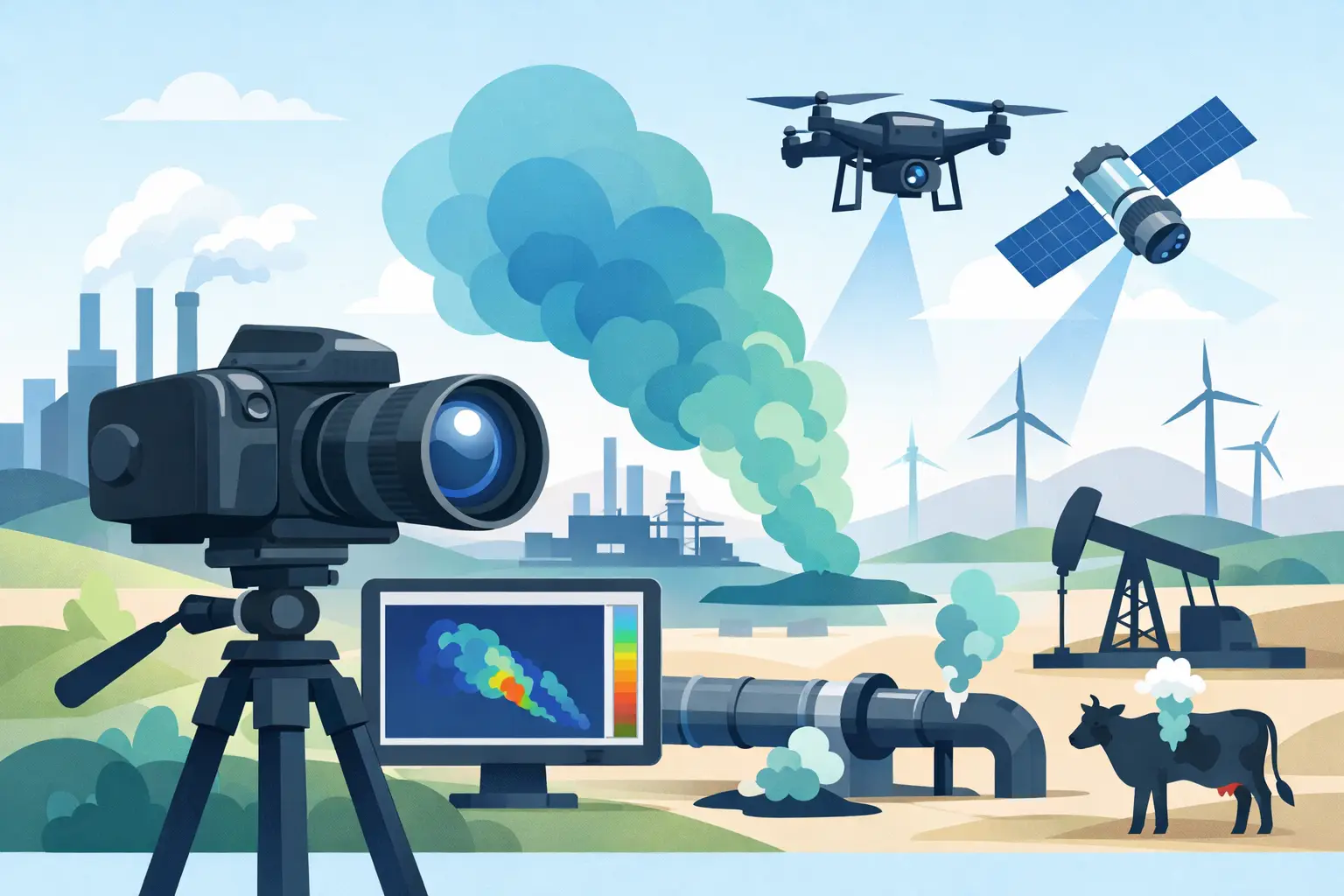
A methane leak that goes unseen for even a few hours can turn into lost product, a safety exposure, an emissions reporting problem, and an avoidable shutdown risk. That is why methane imaging camera trends matter right now for operators under pressure to tighten inspections, document compliance, and cut waste without slowing production.
For procurement teams and operations leaders, the market is moving beyond basic leak visualization. Buyers are asking harder questions about detection performance, integration with plant networks, environmental durability, and how fast a system can deliver actionable evidence to the control room. The strongest products are no longer judged only by image quality. They are judged by how well they fit real industrial workflows.
Why methane imaging camera trends are changing fast
The pace of change is being pushed by three realities at once. First, methane emissions are under sharper regulatory and investor scrutiny. Second, the cost of unplanned loss is easier to quantify than it used to be. Third, industrial facilities expect more from connected surveillance and detection systems than a single-purpose device can deliver.
That combination is shifting demand toward fixed and network-capable imaging solutions that support routine monitoring, event review, and remote decision-making. In refineries, gas processing sites, offshore environments, and power assets, buyers want systems that work as part of a broader detection and security infrastructure. A camera that spots a leak is valuable. A camera that records, timestamps, integrates, and supports response decisions is a stronger commercial investment.
1. Fixed installation is gaining ground over spot checks
One of the clearest methane imaging camera trends is the move toward permanently installed systems in high-risk areas. Operators are placing greater value on continuous or scheduled monitoring around compressors, valves, flanges, storage interfaces, loading points, and enclosed process zones.
The reason is straightforward. Spot inspections can miss intermittent releases, especially in facilities where leaks depend on pressure cycles, temperature changes, or equipment loading. Fixed deployment improves the chance of catching events as they happen and creates a more consistent inspection record. It also reduces the operational friction of sending personnel repeatedly into hazardous or hard-to-access areas.
This does not mean every site should replace all manual inspections with installed imaging. It depends on asset criticality, layout, and budget. But for sites with recurring leak points or strict reporting demands, fixed systems are becoming the stronger long-term choice.
2. Analytics are moving from image capture to decision support
Buyers increasingly expect more than live viewing. They want analytics that help teams identify suspected gas events faster, reduce false alarms, and create evidence that supports maintenance action.
That shift is changing product selection. The best service provider in this category is no longer the one offering only optics. It is the supplier that can deliver the full chain – imaging, recording, event tagging, remote access, and practical system integration. Operations managers do not want another isolated screen in the corner of the control room. They want usable alerts and a cleaner path from detection to intervention.
There is a trade-off here. More analytics can improve response speed, but only if configuration is done properly. Overly sensitive settings can create nuisance alarms in steam, heat shimmer, or visually complex process areas. Serious buyers should look for systems that can be tuned for site conditions and reviewed against actual operational footage.
3. Compliance-ready recording is becoming a buying priority
A growing number of customers now evaluate methane imaging systems as documentation tools, not just detection tools. That changes what matters in the specification. Recording quality, timestamp reliability, playback functions, storage retention, and exportable event footage all become part of the purchasing decision.
For industrial operators, this is a practical shift. When a suspected leak is identified, teams need to review what happened, when it started, how long it persisted, and whether corrective action resolved it. If the system cannot support that chain of evidence, it leaves gaps for maintenance, EHS, and audit teams.
This is especially relevant in larger facilities where multiple stakeholders need access to the same incident record. A top-of-the-line offer today is not just a camera head with strong detection capability. It is a complete surveillance-grade platform that supports playback, remote review, and dependable retention under industrial operating conditions.
4. Harsh-environment design is separating serious systems from basic ones
Another major trend is a sharper focus on enclosure quality and environmental tolerance. Industrial methane imaging is being deployed in hot zones, corrosive atmospheres, salt-heavy offshore settings, vibration-prone structures, and exposed perimeters where standard housings simply do not last.
That makes durability a commercial issue, not just an engineering detail. Procurement managers are looking harder at ingress protection, corrosion resistance, thermal management, and long-term maintenance demands. A lower upfront price can disappear quickly if a unit struggles in marine air, refinery washdown conditions, or extreme temperature swings.
This is where specialized suppliers have an advantage. Buyers in oil and gas and marine sectors are not purchasing for a clean indoor corridor. They are buying for difficult assets where replacement access is expensive and downtime carries real cost. The ultimate in security surveillance systems has to mean dependable performance in the field, not only good specifications on paper.
5. Network integration is now expected, not optional
Methane detection is increasingly part of a connected industrial environment. Cameras are expected to feed into existing video management, network infrastructure, and remote operations workflows. That is one of the most commercially important methane imaging camera trends because it affects total deployment cost and day-to-day usability.
If a system does not fit the site network, operators end up building workarounds. That adds delay, complexity, and support risk. By contrast, systems designed for industrial connectivity can support centralized monitoring across multiple assets, which is especially valuable for offshore operators, marine fleets, and distributed energy sites.
Integration also matters for response speed. A control room team that can see live imaging, review playback, and verify an alarm through a shared platform makes faster decisions than a team chasing separate tools. For buyers comparing vendors, the key question is simple: does the system operate as part of the facility, or does it remain an isolated specialist device?
6. Procurement is shifting toward total value, not just detector cost
A few years ago, many purchases centered on acquisition price. That is changing. Buyers are now more focused on service life, deployment support, maintenance requirements, training needs, and the operational savings tied to earlier leak detection.
This is a better way to buy. Methane loss has a measurable cost. So do emergency callouts, delayed repairs, repeat inspections, and unnecessary shutdowns. When a camera system helps identify leaks earlier and supports clear maintenance planning, the return is broader than simple compliance.
Still, the right specification depends on the site. A large refinery with dedicated control infrastructure may justify a more advanced networked solution with wider coverage and longer retention. A smaller industrial plant may prioritize a targeted setup around specific process risks. The important point is that value should be measured across performance, uptime, and supportability, not just invoice price.
7. Buyers want suppliers who understand the operating environment
The final trend is less about hardware and more about the buying process. Industrial customers are placing greater weight on supplier expertise. They want vendors who understand hazardous areas, refinery workflows, offshore constraints, network requirements, and the difference between a demo environment and a live industrial site.
That is a healthy shift. Methane imaging is not a generic purchase. It sits at the intersection of emissions control, asset reliability, industrial surveillance, and safety response. A supplier that can match system design to the operating environment will usually deliver better results than one focused only on product brochures.
For that reason, experienced providers such as Revlight Security are well positioned when they combine engineering-backed product knowledge with deployment guidance that makes sense for industrial buyers. The strongest sales conversation is not about selling the most units. It is about specifying the right coverage, the right network path, and the right durability level for the asset.
What smart buyers should ask next
As these trends continue, purchasing decisions should become more disciplined, not more complicated. The most useful questions are practical ones. Where are the highest-value leak risks on site? Does the camera need fixed continuous coverage or scheduled observation? How will footage be recorded, reviewed, and retained? What conditions will the system face over the next five years, not just on installation day?
It is also worth asking who will use the system after commissioning. EHS teams, maintenance leads, control room operators, and corporate reporting groups often need different outputs from the same equipment. A strong specification accounts for that early, which prevents expensive redesign later.
The market is clearly moving toward integrated, durable, compliance-aware methane imaging systems built for real industrial performance. Buyers who treat these cameras as part of their wider surveillance and detection infrastructure will make better investments, reduce avoidable loss, and put their teams in a stronger position when the next leak does not wait for a scheduled inspection.


 Singapore :
+65-6708-9302
Singapore :
+65-6708-9302