
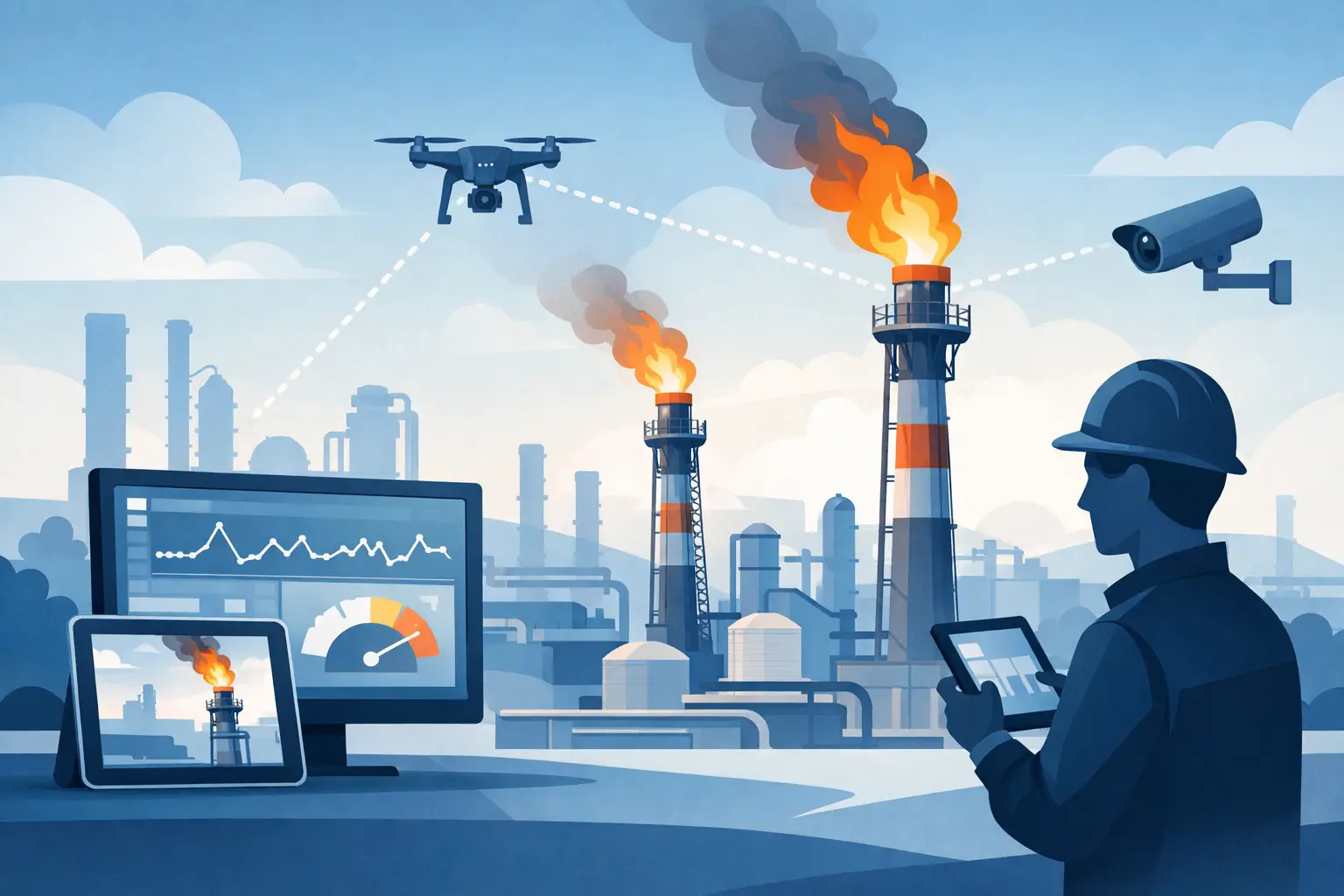
A flare stack is meant to be visible, but its most consequential failures are often difficult to see. A weak pilot flame, damaged tip, excessive smoke, unburned hydrocarbons, or an abnormal release can develop well before an operator can confirm the condition from grade level. Knowing how to monitor refinery flare stacks means building a surveillance and detection system that gives operations personnel trustworthy evidence during normal operation, upset conditions, and incident review.
For refinery operators, this is not simply a camera placement exercise. The equipment must operate in heat, vibration, corrosive atmospheres, glare, weather, and potentially classified areas. It must also deliver usable images and alarms to the control room without creating a maintenance burden that defeats its purpose.
How to Monitor Refinery Flare Stacks With Layered Detection
The strongest approach combines visible video, thermal imaging, gas detection, and a dependable network connection. Each technology answers a different operational question. Standard visual surveillance shows flame shape, smoke, steam, structural condition, access activity, and obvious emissions. Thermal imaging identifies heat patterns that may be hidden by darkness, haze, or glare. Gas detection equipment can identify hydrocarbon or methane releases that visual surveillance alone cannot verify.
A single device rarely covers every risk. A clear daytime image may provide excellent documentation of a smoking event, yet it may not show whether a pilot is stable at night. Thermal imaging can confirm heat at the flare tip, but it does not replace a properly located gas detection system for fugitive emissions around piping, seals, or nearby process equipment.
The objective is operational visibility: give the control room a live view, generate alarms based on meaningful conditions, and preserve recorded evidence for maintenance, environmental teams, safety investigations, and compliance reporting.
Start With the Operating Questions
Before specifying equipment, identify what the system must prove. Common requirements include confirming pilot flame presence, detecting flame-out conditions, observing smoke density and flame behavior, monitoring a flare tip for structural deterioration, and recording releases during process upsets. Some sites also need surveillance of knockout drums, flare headers, access roads, perimeter areas, or elevated platforms.
These requirements determine sensor type, mounting position, optical range, recording duration, and alarm configuration. They also determine whether the project needs continuous monitoring or event-based recording. A system intended to document a monthly maintenance inspection has very different performance requirements from one expected to support operators during a high-pressure release.
Select Optics for Distance, Heat, and Atmospheric Conditions
Flare stacks create a difficult viewing environment. Long stand-off distances are often necessary for safety and for practical mounting, but distance introduces heat shimmer, smoke, vapor, fog, rain, and reduced image detail. Choosing a high-resolution surveillance camera without selecting the correct lens and housing will not solve the problem.
A site survey should establish the distance to the flare tip, the elevation difference, likely viewing angles, prevailing wind direction, sun position, and obstructions. Operators should avoid a viewing line that places the setting sun directly behind the flare during critical operating hours. They should also consider whether the plume will routinely pass between the sensor and the flare tip.
Fixed-position cameras are effective where the target area is known and consistent. Pan-tilt-zoom units provide broader coverage of the stack, flare header, and adjacent equipment, especially when an operator must investigate an alarm. The trade-off is that a moving unit cannot watch multiple points at the same time. For critical pilot confirmation, a dedicated fixed thermal view is often the more dependable choice, with a pan-tilt-zoom device used for situational assessment.
Thermal systems should be selected for the temperature ranges and detection distances involved. The goal is not merely to see a hot object. The system needs enough contrast and resolution to distinguish expected flame conditions from abnormal heat signatures. Thermal analytics can be valuable, but they must be tuned on site to avoid nuisance alerts caused by solar loading, hot process equipment, reflections, or changing weather.
Specify Equipment for the Actual Hazardous Area
Refinery flare monitoring equipment may be installed near classified locations, exposed to salt air, corrosive gases, wind-driven rain, dust, and high ambient temperatures. A consumer-grade enclosure or a standard commercial surveillance device is not an acceptable shortcut in this environment.
Specify equipment with the required hazardous-area approvals for the installation zone, along with suitable ingress protection, corrosion resistance, operating temperature limits, and mounting hardware. The approval required depends on the site classification and jurisdiction, so procurement teams should verify the engineering specification with the refinery’s electrical and safety authorities rather than assume one certification covers every installation.
Housing design matters. A properly engineered enclosure protects optics and electronics, while integrated heaters, blowers, sunshields, wipers, or washer systems help maintain image quality in difficult climates. These options add cost and maintenance points, so they should be selected based on site conditions rather than added automatically. In dry inland locations, a simple protected housing may be sufficient. In coastal, desert, or high-fouling environments, optical cleaning and environmental protection can determine whether the system remains useful after the first season.
Build Alarms Around Actionable Events
Operators do not need more alarms. They need alarms that lead to a defined response. A flare monitoring system should be configured around conditions that matter to operations, such as loss of pilot indication, unexpected temperature change, sustained visible smoke, motion in a restricted access zone, or a gas concentration threshold near associated equipment.
Every alarm should have an owner and a response path. For example, a thermal alert at the flare tip may initiate a control-room visual check, followed by field verification under the site’s safety procedures. A gas detection alarm may trigger a different escalation process. Combining multiple sources can reduce false alarms: a gas event paired with video and thermal evidence is more useful than an isolated notification without context.
Recording is equally important. Configure pre-event and post-event retention so personnel can see what happened before an alarm was generated and how conditions developed afterward. Time synchronization across cameras, gas detectors, network video recorders, and control systems is essential. If timestamps do not align, incident reconstruction becomes slower and less credible.
Protect the Video and Data Path
A flare stack surveillance system is only as reliable as its power and communications infrastructure. Long cable runs, lightning exposure, electromagnetic interference, remote locations, and constrained pathways all affect design. Fiber connections are often a strong choice for long-distance refinery deployments because they support bandwidth, reduce susceptibility to electrical interference, and can help isolate network segments.
Where fiber is impractical, industrial wireless links may be appropriate, provided they are engineered for line of sight, interference, weather exposure, and failover. Marine and offshore-adjacent facilities need particular attention to corrosion, salt contamination, and network resilience.
Separate surveillance traffic appropriately, apply access controls, and use encrypted remote access. A live feed accessible from outside the site can improve response times for authorized personnel, but it also expands the cybersecurity perimeter. Procurement decisions should account for network switches, power supplies, surge protection, recording capacity, and service support, not just the price of the sensor at the stack.
Test the System During Real Operating Conditions
Commissioning should include more than verifying that an image appears on a monitor. Test the view at day and night, in expected weather conditions where possible, and during representative flare activity. Confirm that the flare tip remains in frame, thermal contrast is usable, alarms reach the correct personnel, recordings are recoverable, and remote users receive acceptable video performance.
Then establish a maintenance plan. Inspect lenses and housings, verify focus and alignment, test alarms, review storage health, and confirm that network connections remain stable. A quarterly check may work for a protected installation, while exposed sites may need more frequent cleaning and inspection. Trends in image degradation, recurring false alerts, or connection drops should be treated as maintenance indicators, not minor inconveniences.
Revlight Security supports industrial buyers with specialist surveillance, thermal detection, gas monitoring, and network infrastructure selected for demanding oil, gas, marine, and energy environments. The right system is one that gives operators clear evidence when conditions change and continues delivering that evidence when the refinery needs it most.
A flare stack should never become a blind spot because it is distant, elevated, or difficult to access. Specify the monitoring system around real operating decisions, validate it in the field, and maintain it with the same discipline applied to the process equipment it protects.
🛡️ Secure Your Home or Business Today
Protect your home, office, shop, or business with reliable CCTV security cameras. Explore our range of CCTV cameras and find the right security solution for your needs.
Explore CCTV Cameras ✉️ Email Us

 Singapore :
+65-6708-9302
Singapore :
+65-6708-9302