
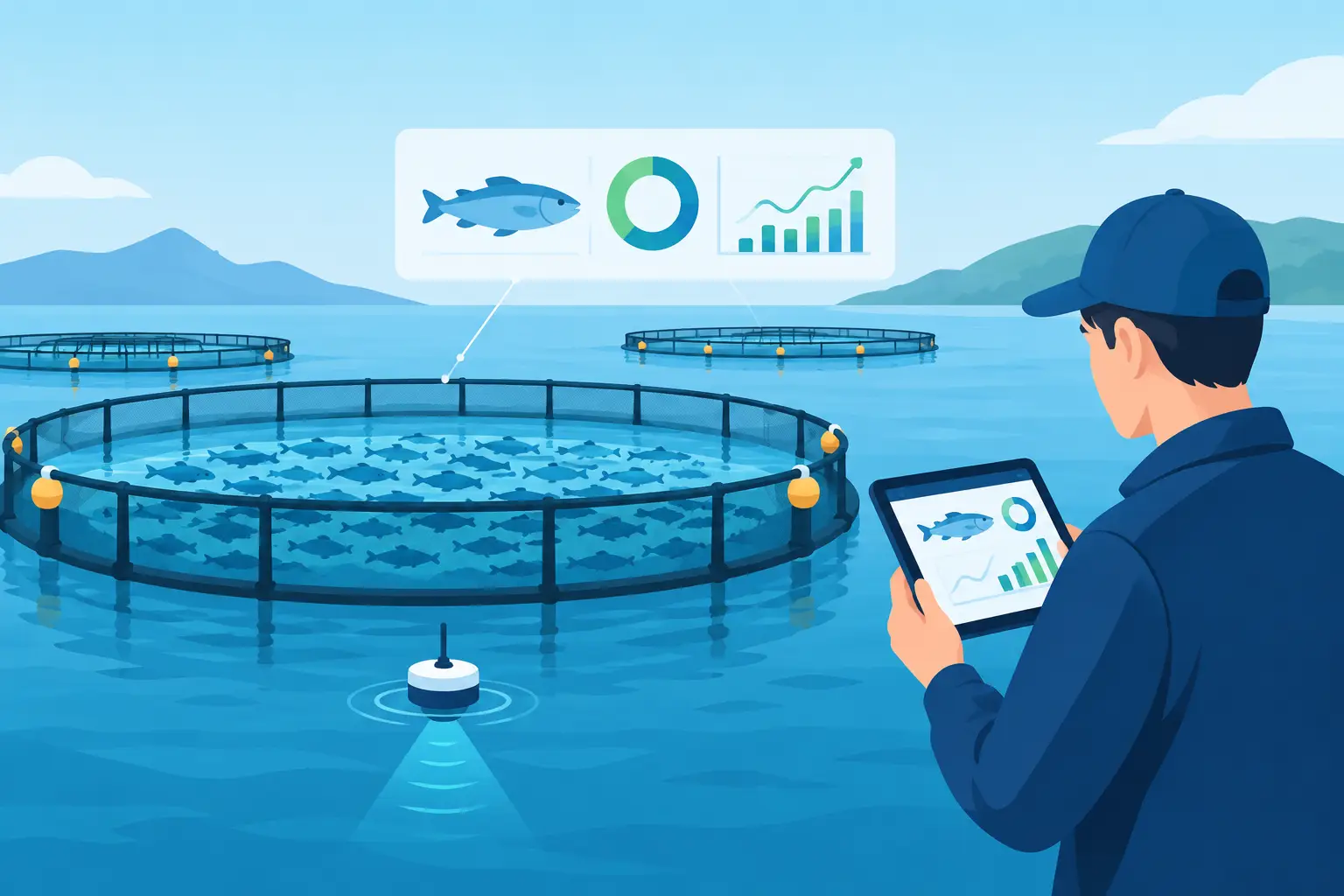
A feeding decision made on an inaccurate biomass estimate can waste significant feed in a single cycle. It can also mask weak growth, distort harvest planning, and leave site teams reacting late to stock-health problems. Aquaculture biomass monitoring gives operators a clearer, repeatable view of what is happening below the surface, turning observation into data that supports commercial control.
For offshore, nearshore, and land-based farms, the objective is not simply to count fish. The objective is to understand live stock weight, size distribution, behavior, and change over time without creating unnecessary handling stress. When surveillance infrastructure is selected and installed correctly, biomass data becomes a practical operating tool for feeding, welfare management, production forecasting, and asset planning.
Why Aquaculture Biomass Monitoring Drives Farm Performance
Biomass is the combined live weight of stock in a pen, tank, raceway, or production zone. Farm managers use it to calculate feeding rates, assess feed conversion, schedule treatments, estimate harvest dates, and report inventory. If the estimate is wrong, every decision built on it carries risk.
Traditional sampling methods can provide useful reference data, but they require netting, crowding, or physical measurement. That process takes labor, can disrupt fish behavior, and only represents a limited sample. A larger operation with multiple sites cannot depend on occasional manual checks alone if it needs consistent production data across the business.
Camera-based monitoring systems provide a more continuous view. Underwater imaging can capture fish passing through defined observation areas, while measurement software identifies body outlines and estimates length. Length-to-weight models then calculate individual and total biomass estimates. The data is most valuable when teams compare it against feed records, mortality records, water-quality readings, and historical growth curves.
This is where better surveillance infrastructure changes the operating model. High-quality images, stable network delivery, dependable recording, and remote access allow supervisors to review conditions without relying entirely on a single on-site observation. For managers responsible for several farm locations, that visibility can reduce travel requirements and improve the speed of operational decisions.
What a Biomass Monitoring System Must Measure
A useful system does more than produce a single biomass number. It should provide enough context for the farm team to judge whether that number reflects normal stock conditions.
Fish size and distribution
Average weight is helpful, but it can hide variation. A pen may show an acceptable average while carrying a growing number of undersized fish, or while a small group reaches market size earlier than expected. Size-distribution data helps teams assess grading needs, harvest timing, and the likely uniformity of a final load.
Stock behavior near feeding and observation zones
Behavior often provides the earliest operational signal. Schooling patterns, swimming speed, density at depth, and appetite response can indicate whether fish are feeding normally. Video monitoring gives staff a record that can be reviewed before, during, and after a feeding event instead of relying on a brief visual check.
Observation quality and confidence
No biomass estimate should be treated as absolute when image quality is poor. Turbidity, algae growth, low light, reflections, current movement, and excessive fish density can affect measurement accuracy. The strongest systems flag low-confidence readings and preserve video evidence so operators can verify conditions rather than accepting a questionable output.
Trends across time
One reading is a snapshot. A series of readings reveals the production story. Tracking biomass weekly or daily, depending on the farm and species, helps identify slower-than-expected growth before the financial impact becomes difficult to recover. It also supports more accurate feed budgeting and harvesting forecasts.
Surveillance Hardware Determines Data Quality
The software model receives most of the attention in biomass discussions, but the camera system determines what the model has to work with. A poor image stream produces poor measurement confidence, regardless of the analytics platform behind it.
For submerged installation, operators should specify underwater camera housings rated for the actual depth, salinity, temperature range, and service interval. Marine exposure is unforgiving. Housing seals, corrosion-resistant materials, cable protection, connectors, and mounting hardware must be selected for long-term deployment, not just initial installation.
Image resolution matters, but it is not the only specification that matters. Lens selection must match the observation distance and field of view. If fish are too small in the frame, measurement precision suffers. If the field of view is too narrow, the system may fail to represent the wider population. Illumination must also be considered carefully, particularly in deeper pens, low-light periods, or turbid water.
Positioning is equally important. Cameras should be installed where fish move naturally through a measurable zone, not where they only appear during abnormal conditions. A poorly placed unit may repeatedly measure the same behavioral subgroup and produce a biased biomass estimate. Site conditions, cage geometry, currents, feeding locations, and species behavior should all inform the installation plan.
A professionally designed network is not optional. Video and analytics data need reliable bandwidth from the water to the operations room, vessel, or shore facility. Marine WiFi, fiber, industrial switches, managed network equipment, and secure remote access should be designed as one system. Intermittent connectivity can create data gaps that undermine trend analysis precisely when a team needs to investigate a change in stock behavior.
Where Biomass Data Produces Commercial Savings
Feed is commonly one of the largest operating costs in aquaculture. Overestimating biomass can lead to overfeeding, wasted feed, poorer water conditions, and avoidable cost. Underestimating biomass may restrict growth and extend the production cycle. Better biomass visibility supports feeding plans based on the stock actually present, not an assumption carried forward from the last sample.
Harvest planning is another major application. Reliable biomass estimates improve forecasts for vessel scheduling, processing capacity, labor, ice, logistics, and customer commitments. For farms supplying strict contracted volumes, the difference between a projected harvest and actual available stock has direct commercial consequences.
Biomass monitoring also strengthens accountability between sites. Central operations teams can compare performance by pen, farm, species group, or production stage using a common data source. This does not replace the judgment of experienced farm personnel. It gives them stronger evidence to explain why a site is ahead of plan, behind plan, or entering a period of elevated risk.
Building a Practical Aquaculture Biomass Monitoring Plan
Start with the decision the system must improve. A farm focused on feeding control may need frequent biomass estimates and live behavioral observation near feed delivery points. A site focused on harvest forecasting may prioritize size distribution and dependable long-term trend data. These are related requirements, but they are not identical.
Next, define the operating environment in detail. Specify water depth, salinity, visibility, current conditions, ambient light, mounting location, cable runs, available power, and communications infrastructure. Procurement teams should also ask how the system will be cleaned, inspected, recovered, and serviced. A lower purchase price can become expensive when maintenance requires repeated vessel time or production interruption.
Data ownership and access should be addressed before installation. Operations managers need clear answers on where video is stored, how long recordings remain available, which users can access analytics, and how the system connects to existing farm-management records. Recorded footage is especially valuable when a biomass result needs investigation or an operational decision must be reviewed later.
Finally, validate the system against controlled samples during commissioning. Biomass analytics improve when the farm compares estimates with known weights and adjusts models for species, life stage, and local conditions. Expect a calibration period. Vendors promising perfect accuracy from day one without considering site conditions should be assessed carefully.
Selecting Equipment for Demanding Marine Conditions
The right specification balances measurement performance with installation practicality. A high-end imaging setup may be justified in large sea-cage operations where a small improvement in feed accuracy delivers major savings. Smaller facilities may need a focused system that prioritizes dependable observation, recording, and remote review before moving to advanced analytics.
Look for industrial-grade underwater surveillance equipment designed for continuous use, not consumer hardware adapted after the fact. Confirm environmental ratings, optical performance, low-light capability, corrosion protection, network compatibility, recording options, and technical support. The equipment should fit the farm’s operating reality, including remote locations, limited maintenance windows, and demanding weather exposure.
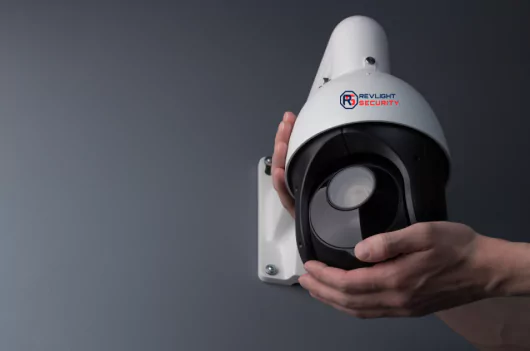
Revlight Security supports marine operators with specialist surveillance and network solutions built around dependable visibility, secure communications, and environment-specific equipment selection. For aquaculture projects, the best result comes from treating cameras, connectivity, recording, and analytics as a single operational system rather than separate purchases.
The most valuable biomass figure is the one your team can trust enough to act on. Build the observation infrastructure around real farm decisions, verify data quality from the start, and use each measurement to make the next feeding, welfare, or harvest decision more certain.
🛡️ Secure Your Home or Business Today
Protect your home, office, shop, or business with reliable CCTV security cameras. Explore our range of CCTV cameras and find the right security solution for your needs.
Explore CCTV Cameras ✉️ Email Us

 Singapore :
+65-6708-9302