
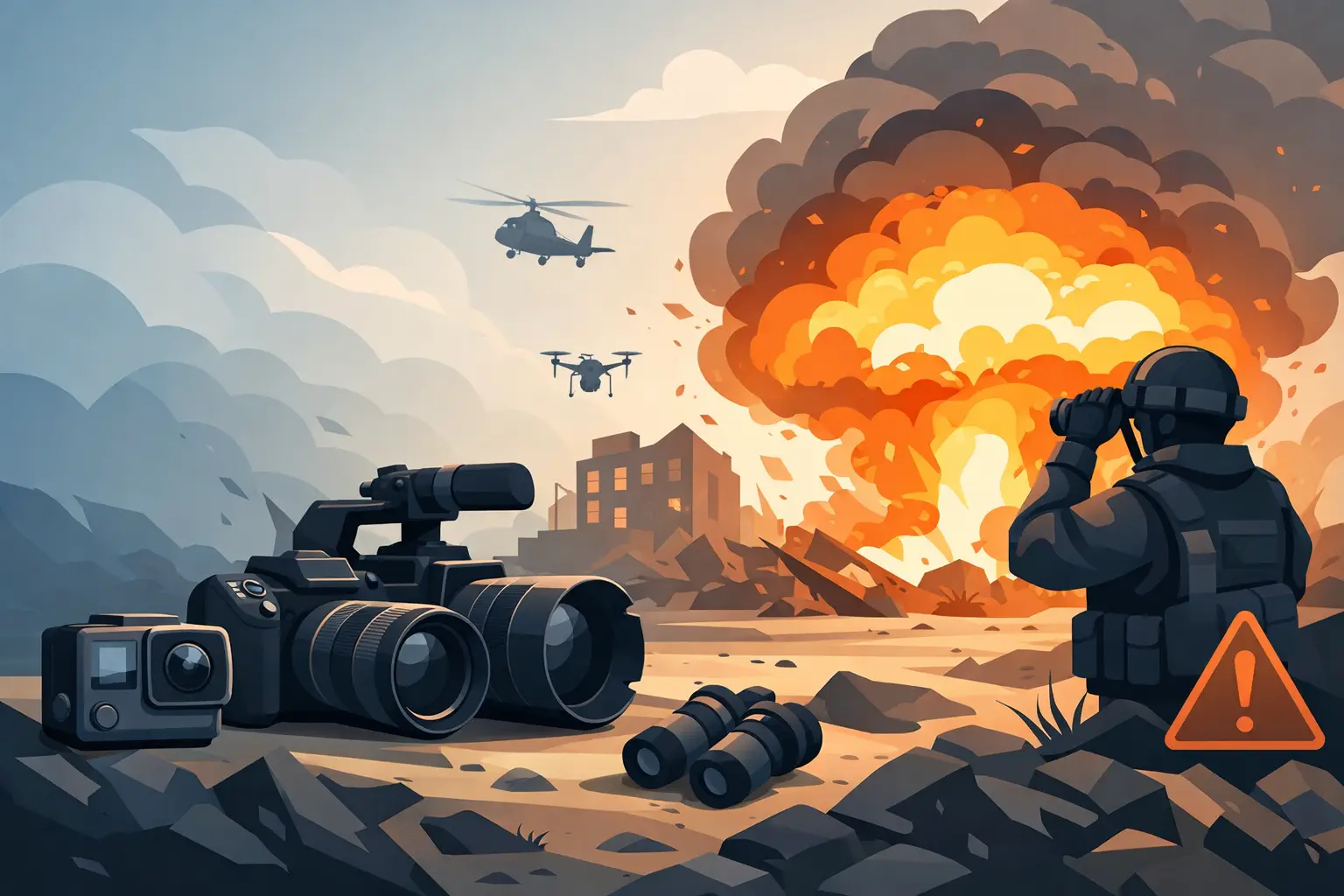
A standard surveillance unit may deliver excellent images in a warehouse and become an unacceptable ignition risk the moment it enters a classified process area. When buyers ask, which camera suits blast zones, the answer is not a model number first. It is a certification, installation, and operating-environment decision that must match the precise hazardous-area classification at the point of deployment.
For refineries, offshore platforms, chemical plants, terminals, and power facilities, the right system protects more than an asset. It supports safer inspection, faster incident verification, perimeter control, and remote operational awareness without sending personnel unnecessarily close to a hazard.
Start with the area classification, not the camera
“Blast zone” is widely understood on site, but it is not a technical classification. Procurement teams should begin with the hazardous-location documentation supplied by the facility engineering team. In the United States, that often means Class and Division or Class and Zone designations. International projects may require ATEX and IECEx compliance.
The classification tells you what flammable material may be present, whether it exists during normal operations or only under abnormal conditions, and what protection level the equipment must meet. A camera approved for one classification is not automatically appropriate for another. The exact approval marking on the equipment, not a broad claim such as “explosion-proof,” is what matters.
For example, a refinery vapor recovery area, a tank farm loading bay, and an offshore wellhead deck can have very different classification requirements despite all being described informally as blast zones. Ambient gas group, temperature class, mounting position, and local authority requirements all influence the final selection.
Which camera suits blast zones in industrial operations?
For most fixed surveillance applications, a certified hazardous-area camera assembly is the correct starting point. This typically combines an approved camera housing, certified cable entries or glands, a properly rated junction box, and a suitable mounting arrangement. The complete installed system must preserve the protection method, not just the enclosure around the lens.
The best format depends on what the operations team needs to see. A fixed wide-angle unit is effective for access points, process skids, pump areas, and loading lanes where continuous coverage matters. A certified pan-tilt-zoom system is better suited to jetties, tank farms, flare-stack approaches, and large process areas where operators need to investigate changing activity from a control room.
Where visibility is poor or intruders must be detected at long range, thermal imaging can provide a valuable second layer. Thermal systems identify heat contrast rather than relying on visible light, making them useful in darkness, smoke, haze, and low-light marine conditions. They are highly effective for perimeter awareness and personnel detection, but thermal imagery is not always the best choice for reading labels, identifying fine mechanical detail, or supporting evidential color footage. Many high-value sites use thermal coverage alongside visible-spectrum surveillance.
Gas detection imaging is a separate operational requirement. Optical gas imaging systems can help teams visualize certain hydrocarbon gas leaks under the correct conditions, but they should not be treated as a replacement for fixed gas detectors, process alarms, or safety instrumented systems. The value is in verification, inspection support, and informed response. The required gas type, detection sensitivity, viewing distance, and environmental conditions should be defined before specifying this equipment.
Certification is only one part of a safe deployment
A certified assembly can still be compromised by poor installation. Cable routes, sealing fittings, junction boxes, power supplies, network components, and maintenance practices need to align with the applicable hazardous-area design. This is where low-cost substitutions create expensive risk.
Ask suppliers to provide clear documentation for the exact configuration being quoted. That includes certification records, approved operating temperature range, ingress protection rating, cable-gland compatibility, voltage requirements, and any conditions of safe use. A housing may be suitable for salt spray and severe vibration, for example, while the selected connectors or mounting hardware are not.
Offshore and marine operators should give particular attention to corrosion resistance. Marine-grade stainless steel construction, durable coatings, protected fasteners, and appropriate sealing help prevent salt-laden air from turning a security investment into a recurring maintenance project. In high-heat process areas, verify both the ambient temperature range and the unit’s temperature classification. These are related but different specifications.
Define the surveillance outcome before choosing optics
Certification establishes whether equipment can be installed safely. Optics and image performance determine whether it will actually do the job. A camera overlooking a gate needs different coverage from one monitoring a flare knockout drum or a transfer manifold.
Start with the required observation task. Is the goal general situational awareness, person detection, facial identification, vehicle recognition, leak verification, or operator oversight of a critical process? Distance, scene width, lighting, weather, and obstruction all affect lens selection. A wide field of view can cover more ground but may leave subjects too small for useful investigation. A longer focal length delivers detail at distance but narrows the scene.
Low-light performance is especially relevant in tank farms, remote substations, and offshore decks. Supplemental illumination may be necessary, but it must also be appropriate for the hazardous location. Do not assume conventional lighting accessories can be added later without affecting compliance or creating maintenance complications.
For moving targets or large areas, pan-tilt-zoom capability offers operational flexibility. The trade-off is that an operator can look in only one direction at a time. Critical zones often benefit from fixed units for constant evidential coverage, with a controllable unit used for active assessment.
Build the network around availability and security
A hazardous-area surveillance project is not complete at the camera. Video must reach the control room, security office, vessel bridge, or remote operations center reliably. Network availability, bandwidth, recording capacity, and cybersecurity should be specified at the same stage as the camera hardware.
High-resolution streams and thermal analytics can consume substantial bandwidth, particularly across offshore backhaul or remote industrial links. A well-designed system uses suitable compression, recording policies, and network segmentation so video does not interfere with operational communications. Local recording can preserve evidence during an uplink outage, while centralized viewing gives authorized teams immediate access to live and recorded video.
Remote access must be controlled. Strong credentials, role-based permissions, encrypted communications, firmware management, and audit trails reduce the chance that surveillance infrastructure becomes an entry point into a wider industrial network. This is commercially significant: a system that is easy to install but difficult to secure can create cost and exposure for years.
Compare lifecycle value, not the lowest purchase price
The lowest initial quote is rarely the lowest-cost solution in a classified area. A unit that requires frequent removal, has limited spare-part support, or lacks documentation can increase downtime and permit-related labor. On offshore assets, the cost of sending technicians to a location may exceed the apparent saving on hardware very quickly.
A strong procurement comparison should consider certification suitability, image performance, corrosion resistance, expected service life, spares availability, warranty support, network compatibility, and ease of maintenance. It should also account for commissioning support and the supplier’s ability to provide a complete solution rather than isolated components.
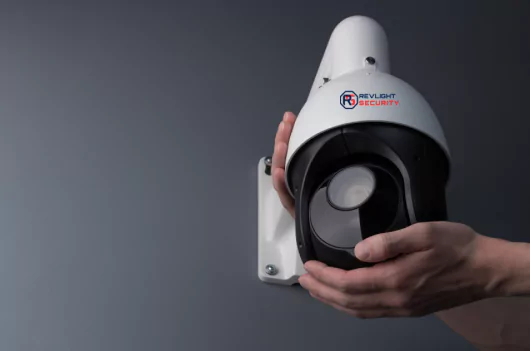
Revlight Security supplies specialist surveillance and detection equipment for demanding industrial and marine environments, with system selection focused on real operating conditions rather than generic security specifications. The right configuration can support remote inspection, stronger site awareness, and better use of maintenance resources across critical infrastructure.
Before issuing a purchase order, bring operations, safety, electrical engineering, IT, and security into the same review. Share the area classification drawings, installation location, required viewing task, environmental conditions, and recording requirements. That disciplined process turns a broad question about blast-zone cameras into a defensible specification – and gives your team surveillance they can rely on when site conditions are at their hardest.
🛡️ Secure Your Home or Business Today
Protect your home, office, shop, or business with reliable CCTV security cameras. Explore our range of CCTV cameras and find the right security solution for your needs.
Explore CCTV Cameras ✉️ Email Us

 Singapore :
+65-6708-9302
Singapore :
+65-6708-9302