
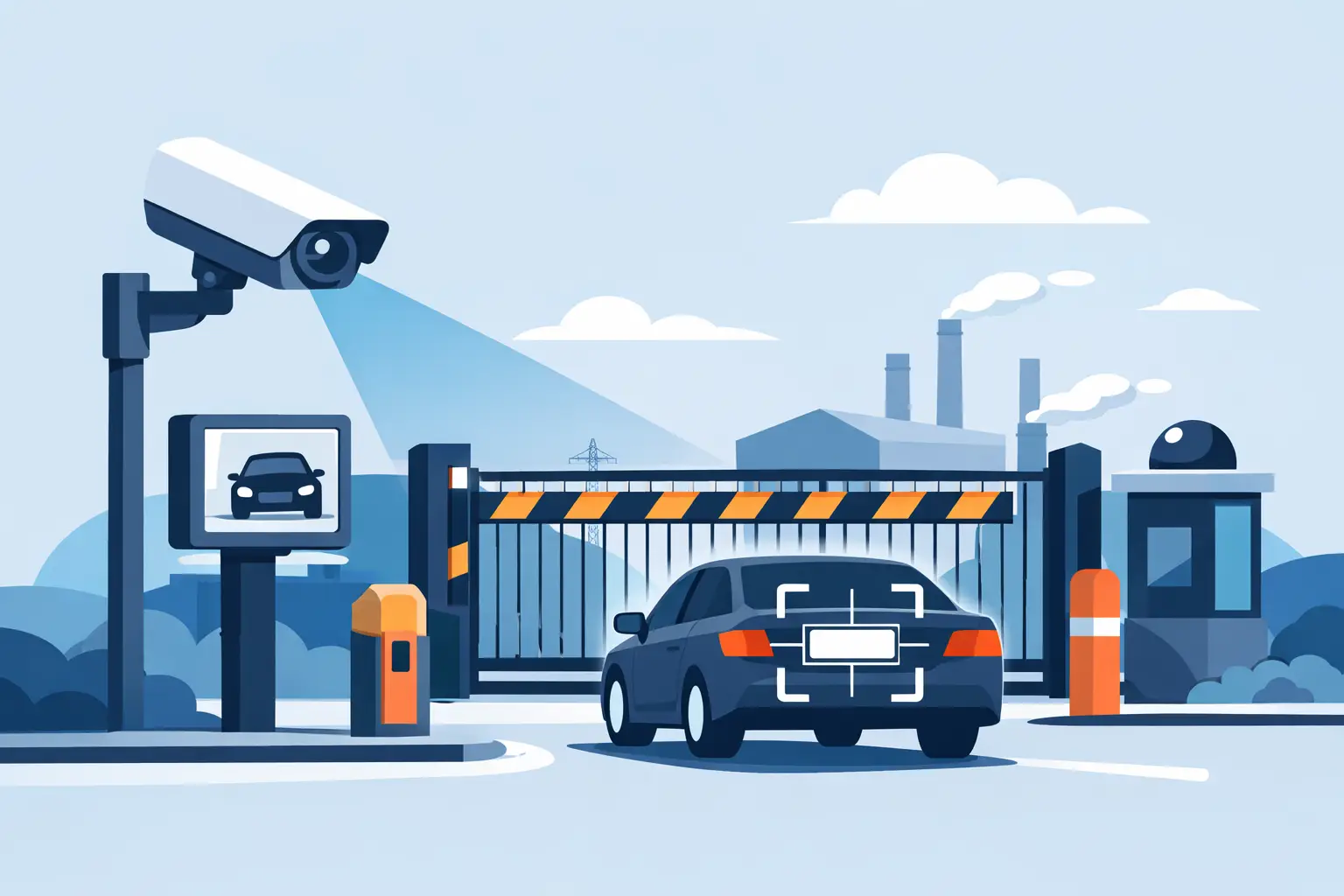
A gate incident rarely starts at the gate. It starts with an unverified vehicle, an incomplete delivery record, a plate that cannot be read after dark, or a guard forced to make a decision without reliable information. LPR surveillance for industrial gates gives security and operations teams a verifiable record of which vehicles approached, entered, exited, and attempted access to a controlled site.
For refineries, power stations, marine terminals, chemical plants, offshore support yards, and logistics-heavy industrial facilities, vehicle movement is operational data. A properly engineered license plate recognition system turns that data into a usable security control. It can support gate authorization, investigation, contractor management, vehicle blacklists, and response coordination without slowing legitimate traffic unnecessarily.
Why Industrial Gates Need More Than Standard Video
A conventional overview camera can show that a truck passed through a gate. It may not provide a readable plate under headlights, rain, glare, dust, salt spray, vibration, or low-light conditions. That distinction matters when a security team needs to confirm the exact vehicle involved in a restricted-area breach, a delivery discrepancy, or an after-hours access event.
LPR systems are designed around plate capture rather than general scene coverage. They use controlled illumination, fast shutter settings, suitable optics, and recognition software to acquire plate data at the point where vehicles must be identified. The result is not simply footage to review later. It is searchable vehicle intelligence tied to time, direction of travel, gate location, and, when integrated, access control events.
At high-consequence facilities, that evidence can resolve questions quickly: Did the approved tanker enter the correct gate? Was a banned contractor vehicle on site? Which truck left a loading area before a security alarm? Did a vehicle tailgate through a barrier after an authorized entry?
How LPR Surveillance for Industrial Gates Works
An industrial LPR deployment typically combines a dedicated plate capture device, an overview surveillance camera, local or network video recording, and plate-recognition software. The dedicated capture unit is positioned and configured to produce readable plates within a defined lane. The overview view provides context, such as vehicle color, trailer details, driver-side activity, lane use, and barrier status.
The recognition platform extracts the plate number and stores it with associated video evidence. Security personnel can search records by plate, date, time range, entry or exit lane, and alert status. When a known plate appears, the system can create an event for review or trigger a workflow through an integrated access-control or security management platform.
Recognition accuracy depends on the installation, not just the software specification. Plate angle, vehicle speed, lane width, mounting height, illumination, regional plate formats, weather, and cleanliness all affect performance. A system designed for a single controlled lane will perform differently from one expected to read plates across several uncontrolled traffic lanes.
The Critical Role of Gate Design
The best LPR performance comes from a controlled capture zone. Vehicles should be guided through a predictable lane, ideally at a manageable speed, with a consistent stopping or slowing point near the barrier. This makes it easier to set the correct focal distance, field of view, and lighting conditions.
Where possible, separate entry and exit lanes reduce ambiguity and simplify reporting. Industrial sites with wide gates, irregular truck approach angles, or mixed vehicle traffic may need multiple capture points rather than one device attempting to cover every movement. Adding equipment is sometimes the less expensive choice when compared with months of missed reads, manual searches, and disputed access records.
The Industrial Conditions That Change the Specification
A gate system installed at a corporate parking lot is not automatically suitable for a refinery perimeter or marine terminal. Industrial buyers should specify the environment before selecting hardware.
At coastal facilities, salt-laden air can attack housings, connectors, and mounting hardware. At mines, cement works, and bulk handling yards, airborne dust can reduce image quality and create frequent maintenance demands. Chemical plants may require equipment selection that aligns with hazardous-area requirements near classified zones. Power stations and remote energy sites may need surge protection, extended network runs, backup power, or wireless backhaul designed for difficult terrain.
Lighting is another common failure point. Headlights, reflective plates, gate floodlights, and direct sun can all create exposure problems. Dedicated infrared illumination and carefully matched optics help maintain plate clarity after dark. However, infrared performance still needs to be validated against the expected plate type, lane distance, and vehicle speed. Claims of long-range recognition mean little if the system is aimed at the wrong capture angle.
For marine and offshore-support operations, the system should also account for vibration, wind loading, corrosion resistance, and the practical realities of maintaining equipment around active berths and service roads. The right design is one that can be serviced safely without disrupting critical operations.
What Procurement Teams Should Define Before Buying
A strong purchase specification starts with operational questions, not a generic request for plate readers. Define the number of gate lanes, expected traffic volume, vehicle types, maximum approach speeds, plate jurisdictions, operating hours, and required retention period. Clarify whether the goal is evidence collection, automated gate authorization, watchlist alerts, or all three.
The following requirements should be settled early because they directly affect system architecture:
- Required read performance by day, night, and adverse weather conditions
- Entry, exit, and wrong-way detection needs for each lane
- Integration requirements for barriers, intercoms, visitor systems, access control, and command centers
- Network availability, cybersecurity controls, recording location, and backup power expectations
- Environmental rating, corrosion protection, hazardous-area constraints, and maintenance access
Retention should be treated as a business decision. A busy multi-lane gate can generate substantial video and event data. Facilities investigating shipment claims, contractor incidents, or perimeter violations may require longer retention than a site using LPR only for real-time access decisions. Storage capacity, bitrate, recording resolution, and search performance should be evaluated together.
Integrating Plates With Access Control and Operations
The strongest industrial gate deployments do not rely on plate data alone. A license plate can be copied, obscured, dirty, or associated with a vehicle that has changed hands. For higher-security areas, LPR should be one layer in a broader verification process alongside credentials, driver identification, guard confirmation, QR-based visitor authorization, or vehicle inspection procedures.
A practical integration can compare a recognized plate against an approved delivery schedule. If the vehicle is expected, the guard receives a clear verification prompt. If the plate is on a blacklist or arrives outside its approved time window, the system can flag the event before the barrier is raised. This reduces manual lookup time while preserving human judgment where it matters.
For operations teams, plate records can also improve yard visibility. Searchable entry and exit times support carrier accountability, dwell-time analysis, dispute resolution, and confirmation that a vehicle reached the correct access point. These benefits are especially valuable where security, logistics, and maintenance traffic share the same perimeter.
Avoid These Common Deployment Mistakes
The first mistake is treating LPR as a wide-area surveillance feature. A general-purpose view may help identify a vehicle, but it should not be expected to consistently capture plates across several lanes at night. Dedicated capture coverage and overview coverage serve different jobs.
The second is installing equipment before validating the traffic pattern. If trucks enter at an angle, stop outside the focus zone, or pass through more quickly than expected, recognition rates will suffer. A site survey should observe real vehicle behavior, including peak traffic, night arrivals, and oversized loads.
The third is overlooking network and power resilience. Gate systems often sit at the edge of a facility, far from core communications rooms. Unstable connectivity, unprotected power, or inadequate bandwidth can turn a well-selected LPR device into an unreliable source of evidence. Industrial-grade network planning is part of the surveillance solution, not an optional add-on.
Finally, do not measure success only by whether the system reads a plate. Measure whether the plate record is usable: Can operators find it quickly? Is it tied to the correct lane and video clip? Does it produce the alert or authorization decision the facility needs? Those are the outcomes that justify the investment.
Build the System Around the Gate You Actually Operate
Every industrial gate has its own operating pressure. A remote substation may need dependable alerts and long-distance communications. A refinery may need controlled lane capture, strict contractor verification, and equipment appropriate for demanding environmental conditions. A port facility may need reliable identification of trucks, service vehicles, and restricted-area traffic through long operating shifts.
Revlight Security supports industrial buyers with surveillance and network solutions selected for real operating environments, not idealized site plans. The objective is clear: capture dependable vehicle evidence, improve gate decisions, and give security teams a faster path from event to answer.
Before approving a system, walk the gate at the busiest and darkest time it operates. Watch where vehicles stop, how headlights strike the lane, what the guards must verify, and where communications fail. Those details will determine whether your LPR investment becomes a dependable security control or just another video feed.
🛡️ Secure Your Home or Business Today
Protect your home, office, shop, or business with reliable CCTV security cameras. Explore our range of CCTV cameras and find the right security solution for your needs.
Explore CCTV Cameras ✉️ Email Us


 Singapore :
+65-6708-9302
Singapore :
+65-6708-9302