
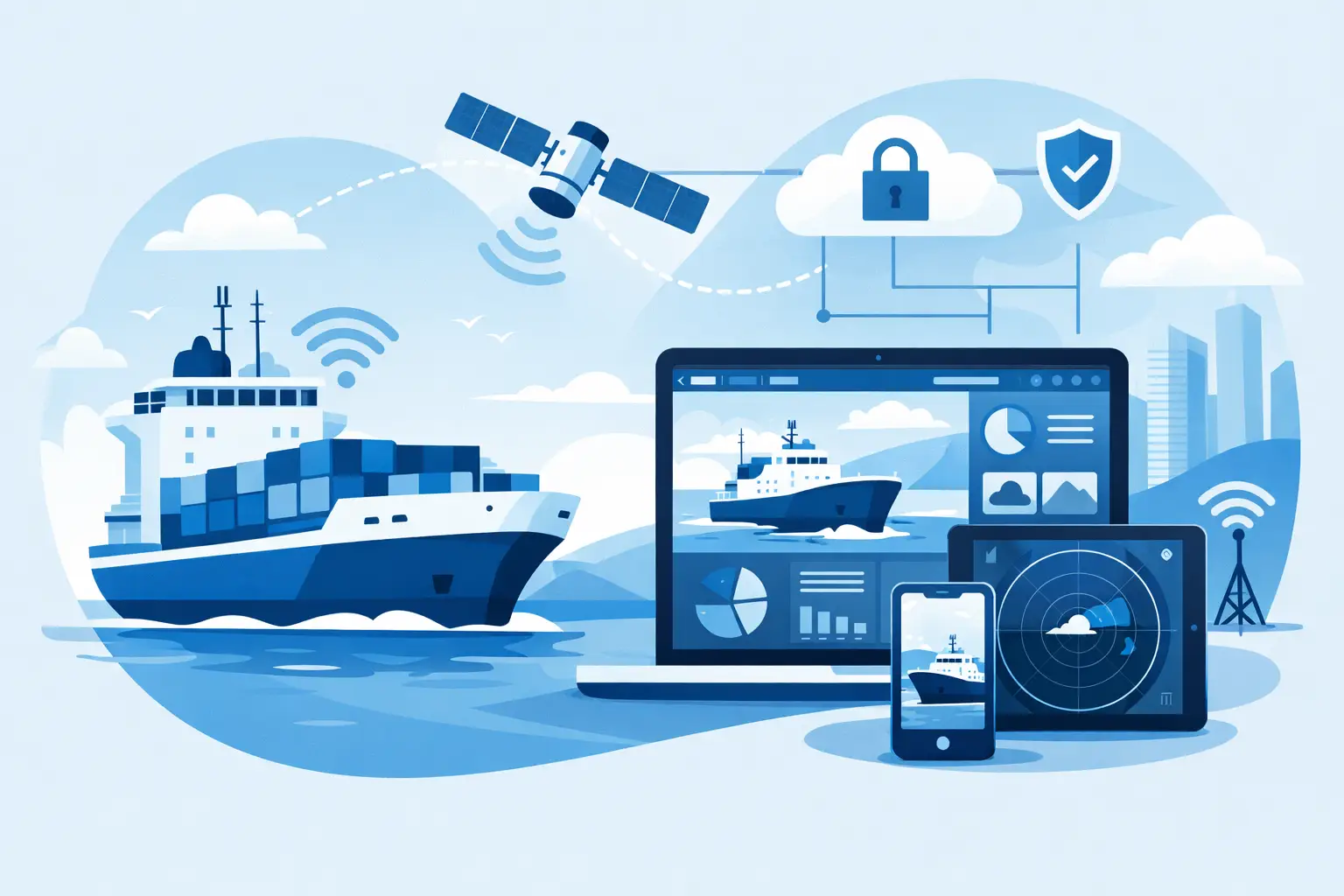
A vessel loses visibility fast when key systems go dark between port calls. That is why the best vessel remote access systems are not a nice-to-have for marine operators, fleet managers, and offshore teams. They are a working layer of control that supports surveillance, diagnostics, crew coordination, and faster response when a security event or equipment fault starts to build.
For buyers in shipping, offshore energy, and industrial marine operations, the challenge is not finding a remote access product. The challenge is choosing a system that still performs when bandwidth is limited, environmental conditions are harsh, and multiple onboard networks have to be managed without creating new security risks. That is where real system comparison matters.
What makes the best vessel remote access systems different
A vessel remote access system has one job on paper – let authorized users reach onboard devices, cameras, recorders, sensors, and networked controls from shore or from another vessel. In practice, the best systems do much more. They maintain stable communication over marine WiFi, cellular, or satellite backhaul. They protect surveillance feeds and operational data. They also make it easier for technical teams to troubleshoot faults without waiting for a port visit.
That sounds straightforward, but vessel conditions change the buying criteria. Salt exposure, vibration, confined equipment spaces, and inconsistent connectivity all put pressure on the hardware and network design. A remote access platform that works well in a warehouse or office may not hold up on a tanker, support vessel, or offshore installation.
The strongest systems usually combine three things. First, they have marine-ready hardware that can tolerate demanding environments. Second, they offer secure network architecture with controlled user permissions. Third, they handle interrupted connectivity without making the whole operation unusable.
The main system types on the market
When buyers compare the best vessel remote access systems, they are usually looking at one of three approaches.
Router-first systems
These systems are built around a marine router or gateway that manages WAN connections, vessel LAN traffic, VPN access, and device segmentation. This is often the best fit for operators who need reliable access to multiple onboard assets such as surveillance cameras, NVRs, alarm panels, and machinery monitoring interfaces.
The advantage is control. Router-first systems give engineering teams a central point to manage traffic, prioritize critical services, and create secure paths for shore-based access. The trade-off is that setup can be more technical, especially when vessels have older equipment or mixed network standards onboard.
Surveillance-led remote access systems
Some platforms are centered on remote viewing and management of onboard security infrastructure. In these systems, camera access, recording playback, alarm handling, and user permissions lead the design. This is a strong option for buyers focused on vessel security, perimeter monitoring, deck activity, and incident review.
The benefit is speed of use. Security teams can get to live video and recorded footage quickly, while management can maintain better oversight across a fleet. The limitation is that not every surveillance-led system is ideal for broader network administration. If the requirement includes deep access to engineering devices and multiple industrial subsystems, a more network-led approach may be stronger.
Hybrid marine access platforms
Hybrid systems combine secure vessel networking with integrated surveillance and operational monitoring. For many commercial operators, this is where the market is moving. Instead of buying one tool for connectivity and another for cameras, buyers want a coordinated system that supports video, diagnostics, alerts, and remote maintenance from one managed framework.
This approach tends to deliver the best long-term value, especially for fleets standardizing equipment across several vessels. The trade-off is initial cost. Hybrid systems are rarely the cheapest offer upfront, but they often reduce service visits, shorten fault resolution time, and improve asset visibility across the life of the installation.
The features that actually matter onboard
A long feature sheet does not automatically mean better performance. Procurement teams should focus on the functions that affect uptime, risk, and service costs.
Secure remote authentication matters first. A vessel access platform should allow role-based permissions so that a superintendent, captain, contractor, and shore IT manager do not all get the same level of access. That is not just good practice. It reduces the chance of accidental changes and limits exposure if credentials are compromised.
Bandwidth management matters just as much. Video traffic can consume capacity quickly, especially where satellite links are involved. Better systems let operators prioritize core traffic, compress streams intelligently, and adjust access based on connection quality. If a platform assumes constant high-bandwidth conditions, it is not designed for real marine use.
Resilience is another deciding factor. Systems should recover cleanly after dropouts, power interruptions, and network switching. A vessel may move between shore WiFi, cellular, and satellite conditions in a single route. The remote access layer should adapt without constant manual intervention.
Environmental suitability is non-negotiable. Marine-grade enclosures, corrosion resistance, vibration tolerance, and stable performance in heat or cold all affect service life. A lower-cost product can become expensive very quickly if it fails early or demands repeated maintenance.
How to compare best vessel remote access systems by use case
The right system depends on what the vessel actually needs to do.
For offshore support vessels and workboats, the priority is often operational continuity. These operators need shore teams to access cameras, recorders, and onboard network equipment without delaying missions. In that case, a hybrid system with strong router control and surveillance integration usually makes the most commercial sense.
For tankers, cargo vessels, and fleet shipping groups, standardization is often the larger issue. They need a repeatable platform that can be deployed across multiple vessels with consistent user permissions, remote maintenance routines, and security policy enforcement. Central management becomes more important than isolated advanced features on one vessel.
For offshore platforms and energy-linked marine assets, security and environmental durability move to the front. These sites often need integration with specialist surveillance equipment, detection systems, and controlled remote diagnostics. Buyers should put more weight on hardware resilience, secure access controls, and support for industrial-grade devices.
Passenger vessels and high-traffic marine operations often place more value on live visibility and fast incident handling. In those deployments, remote viewing quality, alarm response, and reliable playback can have a direct operational payoff.
Common buying mistakes that cost more later
The first mistake is buying for headline speed instead of actual vessel conditions. A platform may look excellent in a product sheet, but if it performs poorly during latency spikes or under low-bandwidth conditions, it will frustrate crews and shore teams alike.
The second mistake is treating remote access as a standalone item. It should be evaluated as part of the wider vessel security and communications architecture. Camera count, recorder compatibility, network segmentation, and future expansion all affect whether the system remains useful after installation.
The third mistake is underestimating support. Marine operators need suppliers that understand deployment realities, not just generic networking. A technically strong provider can help align remote access with surveillance, marine WiFi, and onboard device management so the system delivers savings instead of creating another support burden.
What strong suppliers should be able to show you
A serious supplier should be able to explain how the system handles vessel movement between network types, how remote playback performs under limited bandwidth, and how access permissions are structured for different user groups. If those answers are vague, the offer is probably not built for demanding marine environments.
They should also be ready to discuss camera integration, recorder compatibility, and practical deployment details such as enclosure ratings, mounting constraints, and onboard power requirements. For buyers comparing top-of-the-line offers, these details separate a sales pitch from a dependable security infrastructure plan.
In many projects, the best service provider is not the one promising every feature. It is the one that can match the right configuration to the vessel class, operating route, and security objective. That may mean a simpler architecture for one operator and a more advanced hybrid platform for another.
Revlight Security works in exactly that environment, where marine and industrial buyers need specialist surveillance, network performance, and remote visibility designed around real operating conditions rather than generic catalog claims.
Choosing a system that will still fit in three years
Remote access is now tied to much more than checking a live camera feed. It supports condition awareness, service planning, evidence review, and faster technical response across vessels and offshore assets. That means buyers should think beyond the first installation and ask whether the system can scale with additional cameras, sensors, and networked equipment.
The best vessel remote access systems are the ones that stay useful as operations expand. If the system is secure, marine-ready, and built around practical access control, it can protect uptime and reduce unnecessary service costs. That is the real benchmark worth buying against – not just remote connection, but better control when the vessel is far from easy reach.
If you are specifying a system now, start with the operating conditions, not the marketing sheet. The right fit pays for itself when the next fault, incident, or network problem happens offshore instead of at the dock.
🛡️ Secure Your Home or Business Today
Protect your home, office, shop, or business with reliable CCTV security cameras. Explore our range of CCTV cameras and find the right security solution for your needs.
Explore CCTV Cameras ✉️ Email Us



 Singapore :
+65-6708-9302
Singapore :
+65-6708-9302