
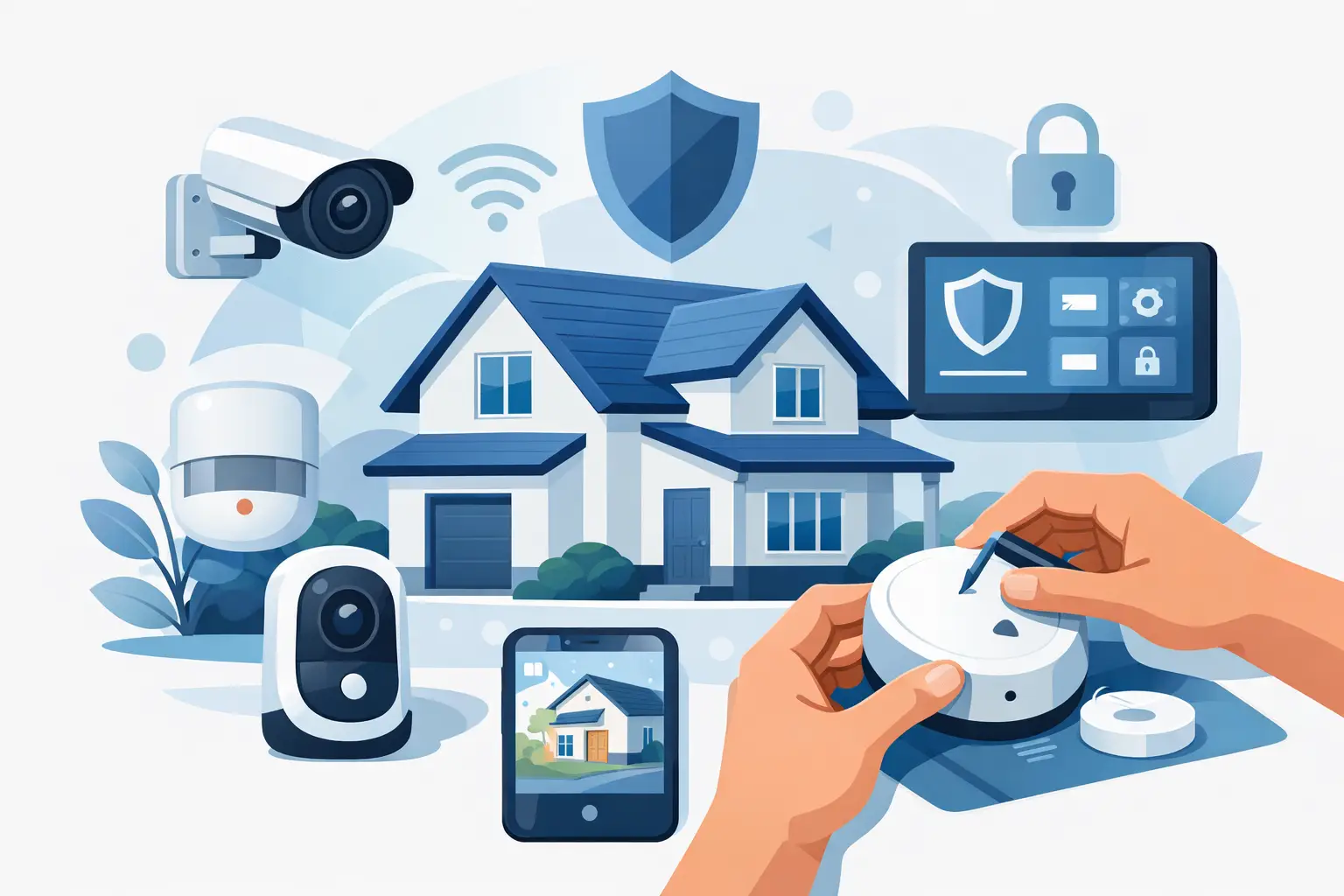
If you are asking what is the best do it yourself home security system, you are probably balancing three pressures at once: real protection, reasonable cost, and fast deployment. That is the right way to think about it. The best DIY system is not simply the cheapest kit or the one with the most marketing. It is the system that matches your property layout, risk level, network reliability, and how much control you want to keep in-house.
For most buyers, the answer is not a single brand name. The best do it yourself home security system is usually the one that combines reliable intrusion detection, clear video verification, mobile control, backup power, and simple expansion without forcing you into a complicated install. If a system cannot alert quickly, record clearly, and keep working during a power or internet interruption, it is not delivering the security outcome that matters.
What is the best do it yourself home security system for most homes?
For a typical single-family home, the strongest DIY setup includes four core elements: entry sensors on doors and ground-floor windows, one outdoor camera covering approach points, one indoor camera for verification, and a central hub with app-based control. Add a video doorbell if package theft or front-door activity is a concern.
That combination outperforms camera-only setups because cameras are reactive. They help you verify an event, but sensors detect the breach first. On the other hand, a sensor-only system leaves gaps in evidence and situational awareness. The best-performing DIY systems pair the two, then add smart alerts so users know whether they are dealing with a person, a vehicle, motion from a pet, or a genuine forced-entry event.
A good system should also support cellular backup or at least local recording. Wi-Fi-only products can work well in stable environments, but they become less dependable when the router drops, power fails, or the signal to an exterior camera is weak. Security infrastructure should be judged by uptime, not just convenience.
The features that actually decide which system is best
Buyers often get distracted by small differences in app design or cosmetic hardware choices. In practice, the best do it yourself home security system is determined by performance categories that directly affect security results.
Detection quality matters more than gadget count
A large box of sensors looks impressive, but sensor accuracy matters more than quantity. Door and window contacts should trigger consistently. Motion sensors should allow proper placement without constant false alarms. If a system creates too many nuisance alerts, users stop responding with urgency. That is when security weakens.
Glass-break sensors can add value in large homes or properties with broad first-floor glazing, but they are not always essential. If your layout is compact and your entry points are already covered, spending more on dependable cameras and better notification settings may deliver a better result.
Video quality should support identification, not just visibility
A camera that shows movement is not enough. You need enough resolution, night performance, and field of view to identify a person, track activity, and verify what happened. That means looking beyond headline claims like 2K or 4K and asking practical questions. Can it handle backlighting at the front door? Can it capture a face at night? Can it store footage locally if the network drops?
For outdoor coverage, weather resistance and stable connectivity are just as important as image quality. A high-spec camera with unreliable signal strength is a weak security asset.
Monitoring options shape response speed
Some DIY users want full self-monitoring through app alerts. Others want professional monitoring that can escalate to emergency response. Neither is automatically better. It depends on the property, occupancy pattern, and the owner’s tolerance for managing alerts personally.
If the home is vacant for long periods, professionally monitored service can be worth the recurring cost. If occupants are almost always present and responsive, self-monitoring may be enough. The key is to be honest about who will actually act when the alert comes in at 2:17 a.m.
Backup power and communication are not optional extras
Many lower-end systems perform well until the first outage. A serious DIY setup should have battery backup at the hub and, ideally, a cellular path for alarm signaling. Criminals do not schedule around utility stability. If your system depends on uninterrupted household Wi-Fi and wall power, it has a clear point of failure.
DIY security systems by home type
The best system changes with the site.
A small apartment often needs a lean package: door sensor, indoor camera, and maybe a doorbell unit if allowed by the building. Too many devices in a compact space can create overlap without adding much protection.
A suburban home usually benefits from layered coverage. Front door, rear door, accessible windows, driveway view, and one interior verification camera create a strong baseline. If there is a garage with direct access to the house, that should be treated as a primary entry point, not an afterthought.
Larger properties need more planning. Long driveways, detached structures, multiple entrances, and weak Wi-Fi zones can make budget kits underperform. In these cases, the best DIY approach often looks more like a light professional-grade deployment: stronger networking, better camera placement, and more deliberate zone coverage.
Cost: where DIY saves money and where it does not
DIY systems save money on installation labor, and that is a real advantage. They also let buyers scale in phases, starting with critical areas and expanding later. For many households, that makes deployment faster and more commercially sensible.
But the cheapest upfront package is not always the lowest-cost solution over time. Subscription fees, cloud storage charges, replacement batteries, and accessory upgrades can add up. Some low-priced systems also create hidden cost through poor reliability. If alerts are inconsistent or footage is missed, the value proposition falls apart.
A stronger way to evaluate cost is to look at total operational value over two or three years. Ask what you are paying for detection, recording, retention, remote access, and resilience. That is how professional buyers assess surveillance infrastructure, and it works just as well for residential security.
Common mistakes when choosing the best DIY home security system
One of the biggest mistakes is overbuying cameras and underinvesting in entry detection. Another is assuming smart home compatibility equals security quality. Integration with lights and voice assistants can be convenient, but convenience features should never outrank alarm reliability.
Poor placement is another common issue. A premium camera mounted too high, pointed into glare, or dependent on unstable Wi-Fi will not deliver strong evidence. The same goes for indoor hubs placed near obvious entry points where they can be damaged quickly.
Buyers also underestimate maintenance. Wireless systems still need battery checks, firmware updates, and testing. A DIY system is not a one-time purchase. It is a security asset that needs periodic verification.
So what is the best do it yourself home security system really?
The best do it yourself home security system is the one that gives you dependable layered coverage without making operation difficult. In practical terms, that usually means a system with a well-rated alarm hub, door and window sensors, motion detection, at least one quality outdoor camera, app control, and backup capability. If remote properties, travel schedules, or higher-value assets are involved, professional monitoring becomes more attractive.
Brand choice still matters, but only after the fundamentals are right. Look for systems with proven device reliability, straightforward setup, stable mobile access, and enough product depth to expand later. A platform that supports additional cameras, environmental sensors, or better recording options has more long-term value than a closed kit that reaches its limit quickly.
For technically minded buyers, the strongest option is often a hybrid mindset: keep the installation simple, but choose hardware with serious performance credentials. That is how you avoid the gap between consumer convenience and real-world security demands. Revlight Security works with buyers who understand that surveillance is not about having more devices. It is about putting the right devices in the right places to produce a dependable result.
If you are making the decision now, start with your entry points, your blind spots, and your tolerance for missed alerts. The best system is the one you will install properly, maintain consistently, and trust when something actually happens.
🛡️ Secure Your Home or Business Today
Protect your home, office, shop, or business with reliable CCTV security cameras. Explore our range of CCTV cameras and find the right security solution for your needs.
Explore CCTV Cameras ✉️ Email Us



 Singapore :
+65-6708-9302
Singapore :
+65-6708-9302