
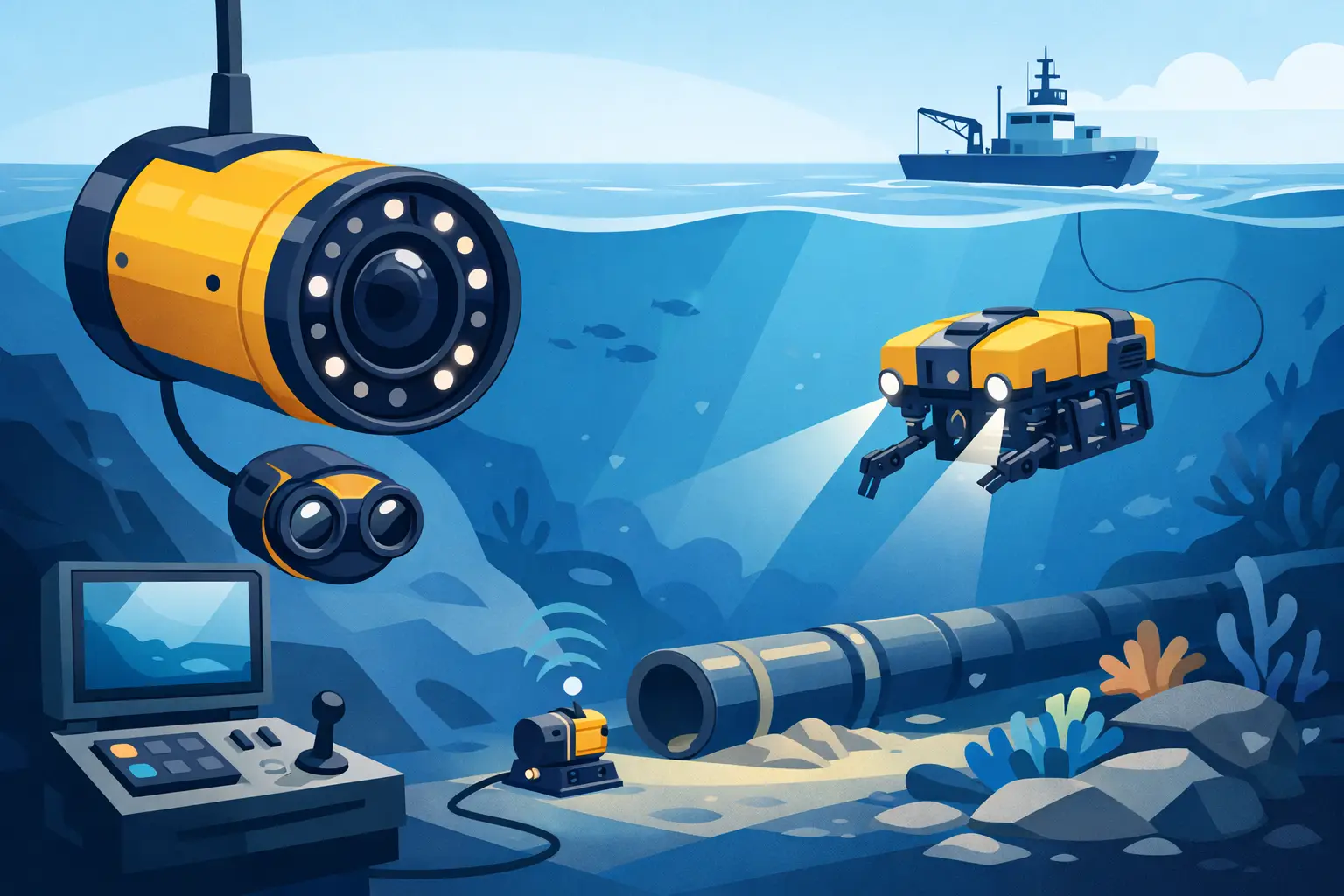
A failed underwater visual during a critical offshore inspection is not a minor inconvenience. It can delay maintenance windows, increase vessel time, and leave operations teams making decisions without clear evidence. That is exactly why a proper subsea inspection camera guide matters for procurement teams, marine operators, and engineering leads who need dependable imaging below the surface.
Buying on price alone is where many projects go wrong. A subsea camera that looks competitive on paper can underperform once it meets low light, suspended solids, strong currents, biofouling, or long cable runs. In industrial environments, the right specification is not about nice-to-have features. It is about image clarity, uptime, compatibility, and total operating value.
What a subsea inspection camera guide should help you decide
At buyer level, the real question is not simply which camera has the best picture. It is which system will hold up in your operating conditions and deliver footage that supports inspection, maintenance, and incident response. That means balancing optical performance, depth capability, housing durability, deployment method, and how the camera fits the rest of your surveillance or inspection setup.
For offshore platforms, hull inspections, intake structures, quay walls, and submerged assets, requirements vary fast. A shallow-water port inspection may prioritize mobility and quick setup. A deeper oil and gas deployment may put pressure resistance, cable integrity, and long-duration operation at the top of the list. The best purchasing decisions come from matching the camera to the task rather than chasing the longest feature sheet.
Start with the operating environment
The environment decides more than the product brochure ever will. Saltwater corrosion, hydrostatic pressure, turbidity, marine growth, and temperature swings all influence performance. If your team is inspecting structural steel, welds, risers, chains, or intake systems, image quality must remain usable in conditions that are rarely ideal.
Depth rating is the first filter. It needs a real safety margin above your normal working depth, not a bare minimum match. Operating a camera near its maximum rated depth for routine work leaves little room for contingency and can reduce confidence in long-term reliability.
Water clarity matters just as much. In clear conditions, standard optics and moderate lighting may be enough. In silty harbors or sediment-heavy industrial sites, stronger illumination and careful lens selection become essential. More light is not always better, though. Backscatter can wash out the image if the beam pattern is too aggressive for murky water.
Camera housing and materials are where reliability starts
The housing is not a secondary detail. It is the front line against corrosion, ingress, and mechanical damage. Industrial buyers should expect marine-grade construction designed for sustained subsea use, not occasional immersion. Materials, seals, connectors, and cable protection all need to match the mission profile.
Aluminum, stainless steel, and specialist corrosion-resistant alloys each have their place. The right choice depends on water chemistry, deployment frequency, and maintenance routines. A lower upfront cost can disappear quickly if the housing requires frequent service or replacement in harsh saltwater conditions.
Pay close attention to connector quality. Many failures happen at connection points, not in the imaging core. Wet-mate or dry-mate options, sealing design, and strain relief all affect field performance. If the camera will be launched and recovered often, connector durability deserves more attention than many buyers give it.
Image quality is more than resolution
Resolution sells, but usable inspection footage depends on more than pixel count. Lens quality, sensor sensitivity, dynamic range, and low-light performance often matter more in real subsea work. If the image breaks down under uneven lighting or suspended particles, a higher resolution spec alone does not help.
For close-up structural inspection, sharp detail and controlled distortion are key. For broader situational awareness around an asset, field of view may matter more than fine detail. Some operators need both, which is why interchangeable optics or carefully chosen fixed lenses can make commercial sense.
Color performance is another practical issue. In deeper water, natural color drops off, and artificial light does more of the work. If your team needs to distinguish coatings, corrosion patterns, marine growth, or damage signatures, lighting and sensor tuning should be assessed together, not as separate line items.
Lighting can make or ruin a subsea inspection camera guide
Any serious subsea inspection camera guide should give lighting the same weight as the camera head. Poor lighting can turn a capable sensor into an average inspection tool. In subsea operations, integrated LEDs are common, but output, beam spread, and placement determine whether the result is clear footage or reflective haze.
In turbid water, diffused and well-positioned lighting often outperforms brute brightness. In cleaner water or larger inspection zones, more intense output may be useful. Buyers should ask whether the lighting is adjustable and whether the camera system has been configured for near-field or mid-range work.
Heat management also matters. Lighting systems generate heat, and subsea housings need to manage it effectively over long durations. That becomes more relevant in continuous monitoring or extended inspection campaigns where the camera remains active for long periods.
Tethered, fixed, or integrated deployment
How the camera will be used should shape the entire buying process. A fixed-mounted camera for permanent monitoring on a structure has different priorities from a unit deployed for periodic inspection. Fixed systems usually place more weight on long-term sealing, network compatibility, remote viewing, and maintenance access. Temporary inspection systems may focus on cable management, transportability within an industrial workflow, and rapid deployment.
Tether length and signal stability are major factors. Long cable runs can affect power delivery and video quality if the system is not engineered properly. For offshore and marine operators, that means reviewing transmission method, power requirements, and recorder compatibility before purchase, not after installation.
Integration also matters commercially. If your facility already uses network video recording, remote monitoring, or centralized surveillance management, the subsea camera should fit that infrastructure. Standalone systems can be suitable in some cases, but integrated platforms usually offer better long-term value for industrial operators managing multiple asset classes.
Recording, playback, and remote access
A good underwater image is useful. A recorded, searchable, shareable inspection record is more useful. Procurement teams should consider how footage will be stored, reviewed, and used across departments. Inspection video often supports maintenance planning, contractor verification, compliance documentation, and incident review.
That makes recording format, playback quality, and remote access important buying criteria. If a superintendent or operations manager cannot quickly retrieve and review footage, the system loses practical value. The strongest systems support clear recording, stable transmission, and straightforward retrieval without overcomplicating operator use.
This is where a supplier with surveillance infrastructure experience can add real value. Revlight Security, for example, operates in the space where subsea imaging, network solutions, and industrial monitoring requirements intersect. For buyers, that matters because camera performance alone is only part of the result.
Maintenance, service life, and total cost
The cheapest camera is rarely the lowest-cost option over time. Service intervals, seal replacement, connector wear, and downtime risk all shape ownership cost. Industrial buyers should ask what routine maintenance is required, how easily parts can be replaced, and whether the system is designed for field service or factory return.
It also pays to look at supplier support. Fast specification advice, clear documentation, and dependable after-sales service can save significant time during deployment and operation. In offshore and energy environments, delayed support can cost far more than the price gap between two systems.
A commercially smart purchase looks beyond unit price to expected life span and performance consistency. If a better-built camera reduces repeat deployments, shortens inspection time, or avoids false calls caused by poor footage, it usually justifies the premium.
Common buying mistakes in subsea inspection camera selection
One common mistake is overbuying for depth while underbuying for optics and lighting. Another is choosing a camera head without considering the full system, including cable, control unit, recording, and mounting. Buyers also underestimate the importance of environment-specific durability. A unit that survives freshwater testing may not be the right answer for aggressive saltwater conditions.
There is also the issue of specifying for ideal conditions instead of real ones. If inspections are routinely carried out in low visibility, around fouled surfaces, or in high-current zones, the system should be selected around those constraints. That is where experienced suppliers stand apart from general equipment sellers.
How to compare options with confidence
The fastest route to a solid decision is to define the inspection task in operational terms. Start with depth, water type, visibility, target size, viewing distance, deployment duration, and recording needs. Then assess housing quality, optics, lighting, integration, and support against those requirements.
Ask suppliers direct questions. What is the recommended operating depth margin? How does the camera perform in turbid water? What recording and network options are available? What maintenance is expected over the first year and beyond? Serious suppliers should answer with clarity, not vague claims.
The right subsea inspection camera is not simply a device that works underwater. It is a dependable inspection asset that supports better decisions, protects uptime, and helps your team see what matters when conditions are at their worst. Buy for the operating reality, and the value will show up long after the initial quote is forgotten.
🛡️ Secure Your Home or Business Today
Protect your home, office, shop, or business with reliable CCTV security cameras. Explore our range of CCTV cameras and find the right security solution for your needs.
Explore CCTV Cameras ✉️ Email Us

 Singapore :
+65-6708-9302
Singapore :
+65-6708-9302